

Work-related stress shows up in five distinct ways: physical symptoms like headaches and fatigue, emotional changes including irritability and anxiety, difficulty concentrating and making decisions, behavioral shifts such as withdrawing from others, and declining job performance. These signs often appear gradually, making them easy to miss until work stress becomes overwhelming. Research shows that chronic work-related stress can lead to serious health problems including sleep disturbances, high blood pressure, and increased risk of cardiovascular disease, affecting both your physical and mental health.
What Is Career Stress?
Career stress—also called job stress or workplace stress—occurs when work demands exceed your ability to cope. Work-related stress happens when you feel you have little control over your work situation, face tight deadlines, manage unclear job expectations, or navigate difficult interpersonal relationships with coworkers or supervisors. In DC’s high-pressure environment where career and identity are deeply intertwined, distinguishing normal professional challenges from harmful work-related stress becomes especially important for employee health and well-being.
Work stress differs from temporary pressure. While occasional deadline stress is normal, chronic workplace stress affects your physical health, mental health, and personal life. Understanding occupation stress helps you recognize when job stressors have crossed from manageable to harmful.
We regularly work with professionals who’ve normalized their stress levels to the point where they don’t realize the toll work-related stress is taking. A client might come in saying they’re “fine” while describing insomnia, constant muscle tension, and having zero free time for relationships. Often, the first step in managing work-related stress is simply recognizing that what feels normal isn’t actually sustainable for your physical and mental health.
What Are the 5 Signs of Work-Related Stress?
1. Physical Symptoms That Won’t Go Away
Chronic job stress manifests in your body first. You might experience persistent headaches, muscle tension in your shoulders and neck, stomach problems, or frequent fatigue that doesn’t improve with rest. Sleep disturbances are among the most common indicators that work-related stress has become chronic, affecting both sleep quality and daytime functioning. Over time, stressful job conditions can contribute to serious concerns like high blood pressure, musculoskeletal disorders, and weakened immune function. Meta-analyses of occupational health interventions show that addressing workplace stressors helps reduce these physical symptoms and improves overall worker health.
If you find yourself constantly tired despite adequate sleep, developing new health issues without clear medical causes, or experiencing ongoing physical discomfort, your body may be signaling that work stress has exceeded healthy limits.
2. Emotional Exhaustion and Mood Changes
Excessive stress at work drains your emotional reserves. You may notice increased irritability with colleagues, family, or friends, heightened anxiety about job duties, feelings of being overwhelmed, or a sense of dread about going to work (what many in DC experience as “Sunday Scaries”). Job insecurity—whether from company restructuring, performance concerns, or uncertain future employment prospects—compounds emotional stress and creates persistent anxiety. Research on work-related mental health conditions demonstrates that chronic workplace stress significantly increases risk for anxiety and depression, affecting job satisfaction and quality of life.
Emotional exhaustion from job stress can also show up as cynicism about your career development, loss of motivation for work that once engaged you, or feeling emotionally numb. These psychological symptoms indicate your nervous system is overwhelmed by workplace stressors. Toxic workplace relationships or poor communication from management can intensify these emotional responses, creating a work environment that feels impossible to manage.
3. Cognitive Difficulties and Brain Fog
When job stress increases, your brain’s ability to function declines. You might struggle with concentration on tasks that were once routine, have trouble making decisions, experience memory problems, or find yourself frequently distracted during important work. This cognitive impact of work-related stress affects job performance and can create a cycle where declining performance increases stress levels further.
Scientific evidence suggests that psychologically demanding jobs that offer little control create especially high cognitive strain. If you’re rereading emails multiple times, forgetting meetings, or taking much longer to complete familiar job duties, your brain is signaling the need to reduce job stress and restore cognitive function.
4. Behavioral and Social Changes
Stress affects how you interact with the world. Warning signs include withdrawing from coworkers, family, or social activities (similar to social energy depletion), changes in eating habits (eating much more or less than usual), increased use of alcohol or other substances to cope, neglecting self-care and physical health activities, or procrastinating on important tasks. Interventions targeting occupational stress show that addressing these behavioral patterns through stress management programs helps prevent more serious health consequences.
You might also notice yourself snapping at people, avoiding work environment interactions, or isolating yourself during free time. These behavioral shifts often reflect attempts to manage stress that ultimately worsen the problem by reducing social support and healthy coping mechanisms. Establishing healthy boundaries between work and personal life becomes difficult when workplace stress follows you home.
5. Declining Job Performance and Engagement
Unmanaged workplace stress eventually impacts your work output. This might look like missing deadlines, making more mistakes than usual, avoiding challenging projects, increased absenteeism from work, or feeling disconnected from your career goals. When stress prevention efforts aren’t in place, workers suffer from decreased productivity and health care costs rise for both employees and organizations. Research shows health care expenditures are nearly 50% greater for workers reporting high stress levels, making workplace stress both a personal and organizational concern.
Research published in occupational and environmental medicine journals emphasizes that job stress creates a vicious cycle: declining performance increases anxiety about future employment prospects, which further elevates perceived stress and impairs performance. Breaking this cycle requires both individual strategies to manage work-related stress and organizational changes to improve work environment conditions.
In our practice, we frequently see high-functioning professionals who maintain their job performance through sheer willpower while other life areas deteriorate. They might excel at job duties while their interpersonal relationships suffer, sleep quality plummets, or physical health declines. True well-being means managing stress across all domains, not just keeping your supervisor happy at the expense of everything else.
When Work Stress Is Too Much
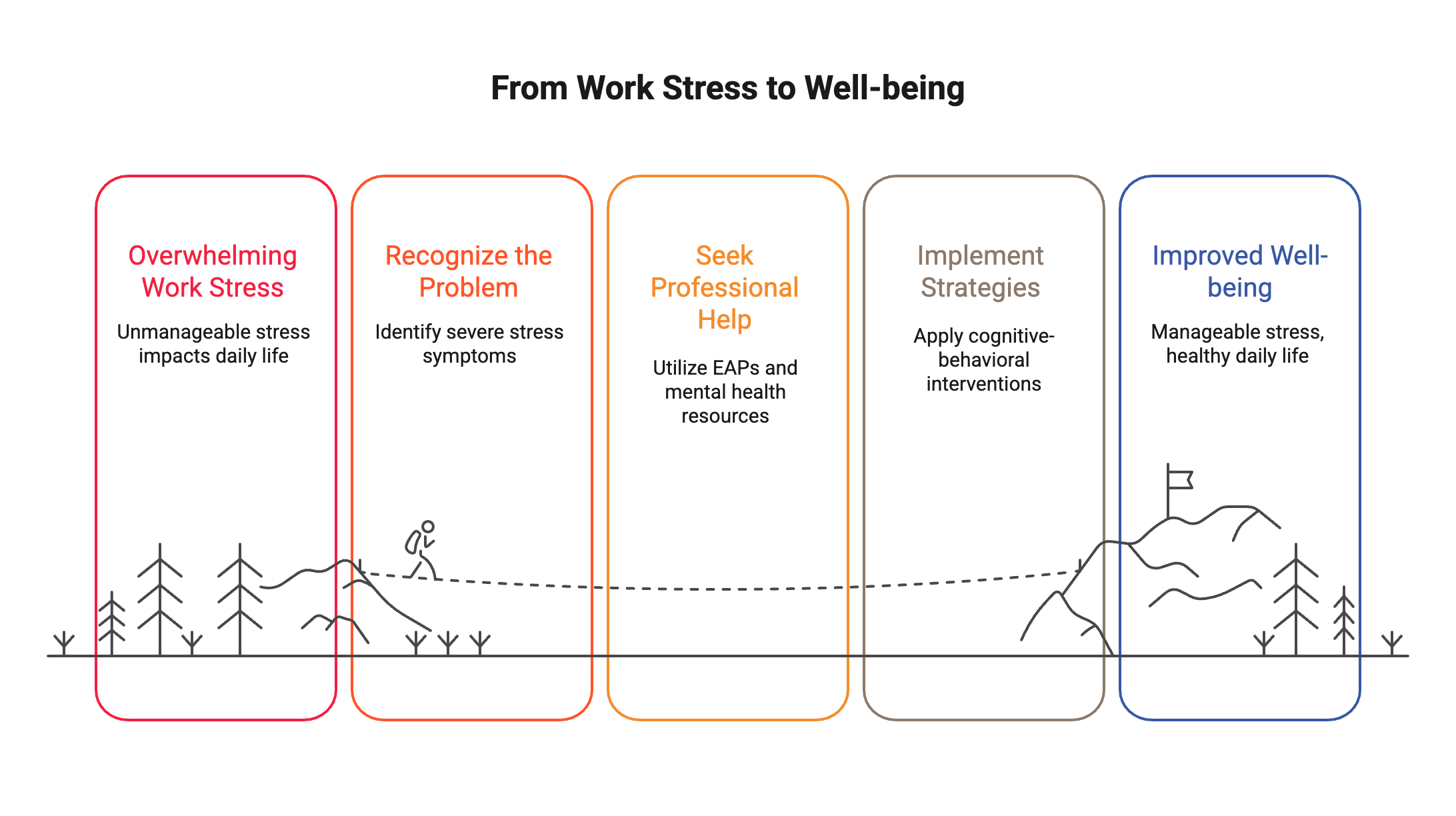
Recognize when stress at work has become a public health concern requiring professional intervention. If workplace stress leads to thoughts of self-harm, severe anxiety or panic attacks, inability to function in daily activities, substance abuse problems, or symptoms of depression that persist beyond work hours, it’s time to seek help from mental health professionals. Learning how to recover from work burnout often requires professional support, not just personal coping strategies.
Many employers offer employee assistance programs (EAPs) that provide confidential counseling and resources specifically designed to help workers manage job stressors. Employee assistance programs are part of organizational behavior strategies to support employee health and reduce health care expenditures related to unnecessary stress. Don’t wait until a crisis to utilize these resources—early intervention through stress prevention programs prevents more serious mental health conditions.
For those seeking therapy approaches for stress and anxiety, cognitive-behavioral interventions and stress management techniques have strong research support for reducing occupational stress and improving well-being.
How to Manage Work-Related Stress
Effective stress management combines individual coping strategies with workplace changes. A primary prevention strategy includes:
Individual approaches to manage stress: Stress management programs using cognitive-behavioral techniques help you identify unhelpful thought patterns and develop better coping skills. Practice relaxation techniques like deep breathing exercises, mindfulness, or progressive muscle relaxation. Maintain work-life balance by setting boundaries between work and personal life. Stay physically active—even short walks reduce stress and improve mood. Prioritize sleep quality and establish work schedules that include regular breaks.
Workplace solutions for preventing stress: Effective intervention strategies require organizational commitment to preventing stress. Talk to supervisors about workload management and job demands. Participate in stress prevention activities when organizations implement stress prevention programs. Advocate for changes that improve communications, reduce uncertainty, and define workers’ roles more clearly. Good management education helps supervisors recognize signs of worker distress and create supportive work environments. When companies invest in stress prevention programs, they create systemic support for reducing occupational stress across all employee levels.
Comprehensive research from occupational health experts shows that combining individual stress management with organizational changes produces the best outcomes for reducing workplace stress and protecting occupational health. When organizations implement stress prevention activities alongside teaching employees to manage stress, everyone benefits from improved occupational safety, reduced job insecurity, and better overall well-being.
We encourage clients to view stress management as both a personal responsibility and a systems issue. You can develop excellent coping skills, practice deep breathing exercises daily, and maintain healthy boundaries—but if stressful job conditions persist without organizational change, you’re bailing water from a sinking boat. Effective change often requires addressing both your response to work-related stress and advocating for better working conditions.
Moving Forward
Career stress affects millions of workers, but work-related stress doesn’t have to control your life. Recognizing the five signs of work-related stress is your first step toward protecting your physical health, mental health, and personal life from the damaging effects of chronic workplace stress.
Get Support for Work-Related Stress in Washington, DC
If workplace stress is affecting your well-being, our therapists in Dupont Circle understand the unique pressures of DC’s career-driven culture. We offer evidence-based approaches to help you manage stress, set healthy boundaries, and thrive both professionally and personally. Contact Therapy Group of DC to schedule an appointment.
This blog provides general information and discussions about mental health and related subjects. The content is not intended to be a substitute for professional medical advice, diagnosis, or treatment. Always seek the advice of your physician or other qualified health provider with any questions you may have regarding a medical condition.