Feeling Relieved After Breaking Up? Here’s What Your Emotions Are Telling You

Last updated: November 2025
Feeling relief after a breakup is completely normal and often signals that the relationship wasn’t meeting your needs. Many people worry that relief means something is wrong with them, but research shows that experiencing positive emotions like relief, hope, and even happiness after relationships end is a healthy sign of emotional adjustment and personal growth. Relief doesn’t diminish what you shared—it simply means you’re listening to what your emotional well-being truly requires.
Why Do I Feel Relieved Instead of Sad After a Breakup?

Relief after a breakup indicates that certain stresses tied to the relationship have lifted. When a relationship ends, your nervous system may respond with a sense of calm rather than distress, especially if the relationship involved chronic stress, mismatched needs, or ongoing conflict.
This emotional response happens because your mind and body recognize that a source of tension is gone. You might notice you’re sleeping better, feeling less anxious, or experiencing more energy for the things you care about. These are signs that your well-being was compromised in ways you may not have fully acknowledged while you were in the relationship.
In our practice in Dupont Circle, we frequently work with clients who feel guilty about experiencing relief after a breakup. We help them understand that relief is often your authentic self recognizing that the relationship wasn’t serving you. This doesn’t mean the relationship was entirely negative or that your partner was a bad person—it simply means the match wasn’t right for your emotional needs and life goals.
Feeling relieved doesn’t erase the good moments or mean the relationship didn’t matter. It’s possible to feel grateful for what you learned while also recognizing that ending the relationship was the healthiest choice. Research confirms that people often experience a mix of emotions after breakups, and positive feelings like relief can coexist with sadness or grief.
What Does Feeling Relief After a Breakup Mean About My Relationship?
Relief often signals that partners weren’t meeting each other’s needs or that the relationship dynamics were creating ongoing stress. When relief is your dominant emotional response, it’s worth reflecting on what specific aspects of the relationship were draining rather than energizing.
Common patterns that lead to relief when relationships end include:
- Incompatible life goals or values – When partners want different futures, the constant compromise can feel exhausting
- One-sided emotional labor – Carrying the relationship’s emotional weight alone creates chronic stress
- Loss of personal identity – Feeling like you couldn’t be yourself fully in the partnership
- Walking on eggshells – Constant anxiety about your partner’s reactions or mood, sometimes involving emotional manipulation
- Unresolved conflicts – Recurring arguments about the same issues with no resolution
If you’re experiencing relief, your emotions are giving you valuable information about what didn’t work. This insight can help you identify what you need in future relationships and recognize unhealthy patterns earlier.
Is Feeling Relieved After a Breakup Normal?
Yes, feeling relieved is a natural and healthy emotional response. Studies show that many people report relief as one of their primary emotions after ending a relationship, particularly when the relationship involved mismatched expectations, lack of emotional support, or toxic relationship dynamics.
Relief doesn’t mean you’re cold or uncaring. It means you have strong emotional intelligence—the ability to recognize and understand what serves your well-being. In a city like DC where high-achieving professionals often stay in relationships longer than they should out of a sense of commitment or fear of failure, recognizing when to walk away is actually a sign of self-awareness.
How Long Is the Relief Stage After a Breakup?
The relief stage typically emerges immediately or within the first few weeks after a breakup and can last several months, though the timeline varies significantly between individuals. How long you feel relief depends on factors like the length of your past relationship, whether you initiated the breakup, and how much emotional stress the relationship created.
For some people, relief is the dominant feeling from day one and remains steady as they move through the healing process. Others experience waves of relief interspersed with sadness, anger, or loneliness. Both patterns are normal.
What matters more than the timeline is allowing yourself to acknowledge and accept whatever you’re feeling without judgment. Fighting against your relief or trying to force yourself to feel sad can actually prolong the healing process and prevent you from learning what the relief is teaching you.
What Is the 72 Hour Rule After a Breakup?
The 72-hour rule suggests waiting at least three days before contacting your ex after a breakup to give yourself space to process your initial emotions. This cooling-off period helps prevent impulsive decisions driven by temporary feelings like loneliness, fear, or confusion rather than genuine desire to reconnect.
During these first 72 hours, your emotions will likely shift multiple times. You might feel relieved one moment and devastated the next. Creating space from your ex—including on social media accounts—allows you to experience your authentic emotional response without the influence of their presence or communication.
If relief is what you consistently feel after these initial days pass, that’s important information. It suggests the breakup aligns with your true needs, even if other people in your life question your decision.
Why Do I Feel So Bad After a Breakup (Even If I Also Feel Relieved)?
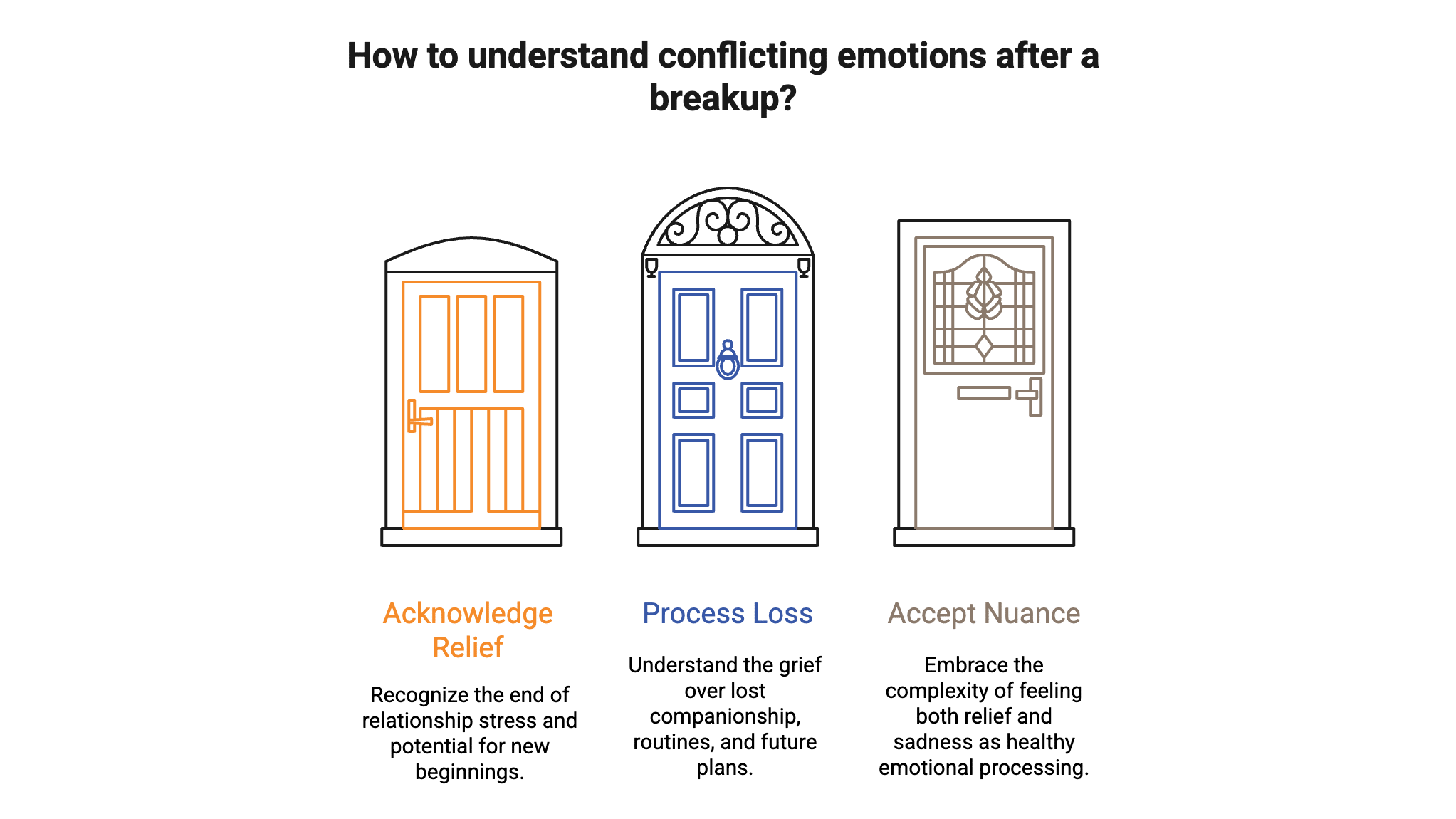
Feeling both relief and sadness simultaneously is common and reflects the complexity of ending a relationship. Even when a breakup brings relief, you’re still processing loss—loss of companionship, shared routines, future plans, and the version of yourself that existed in that partnership.
It’s helpful to understand that these emotions aren’t contradictory. You can feel relieved that relationship stress has ended while also feeling sad about what you hoped the relationship would become. You might grieve the potential you saw rather than the reality you experienced.
When clients in DC tell us they’re confused by feeling relieved and sad at the same time, we explain that this emotional complexity is actually healthy. It shows you can hold nuanced perspectives—acknowledging both that the relationship needed to end and that endings are inherently difficult. This capacity for emotional nuance is what allows for genuine healing and personal growth.
The emotional response you have immediately after a breakup doesn’t predict how you’ll feel long-term. Relief might be your primary feeling now, while sadness emerges more strongly later, or vice versa. Trust that all of these feelings have something to teach you about yourself and what you need moving forward.
How to Ease the Pain After a Breakup
Effective coping strategies focus on processing your full range of emotions while taking active steps toward healing and personal development. Research shows that people who use healthy coping methods experience less distress and more personal growth after breakups.
Here are evidence-based approaches that support healing:
Create space for self-reflection. Use this time to understand what the relief is telling you. Journal about what felt wrong in the relationship, what needs weren’t being met, and what you learned about yourself. This introspection helps you make better choices in future relationships.
Set boundaries with your ex. If you’re feeling relieved, staying in frequent contact can create confusion and pull you back into unhealthy patterns. It’s okay to say you need space, even if your ex wants to stay friends right away.
Spend time with friends and family members who support your well-being. Share your feelings with a trusted friend who can help you process without judgment. Being around people who remind you of who you are outside the relationship reinforces your sense of self.
Engage in activities that bring you joy. Rediscover hobbies you may have neglected or explore new interests. Physical activities like yoga or running can help channel your relief into positive energy while supporting your healing process.
Practice self-compassion. Be as kind to yourself as you would be to a friend in the same situation. People who practice self-compassion recover faster and experience more positive emotions after breakups.
Consider working with a mental health professional. A therapist can help you understand your emotional response, identify relationship patterns, and develop skills for healthier connections. Different therapy approaches can support you through this transition.
We regularly see clients who initially thought they could handle break ups on their own, but then realized that professional support accelerated their healing in ways they hadn’t expected. Therapy is particularly helpful if you notice repeating patterns across relationships or if you’re struggling to make sense of complex feelings. There’s strength in seeking support rather than trying to process everything alone.
Breaking up is rarely easy, even when relief is your primary emotional response. Acknowledging that relief is valid while also honoring any sadness or grief you feel creates space for authentic healing. This honest emotional process—often called posttraumatic growth, or positive psychological change following difficult life events—is what allows you to ultimately emerge stronger, with clearer understanding of yourself and what you need in relationships.
Common Questions About Relief After a Breakup
Is it normal to not feel sad after a breakup?
Yes, it’s completely normal to not feel sad after a breakup ends. Many people experience relief, calm, or even happiness when relationships end, especially if the relationship wasn’t a good match or involved ongoing stress. Not feeling sad doesn’t mean you didn’t care about your partner—it means your well-being wasn’t being supported in healthy ways within that relationship.
Should I stay friends with my ex after a breakup?
Whether to stay friends depends on your specific situation and feelings. If you’re experiencing relief, it’s often healthier to create space initially rather than trying to stay friends immediately. Breaking free from the relationship dynamic allows you to process your emotions clearly and begin self discovery without the confusion that comes from maintaining close contact. You can revisit the friendship question later if it still feels right.
Does feeling relief mean I was in a toxic relationship?
Not necessarily. While relief after a breakup can indicate toxic relationship patterns, it can also simply mean the relationship wasn’t the right fit. Partners can be good people who just aren’t compatible in terms of life goals, communication styles, or emotional needs. Relief is your body’s way of recognizing that the relationship wasn’t serving your well-being—whether that’s due to toxicity or simply incompatibility.
Why do I feel relief after ending a long term relationship?
Relief after ending a long term relationship often happens because you’ve been carrying unmet needs or chronic stress for an extended period. The longer you stayed in a relationship that wasn’t working, the more profound the relief can feel when it ends. This doesn’t diminish the good years you had together—it simply reflects that something fundamental wasn’t aligned, and your nervous system is responding to the release of that ongoing tension.
Finding Support in Washington, DC
If you’re working through relief, confusion, or any emotions after a breakup, professional support can help you process what you’re feeling and move forward with clarity. Our therapists in Dupont Circle understand the unique pressures facing DC professionals and can provide guidance as you navigate this transition.
Contact us to schedule a consultation and begin the healing process with expert support.
This blog provides general information and discussions about mental health and related subjects. The content is not intended to be a substitute for professional medical advice, diagnosis, or treatment. Always seek the advice of your physician or other qualified health provider with any questions you may have regarding a medical condition.