Moving On After a Breakup: What Research Says Actually Works

When a relationship ends, you might wonder if your feelings are normal or if you’ll ever feel like yourself again. Emotional distress after a breakup is a universal experience, and most people do recover with time—especially when they use evidence-based coping strategies. Research consistently finds that certain approaches significantly predict better adjustment, while others prolong the healing process.
Moving on after a breakup isn’t just about managing sadness. Break ups trigger many conflicting emotions—grief, relief, anger, hope—often all at once. In Washington, DC, where professional and personal lives overlap, the process can feel more complicated when your ex is still part of your work circle.
How to Accept the Breakup and Move On?

Acceptance begins with allowing yourself to fully feel emotions without judgment or rushing. Research on emotional adjustment after relationship dissolution shows that people who acknowledge feelings—rather than suppress them—recover more effectively. You must allow yourself to feel all emotions after a breakup, including sadness, emptiness, and loneliness. Holding on to the past only prolongs your healing process.
The grieving process follows no exact timeline. Distress often peaks in the first few weeks, then gradually improves. But this varies based on your past relationship length, who initiated the break, and your support system.
What actually helps:
- Stop monitoring your ex’s life. Limiting social media and resisting the urge to check their posts helps reset healing. Limit exposure to social media to avoid constant reminders of an ex.
- Remove physical reminders gradually. Old photos in constant view trigger rumination. Pack them away. Removing physical reminders of your ex from your environment can help alleviate emotional pain and support healing.
- Accept good and bad days. Healing isn’t linear. One day you’re hopeful, the next you’re crying over ice cream. This is normal.
In our practice, we see clients struggle with acceptance because they’re used to solving problems quickly. But moving on after a breakup isn’t a problem to solve—it’s a process to move through at its own pace. Feelings don’t respond to professional problem-solving strategies. We help clients develop patience and recognize that emotional healing operates on a different timeline than career goals, which becomes a valuable skill beyond processing break ups.
What Is the 72 Hour Rule After a Breakup?
The “72 hour rule” suggests cutting all contact with your ex for 72 hours to gain clarity and prevent impulsive decisions. While not research-based, creating space for emotional regulation has merit when dealing with a broken heart.
Research on coping strategies shows impulsive responses during high distress (drunk texting, dramatic declarations) rarely help. A cooling-off period lets you process the shock and think clearly.
However, 72 hours is arbitrary. Some need just one person to talk through feelings. Others need a few weeks. The goal is gaining enough distance to think rationally about whether reconciliation would address core issues.
If you’re considering reaching out, ask: Am I doing this because I miss what we actually had, or because I’m uncomfortable with loss? Often, we see past relationships through rose colored glasses, remembering the best while forgetting persistent problems.
Should You Go “No Contact”?
Many experts recommend longer no-contact periods—sometimes months—especially if the relationship ended painfully. If you’re healing from a toxic relationship, this space becomes even more critical to rebuild your sense of self.
Going no contact means no texting, no social media stalking, no attending events where your ex will be, and no using friends for information. This isn’t punishment—it’s creating mental space to build a new routine that doesn’t revolve around them.
How Long After Breaking Up Should You Move On?
People often ask: how long after breaking up should you move on? There’s no universal timeline for healing a broken heart—recovery varies based on resilience, social support, and coping strategies. Expecting to be “over it” by a certain date creates unnecessary pressure.
Research on post-breakup adjustment identifies key factors:
Resilience matters. People with higher optimism and self-esteem bounce back faster from break ups, but these traits can be developed through therapy.
Support systems help. Those who seek support from friends and family experience better mental health outcomes. You don’t need incredible friends—just people willing to listen. Individuals can build a support system by spending time with trusted friends and family.
How you spend time counts. Active coping strategies (making plans, finding new hobbies, reframing thoughts) work better than passive ones (drinking, withdrawal, rumination). Effective breakup strategies include creating new routines, leaning on a support system, and focusing on self-care.
Many people feel noticeably better after a few weeks to months. But “better” doesn’t mean completely over the relationship—it means the intense daily pain has lessened. Time heals, but only when combined with intention and healthy coping strategies.
We frequently work with clients who beat themselves up for “not being over it yet” weeks or months after a relationship ended. The healing timeline doesn’t follow professional life’s pace, and expecting to handle emotional pain like a work project usually backfires. Emotional healing after break ups requires patience with the process, not productivity strategies. We help clients shift from asking “Why aren’t I over this?” to “What do I need today?”
How to Fill the Void After a Breakup?
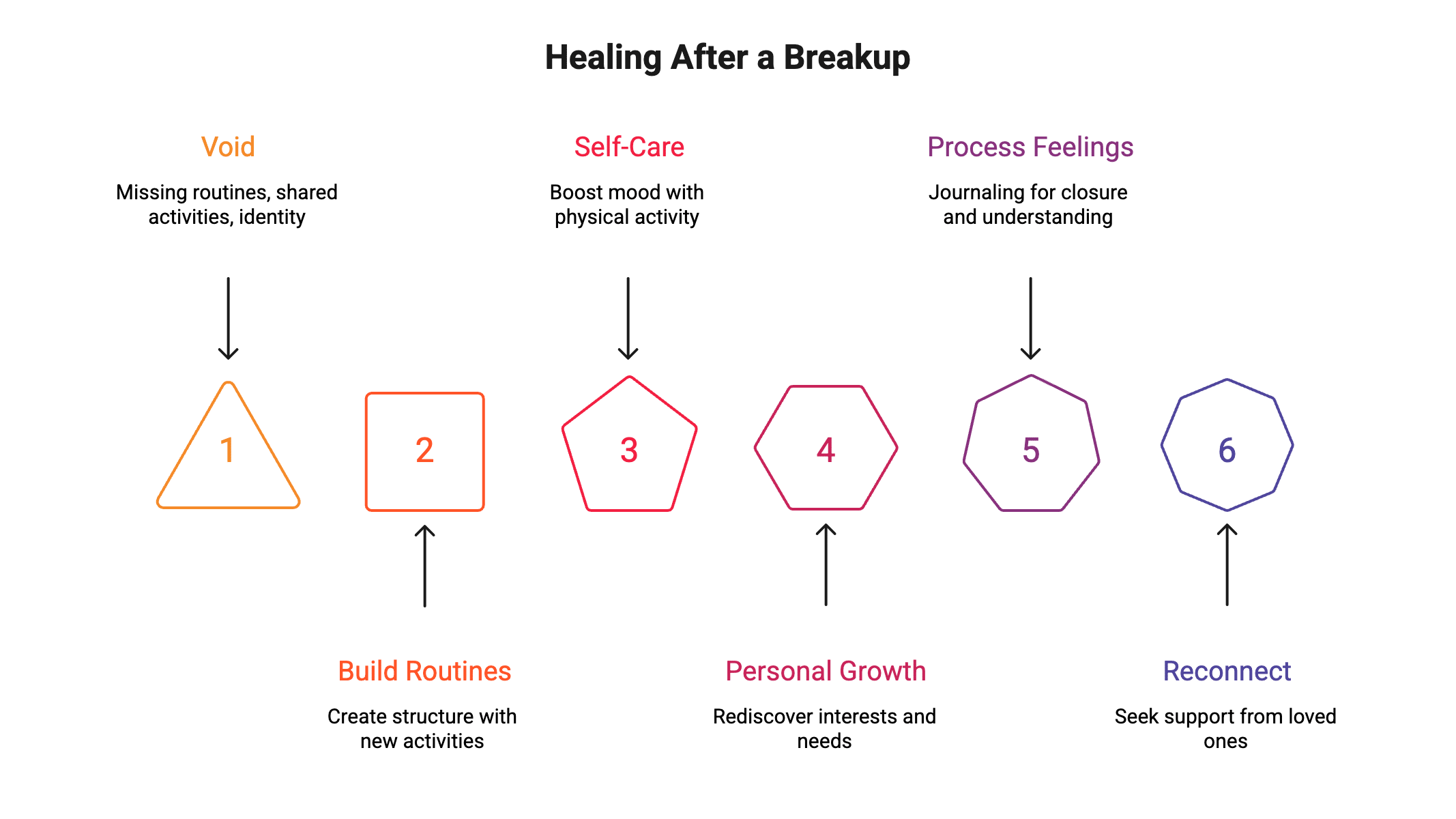
The void isn’t just about missing your ex—it’s about losing routines, shared activities, and identity. Breakups affect multiple dimensions of your life, from daily routines to sense of self.
What helps:
Build new routines immediately. When your old life included daily texts and weekend plans, actively create structure. Establishing a new daily routine can assist in creating structure after a breakup. Schedule activities with friends, and pick up a new hobby. Exploring new hobbies is a suggested activity for personal growth.
Engage in self-care activities. Physical activity, such as outdoor walks, can boost mood and serve as a healthy distraction. Engaging in self-care activities such as exercise and mindfulness can aid recovery after a breakup. In Washington, DC, individuals can explore the city’s parks for nature walks.
Focus on personal growth. Breakups create space to rediscover who you are. Ask: What did I compromise on? What interests did I set aside? Shift from dwelling on loss to exploring possibility. Understanding your needs in a relationship can guide you in future relationships. Every breakup allows you to rewrite your story about self-worth and boundaries.
Process your feelings through writing. Journaling can help process feelings and create a sense of closure. Creating a new routine and finding closure, such as through personal rituals or letter writing, is crucial for healing.
Reconnect with your support system. Many people withdraw during break ups, but social support strongly predicts positive outcomes. Spend time with people who remind you of your worth. Seeking support from loved ones can significantly aid in processing emotions. Friends and family help you remember who you are.
Try new things, but pace yourself. Personal growth happens gradually. The goal is new habits that support well-being, not distraction from feelings.
When “Filling the Void” Becomes Avoidance
Be honest about healthy distraction versus avoiding feelings. Constantly staying busy, jumping into a new relationship, or using substances only delays the grieving process.
Research on rumination shows that while you shouldn’t dwell obsessively, you need to allow space for emotions. Balance experiencing grief with actively moving forward.
What Makes Some People Recover Faster?
Research identifies traits and behaviors that predict better adjustment. Understanding these helps you focus on what works.
Studies on resilience show:
Optimism and positive reframing. People who find meaning in difficult experiences and maintain hope adjust better. This means holding space for both pain and possibility.
Self-esteem. Those who maintain strong self-worth independent of the relationship recover more quickly.
Effective emotion regulation. The ability to experience emotions without becoming overwhelmed predicts better outcomes.
Avoidance of rumination. Research shows that repeatedly replaying what went wrong prolongs distress. Learning to redirect thoughts when ruminating is crucial.
The good news? These aren’t fixed traits. Therapy can help you develop better coping strategies and emotional regulation skills.
When to Seek Professional Help
If you’re experiencing persistent hopelessness, significant changes in sleep or appetite, or thoughts of self-harm, professional mental health support is essential. While sadness is normal, some people develop depression or anxiety that requires clinical treatment.
Warning signs:
- Intense grief that doesn’t improve after several months
- Inability to function at work or maintain daily responsibilities
- Persistent thoughts that life isn’t worth living
- Using alcohol or drugs to cope
- Isolating completely from friends and family
- Intrusive thoughts about your ex that interfere with daily life
Some individuals experience post-traumatic stress symptoms following relationship dissolution, particularly if it involved abuse or emotional manipulation like gaslighting. These situations always warrant professional support. Many private practices in DC specialize in relationship issues, offering individual counseling. Individual therapy can help work through relationship patterns and develop healthier coping mechanisms.
DC Resources for Breakup Support:
- Therapy Group of DC provides individual and couples therapy in Washington, DC, specializing in grief and relationship transitions. Their licensed therapists offer evidence-based support to help clients process breakups and build resilience through in-person and teletherapy sessions.
- Access HelpLine: Call 1-888-793-4357 for immediate support and referrals to behavioral health providers in DC
- DC Victim Hotline: 1-844-443-5732 offers free, confidential services related to domestic violence
- NAMI Washington DC provides confidential support groups through the local chapter of the National Alliance on Mental Illness
- Social connections: Individuals in Washington, DC can join local clubs and groups through platforms like Meetup to meet new people. Engaging in structured social events can help individuals meet new people post-breakup. DC offers local community events, such as ‘Craft & Cry’ sessions at The Potter’s House Café & Bookstore.
Clients often wait too long to seek help because they believe they “should” handle break ups on their own. But reaching out for support after your relationship ended is a sign of self respect and emotional intelligence, not weakness. In therapy, we help people process the breakup, work through complex feelings, identify unhealthy patterns from past relationships, and develop practical skills to build healthier future connections. Just a few sessions can make a significant difference.
Moving on after a breakup takes time. The process of moving on can take significant time, and it’s essential to be patient and compassionate with yourself during this period. But by using evidence-based strategies—seeking social support, avoiding rumination, focusing on personal growth—you can emerge stronger with clearer sense of who you are and what you want in future relationships. Moving on involves rediscovering yourself, as breakups often lead to a loss of self.
Ready to Start Healing?
If you’re struggling to move forward after a breakup and wondering how to accept the breakup and move on, therapy can help you work through complex feelings and develop effective coping strategies. Our psychologists in Washington, DC specialize in helping people work through relationship transitions, process grief, and build resilience. Contact Therapy Group of DC to schedule a consultation.
This blog provides general information and discussions about mental health and related subjects. The content is not intended to be a substitute for professional medical advice, diagnosis, or treatment. Always seek the advice of your physician or other qualified health provider with any questions you may have regarding a medical condition.