Understanding Anxiety After a Breakup: What’s Normal and When to Seek Help

If you’re feeling anxious after a breakup, you’re not alone. Anxiety after a breakup is one of the most common emotional responses to the end of a romantic relationship. Whether you’re dealing with racing thoughts about the future, physical symptoms like stomach pain, or feelings of panic, these reactions are normal parts of processing loss. Understanding anxiety after a breakup—what causes it and how to manage it—can help you navigate this difficult time with more clarity and self-compassion.
What Is Anxiety After a Breakup?

Breakup anxiety is the emotional and physical distress that occurs when a romantic relationship ends. This type of post breakup anxiety can show up as worry about the future, fear of being alone, or constant thoughts about your ex.
Many mental health experts describe anxiety after a breakup as a natural response to major life changes. When a serious relationship ends, you lose more than just your romantic partner—you lose shared routines, future plans, and sometimes parts of your support network. This creates uncertainty, which triggers your nervous system’s stress response.
Breakup anxiety often includes both emotional symptoms (like irritability, sadness, or panic) and physical symptoms (like difficulty sleeping, stomach pain, or trouble focusing). These reactions happen because your brain is processing a significant loss while adjusting to a completely different daily life.
We see clients struggle with the unpredictability of breakup anxiety—one moment they feel fine, the next they’re overwhelmed. What helps is normalizing this experience. Your nervous system is recalibrating after losing someone central to your daily life. The anxiety isn’t a sign you’re broken or doing something wrong; it’s your body and mind working through a real loss that affects your sense of safety and connection.
Why Does Anxiety After a Breakup Happen?
The end of a romantic relationship creates real changes in your brain chemistry that contribute to anxious feelings. Breakup distress involves psychological challenges similar to grief, including denial, anger, and sadness.
When you go through a breakup, your brain experiences drops in dopamine and oxytocin—chemicals associated with bonding and pleasure. At the same time, stress hormones like cortisol increase. These neurochemical changes trigger the sympathetic nervous system, leading to physical symptoms of anxiety and emotional pain. It’s common to feel overwhelmed by these biological responses.
The absence of familiar routines also plays a major role. If you’re used to texting your partner every morning or spending weekends together, suddenly losing those patterns can feel overwhelming. Your brain has to adapt to a new normal, which takes time and energy.
Attachment Patterns and Breakup Distress
Some people experience more intense anxiety due to their attachment style. Those with attachment anxiety—who tend to worry about abandonment or need frequent reassurance in relationships—may find post breakup distress especially difficult. Similarly, individuals with pre-existing mental health conditions like generalized anxiety disorder, panic disorder, or obsessive compulsive disorder may notice their anxiety symptoms intensify after a romantic relationship breakup. Understanding how anxiety disorders can interact with breakup distress helps you recognize when additional support may be beneficial.
What Are Common Signs of Post Breakup Anxiety?
Breakup anxiety can manifest in many different ways, affecting your mental health, physical health, and daily life. Recognizing your symptoms is the first step toward managing them effectively.
Common emotional signs include:
- Racing thoughts about what went wrong or what happens next
- Constant worry about being alone or finding love again
- Rumination—replaying conversations or moments from the past relationship
- Self doubt and low self esteem
- Irritability or mood swings
Physical symptoms often include:
- Difficulty sleeping or changes in sleep quality
- Stomach pain or digestive issues
- Chest tightness or rapid heartbeat
- Difficulty concentrating
- Changes in appetite or maintaining a healthy diet
These reactions are completely normal responses to the end of a relationship. Your body is working through the healing process, even when it doesn’t feel that way.
Ready to Get Started?
Connect with our anxiety specialists.
How Long Does Breakup Anxiety Last?
Most people notice their anxiety begins to improve within a few weeks to several months after a breakup, though everyone’s mental health journey is different. The grieving process doesn’t follow a fixed timeline—it varies based on the length of the relationship, how it ended, and your individual coping strategies. For most people, anxiety after a breakup gradually lessens as they adjust to their new circumstances.
For some, anxious feelings peak in the first few weeks when the loss feels most acute. Others find their anxiety worse at specific triggers, like seeing their ex’s social media or encountering places that hold memories of the past relationship. This is all part of the normal healing process.
That said, if your anxiety persists for more than a few weeks and interferes with your ability to function in daily life, it may be time to seek help. Persistent symptoms could indicate chronic anxiety or mental health issues that benefit from therapy or medication management.
What’s the 3-3-3 Rule for Anxiety?
The 3-3-3 rule is a grounding technique that helps redirect your attention when you feel anxious. Here’s how it works: Name three things you can see, three things you can hear, and move three parts of your body (like your fingers, shoulders, and feet).
This simple practice helps turn your attention away from distressing thoughts and brings you back to the present moment. Grounding techniques like this engage your senses and can calm your sympathetic nervous system when panic attacks or racing thoughts take over. Many people find it especially helpful during intense moments of post breakup anxiety.
What Is the 72-Hour Rule After a Breakup?
The 72-hour rule suggests waiting at least three days before making any major decisions or reaching out to your ex after a breakup. The idea is that emotions run highest immediately after a relationship ends, and giving yourself time helps you avoid impulsive choices you might regret.
During this period, feelings can be overwhelming. Your mind may swing between wanting to reconcile and accepting the relationship is over. Practicing self care during these first 72 hours—like spending time with trusted friends, journaling, or using relaxation techniques—can help you gain clarity before taking any action.
How Can I Manage Post Breakup Anxiety?
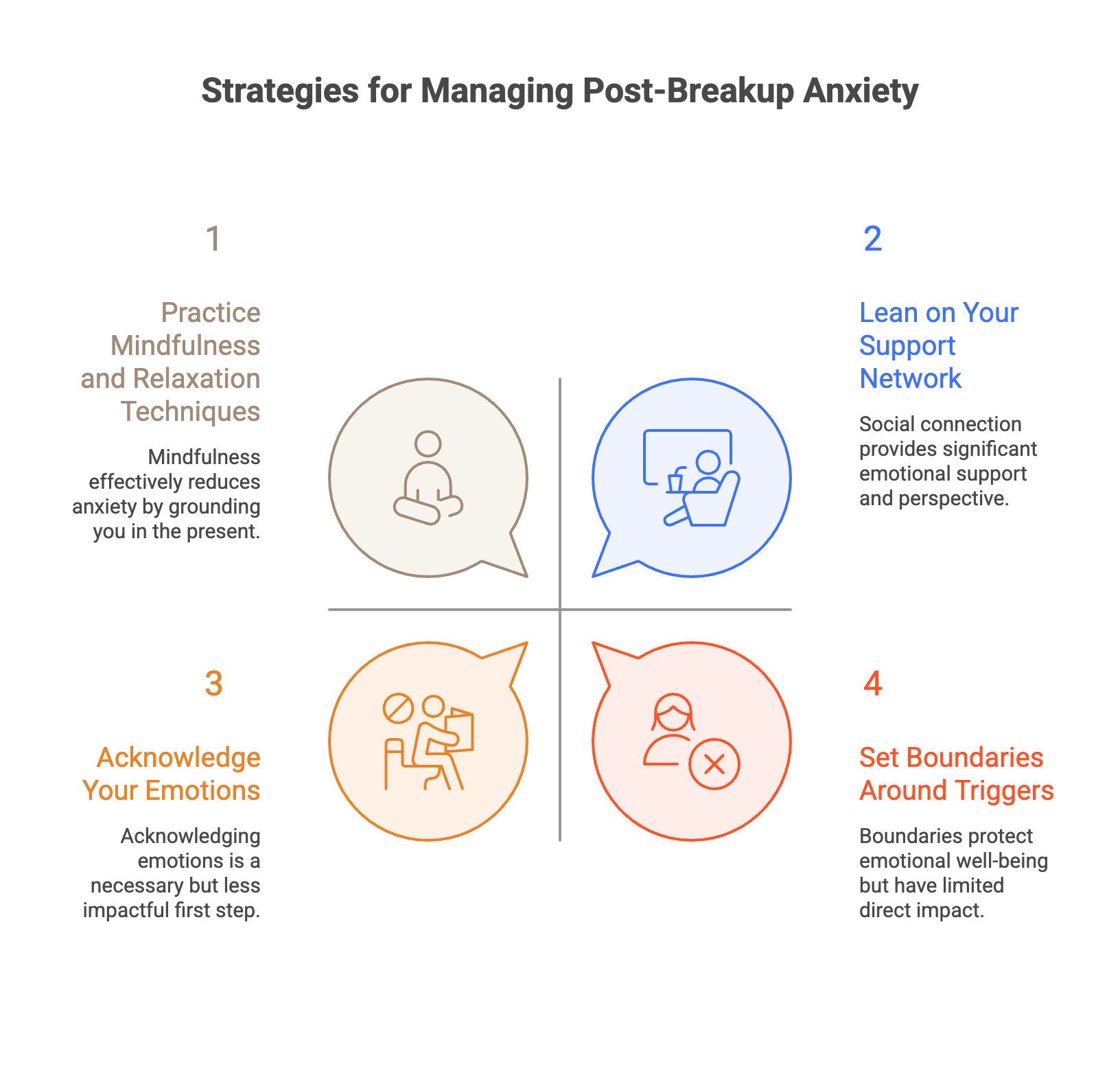
A combination of self-care strategies and healthy coping skills can significantly reduce anxiety symptoms after a breakup. Healthy coping and social connection play key roles in the healing process. Managing anxiety after a breakup often involves multiple approaches working together.
Acknowledge Your Emotions
Instead of avoiding painful feelings, allow yourself to grieve. Naming and facing your emotions—whether it’s sadness, anger, or fear—helps you process the loss. Journaling can help sort through complex thoughts and provide relief.
Lean on Your Support Network
Reaching out to friends and family offers connection and reassurance during difficult times. Social connection buffers against psychological distress and provides emotional support. Don’t isolate yourself—spending time with trusted people can provide comfort and perspective. Here in Dupont Circle, connecting with your community through coffee meetups or walks around the neighborhood can help combat loneliness.
Practice Mindfulness and Relaxation Techniques
Mindfulness-based practices increase awareness of your thoughts and emotions without judgment. Mindfulness-based stress reduction is as effective as medication for treating anxiety disorders. Breathing exercises, meditation, or practicing mindfulness can help you stay grounded in the present moment rather than spiraling into worries about future relationships or negative thoughts about your past.
Stay Physically Active
Regular exercise has been linked with reduced anxiety symptoms and improved mental well being. Even a daily walk through Rock Creek Park or a yoga class can boost your mood and help you sleep better. Physical activity releases endorphins and provides a healthy distraction from negative thought patterns. Exercise supports both your mental health and physical health during this challenging time.
Establish Healthy Routines
Creating a new, stable schedule brings a sense of normalcy after the disruption of a breakup. Prioritize basic needs like sleep, nutrition, and hydration. Small acts of self care—like making your bed each morning or cooking a healthy meal—build stability during the healing process. These self care practices help reduce stress and create structure in your daily life.
Set Boundaries Around Triggers
Identify what makes you feel overwhelmed and set boundaries. This might mean unfollowing your ex on social media, avoiding certain places temporarily, or asking friends not to share updates about them. Protecting your emotional well being during recovery isn’t avoidance—it’s self compassion.
We often remind clients that self-compassion during breakup anxiety means treating yourself with the same kindness you’d offer a close friend going through a hard time. In our work with people processing breakups, we notice that self-criticism only amplifies the anxiety. When clients shift from “I should be over this by now” to “This is really hard, and I’m doing my best,” their nervous system begins to settle. That shift isn’t just emotional—it’s physiological.
When Should I Seek Professional Help?
If your anxiety is persistent or interfering with daily life, reaching out to a mental health professional is a wise step. Cognitive behavioral therapy teaches practical skills to manage unwanted thoughts and anxiety symptoms.
Therapists can help you recognize maladaptive coping strategies and develop healthier coping mechanisms. Therapy approaches like cognitive behavioral therapy (CBT) and dialectical behavioral therapy (DBT) are effective for managing anxiety struggles and disorders and related conditions. These evidence-based approaches work particularly well for anxiety disorders that may intensify after a breakup. In some cases, a mental health professional may also discuss medication management if your symptoms suggest generalized anxiety disorder, panic disorder, or other mental health conditions.
You should seek help right away if you experience:
- Thoughts of self-harm or suicide
- Panic attacks that occur frequently
- Inability to function at work or maintain relationships
- Turning to unhealthy habits like excessive alcohol use
- Symptoms that worsen rather than improve over time
From a clinical perspective, we look for a few key indicators that someone needs more support than self-care alone can provide. If anxiety is consistently interfering with work, if panic attacks are becoming more frequent rather than less, or if someone’s leaning on alcohol or avoidance to cope, those are signals that professional help will make a significant difference. We’ve seen countless clients feel relief just from having a structured place to process their experience.
Find Support in Dupont Circle
If you’re looking for support with post breakup anxiety, the therapists at Therapy Group of DC are here to help. We offer talk therapy to help you navigate challenging emotions, develop healthier coping strategies, and build resilience during this difficult time. Schedule an appointment to get started on your mental health journey.
The Path Forward
Experiencing anxiety after a breakup is completely normal—even expected. The end of a relationship involves real loss, and your mind and body need time to adjust. While the grieving process can feel overwhelming, it also creates opportunities for personal growth and self-discovery. Remember that anxiety after a breakup typically improves with time and proper support.
With the right coping skills, emotional support, and self compassion, most people find their anxiety improves and their life satisfaction returns. Understanding your past relationship patterns can help you set boundaries for future relationships and develop stronger emotional well being.
Healing isn’t linear—some days will feel harder than others, and that’s okay. Be patient with yourself. Reduce stress where you can. Reach out when you need it. And remember that help is available when anxiety feels too heavy to carry alone.
You Don't Have to Do This Alone
Our Dupont Circle therapists specialize in anxiety and relationship issues. We're here when you're ready.
Frequently Asked Questions About Anxiety After a Breakup
What are the risk factors for experiencing anxiety after a breakup?
Risk factors include pre-existing mental health conditions such as generalized anxiety disorder, obsessive compulsive disorder, post traumatic stress disorder, and attachment anxiety. Additionally, sudden or unexpected breakups, lack of social support, and distressing situations related to the former partner can increase the likelihood of intense breakup anxiety.
What common medications are used to manage anxiety after a breakup?
Common medications prescribed for anxiety symptoms include selective serotonin reuptake inhibitors (SSRIs), benzodiazepines, and beta-blockers. These medications can help regulate anxious thoughts and physical symptoms but are typically recommended alongside therapy and professional guidance from a mental health professional.
When should I consider online therapy for breakup anxiety?
Online therapy is a convenient option if anxiety symptoms persist beyond a few weeks, interfere with daily life, or if access to in-person care is limited. Mental health professionals can offer evidence-based coping strategies, medication management, and emotional support to effectively manage post breakup distress.
How do attachment and breakup distress relate to each other?
Attachment styles influence how individuals experience breakup distress. Those with anxious attachment may experience heightened negative emotions and more intense anxious feelings after a breakup. Understanding these patterns can guide tailored coping strategies to manage emotional distress and promote recovery.
Disclaimer: This article is for educational purposes only and is not a substitute for professional medical advice, diagnosis, or treatment. Always seek the advice of your physician or qualified mental health provider with any questions you may have regarding a medical or mental health condition. If you are in crisis or experiencing thoughts of self-harm, please call 988 (Suicide and Crisis Lifeline) or go to your nearest emergency room.