Recognizing Early Warning Signs of Depression Recurrence

If you’ve experienced depression before, you know how hard it is to find your way back to feeling like yourself. But here’s something many people don’t realize: depression recurrence is common, and catching the early warning signs can help you get treatment before symptoms become severe. Research shows that between 50% and 85% of people who have one episode of major depressive disorder will experience another. Many people with a history of depression experience multiple episodes over their lifetime, making it essential to know what to watch for.
The good news? When you recognize the subtle changes that signal depression may be returning, you can take action early. This gives you the best chance of preventing a full relapse or reducing its severity. Whether you’ve had one episode or several, understanding your personal early warning signs is one of the most powerful tools for staying well.
What Is Depression Recurrence?

Depression recurrence happens when symptoms return after you’ve recovered from a previous major depressive episode. Clinicians sometimes use the terms “recurrence” and “relapse” slightly differently—relapse typically means symptoms return soon after you start feeling better, while recurrence means they come back after a longer period of wellness. But both describe the same fundamental challenge: major depression returning after a period of remission.
Recurrent depression isn’t a sign of personal failure or weakness. It’s a characteristic of the condition itself. Research shows that people with a history of depressive episodes face significantly higher risk for future episodes, especially if they experienced childhood trauma, still have some residual symptoms after treatment, or face ongoing stressful life events like job loss, divorce, financial problems, or relationship conflicts.
Why Does Early Recognition Matter?
Catching depression early—before it fully returns—can significantly change the outcome. When you notice warning signs and reach out for help quickly, your treatment team can adjust your care plan before symptoms become severe. This might mean restarting therapy, adjusting medication, or adding new coping strategies.
Studies show that maintenance treatment after you feel better reduces the risk of relapse from about 41% to just 12%. But maintenance treatment works best when you’re actively monitoring for changes and communicating with your mental health provider about what you’re experiencing. Discontinuing antidepressant medication before your provider recommends can increase your risk of recurrent episodes.
Early intervention also matters for your quality of life. The longer depression goes unaddressed, the more it can disrupt your work, relationships, and daily functioning. Catching it early means less total time spent struggling and a faster return to wellness.
In our work with clients managing recurrent depression, we’ve noticed that many people dismiss early warning signs as “just stress” or “a bad week.” They wait until symptoms become severe before reaching out. We consistently encourage clients to trust their instincts—if something feels off and reminds you of how previous episodes started, that’s worth exploring with your therapist. It’s always easier to address emerging symptoms than to recover from a full relapse.
What Are the Early Warning Signs?
Depression doesn’t usually return all at once. Most people experience subtle shifts in their mood, thinking, behavior, or physical state before a full episode develops. Learning your personal pattern of early warning signs takes time and attention, but these are some of the most common signals:
Emotional Changes
The first hints of returning depression often show up in your emotional life. You might notice:
- Feeling more irritable or frustrated than usual, especially over small things
- A growing sense of sadness or emptiness that lingers throughout the day
- Increased anxiety symptoms or worry that feels harder to manage
- Feeling emotionally numb or disconnected from people and activities
- A sense of hopelessness creeping back in, even if you can’t identify why
- Growing fear about depression returning, which itself can be a warning sign
These emotional shifts might be mild at first. You might dismiss them as having a bad day or feeling stressed. But if they persist for several days or start to interfere with your daily life, they deserve attention.
Physical Changes
Your body often signals depression before your mind fully registers what’s happening. Watch for:
- Sleep disruptions—either sleeping much more than usual or struggling with insomnia
- Changes in appetite or weight, whether eating much more or much less
- Persistent fatigue or low energy that doesn’t improve with rest
- Physical aches and pains without a clear medical cause
- Digestive problems or frequent headaches
These depression symptoms can be easy to attribute to other causes like a busy schedule or getting older. But when several physical changes happen together, especially if you’ve noticed them before previous episodes, they may be warning signs. People with chronic health conditions like heart disease, diabetes, or cancer may face additional challenges with mood and should be especially attentive to emotional changes.
Behavioral Changes
Depression affects what you do, often before you’re fully aware your mood is shifting. Common behavioral warning signs include:
- Withdrawing from friends and family, declining invitations you’d normally accept
- Letting responsibilities slide—missing appointments, avoiding tasks, procrastinating more
- Spending more time alone or in bed
- Losing interest in hobbies and activities that usually bring you joy
- Increased use of alcohol or other substances to cope with feelings
- Abandoning healthy habits like regular exercise or nutritious eating
Sometimes the people around you notice these changes before you do. If loved ones comment that you seem withdrawn or different, take their observations seriously. Maintaining social connections and support can be an important part of managing recurrent depression.
Cognitive Changes
The way you think and process information can shift as depression returns. You might notice:
- Difficulty concentrating or making decisions, even about small things
- Memory problems or feeling mentally foggy
- Increasingly negative or critical thoughts about yourself
- Ruminating on problems or past events more than usual
- Thinking patterns you recognize from previous depressive episodes—like catastrophizing or seeing everything in black-and-white terms
These cognitive warning signs can be particularly important to track. Research shows that negative thinking patterns are both a symptom and a risk factor for depression recurrence. Certain thinking styles, like being overly self-critical or having persistent negative thoughts about yourself, may be associated with higher rates of recurrence.
We often tell clients that cognitive changes can be especially tricky to spot because they feel like “you”—your own thoughts and perceptions. A helpful question to ask yourself is: “Would I have thought this way six months ago?” If your inner dialogue has become noticeably harsher or more pessimistic, that shift itself is valuable information. Recognizing the change in your thinking style, separate from the content of your thoughts, can be an early warning system.
What Should You Do When You Notice Warning Signs?
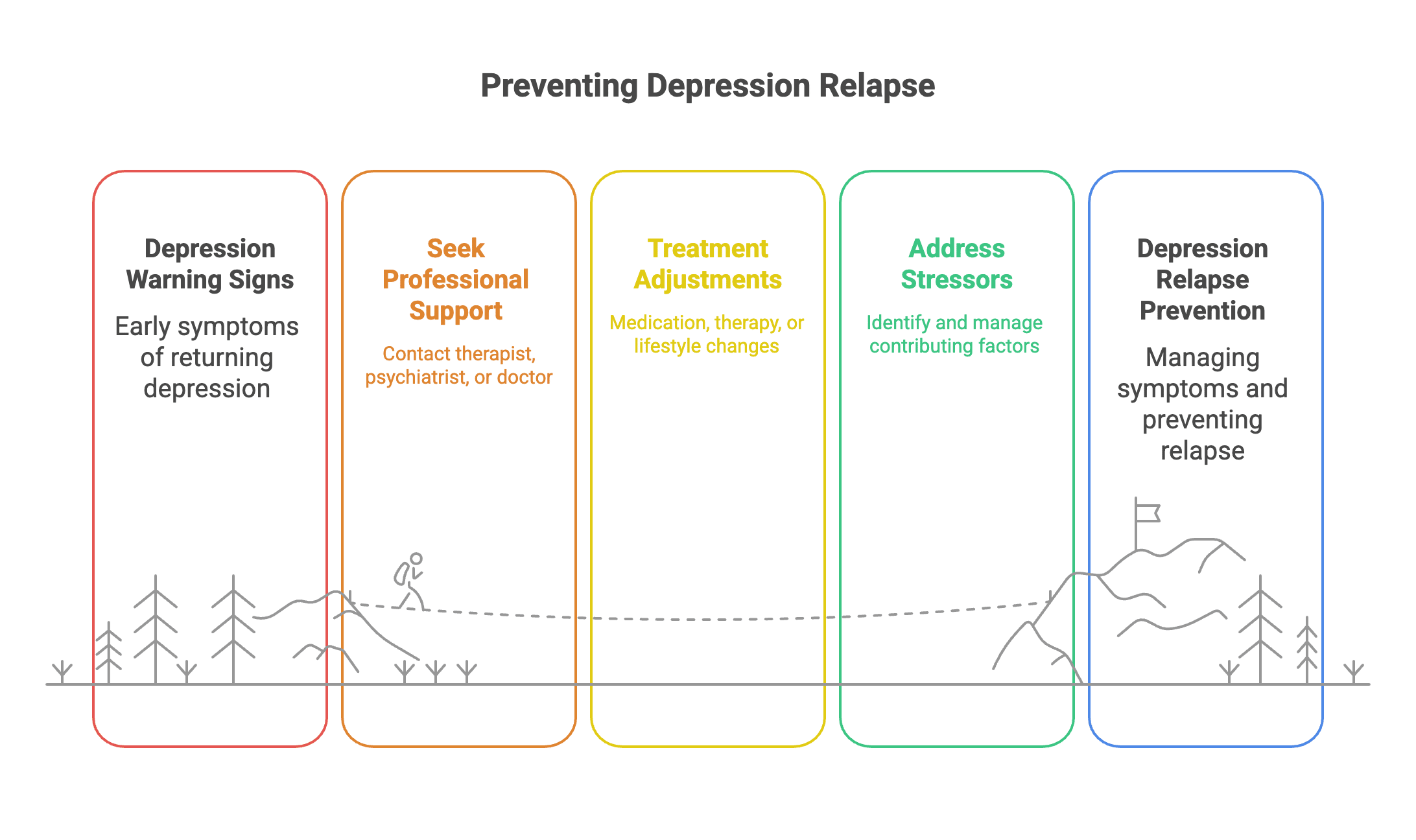
If you recognize early warning signs of depression returning, the most important step is reaching out for professional support as soon as possible. Don’t wait to see if symptoms go away on their own or reach a certain severity. Early intervention gives you the best chance of preventing a full relapse.
Contact your therapist, psychiatrist, or primary care doctor to discuss what you’re experiencing. They can help you determine whether treatment adjustments are needed. This might include:
- Restarting or adjusting antidepressant medication if you’ve tapered off or are on a maintenance dose
- Increasing the frequency of therapy sessions temporarily
- Adding or changing therapeutic approaches, like cognitive behavioral therapy or mindfulness-based cognitive therapy, which teach coping skills and help identify negative thought patterns
- Addressing any stressful life circumstances that may be contributing
- Reviewing your self-care practices and making adjustments to sleep, exercise, and nutrition
- Incorporating stress management techniques like meditation, deep breathing exercises, or yoga
If you also experience anxiety symptoms or have been diagnosed with comorbid anxiety disorders, addressing both conditions together often leads to better outcomes. If you’re having thoughts of self-harm or suicide, get help immediately. Call 988 (the Suicide and Crisis Lifeline) or go to your nearest emergency room.
How Can You Monitor Yourself Effectively?
Developing a regular practice of self-monitoring helps you catch warning signs early. Many mental health professionals recommend using simple tools to track your mood and symptoms over time.
One helpful approach is keeping a brief daily mood log. This doesn’t need to be complicated—just a few sentences about how you’re feeling, your sleep and appetite, and any significant stressors. Over time, patterns become visible that might be hard to see day-to-day.
Standardized questionnaires like the PHQ-9 can also help. This nine-item tool asks about common depressive symptoms and gives you a score you can track over time. Taking it every few weeks and sharing the results with your provider can help both of you spot changes early.
Creating a relapse prevention plan with your therapist is another valuable strategy. This plan identifies your specific warning signs, the actions you’ll take if they appear, and the people you’ll reach out to for support. Having this roadmap in place before you need it makes it easier to take action when you’re not feeling your best.
Who Is at Higher Risk for Depression Recurrence?
Understanding your personal risk factors can help you stay vigilant. People at higher risk for recurrent depression include those who:
- Have experienced multiple previous episodes of depression
- Still have some mild depressive symptoms even after treatment (partial remission)
- Have a family history of depression or other mood disorders
- Experience hormonal shifts, such as during postpartum or menopause
- Have chronic medical conditions or cardiovascular illnesses
- Face ongoing psychosocial stressors or lack adequate social support
- Stopped antidepressant treatment earlier than their provider recommended
If several of these risk factors apply to you, working closely with a mental health professional on a prevention strategy becomes even more important.
Staying Connected to Support
Beyond professional treatment, staying connected to your support system matters. Let trusted friends or family members know what your early warning signs look like and ask them to gently point out changes they notice. Sometimes an outside perspective helps you recognize patterns you might miss.
Support groups—whether in-person or online—can also provide valuable spaces to share experiences with others who understand the challenge of managing recurrent depression. Hearing how others handle warning signs and prevent relapse can give you new strategies to try. Organizations like the National Alliance on Mental Illness (NAMI) offer resources and support for people managing mental health conditions.
Getting Support in DC
If you’re concerned about depression returning or you’re noticing early warning signs, the therapists at Therapy Group of DC in Dupont Circle are here to help. We work with clients to develop personalized strategies for recognizing and responding to depression recurrence. Schedule an appointment to get the support you need.
Frequently Asked Questions About Depression Recurrence
What’s the difference between relapse and recurrence in major depressive disorder?
Relapse means symptoms return shortly after you start feeling better, usually within a few months. Recurrence means depression comes back after you’ve been well for a longer period—typically six months or more. Both describe the challenge of managing major depression, but the timing is different. The important thing to know is that both are common, and both respond well to treatment adjustments.
How do treatment guidelines recommend managing the risk of depression recurrence?
Treatment guidelines emphasize continuing care after you feel better. The VA/DoD guidelines recommend maintenance therapy, which means staying on antidepressant medication for at least 6-12 months after recovery, and continuing with psychological therapies like cognitive behavioral therapy or interpersonal therapy. This ongoing treatment significantly reduces your recurrence risk and helps you stay well longer.
Can stopping antidepressant medication increase the risk of depression relapse?
Yes, stopping medication too soon is one of the biggest risk factors for relapse. Research shows that continuing antidepressant treatment after you feel better reduces relapse risk from about 41% to just 12%. Treatment discontinuation without talking to your doctor first puts you at higher risk for recurrent major depressive episodes. Always work with your provider to make a plan before stopping medication.
Are there clinical predictors that help identify who’s at higher risk for recurrent major depressive disorder?
Yes, certain factors indicate higher recurrence risk. According to clinical research, people at higher risk include those who have had multiple prior episodes of depression, still have some mild symptoms even after treatment (partial remission), or have comorbid disorders like anxiety. Other risk factors include family history of mood disorders, childhood trauma, and ongoing psychosocial stressors. Depression severity during previous episodes also matters—more severe depression tends to have higher recurrence rates.
What role do psychosocial interventions play in preventing depression relapse and recurrence?
Therapy-based approaches are highly effective at preventing recurrence. Studies show that psychological therapies like cognitive behavioral therapy, interpersonal psychotherapy, and mindfulness-based cognitive therapy teach you coping skills and help you identify negative thought patterns before they spiral. These psychosocial interventions work by building your ability to manage stress, improve social support, and catch early warning signs. For many people, combining therapy with medication works better than either approach alone.
How important is early intervention in managing depression symptoms to prevent recurrence?
Early intervention is crucial for preventing a full relapse. When you catch depression symptoms early and reach out for help right away, your treatment team can make adjustments before the episode becomes severe. This might mean temporarily increasing therapy sessions, restarting or adjusting antidepressant medication, or adding new coping strategies. Quick action leads to better clinical outcomes and less disruption to your daily life.
What are the implications of comorbid disorders on depression recurrence risk?
Having other mental health conditions increases your risk for recurrent depression. Comorbid disorders—particularly anxiety disorders—make recurrent major depressive disorder more likely. If you have both depression and anxiety symptoms, it’s important to address both conditions together in treatment. Research suggests that treating comorbid conditions as part of your overall care plan reduces recurrence risk and improves long-term outcomes.
How do clinical trials contribute to understanding and treating depression recurrence?
Controlled trials and systematic reviews help us understand what treatments work best. These clinical studies compare different treatment interventions to see which approaches most effectively reduce recurrence risk in major depressive disorder. The evidence from these trials shapes current treatment guidelines and helps mental health professionals make informed recommendations. This research has shown, for example, that maintenance treatment significantly lowers relapse rates compared to stopping treatment too soon.
Disclaimer: This article is for educational purposes only and is not a substitute for professional medical advice, diagnosis, or treatment. Always seek the advice of your physician or qualified mental health provider with any questions you may have regarding a medical or mental health condition. If you are in crisis or experiencing thoughts of self-harm, please call 988 (Suicide and Crisis Lifeline) or go to your nearest emergency room.