

If you’ve noticed your anxiety ramping up during perimenopause or menopause, you’re not imagining it. Hormonal changes and anxiety are closely linked, especially during the menopause transition. Many women who never struggled with anxiety before find themselves feeling on edge, worried, or panicked during this time. Others who’ve managed anxiety disorders for years discover their symptoms intensifying in ways that feel unfamiliar and overwhelming.
This isn’t just about hot flashes and night sweats. The menopause transition often brings a complex mix of biological shifts and deeper psychological questions about identity, purpose, and what comes next. Understanding both dimensions—how hormones affect mental health and the existential weight of this life passage—can help you make sense of what you’re experiencing and find the right support.
Can Hormone Imbalance Cause Anxiety?
Yes, hormone imbalance can trigger or worsen anxiety symptoms. Research shows that women are particularly vulnerable to anxiety during hormonal transitions, including menopause. Women are at twice the risk for anxiety and depression disorders compared to men, partially due to the influence of fluctuating sex hormones on brain structure and function. The fluctuating and declining sex hormone levels during perimenopause and menopause directly affect how your brain regulates mood and stress responses.
Your endocrine system produces chemical messengers—hormones—that regulate everything from mood to metabolism. When one or more hormones fall out of balance, the effects can ripple through your physical and mental health. Hormonal imbalances can affect neurotransmitters in the brain, disrupt the functioning of the nervous system, and increase stress and anxiety. Not everyone experiences heightened anxiety during menopause, and the severity varies widely. Some women are more sensitive to hormonal fluctuations than others, and factors like sleep disruption, physical symptoms, and stressful life circumstances can compound anxiety symptoms.
Menopause often coincides with other major life transitions—children leaving home, aging parents, career shifts, relationship changes. The anxiety you’re feeling may be hormone-driven, situationally driven, or most likely a combination of both. During perimenopause, irregular periods signal changing hormone levels, and these hormonal changes can trigger increased anxiety even before menstruation stops completely.
Why Does Menopause Trigger Anxiety?
Is Anxiety a Symptom of Low Estrogen?
Declining estrogen levels play a significant role in menopause-related anxiety. These sex hormones influence neurotransmitters like serotonin and GABA, which help regulate mood and anxiety. When hormone levels fluctuate dramatically during perimenopause—sometimes surging, sometimes plummeting—your brain’s emotional regulation system struggles to keep up. Sex differences in how hormones affect the brain help explain why female hormones have such a powerful influence on anxiety levels throughout different life stages.
Women with a history of anxiety disorders often report increased anxiety during hormonal changes at different life stages, including puberty, the menstrual cycle, postpartum, and menopause. The brain responsible for mood regulation becomes more vulnerable when estrogen levels drop. The majority of women experiencing mood disorders report that symptoms fluctuate across their menstrual cycles, commonly worsening in the premenstrual phase.
Premenstrual dysphoric disorder (PMDD) is a severe variant of premenstrual syndrome that manifests during the luteal phase of the menstrual cycle, marked by intense mood disturbances and significantly heightened anxiety. Women with PMDD may be particularly sensitive to hormonal changes during their menstrual cycles. Similarly, postpartum depression can affect up to 19% of individuals during the first year after childbirth, demonstrating how sharp drops in estrogen and progesterone after delivery can trigger significant mood and anxiety symptoms.
Does Taking Progesterone Help with Anxiety?
Progesterone appears to have calming effects on the nervous system. As progesterone levels decline during menopause, some women may lose that natural buffer against stress and anxiety. Meanwhile, erratic estrogen levels can contribute to mood symptoms like irritability, mood swings, and heightened stress response. Estrogen fluctuations can increase vulnerability to anxiety and depression by affecting neuroplasticity in brain regions like the hippocampus, which plays a key role in emotional regulation.
Does High Estrogen Cause Anxiety?
Both low and fluctuating estrogen can contribute to anxiety. During perimenopause, estrogen levels can swing unpredictably rather than declining steadily. These hormone fluctuations may worsen anxiety more than consistently low levels would. Research from the Anxiety and Depression Association indicates that the risk for major depressive disorder is elevated during the perimenopausal transition due to these erratic hormonal fluctuations.
Physical symptoms of menopause can also fuel anxiety. Poor sleep from night sweats, concerns about weight gain or body changes, or worry about cognitive fog all activate your body’s stress response. Over time, persistent stress can affect cortisol and other stress hormones, creating a feedback loop that intensifies both physical and emotional symptoms. Elevated cortisol levels are commonly experienced during periods of heightened anxiety, and chronic stress can disrupt the delicate balance between sex hormones and stress hormones produced by the adrenal glands.
What About Thyroid Hormones?
Thyroid disease and thyroid hormone imbalances become more common during midlife. Thyroid function often shifts during this time, and even subclinical thyroid imbalances can worsen anxiety and depression symptoms. The thyroid gland produces hormones that affect everything from heart rate and blood pressure to mood regulation and anxiety levels. Thyroid disorders can mimic or trigger symptoms of anxiety disorders, and certain hormone imbalances involving thyroid hormones can exacerbate existing mental health conditions.
If your anxiety feels particularly difficult to pin down or manage, it’s worth having your healthcare provider check both sex hormone levels and thyroid hormones. A physical exam and blood work can identify certain hormone imbalances that may be contributing to your symptoms.
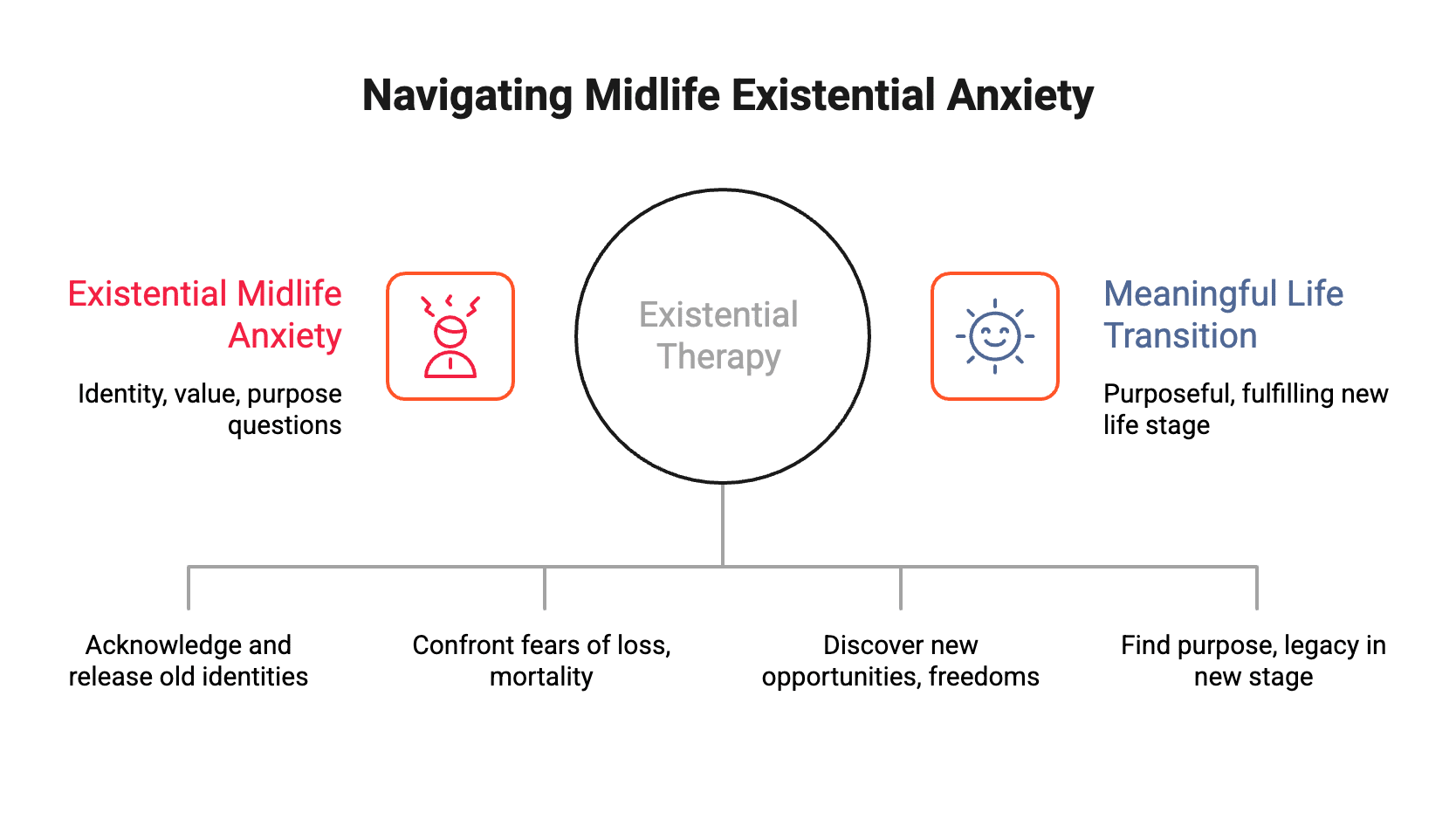
The Deeper Meaning of Midlife Anxiety
Here’s what often goes unspoken: menopause isn’t just a biological event—it’s an existential threshold. For many women, the end of reproductive capacity brings up profound questions about identity, value, and what your life means now.
If you’ve defined yourself partly through motherhood, fertility, or youthfulness, menopause can feel like a loss of identity. The anxiety you’re experiencing may not only be about hormonal imbalance—it may also be about who you are becoming and what your life looks like on the other side of this transition.
This is where depth psychology and existential therapy offer something that biological explanations alone cannot. Anxiety during menopause can be a call to examine:
- What identities am I releasing? Moving beyond reproductive years can feel like losing a fundamental part of who you are, even if you didn’t want more children or never had them.
- What am I afraid of losing? Aging brings mortality into sharper focus. The anxiety may not just be about hot flashes—it may be about time running out or opportunities closing.
- What new possibilities open up? For some women, menopause brings relief and freedom. For others, it’s terrifying not to know what comes next.
- How do I find meaning in this stage of life? Without the framework of caregiving roles or “productive years,” you may be asking deeper questions about purpose and legacy.
This psychological dimension of hormone-related anxiety is real and valid. The existential weight of life transitions can manifest as anxiety disorders, but it can also be a meaningful signal that you’re grappling with important questions about your life.
In our practice, we’ve noticed that anxiety during menopause often serves two purposes. Yes, hormone changes create real shifts in mood and stress response. But this transition also brings up important questions about identity and purpose. The women who do best address both—they manage symptoms with practical tools while also exploring what this life stage means for them.
How Therapy Can Help with Menopause-Related Anxiety
Psychotherapy is one of the most effective approaches for treating anxiety, whether it’s driven by hormonal changes, life circumstances, or both. Cognitive behavioral therapy has strong evidence for treating anxiety disorders and can be particularly helpful for hormone-related anxiety.
CBT works by helping you identify thought patterns that fuel anxiety and replace them with more balanced, realistic perspectives. CBT can help identify the sources of anxiety—whether hormonal, situational, or both—and develop coping skills to manage symptoms effectively. During menopause, this might look like:
- Recognizing catastrophic thinking about physical symptoms
- Challenging beliefs that anxiety means something is seriously wrong
- Building tolerance for uncertainty and change
- Developing practical coping skills for managing panic attacks or racing thoughts
CBT is typically short-term—around 8 to 20 sessions—and teaches concrete strategies you can use independently. It’s also available in both in-person and online formats.
Mindfulness and Stress Reduction
Mindfulness-based stress reduction has shown effectiveness for women experiencing anxiety during the menopause transition. MBSR teaches you to observe anxious thoughts and physical sensations without judgment, reducing their power over you.
Relaxation techniques—deep breathing, progressive muscle relaxation, meditation—can help regulate your nervous system and lower stress hormones. These practices don’t eliminate anxiety, but they give you tools to ride out anxious moments without escalating them.
Depth Work for Existential Anxiety
If your anxiety feels connected to deeper questions about identity and meaning, depth-oriented therapy can be invaluable. This approach:
- Creates space to grieve what’s ending without rushing to fix or reframe it
- Explores the symbolic meaning of menopause as a life passage, not just a medical condition
- Helps you construct new narratives about who you are beyond reproductive capacity
- Supports you in finding purpose and vitality in midlife and beyond
Depth work acknowledges that not all anxiety needs to be eliminated. Sometimes anxiety is a signal that you’re at a crossroads, and the work is to listen to what it’s telling you about what matters most.
We see this pattern often: combining practical strategies with deeper exploration works best. When we address symptoms and meaning together, many women find this transition becomes an opportunity for real growth, not just something to get through.
Lifestyle Changes That Support Hormonal Health
While therapy addresses the mental health aspects of menopause-related anxiety, lifestyle changes can support balanced hormones and reduce anxiety symptoms:
Regular exercise helps lower stress levels and can ease both anxiety and depression. Physical activity reduces cortisol and adrenaline levels while releasing endorphins, which are natural mood elevators that improve both physical and emotional health. Exercise also supports balanced hormones by helping regulate the endocrine system and improving blood flow throughout the body.
A healthy diet rich in fiber-rich foods, omega-3 fatty acids, and fermented foods may help stabilize hormones and reduce inflammation. What you eat directly affects hormone production, including both sex hormones and stress hormones. Dietary adjustments that include nutrient-dense foods can help reduce levels of stress and anxiety while supporting overall hormonal health.
Sleep hygiene is crucial when dealing with hormonal imbalances. Even when night sweats disrupt sleep, establishing consistent sleep routines can help stabilize hormone levels and improve anxiety symptoms. Poor sleep can worsen hormonal imbalances by affecting cortisol levels and disrupting the body’s natural hormone production cycles.
Stress management practices like yoga, meditation, or time in nature can help regulate the adrenal glands, which produce stress hormones that interact with sex hormones.
When to Seek Support
If anxiety is interfering with your daily life, relationships, or ability to function, it’s time to reach out. Effective treatments are available, and you don’t have to manage this alone.
Consider talking to a mental health professional if you’re experiencing:
- Persistent worry or racing thoughts that won’t quiet down
- Physical symptoms like heart palpitations, shortness of breath, or dizziness
- Avoidance of situations or activities because of anxiety
- Sleep problems beyond typical menopause-related night sweats
- Panic attacks or sudden intense fear that can accompany hormonal imbalances
- Anxiety that’s worsening over time rather than stabilizing
- More severe symptoms that affect your quality of life, relationships, or work performance
- Depression symptoms alongside anxiety, which commonly co-occur during hormonal transitions
It’s also worth seeing your healthcare provider to rule out or address other hormone imbalances, particularly thyroid disease, that can compound anxiety and depression. A healthcare provider can perform a physical exam and check sex hormone levels, thyroid hormones, and cortisol levels to identify any hormonal imbalances contributing to your symptoms. Sometimes a collaborative approach—therapy for the psychological aspects, medical treatment for hormone levels, and potentially hormone replacement therapy if appropriate—provides the most comprehensive relief. Treating anxiety related to hormonal imbalances often requires addressing both the physical health and mental health dimensions of the condition.
Women in Washington, DC dealing with anxiety during menopause have access to mental health resources and support throughout the area. If you’re looking for therapy that addresses both the biological and psychological dimensions of this transition, the therapists at Therapy Group of DC in Dupont Circle are here to help. Schedule an appointment to explore how therapy can help you feel more grounded during this time.
Disclaimer: This article is for educational purposes only and is not a substitute for professional medical advice, diagnosis, or treatment. Always seek the advice of your physician or qualified mental health provider with any questions you may have regarding a medical or mental health condition. If you are in crisis or experiencing thoughts of self-harm, please call 988 (Suicide and Crisis Lifeline) or go to your nearest emergency room.