

Have you ever felt blindsided when someone suddenly shares intense, personal experiences without warning? Trauma dumping is sharing traumatic experiences or distressing emotions in an overwhelming, one-sided way—often without considering the listener’s capacity to handle such heavy content. Unlike healthy venting or seeking emotional support, trauma dumping happens without consent, disregards boundaries, and can leave both people feeling worse. Emotional dysregulation—difficulty managing intense feelings, which often goes along with a history of trauma—may help drive this pattern of oversharing.
This behavior affects relationships, mental health, and emotional well being for everyone involved. Understanding what trauma dumping is, why it happens, and how it differs from healthy communication can help you recognize the pattern and find better ways to process difficult emotions.
What is trauma dumping?
Trauma dumping happens when someone shares graphic details or intense emotional content without checking if the listener is ready to receive that information. It’s characterized by unfiltered, prolonged sharing that disregards the emotional capacity of the person on the receiving end. People who trauma dump may share disturbing content repeatedly, often in inappropriate settings like casual social gatherings, work environments, or on social media platforms.
The key difference lies in consent and consideration. When you trauma dump, you’re not asking “Is now a good time?” or “Are you okay hearing about this?” Instead, you’re unloading pent up emotions without regard for how it affects the listener. Establishing mutual understanding and consent in conversations reduces the chances of trauma dumping and helps maintain healthier connections. This type of sharing can happen with friends and family, coworkers, or even strangers online.
Emotional dysregulation—trouble managing how intense your feelings get—often sits underneath this behavior. It is common after trauma: in a study of 783 adults with high rates of trauma exposure, those who struggled most to regulate their emotions also reported more anxiety, depression, and PTSD symptoms. After experiencing childhood trauma, past trauma, or a recent traumatic event, some individuals struggle to manage the intensity of their feelings. Rather than developing effective coping skills or seeking professional help, they rely on others as an emotional release valve—which quickly becomes overwhelming.
Common trauma dumping examples
Trauma dumping takes many forms:
- Cornering someone at a party to share graphic details about painful experiences without warning
- Sending long, distressing messages late at night detailing traumatic experiences
- Posting lengthy social media content describing traumatic events in explicit detail, fishing for sympathy from social media followers
- Repeatedly discussing personal trauma during work meetings or lunch breaks
- Dominating friendships with heavy topics, never reciprocating support or checking on the other person’s well being
Why do I emotionally dump on people?
People trauma dump primarily because they haven’t developed effective coping mechanisms to process trauma on their own. Emotional dysregulation makes it difficult to control intense feelings, especially after experiencing trauma. When you’re flooded with negative emotions and lack the tools to manage them, sharing becomes a way to seek temporary relief from the emotional burden.
Several factors drive this pattern. You might be seeking validation, wanting others to acknowledge your pain and confirm that what happened was significant. Some people trauma dump because they’re desperate for connection, hoping that sharing their deepest wounds will create intimacy or make them feel less alone. Many individuals don’t realize the emotional toll their trauma dumping takes on others—they simply feel an urgent need to release the pressure of unprocessed trauma.
Social media has amplified trauma dumping behavior. The ability to share your story publicly, without seeing the immediate impact on readers, encourages oversharing. You might post about traumatic events seeking emotional support, but without the social cues that would normally help you gauge when you’ve shared too much.
In our practice, we often see clients who’ve relied on friends as their main support for years without realizing the toll it’s taken on relationships. When someone hasn’t learned to process trauma through therapy, they naturally turn to whoever is available. Learning to recognize when you need professional support rather than another late-night conversation is a crucial healing step.
The role of unprocessed trauma
When you experience a traumatic event and don’t adequately work through it with a mental health professional, that unprocessed trauma doesn’t disappear. It builds up, creating pressure that seeks release. Trauma dumping becomes a maladaptive coping mechanism, a way to temporarily reduce stress without actually healing.
People who’ve experienced significant trauma often struggle with emotion regulation, making it harder to know when and how much to share. Without trauma informed care or guidance from mental health professionals, you might not realize that your way of sharing is pushing people away rather than bringing them closer. Practicing mindfulness can help manage the urge to trauma dump on others by creating space between your emotions and your impulse to share.
How to respond when someone is trauma dumping?
If someone’s trauma dumping on you, setting healthy boundaries protects your own mental health while still showing compassion. You’re not responsible for carrying someone else’s trauma, and it’s okay to say so. The person on the receiving end of trauma dumping often feels overwhelmed, trapped, or guilty for wanting to step back—but setting appropriate boundaries is necessary for both people.
Start by being honest in the moment. You might say:
- “I care about you, but this topic is really heavy for me right now. Can we talk about something else?”
- “I’m not the right person to help with this—have you considered talking to a therapist?”
These responses acknowledge the person’s pain without taking on more than you can handle.
If someone trauma dumps on social media, you don’t owe them engagement. You can unfollow, mute, or simply scroll past without commenting. Responding to every distressing post can reinforce the behavior and drain your emotional resources.
Protecting yourself from secondary trauma
Listening to repeated, graphic descriptions of traumatic events can lead to secondary trauma—a trauma response where you develop your own symptoms from prolonged exposure to someone else’s distress. Hearing about other people’s trauma can take a toll, too: research on child and elder protective service workers links this “secondary traumatic stress” to unhealthy ways of coping, such as denial and substance use. Experiencing secondary trauma can include feelings of fear, irritability, and difficulties with sleep that persist even when you’re not in contact with the person.
To reduce the risk of secondary trauma:
- Limit time spent in these conversations
- Don’t feel obligated to listen to every graphic detail
- Seek professional support yourself if you’re regularly receiving trauma dumps
- Practice self-care and prioritize your emotional well-being
- Recognize that stepping back doesn’t make you uncaring
You can feel compassion for someone’s struggles while still protecting your mental health. Setting boundaries isn’t about abandoning someone—it’s about ensuring you don’t become overwhelmed by someone else’s trauma to the point where you can’t function.
We regularly work with people who’ve absorbed so much from others’ trauma dumping that they develop anxiety and sleep problems. Often the turning point is realizing that setting limits is necessary, not selfish. You can’t pour from an empty cup.
What is the red flag trauma dumping?
Red flag trauma dumping involves manipulative behaviors, repeated boundary violations, or using oversharing to control or burden others. Not all trauma dumping is intentionally harmful, but certain patterns indicate a deeper problem that goes beyond someone struggling to cope.
Watch for these warning signs. The person never asks if you’re okay to listen—they just launch into graphic details regardless of the setting. They ignore your discomfort or requests to change the subject. After trauma dumping, they might dismiss your feelings with comments like “At least your problems aren’t as bad as mine” or use their trauma as an excuse for treating you poorly.
Another red flag is when trauma dumps feel performative, especially on social media. The person shares distressing content frequently, often with dramatic language designed to solicit sympathy or attention. They may trauma dump as a way to avoid accountability, using their past trauma as justification for present harmful behavior.
The most concerning red flag is when trauma dumping becomes a form of emotional manipulation. Some people use detailed accounts of their traumatic experiences to make you feel guilty for setting boundaries, to control your behavior, or to keep you emotionally tethered to them. This crosses from poor coping into abusive territory.
When trauma dumping damages relationships
Trauma dumping vs healthy venting becomes clear when you examine the impact on relationships. Healthy venting strengthens bonds through mutual support and reciprocal sharing. Trauma dumping erodes relationships because it’s one-sided, overwhelming, and often leaves the listener feeling used rather than valued.
The person doing the dumping might not provide support in return, creating an unbalanced and one-sided relationship where emotional energy only flows one direction. If you notice that people are avoiding you, conversations always center on your pain, or friends have started creating distance, these may be signs that trauma dumping is pushing people away. The emotional burden becomes too heavy for friends and family to carry long-term, especially without the tools that trained therapists have.
Finding healthy ways to process trauma
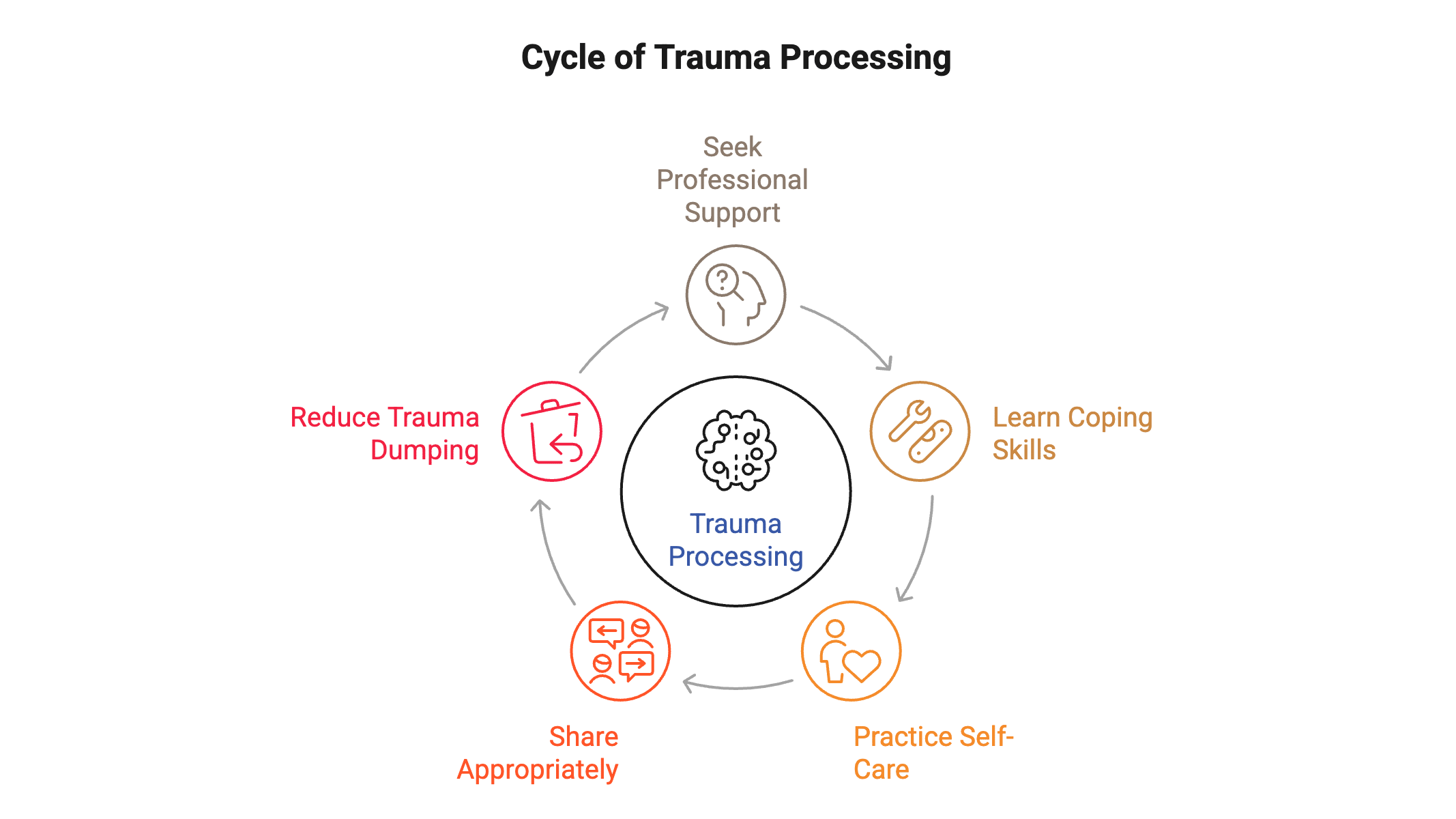
Seeking support from mental health professionals gives you a safe and supportive space specifically designed for processing trauma. Therapists are trained to handle the intensity of traumatic experiences without becoming overwhelmed themselves. They can teach you effective coping skills, help you develop better emotion regulation, and provide trauma focused therapy approaches that actually heal rather than just venting.
Mental health professionals understand how to address trauma dumping patterns by helping you recognize when you’re about to overshare, identify what triggers the urge, and develop healthier ways to cope. Group therapy and support groups also offer appropriate settings where sharing difficult experiences is expected and everyone has consented to being there.
Consider these healthy alternatives:
- Journaling to process your own emotions privately before sharing with others
- Exercise, meditation, or other self care practices to manage stress and regulate emotions
- Asking permission before sharing heavy topics: “I’m going through something difficult—do you have capacity to talk about it?”
- Therapy or counseling as your primary outlet for processing trauma
- Support groups designed specifically for people with similar traumatic experiences
Research on survivors of childhood abuse points to emotion regulation as a worthwhile focus in recovery, and building those skills with professional help can ease the urge to trauma dump. When you learn to sit with uncomfortable feelings, practice mindfulness, and use healthy coping mechanisms, you don’t feel the same desperate need to unload on others.
We encourage clients to think of support in tiers. A trained therapist handles the full weight of traumatic experiences—that’s tier one. Friends and family offer day-to-day emotional support after you’ve processed trauma with a professional—tier two. Acquaintances and social media are for lighter connection. When you push tier-one material onto tier-two people, relationships suffer.
Healing from past trauma takes time and intentional work with mental health professionals. While it’s natural to want support from friends and family, relying on them as your sole outlet for traumatic experiences isn’t fair to them and won’t give you the help you truly need.
Getting help for trauma dumping
If you’re recognizing patterns of trauma dumping in yourself or feeling overwhelmed by someone else’s repeated oversharing, professional support can help. Our therapists in Dupont Circle understand how trauma affects relationships and can help you develop healthier ways to connect with others. Learn strategies to heal from toxic relationships to start building the coping skills you need. Schedule an appointment.
Disclaimer: This article is for informational and educational purposes only and is not a substitute for professional medical or mental health advice, diagnosis, or treatment. Always seek the guidance of a qualified healthcare provider with any questions you may have regarding your mental health or a medical condition. If you are experiencing a mental health crisis, please call 988 (Suicide and Crisis Lifeline) or go to your nearest emergency room.