

Have you ever felt confused, exhausted, or like you’re “going crazy” in a relationship with someone who seems humble or victimized on the surface? A covert narcissist is someone who displays narcissistic traits in subtle, indirect ways—appearing self-effacing or vulnerable while still seeking admiration, lacking empathy, and manipulating others for their own needs. Unlike overt narcissists who are openly grandiose, covert narcissists use passive aggressive behavior, victim mentality, and emotional manipulation to maintain a sense of self importance while avoiding direct confrontation. Research describes covert (or vulnerable) narcissism and grandiose narcissism as two sides of the same coin: the same core traits, expressed through softer tactics.
Covert narcissists tend to be harder to identify than their overt counterparts, often appearing introverted, anxious, or self-critical. This leaves partners and family members feeling confused about what’s really happening in the relationship. Covert narcissism can be just as destructive as overt narcissism, despite the less obvious presentation.
What is a covert narcissist behavior?
Covert narcissist behavior involves indirect manipulation tactics rather than obvious self-centeredness. While overt narcissists openly demand attention, covert narcissists use subtle methods to get their narcissistic supply—the validation they crave.
Common covert narcissism traits include:
- Passive aggression: Silent treatment, “forgetting” commitments, or making subtle digs disguised as jokes
- Victim mentality: Constantly positioning themselves as wronged, overlooked, or treated unfairly to gain sympathy and avoid accountability
- Poor empathy: Struggling to truly connect emotionally with what others are going through
- Hidden envy: Covert narcissists often experience envy towards others’ success while dismissing their achievements through subtle criticism
- Self-deprecation as manipulation: Using false humility to fish for reassurance, creating situations where others must constantly validate them
A covert narcissist displays traits subtly while harboring feelings of superiority beneath a less obvious image. Covert narcissists frequently express feelings of being unappreciated and misunderstood, positioning themselves as perpetual victims. When validation doesn’t come, they respond with passive aggression or withdrawal, creating confusion in relationships.
The sob story becomes a tool: covert narcissists may share elaborate narratives about how they’ve been wronged, using these tales to gain emotional support while rarely providing the same in return. This self-effacing presentation allows them to maintain their internal sense of superiority while appearing humble to the world.
In our practice, we often see clients struggling to name what feels wrong in these relationships. The covert narcissist’s ability to appear vulnerable makes it difficult to recognize the underlying manipulation. Clients frequently describe walking on eggshells, constantly managing the other person’s fragile ego while their own needs go unmet.
What childhood trauma causes covert narcissism?
Childhood experiences play a significant role in developing covert narcissism, though not everyone with difficult childhoods develops narcissistic traits. Research suggests both parental coldness and excessive parental admiration are linked to narcissistic traits in adulthood.
Children who develop vulnerable narcissism may have experienced:
- Emotional neglect or having their feelings consistently dismissed
- Conditional love based only on achievements or meeting parents’ expectations
- Overpraise without genuine emotional connection—being told they were special but not feeling truly seen
- Growing up with a narcissistic parent and learning these manipulation patterns
- Trauma or instability that disrupted their sense of safety and self worth
These childhood experiences create fragile self importance—an inflated but unstable self-image requiring constant external validation. Unlike overt narcissism, which may stem from excessive indulgence, vulnerable narcissism often develops from this mix of neglect and conditional regard. The child learns that direct demands for attention are unsafe, so they develop indirect methods—sob stories, self-deprecation, and passive manipulation—to get their needs met.
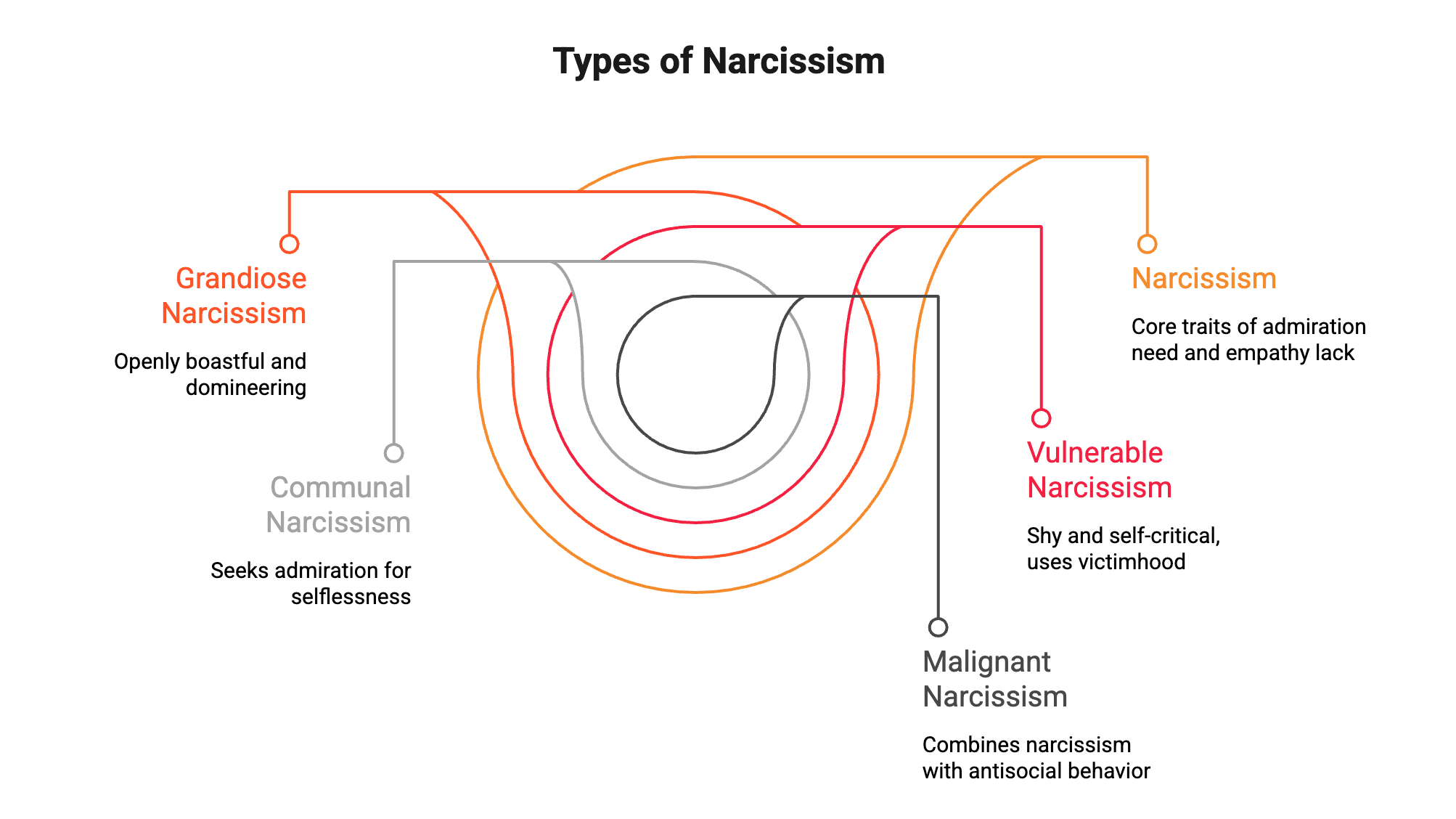
What are the 5 types of narcissism?
Narcissism exists on a spectrum with several distinct presentations sharing common narcissistic traits like need for admiration, lack of empathy, and sense of entitlement.
Grandiose (Overt) Narcissism: Openly boastful, domineering, and self-centered. An overt narcissist demands special treatment, dominates conversations, and responds to criticism with visible anger or contempt. Overt narcissism is the classic presentation most people recognize.
Vulnerable (Covert) Narcissism: Covert narcissistic behavior involves the same underlying traits expressed through subtle methods. Covert narcissists appear shy or self-critical, are hypersensitive to criticism, and use victimhood to achieve the same goals as overt narcissists—like wolves in sheep’s clothing. Despite appearing humble, they maintain the same self absorption and lack of empathy.
Communal Narcissism: These individuals derive their sense of superiority from being seen as exceptionally helpful or caring, seeking admiration for selflessness while often neglecting those close to them.
Malignant Narcissism: This severe form of personality disorder combines narcissistic traits with antisocial behavior and aggression, sometimes involving pleasure in causing others distress.
Self-Righteous Narcissism: Uses moral or ideological positions to maintain superiority, judging others harshly through their ethical framework while positioning themselves as more enlightened.
While narcissism exists along dimensions, understanding these types clarifies how covert narcissism fits the broader picture. Many people with narcissistic behavior show characteristics from multiple types in different contexts.
What can covert narcissism be mistaken for?
Covert narcissism is frequently misidentified because symptoms overlap with other mental health challenges, making these individuals harder to identify initially.
Depression and Anxiety: Covert narcissists may struggle with anxiety and depression, displaying social withdrawal, self-critical statements, and emotional sensitivity. The key difference: people with genuine depression or anxiety care how their struggles affect others and take responsibility for harm caused. Covert narcissists use their apparent mental health struggles as shields against accountability without reciprocating care or making meaningful changes.
Introversion or Shyness: Because covert narcissists tend to be introverted, they appear simply shy or withdrawn. However, genuine introverts form deep, reciprocal relationships and show authentic empathy. Covert narcissists withdraw as control or punishment and struggle with the emotional give-and-take of healthy relationships.
Low Self-Esteem: The self-deprecating comments look like genuine low self esteem, but there’s a fundamental difference. Low self esteem involves genuinely doubting your worth and abilities. Covert narcissism involves fragile self importance—an inflated self-image requiring endless external validation to maintain. Someone with actual low self esteem responds to support by building confidence over time. A covert narcissist’s need for reassurance is bottomless—no amount of support ever seems enough, and they may resent others for not recognizing their specialness without being told.
Understanding what covert narcissism can be mistaken for matters because these individuals often use the language of mental health to avoid accountability, claiming behavior stems from anxiety or past trauma while refusing to do the actual work of addressing these issues in a healthy way.
Common Signs You’re Dealing With a Covert Narcissist
Recognizing covert narcissism requires paying attention to patterns rather than isolated incidents. Key red flags include:
Hypersensitivity to Criticism: Covert narcissists exhibit extreme hypersensitivity to criticism—even gentle feedback triggers intense reactions. They struggle to handle criticism in any form, often withdrawing completely, becoming defensive, or sulking to make you feel guilty. This creates an environment where you learn to walk on eggshells, carefully managing what you say to avoid triggering their emotional reaction.
Emotional Manipulation Tactics: Covert narcissists often understand a situation logically but struggle to connect with how others feel. Emotional manipulation tactics employed by covert narcissists include guilt-tripping and gaslighting—denying your reality and making you question your own perceptions. They also use blame shifting, refusing to acknowledge their role in conflicts. This manipulative behavior creates what’s sometimes called “crazy making”—creating confusion where you constantly doubt your sense of reality.
Lack of Emotional Responsiveness: Covert narcissists lack emotional responsiveness to their partners, expecting constant emotional support while failing to provide the same in return. Your own feelings and own needs consistently take a back seat to theirs. Relationships with covert narcissists often lack reciprocity and partnership, feeling one-sided and exhausting. When you try to establish more balance, they may accuse you of being selfish.
Maintaining Different Images: Covert narcissists often fail to acknowledge their problematic behavior or its effects on others. A covert narcissist might maintain a different public image from their private behavior, making it difficult for victims to seek support. When you try explaining the relationship dynamics to others, their humble public persona doesn’t match your private experience of narcissistic abuse. Friends and family may not believe you or suggest you’re overreacting.
False Promises and Avoidance: When confronted, covert narcissists may make false promises about changing or seeking help. They might agree to therapy but resist genuine accountability, using their mental health struggles to excuse narcissistic behavior without doing the actual work to address it in a healthy way.
Washington, DC’s focus on reputation creates ideal conditions for covert narcissists to thrive. They maintain impeccable professional personas while being emotionally manipulative in private. Partners often think, “They’re just stressed from work—maybe I’m expecting too much.” The city’s emphasis on discretion makes seeking support even harder when someone’s public image appears sterling.
How Covert Narcissists Differ From Overt Narcissists
While overt and covert narcissism share the same core traits—lack of empathy, need for admiration, sense of entitlement, and self absorption—they express these traits through starkly different behavioral patterns.
Overt narcissists use direct tactics to get attention and admiration. They openly demand special treatment, react to criticism with visible anger, boast about achievements, and dominate social situations. Their expectations and needs are clear.
Covert narcissists achieve the same goals through softer tactics that are harder to identify. They use victim narratives to gain sympathy, react to criticism by withdrawing or appearing wounded, downplay achievements while expecting others to recognize them anyway, and avoid the social spotlight but resent when others receive attention. They create confusion about their needs and expectations rather than stating them directly.
Clinical writing on covert narcissism describes these individuals as having the same sense of entitlement and grandiosity as overt narcissists, but expressing it through passive means. The common thread: whether overt or covert, narcissists struggle to see others as separate people with valid feelings, needs, and worth. Both types view relationships primarily through the lens of “what can this person do for me?”
Both presentations of narcissism can be equally destructive to romantic relationships and cause significant harm to family members. Covert narcissism can actually be more damaging because the subtle nature of the manipulation makes it harder to identify, name, and address. You might spend years feeling like something is wrong without being able to articulate what it is.
Setting Healthy Boundaries and Seeking Support
Setting healthy boundaries is crucial when dealing with covert narcissists to protect your own sense of self and mental health. This involves recognizing when someone crosses your boundaries and maintaining them despite guilt trips, passive aggressive responses, or sob stories designed to make you back down.
Practice setting boundaries that protect your emotional well being. This means learning to recognize manipulative behavior as it happens and developing strategies to maintain your boundaries even when faced with the silent treatment or attempts to make you feel like the problem. You’re not responsible for managing another person’s fragile ego at the expense of your own needs.
Coping with a covert narcissist often requires maintaining a realistic view of the relationship and the person’s capacity for genuine change. Many people on the receiving end of covert narcissistic abuse spend years hoping the person will realize how their behavior affects others and choose to change. Understanding that this rarely happens without intensive professional help can be painful but necessary for making informed decisions about your life.
Reaching out to a qualified mental health professional can provide essential support for those dealing with covert narcissists. Therapy can help you understand patterns, rebuild your sense of self worth after covert narcissistic abuse, and develop healthier ways of relating to yourself and others. Professional support also addresses anxiety, depression, chronic guilt, and trauma symptoms that often result from these relationships.
Partners of covert narcissists may experience emotional confusion, anxiety, chronic guilt, loss of identity, and isolating behavior. A mental health professional can help validate your experience, countering the gaslighting that characterizes these relationships, and support you whether you’re deciding to stay with firmer boundaries or to leave.
Understanding covert narcissism helps make sense of confusing relationship dynamics and validates your experience. Whether you’re currently in such a relationship, healing from one, or trying to support a family member in this situation, recognizing the patterns is the first step toward protecting yourself and making informed decisions.
Get Support From DC Therapists Who Understand
Our team at Therapy Group of DC specializes in helping individuals recognize unhealthy relationship patterns, practice setting boundaries with covert narcissists, and rebuild their sense of self after narcissistic abuse. We understand both the clinical aspects of narcissistic personality disorder and the unique pressures of DC’s high-achieving environment where these dynamics often thrive unchecked. You don’t have to navigate this alone. Schedule an appointment today to start your journey toward healthier relationships.
Disclaimer: This article is for informational and educational purposes only and is not a substitute for professional medical or mental health advice, diagnosis, or treatment. Always seek the guidance of a qualified healthcare provider with any questions you may have regarding your mental health or a medical condition. If you are experiencing a mental health crisis, please call 988 (Suicide and Crisis Lifeline) or go to your nearest emergency room.