

Being in a relationship brings joy, but it also comes with challenges—especially when you’re navigating unique pressures that many same sex couples face. LGBTQ couples therapy strengthens relationships through five key approaches: better communication, processing discrimination stress, deepening intimacy, working through internalized prejudices, and creating shared goals. Research shows that culturally adapted couples therapy improves relationship satisfaction and communication for LGBTQ couples.
Whether you’re dealing with family acceptance issues, identity conflicts, or want to improve how you connect with your partner, therapy offers a safe space designed for your experiences. Here are five concrete ways couples counseling can transform your relationship.
1. Building Stronger Communication Skills
Communication forms the foundation of healthy relationships, but many LGBTQ couples struggle to express feelings and needs clearly—especially when external stressors create tension. Couples therapy teaches practical techniques to share what you’re experiencing without blame or defensiveness.
In counseling sessions, therapists create a non-judgmental environment where you practice active listening and expressing emotions constructively. You’ll learn to spot patterns that create conflict:
- Withdrawing when stressed instead of voicing concerns
- Making assumptions about your partner’s thoughts or feelings
- Escalating disagreements before addressing core issues
Cognitive-behavioral approaches help couples modify negative thought patterns that fuel arguments and replace them with healthier ways of connecting. Therapists help you express feelings related to your sexual orientation and gender identity in ways your partner can truly hear.
These skills extend beyond the therapy room. As you apply what you learn in daily life, conversations become easier. You’ll resolve disagreements more quickly and express appreciation more naturally.
In our practice, we work with LGBTQ couples in all their diversity—gay, lesbian, bisexual, transgender, non-binary, and queer partners. We often see couples discover their communication breakdown isn’t about the surface issue—it’s about feeling unheard on deeper concerns around identity or acceptance. Once partners learn to name these underlying feelings and respond with empathy, conflicts that seemed impossible to resolve often shift dramatically.
2. Processing Minority Stress and Societal Pressures
Living as an LGBTQ couple means dealing with societal pressures that straight couples don’t face. Discrimination, microaggressions, and the constant awareness of being “different” create minority stress—chronic stress from being part of a marginalized group. Many LGBTQ individuals report higher stress levels due to societal and familial expectations related to their identity.
This stress directly impacts your relationship. When you’re exhausted from navigating a world that doesn’t always affirm your partnership, it’s harder to show up fully for each other. The emotional toll can trigger feelings of anger, shame, and fear that strain even strong connections. Couples counseling provides a safe environment to acknowledge these external pressures and develop coping strategies together.
LGBTQ-affirmative therapy validates your experiences while teaching you to separate relationship problems from outside stress. Therapists trained in working with the LGBTQ community recognize how individual mental health and relationship dynamics connect, helping you build resilience as a couple.
You’ll learn to support each other through difficult moments—dealing with unsupportive families, workplace discrimination, or the daily weight of existing in spaces that aren’t always welcoming. Community support and acceptance play a significant role in mental health, and therapy helps you strengthen both your internal partnership and external support networks.
3. Deepening Emotional Intimacy and Trust
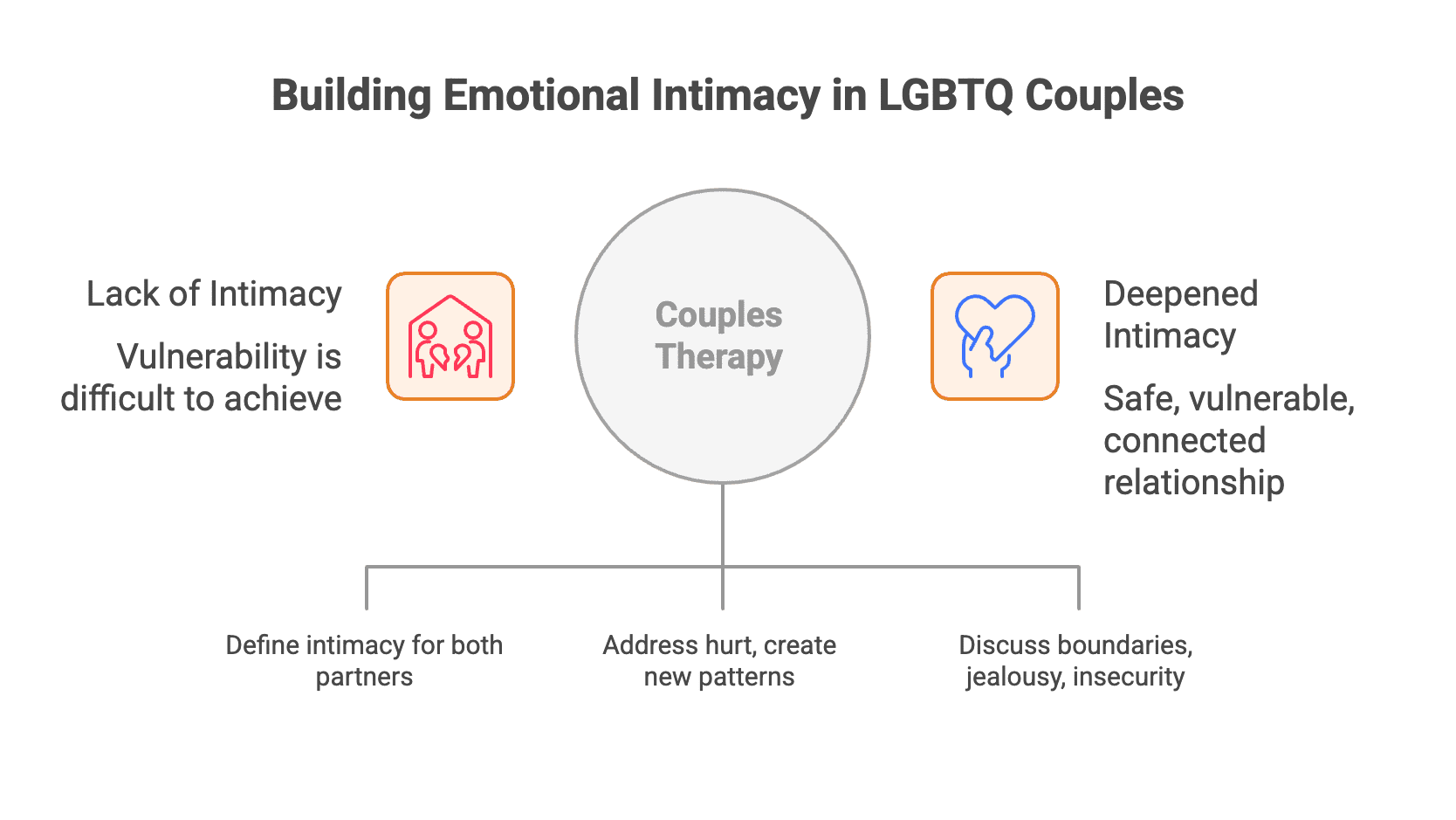
Emotional intimacy means feeling safe enough to be vulnerable—to share fears, dreams, and parts of yourself you don’t show the world. For many LGBTQ couples, building intimacy requires working through layers of self-protection developed over years of hiding or minimizing identity.
Couples therapy creates space to explore what true intimacy looks like for you both, especially when balancing individual identities within your partnership. Emotionally Focused Therapy, adapted for LGBTQ couples, helps partners understand emotional needs and attachment patterns. The therapy process emphasizes self-acceptance and emotional well-being as foundations for a deeper connection.
Rebuilding Trust After Rupture
Sometimes intimacy breaks down after betrayal or major conflict. Gay couples counseling helps you rebuild trust by addressing the underlying hurt and creating new patterns of reliability. Therapists guide you through honest conversations about what happened and what each person needs to feel safe again.
Addressing Open Relationship Dynamics
For couples navigating open relationships or non-traditional structures, therapy provides a framework for discussing boundaries, jealousy, and insecurity without judgment. Many LGBTQ couples benefit from having a neutral space to negotiate what works for their unique relationship configuration.
We regularly work with couples exploring different relationship structures, and what we’ve learned is that emotional intimacy doesn’t look the same for every couple—and that’s okay. Some partners thrive with high interdependence while others need more autonomy. Therapy helps you figure out what intimacy means for your relationship specifically, not what society tells you it should be.
4. Working Through Internalized Homophobia and Transphobia
Even in affirming environments, many LGBTQ individuals carry internalized prejudices absorbed from growing up in a heteronormative society. These unconscious beliefs can show up in relationships as shame around sexual orientation or gender identity, difficulty accepting affection in public, or negative self-talk that affects self acceptance.
Couples therapy helps you recognize how internalized homophobia and transphobia impact relationship dynamics, often in subtle ways you haven’t noticed. Many LGBTQ clients seek therapy specifically to address these issues and work toward greater self acceptance. A therapist with cultural competence and experience with LGBTQ issues can help you identify patterns and heal together.
For couples where one or both partners are transgender or gender non-conforming, therapy provides support for navigating gender transitions within the relationship. You’ll work through questions about:
- How shifting gender expression affects roles and intimacy
- Managing external reactions from family and community
- Honoring both partners’ experiences during transition
Identity conflicts stemming from cultural or religious pressures can create particular challenges. LGBTQ-affirmative approaches ensure your therapist celebrates all identities rather than pathologizing your experiences.
Processing internalized prejudices isn’t just about individual healing—it’s about understanding how these beliefs create distance between partners. When both of you can name shame and work through it together, your relationship becomes a source of affirmation.
5. Setting Collaborative Goals for Your Future Together
Relationships thrive when both partners feel heard and invested in shared goals. For LGBTQ couples, goal-setting often involves unique challenges—from deciding whether to come out to extended family, to planning for marriage or children when legal barriers complicate healthcare access and other practical matters.
Relationship counseling helps you align on what matters most and create actionable plans for moving forward together. Therapists guide conversations about values, priorities, and where you see the relationship going. This collaborative approach ensures both partners contribute equally to shaping your future.
In counseling sessions, you’ll track progress toward goals and celebrate achievements along the way. Whether you’re working on daily communication, navigating family dynamics related to coming out, or planning major life transitions, structured support keeps you accountable and motivated.
Couples therapy programs designed for LGBTQ relationships incorporate goal-setting from the first appointment, giving you clear direction and helping you measure growth over time. This strengthens your sense of partnership—you’re not just roommates managing logistics, but committed partners building a life that reflects both your identities.
We frequently see couples come to therapy uncertain about their future together. Through collaborative goal-setting, many discover they want the same things but haven’t found language to discuss them. Other times, partners realize they have different visions and therapy becomes a space to negotiate compromise or, occasionally, recognize incompatibility. Either way, clarity is a gift.
Moving Forward Together
LGBTQ couples therapy offers more than problem-solving—it provides a foundation for building the relationship you deserve. From improving communication to addressing unique challenges around identity and acceptance, therapy helps you grow stronger as partners while honoring individual experiences.
If you and your partner are ready to strengthen your relationship, the Therapy Group of DC is 100% LGBTQIA+ affirming with therapists who bring specialized training and lived experience within the community. We offer a free initial consultation to help you determine if we’re the right fit. We’re an out-of-network practice, and many plans include out-of-network mental health benefits. Sessions are in person in Dupont Circle or by secure video across DC, Maryland and Virginia. Schedule an appointment to meet with a therapist who understands your unique needs.