A Guide to Dealing with Toxic Family Members

When certain family members consistently drain your energy, manipulate your emotions, or disrespect your limits, it’s natural to feel stuck between loyalty and self-preservation. Setting boundaries with toxic family members means clearly defining what behaviors you will and won’t accept, then consistently enforcing those limits to protect your mental health. Research shows that strong, supportive relationships help buffer the effects of toxic stress and build resilience.
Dealing with toxic family members requires self-awareness, practical strategies, and often professional support. Effective strategies include recognizing toxic patterns, communicating your needs clearly, limiting contact when necessary, and building a support system outside the toxic family dynamic. While family relationships can feel obligatory, you deserve respect in all your relationships.
What Are the Signs You’re Dealing with Toxic Family Members?

Toxic family members are those whose behavior consistently drains you emotionally, manipulates your choices, or repeatedly violates your boundaries. Recognizing the impact of toxic family dynamics is the first step toward taking control of your well-being. Common signs include constant criticism that undermines your confidence, emotional manipulation through guilt-tripping or playing the victim, and refusing to respect your decisions or personal space.
You might notice that interactions with certain family members leave you feeling anxious, exhausted, or questioning your own worth. These toxic behaviors can manifest as:
- The silent treatment when you don’t comply with their wishes
- Explosive reactions to reasonable requests
- Making everything about their needs while dismissing yours
- Boundary violations despite clear communication
Toxic stress from harmful relationships can have lasting effects on both mental and emotional health, making recognition crucial for protecting your well-being.
Physical and Emotional Warning Signs
Pay attention to how your body and emotions respond to toxic family dynamics. You might experience chronic stress symptoms like headaches, sleep problems, or stomach issues before or after family gatherings. Emotionally, you may feel guilty for setting boundaries, anxious about saying no, or trapped in a cycle of trying to please someone who never seems satisfied.
Toxic family environments often include emotional abuse through constant negativity and belittling comments that chip away at your sense of self. Prolonged exposure to these harmful patterns can lead to mental health issues like anxiety and depression, plus difficulty maintaining healthy relationships outside the family. Recognizing signs early gives you the power to address underlying issues before they cause more damage.
How to Deal with Family Members That Disrespect You?
The most effective approach involves staying calm during confrontations, communicating assertively using “I” statements, and disengaging when interactions escalate. Staying calm and disengaging during escalating toxic interactions can prevent further conflict and protect your mental health. Instead of matching their energy or trying to convince them they’re wrong, focus on what you can control—your responses and your boundaries.
When a family member crosses a line, use clear communication that names the behavior without attacking their character. Communicating assertively helps you express feelings without blaming others. Try phrases like “I feel disrespected when you speak to me that way” or “I need you to stop bringing up this topic.” Evidence-based counseling strategies emphasize the importance of validating your own emotions, even when others dismiss your feelings.
Practical Strategies That Work
Being direct and calm while stating boundaries is essential to avoid manipulation or emotional escalation. Preparing for pushback when setting boundaries is important, as toxic family members may react negatively when you first set limits. They may accuse you of being selfish, dramatic, or disloyal. Stand firm anyway.
If a conversation becomes hostile, say “I’m going to step away from this conversation” and actually leave the room or end the call. This isn’t giving up—it’s refusing to participate in harmful patterns that drain your emotional well-being.
Build a support network of trusted friends, other relatives who understand your situation, or support groups for people navigating complex family relationships. Support networks are essential for managing relationships with toxic family members. Having external support helps you gain perspective and reminds you that your feelings are valid. Clinical strategies for interpersonal problems with family members emphasize the value of outside perspectives in breaking destructive cycles.
In our practice, we see clients who’ve spent years trying to reason with family members who aren’t interested in change. What often helps most is realizing you don’t need their validation to set boundaries. When you stop seeking approval from people who won’t give it, you free yourself to focus on relationships that actually nourish you. This shift can feel uncomfortable at first, but most people find it brings tremendous relief.
How Do You Emotionally Detach from a Toxic Family?
Emotional detachment from toxic family means creating psychological distance so their behaviors no longer control your emotional state or self-worth. This doesn’t necessarily mean cutting off contact—it means no longer investing your happiness in whether they approve of you. You accept that they may never change while deciding their dysfunction doesn’t define you.
Start by shifting your expectations. If a parent has been critical your entire life, expecting them to suddenly become supportive sets you up for repeated disappointment. Instead, accept who they are while grieving who you wish they could be. This grief is real and valid. Many people struggle to let go of family that hurts them because they’re mourning the relationship they deserved but never received.
Building Your Own Sense of Self
Your sense of self cannot depend on toxic family members’ approval. Practice self-compassion by treating yourself with the kindness you’d show a close friend in the same situation. When you feel guilty for setting boundaries or limiting contact, remind yourself that you deserve respect and emotional safety.
Using self-care strategies helps build resilience against toxic family dynamics. Try:
- Engaging in hobbies that bring you joy
- Practicing relaxation techniques like deep breathing or meditation
- Spending time with people who appreciate you
- Journaling about your experiences and feelings
Research on coping strategies shows that positive approaches to manage stress—such as physical activity and connecting with supportive relationships—build resilience. Avoid coping through anger or helplessness, as these responses can make things worse.
Emotional detachment takes practice. You might need to remind yourself multiple times during a single conversation that their opinion doesn’t define your worth. That’s normal. Over time, their critical comments or manipulation attempts lose their power over you.
How to Let Go of Family That Hurts You?
Letting go of family that hurts you involves accepting you cannot fix or change them, releasing yourself from obligation to maintain harmful relationships, and prioritizing your own needs over family harmony. This process often brings up conflicting emotions—relief mixed with sadness, freedom alongside guilt.
Many people stay trapped in toxic family relationships because of societal messages that “family is everything” or “blood is thicker than water.” But these beliefs ignore the reality that family relationships, like all relationships, should involve mutual respect. You’re not abandoning your values by protecting yourself from harm.
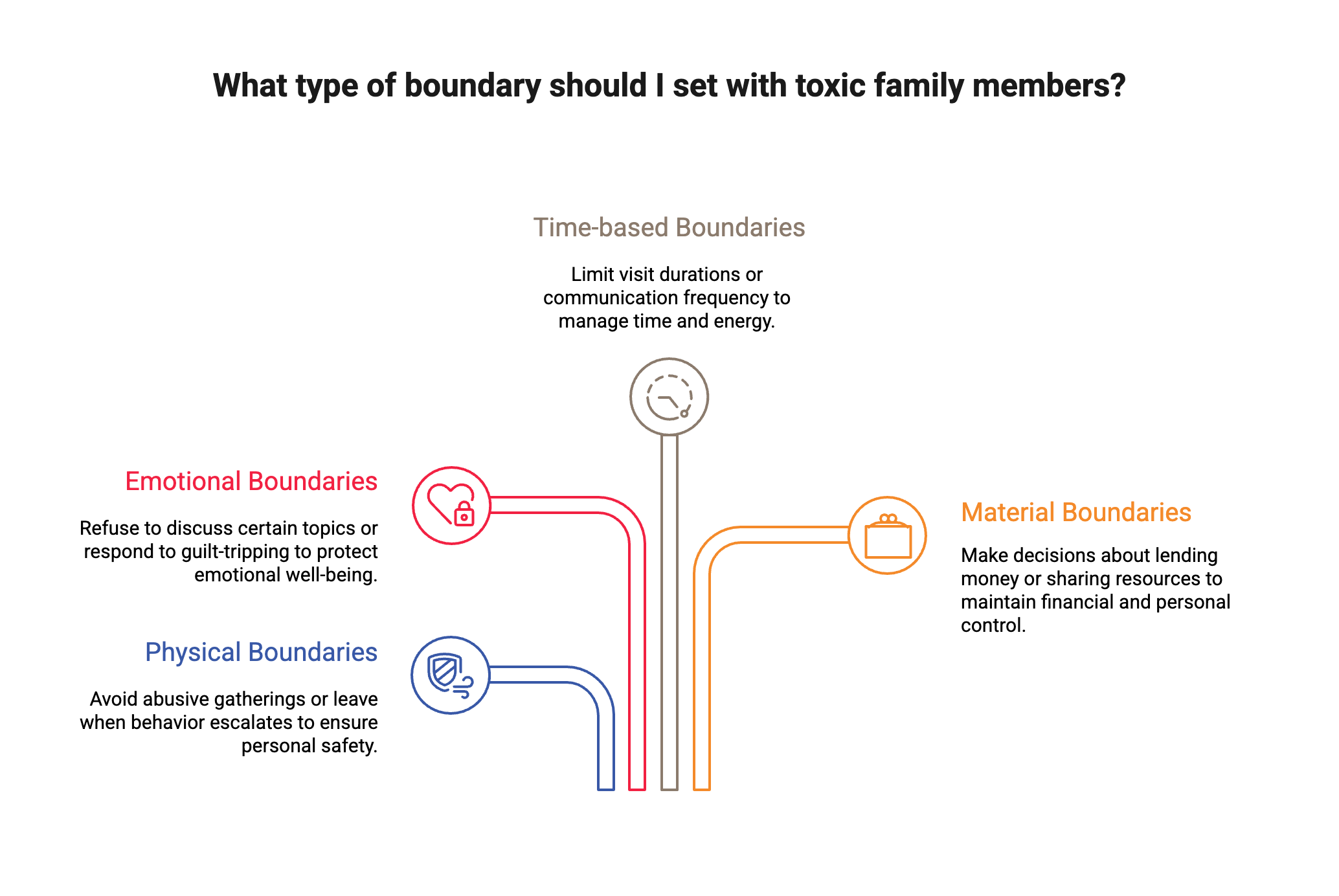
Types of Boundaries You Can Set
Boundaries can be physical, emotional, time-based, or material depending on your personal needs for safety:
- Physical boundaries: Avoiding certain family gatherings or leaving when behavior becomes abusive
- Emotional boundaries: Refusing to discuss certain topics or not responding to guilt-tripping messages
- Time-based boundaries: Visiting for two hours instead of an entire weekend, or talking monthly instead of weekly
- Material boundaries: Decisions about lending money or sharing personal resources
Consistency in enforcing boundaries is key to their effectiveness. If you set a limit and then back down when pressured, toxic family members learn that pushing harder gets them what they want. Setting boundaries with toxic family members is crucial for maintaining emotional well-being.
We work with people who feel like they’re betraying their family by setting boundaries. Here’s what we’ve found: the people who feel most guilty about protecting themselves are often the ones who needed protection most. Your family members may not understand your choices, but understanding isn’t required. What matters is that you’re building a life where you feel safe and respected, even if it looks different from what your family expected.
Therapy can provide individuals with tools to process experiences and establish healthy boundaries with toxic family members. Seeking professional help offers a safe space to explore family conflicts without judgment and develop strategies tailored to your family situation.
How to Remove Toxic Family Members from Your Life?
Removing toxic family members from your life—often called going “no contact”—means ending the relationship entirely to protect your well-being. This isn’t a decision to make lightly, but sometimes limiting contact isn’t enough, especially in cases of emotional abuse, physical abuse, or when the relationship consistently threatens your mental health.
Walking away from toxic family members may be necessary for protecting mental health and improving overall well-being. Before taking this step, consider whether you’ve tried other options like setting clear boundaries, limit interactions, or addressing the issues directly. No contact works best when you’ve exhausted other strategies or when the situation involves serious harm.
Making the Decision and Following Through
If you decide to remove a toxic family member from your life, prepare for the emotional and practical challenges. Other family members may pressure you to reconcile or accuse you of breaking up the family. You might feel guilty even while knowing it’s the right choice. These reactions are normal and don’t mean you’ve made the wrong decision.
Create firm boundaries around communication—block phone numbers if necessary, don’t respond to attempts at contact, and prepare a brief explanation for other relatives who ask questions. You don’t owe anyone a detailed justification for protecting yourself. Something like “I’ve made the decision that’s best for my mental health” is sufficient.
Build your chosen family—the people who truly support and respect you. Supportive relationships with friends, partners, or other relatives who understand your situation can provide the connection and belonging that your toxic family failed to offer. Limiting contact with toxic family members can significantly reduce their negative impact on your well-being. Many people find that their lives become more peaceful after removing toxic influences, though the grief may linger.
Protecting yourself from toxic family dynamics isn’t selfish—it’s essential for your mental health and future healthy relationships. Whether you choose to set boundaries, limit contact, or walk away entirely, you’re taking an important step toward prioritizing your well-being.
Get Support from Therapy Group of DC
If you’re struggling to manage toxic family relationships and need support developing healthy boundaries, our therapists in Washington DC understand the complexity of navigating complex family relationships. We can help you process your experiences, reduce the guilt and stress, and build the skills you need to protect your emotional health. Schedule an appointment to start working through these challenges with compassionate, evidence-based care.
Disclaimer: This article is for informational purposes only and does not constitute medical or therapeutic advice. If you are experiencing abuse or are in immediate danger, please contact local emergency services or the National Domestic Violence Hotline at 1-800-799-7233. For personalized mental health support, consult with a licensed mental health professional.