ADHD Anxiety and Depression: Understanding When All Three Conditions Overlap

If you’re struggling with attention problems, constant worry, and persistent low mood all at once, you’re not alone. ADHD, anxiety, and depression frequently occur together, with about 70% of adults with ADHD also experiencing another mental health condition. Research shows this comorbidity creates unique challenges that go beyond managing any single disorder.
The relationship between attention deficit hyperactivity disorder, anxiety disorders, and depression isn’t simple. These conditions share overlapping symptoms, influence each other through shared brain pathways, and create a disease burden that requires specialized understanding. When all three coexist, they form what clinicians call comorbid conditions that need integrated treatment approaches.
Can ADHD Give You Anxiety and Depression?

ADHD doesn’t directly cause anxiety or depression, but it significantly increases your risk for both mental disorders. Research shows that up to 50% of adults with ADHD also experience anxiety disorders, and approximately 30% will have a depressive episode in their lifetime. These rates are substantially higher than in the general adult population.
The connection works in multiple directions. Living with untreated ADHD creates chronic stress from missed deadlines, forgotten commitments, and relationship difficulties. This ongoing stress can develop into generalized anxiety disorder, social anxiety disorder, or major depressive disorder over time. The National Comorbidity Survey found that individuals with ADHD are three times more likely than others to develop a mood disorder.
Meanwhile, ADHD symptoms like difficulty concentrating and restlessness worsen when you’re anxious or depressed, creating a cycle that’s hard to break. The conditions also share common genetic markers and neurocognitive deficits affecting attention and decision-making, which explains why they cluster together so frequently in the same person.
Studies indicate that the prevalence of depression among ADHD patients ranges from 18.6% to 53.3%, depending on the population studied. Gender differences also play a role, with women showing different symptom patterns than men across all three conditions.
How Do ADHD Symptoms Interact with Anxiety and Depression?
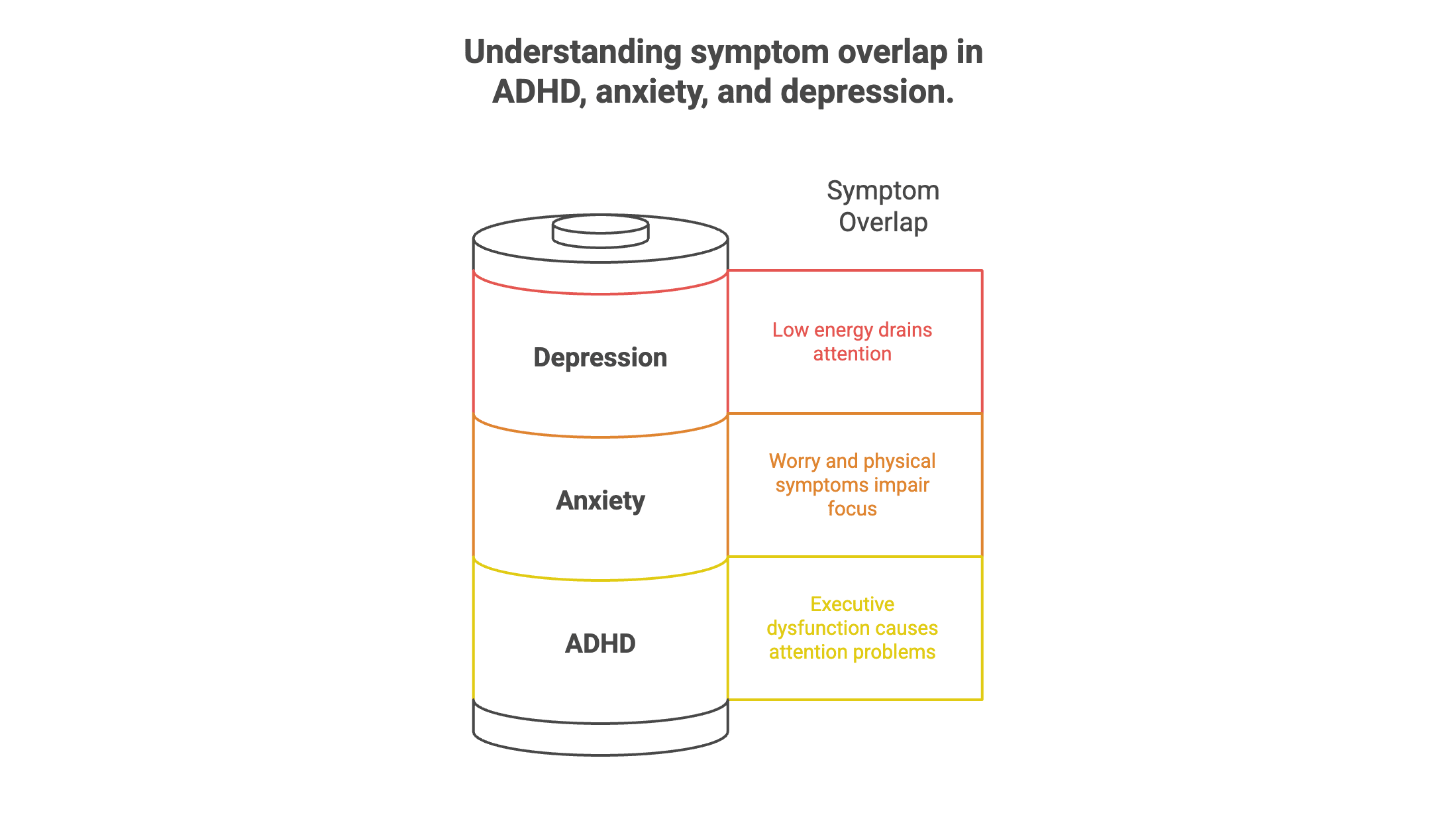
The three psychiatric disorders overlap and amplify each other in ways that complicate both accurate diagnosis and treatment. For example, difficulty concentrating appears in ADHD, anxiety, and depression, but the underlying causes differ.
With attention deficit hyperactivity disorder, attention problems stem from executive functioning challenges in the brain’s management systems. With anxiety, constant worry and physical symptoms make it hard to focus. With major depression, low energy and loss of interest drain your ability to pay attention. When you have comorbid disorder combinations, these effects stack and interact.
Anxiety symptoms can mask or mimic ADHD hyperactivity—physical symptoms like a racing heart, restlessness, muscle tension, and cold or sweaty hands appear in both generalized anxiety disorder and ADHD. This overlap makes it challenging to distinguish which condition is causing which symptom without careful evaluation by a mental health professional.
In our practice, we’ve found that untangling ADHD from anxiety and depression requires careful attention. When clients describe difficulty concentrating, we explore whether it’s executive dysfunction, anxious worry, or depressive fatigue driving the symptom. This distinction shapes our entire treatment approach.
Depression’s persistent sadness and inappropriate guilt can hide underneath untreated ADHD. Many adults with ADHD develop ways of masking their symptoms to fit in, which contributes to persistent anxiety and depression over time. The effort of compensating for attention deficits day after day takes a significant emotional toll and can lead to significant distress.
Children with ADHD who go undiagnosed often carry these struggles into adulthood, where adult ADHD manifests differently than childhood ADHD. Adults typically exhibit more heterogeneous clinical presentations, making diagnosis even more complex when anxiety and depression are also present.
What Makes Comorbid ADHD, Anxiety, and Depression Different?
Having all three conditions creates higher disease burden than any single diagnosis alone. Those with both ADHD and depression experience longer illness duration and diminished treatment efficacy compared to those with either disorder by itself. Research consistently shows that comorbid conditions lead to more severe symptoms and poorer quality of life outcomes.
The diagnostic challenge is significant. When anxiety disorders and depressive symptoms overlap with ADHD, clinicians must carefully distinguish which symptoms belong to which condition. Certain symptoms like difficulty paying attention, sleep problems, irritability, or restlessness could indicate any of the three mental disorders or even other psychiatric disorders like bipolar disorder or obsessive compulsive disorder.
Treatment becomes more complex with comorbid anxiety and depression. Core symptoms of ADHD often interfere with standard management strategies for depression or anxiety. For instance, if executive functioning deficits make it hard to remember therapy homework, maintain sleep patterns, or stick to routines, treating the anxiety alone may not work well.
Data from the National Comorbidity Survey demonstrates that individuals with ADHD and comorbid conditions experience profound functional impairments across multiple life domains. ADHD-related struggles alongside mood disorders create challenges in work performance, academic success, social interactions, and daily functioning that require integrated treatment strategies.
The increased severity of ADHD symptoms correlates with higher depressive symptoms across individuals with comorbid ADHD and depression. This relationship suggests that effectively treating ADHD may help reduce the burden of depression or anxiety as well.
How Common Are Other Disorders with ADHD?
Beyond anxiety and depression, adults with ADHD show elevated rates of other disorders including:
- Substance use disorder: Higher risk of substance abuse compared to the adult population
- Eating disorders: Increased prevalence, particularly in women with ADHD
- Personality disorders: More common in ADHD adults than general population
- Learning disorder: Frequently co-occurs with childhood ADHD and persists into adulthood
Understanding this broader context of comorbidity helps explain why comprehensive evaluation matters. An ADHD diagnosis should always include screening for these other psychiatric disorders to ensure you receive complete care.
What Medication Treats Anxiety, Depression, and ADHD?
No single medication treats all three conditions, but some pharmaceutical interventions can help with multiple symptoms. The treatment strategy typically involves prioritizing the most severe condition first, then addressing the others sequentially. A mental health professional familiar with comorbid disorder management should guide this process.
For ADHD with comorbid anxiety, non-stimulant medications like atomoxetine or viloxazine are often preferred over stimulant treatment. These ADHD medications can improve focus while reducing anxiety symptoms in some people. Atomoxetine has demonstrated particular effectiveness in treating ADHD symptoms in adults with comorbid anxiety disorders.
Stimulant medications can also help with comorbid anxiety, though this seems counterintuitive. By addressing the functional impairments caused by ADHD, stimulants can indirectly alleviate anxiety symptoms related to ADHD-related struggles. However, careful monitoring is essential, as stimulants may worsen anxiety symptoms in some individuals.
When major depression and anxiety disorders coexist with ADHD, selective serotonin reuptake inhibitors (SSRIs) may be combined with ADHD medications. Pharmaceutical interventions work best when paired with cognitive-behavioral therapy, which effectively targets both ADHD and comorbid depression or comorbid anxiety.
Your specific treatment plan depends on multiple factors including symptom severity, family history, which condition causes the most significant distress, and how the disorders interact in your case. Some people respond well to medication alone, while others need combination approaches.
Can ADHD Medication Help with Depression?
Research suggests that symptomatic relief in ADHD enhances self-esteem and quality of life, which naturally helps reduce anxiety and depression. When you can finally focus, complete tasks, and meet expectations, the chronic stress and feelings of failure that fuel major depression begin to lift.
However, ADHD medication alone isn’t sufficient for treating major depressive disorder. Moderate to severe depression typically requires its own dedicated treatment approach, whether through psychotherapy, antidepressants, or both. The key is addressing whichever condition is causing the most severe symptoms first, then evaluating what additional support you need.
Sequential treatment is often recommended for individuals with ADHD and comorbid conditions. This means treating one condition, reassessing symptoms, then adding treatment for remaining conditions as needed. This approach prevents medication interactions and helps identify which interventions are most effective for you.
Digital mental health support programs have also shown promising results in reducing anxiety and depressive symptoms in adults with ADHD, offering additional tools beyond medication and traditional therapy.
How Do You Manage Daily Life with All Three Conditions?
Managing ADHD, anxiety, and depression together requiresstrategies that address overlapping symptoms. The good news is that many interventions help with multiple conditions simultaneously, making daily management more efficient than treating each disorder separately.
Here’s what research shows helps:
- Break goals into smaller steps to prevent overwhelming feelings that trigger both anxiety and depression while working with executive functioning challenges
- Establish consistent daily routines to reduce overwhelm and provide predictability, which helps stabilize attention and mood
- Exercise regularly to improve focus, reduce restlessness, and alleviate depressive symptoms across all age groups
- Maintain sleep patterns with consistent bedtimes to support brain function and emotional regulation
- Eat balanced meals to stabilize energy levels and reduce physical symptoms like acid reflux that can mimic or worsen anxiety
Meditation and mindfulness practices can improve focus while reducing stress and enhancing emotional regulation. These techniques help with the constant worry of anxiety, the rumination of depression, and the racing thoughts of ADHD adults. Even brief daily practice shows benefits.
Working with a mental health professional who understands comorbidity is essential. They can help you recognize which symptoms are most problematic at any given time, whether you need an ADHD diagnosis evaluation, and how to adjust your treatment approach accordingly. This specialized understanding prevents the underdiagnosis and undertreatment that often occur when comorbid disorders are present.
The clients who make the most progress are those who stop trying to do everything perfectly. We encourage starting with one small routine or strategy and building from there. Attempting to overhaul everything at once typically backfires with these conditions.
Support groups for adults with ADHD who also manage depression, anxiety, and other mental health conditions provide valuable connection. Joining local support groups or connecting with community can aid individuals coping with ADHD and related conditions by providing a sense of belonging and shared understanding.
What’s the 20 Minute Rule for ADHD?
The 20-minute rule breaks tasks into focused intervals. This approach works with ADHD’s natural attention span limitations rather than against them, making it easier to start and maintain focus on necessary tasks.
The concept is simple: commit to working on a task for just 20 minutes, then give yourself permission to take a break or switch activities. This strategy helps reduce anxiety and avoidance that often accompanies large, intimidating projects that feel overwhelming.
For people managing depression alongside ADHD, the small time commitment feels more achievable than facing hours of work. Many people find that once they start the 20-minute block, they naturally continue beyond it. But even if you only manage 20 minutes, you’ve made progress and avoided the cycle of avoidance.
This builds momentum and self-efficacy, which helps counter the inappropriate guilt and persistent sadness common in major depression. The rule works especially well for ADHD adults who experience decision paralysis or have difficulty paying attention to tasks they find boring or unrewarding.
The 20-minute approach also helps with treating ADHD-related procrastination by lowering the barrier to starting. Once you begin, the brain’s reward systems engage, making continuation easier. This technique can reduce anxiety about performance and help you manage anxiety around task completion more effectively.
What Causes ADHD, Anxiety, and Depression to Occur Together?
The underlying causes are complex and multifaceted. Genetics plays a significant role, with ADHD, anxiety disorders, and depression sharing common hereditary markers. If you have a family history of any of these conditions, your risk increases for all three.
Brain chemistry and structure also contribute. Neurocognitive deficits in areas controlling attention, emotion regulation, and impulse control appear across all three conditions. This overlap explains why symptoms interact so closely and why treating one condition often affects the others.
Environmental factors matter too. Chronic stress from undiagnosed ADHD can trigger anxiety disorders and major depressive episodes. Conversely, childhood trauma or adverse experiences increase risk for all three mental disorders simultaneously.
Getting Support in DC
If you’re struggling with ADHD, anxiety, depression, or a combination of these conditions, the therapists at Therapy Group of DC are here to help. We understand how these psychiatric disorders interact and can provide the specialized support you need. Schedule an appointment to get started on a treatment plan that addresses your unique situation.
Disclaimer: This article is for educational purposes only and is not a substitute for professional medical advice, diagnosis, or treatment. Always seek the advice of your physician or qualified mental health provider with any questions you may have regarding a medical or mental health condition. If you are in crisis or experiencing thoughts of self-harm, please call 988 (Suicide and Crisis Lifeline) or go to your nearest emergency room.