

If you’ve ever sat in a meeting on Capitol Hill or presented to clients at a K Street firm and thought “I don’t belong here,” you’re not alone. Imposter syndrome is the persistent feeling that your success is undeserved, that you’re a fraud who will eventually be exposed—despite clear evidence of your competence. Understanding imposter syndrome meaning starts here: up to 70% of people experience impostor feelings at some point, especially common in Washington’s high-achieving, competitive professional environment.
The five distinct types of imposter syndrome—The Perfectionist, The Expert, The Natural Genius, The Soloist, and The Superperson—help you recognize your patterns and take steps toward overcoming these feelings. Each type manifests differently, but all share the same core: an inability to internalize accomplishments and feelings of inadequacy despite objective success.
What is imposter syndrome in simple words?
Imposter syndrome, also called fraud syndrome, is when capable, successful people feel like frauds who don’t deserve their achievements. Despite external evidence of competence—promotions, degrees, positive feedback—people with imposter syndrome attribute success to luck, timing, or fooling others rather than their own abilities. They live with constant fear of being “found out.”
The impostor phenomenon, as it’s known clinically, is not a diagnosable mental illness or classified in the Diagnostic and Statistical Manual of Mental Disorders. It’s a psychological phenomenon characterized by chronic self-doubt and the tendency to discount abilities. In Washington’s professional settings—whether you work in government, law, consulting, or advocacy—the intense pressure and scrutiny amplify these feelings.
The term originated in research by Clance and Imes on high-achieving women, but impostor syndrome affects everyone across genders, professions, and career stages. From first-year Hill staffers to senior federal attorneys, many DC professionals experience impostor feelings but rarely discuss them, perpetuating the belief that everyone else belongs except you. Research suggests both personality traits like perfectionism and low self-esteem, as well as environmental factors like workplace culture, contribute to these feelings.
What are the 5 types of imposter syndrome?
Research identifies five types of imposter syndrome, each with unique triggers and behaviors. Recognizing which type resonates with you is the first step toward addressing these feelings. The Clance Impostor Phenomenon Scale and other measuring impostor phenomenon tools often categorize experiences into these patterns.
The Perfectionist
The Perfectionist sets impossibly high standards and feels like a failure for not meeting them, even when work is objectively excellent. If you’ve gotten a 95 on a brief and fixated on the 5% you missed, or felt disappointed after a successful presentation because one slide wasn’t perfect, you might be a perfectionist-type.
In DC’s achievement-oriented culture, perfectionists are everywhere—the policy analyst who rewrites memos twelve times, the attorney who stays until midnight perfecting arguments, the congressional staffer who can’t delegate because “no one else will do it right.” The problem isn’t high standards; perfectionists tie self-worth entirely to flawless execution, making any mistake feel catastrophic and triggering negative self-talk.
This pattern is closely linked to the imposter cycle: perfectionists often procrastinate due to anxiety about meeting their own standards, then over-prepare excessively when deadlines loom, reinforcing their belief that success requires superhuman effort.
The Expert
The Expert believes they need to know everything before starting, and feels like a fraud without all the answers. This type is common among people transitioning to new roles or policy areas—the foreign service officer assigned to a new region, the think tank researcher tackling an unfamiliar topic, the attorney handling their first case in a new practice area.
Experts avoid opportunities unless they feel 100% prepared. They accumulate credentials, certifications, and training but still feel unqualified. In Washington’s information-dense environment, where you’re expected to become fluent in complex policy overnight, the expert type can be particularly paralyzing. Even positive feedback feels undeserved because they fixate on what they don’t yet know.
The Natural Genius
The natural genius believes competence means everything should come easily, and interprets struggle as proof they’re not talented. If you’ve ever thought “If I were really good at this, I wouldn’t have to work so hard,” you identify with this type.
Natural geniuses likely excelled academically without much effort and now feel ashamed when work requires struggle. The legislative aide who can’t draft talking points as quickly as they want, the consultant who needs multiple attempts to master new software, the policy director who finds budget analysis challenging—all might feel like impostors because they expect innate ability to carry them through.
People with imposter syndrome of this type often avoid challenges where they might not immediately excel, limiting growth opportunities. They measure themselves against an unrealistic standard of effortless mastery.
The Soloist
The Soloist believes they must accomplish everything independently, viewing requests for help as proof of inadequacy. In Washington’s collaborative work environment—where policy is made through coalition-building, memos require multiple reviews, and projects involve cross-agency coordination—the soloist’s belief that “I should do this alone” creates unnecessary struggle.
Soloists refuse assistance even when drowning in work. They decline offers of mentorship, avoid asking clarifying questions in meetings, and feel ashamed about needing guidance. If you’ve ever thought “If I were competent, I wouldn’t need help,” you’re experiencing imposter syndrome with soloist patterns that discount your own abilities.
The Superperson
The Superperson pushes themselves to work harder than everyone else to prove they’re not frauds, often leading to burnout. This is the senior associate taking every case, the deputy director volunteering for every taskforce, the staffer who never says no to assignments—all driven by the belief that working harder than everyone else is the only way to compensate for being an impostor.
Superpeople measure worth by productivity and struggle to set boundaries. In DC’s “always-on” work culture, where 60-hour weeks are normalized and weekend emails are expected, the superperson pattern can be especially destructive to mental health. They’re constantly exhausted but can’t slow down because rest feels like proof they don’t belong.
In our practice, we frequently work with DC professionals experiencing imposter syndrome who identify with multiple types—the perfectionist who also functions as a superperson, or the expert who operates as a soloist. Understanding your specific patterns helps us develop targeted therapeutic intervention strategies. We’ve observed that recognizing these types often brings relief; many clients say “Finally, there’s a name for what I’m experiencing.” These patterns transcend gender differences, though systematic review research shows women and minority groups may face additional environmental factors that intensify impostor feelings.
What does imposter syndrome feel like?
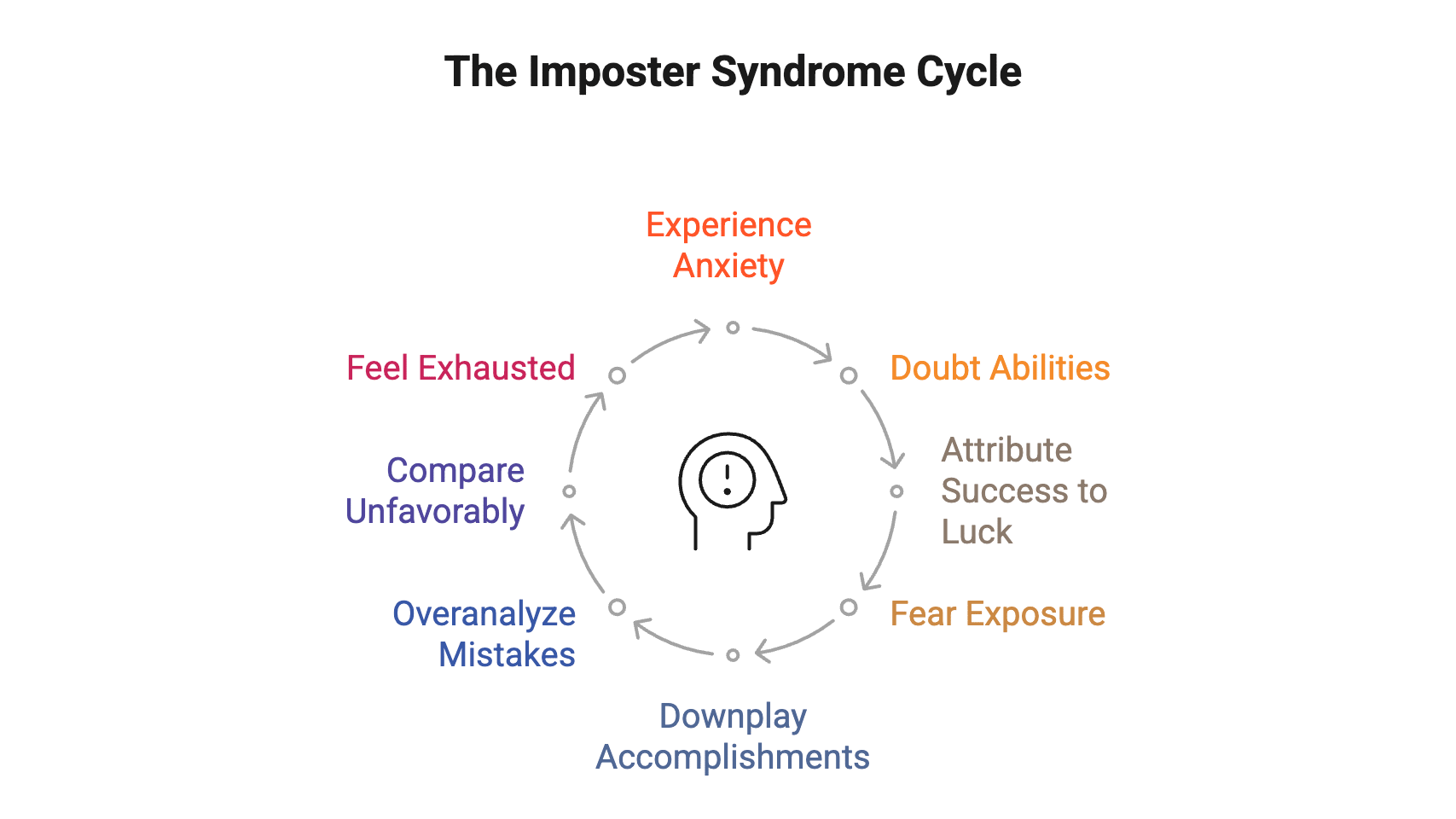
Impostor syndrome feels like persistent anxiety that you’ll be exposed as a fraud, despite evidence to the contrary. The emotional experience includes chronic self-doubt, attributing success to external factors like luck or timing rather than abilities, and fear of being exposed as not truly capable. People experiencing imposter syndrome often feel like a fraud in professional settings, regardless of their actual competence.
Common signs of imposter syndrome include:
- Downplaying accomplishments or deflecting compliments and positive feedback
- Overanalyzing mistakes while dismissing successes
- Comparing themselves unfavorably to successful people and colleagues
- Experiencing anxiety before evaluations or presentations
- Attributing success to external factors: “I just got lucky” or “They felt sorry for me”
- Feeling exhausted from constantly trying to prove themselves
In Washington’s hierarchical, credential-focused environment, these feelings intensify. When you’re surrounded by Rhodes Scholars, former federal clerks, and Ivy League graduates, it’s easy to feel exposed as a fraud who somehow slipped through the cracks. The constant comparison—examining everyone’s LinkedIn profiles, tracking who went to which law school, noting who got which fellowship—feeds impostor feelings and the imposter cycle of self-doubt.
Impostor syndrome correlates with higher mental health issues, including anxiety, depression, and burnout, particularly in high-pressure professional settings. The emotional toll extends beyond work, affecting relationships, sleep, self-esteem, and overall well-being. Some people with imposter syndrome also struggle with social anxiety disorder or generalized anxiety disorder, though these are distinct mental disorders requiring separate treatment.
How to heal from imposter syndrome?
Healing from impostor syndrome involves recognizing these feelings are common, reframing how you understand success and failure, and developing self-compassion. Multiple interventions prove effective, particularly those addressing perfectionistic thinking and cultivating a growth mindset. Many successful women and men have learned to overcome imposter syndrome through evidence-based approaches.
Recognize the pattern
The first step to fight imposter syndrome is naming what you’re experiencing. Understanding impostor feelings helps reduce their power among high achievers. You’re not uniquely flawed; you’re experiencing a well-documented psychological phenomenon affecting successful people across industries. Measuring impostor phenomenon through validated tools can help you understand the severity and track progress.
Develop a growth mindset
Growth mindset reduces impostor feelings significantly compared to fixed mindset beliefs. When you view challenges as opportunities to learn rather than tests of inherent worth, mistakes become less threatening. This shift directly addresses the fear of failure that drives impostor feelings.
For DC professionals, this might mean reframing a difficult policy briefing as a chance to deepen expertise rather than a test you might fail. It means recognizing that asking questions demonstrates engagement, not ignorance.
Celebrate your achievements
Keep a “brag list” or success journal documenting your accomplishments with specific details—the projects you completed, problems you solved, positive feedback you received. When impostor feelings arise, review this evidence of your competence. This practice helps counter the tendency to discount your own abilities and attribute success to luck.
Share your experience
Talking about impostor feelings with trusted colleagues, mentors, or friends helps normalize the experience. Seeking mentorship and feedback provides objective perspectives and realistic assessment of your skills. In our practice, we regularly hear “Wait, other people feel the same feelings?” Many Washington professionals suffer in silence, assuming everyone else belongs while they’re the only impostor.
Seek professional support from a mental health professional
Therapeutic interventions prove effective, including workshops, coaching, and individual therapy. Cognitive processing therapy and other evidence-based approaches can help identify and challenge the distorted thinking patterns maintaining these feelings. Clinical psychology research and behavioral science demonstrate that professional support significantly reduces impostor syndrome.
Professional help is particularly valuable when impostor syndrome significantly impacts your mental health, career decisions, or quality of life. A mental health professional can assess whether anxiety, depression, or other conditions require additional treatment.
We’ve worked with federal attorneys who decline partnership tracks, Hill staffers who turn down promotions, and consultants who avoid high-visibility projects—all because of impostor feelings. The cost isn’t just emotional; it’s professional. Addressing these patterns through therapy helps our clients stop self-sabotaging and start making career decisions based on genuine preferences rather than fear of exposure. We help clients develop self-compassion, challenge negative self-talk, and build healthier relationships with their accomplishments.
Understanding the impostor syndrome meaning and identifying which type you experience provides a roadmap for healing. Whether you’re a perfectionist paralyzed by minor mistakes or a soloist struggling alone, recognizing these patterns is the first step toward developing a healthier relationship with your accomplishments and improving your self-esteem.
If you’re a DC professional struggling with impostor syndrome, know that these feelings are treatable. With support and the right strategies, you can move from constant self-doubt to genuine confidence in your abilities.
Work with DC Therapists Who Understand Imposter Syndrome
Ready to address impostor feelings with professional support? The therapists at Therapy Group of DC specialize in working with high-achieving professionals navigating anxiety, perfectionism, and self-doubt. We offer evidence-based approaches tailored to the unique pressures of Washington’s professional environment. Schedule an appointment to start building a healthier relationship with your success.
Disclaimer: This blog provides general information about imposter syndrome and is not a substitute for professional mental health care. If you’re experiencing significant anxiety, depression, or other mental health concerns, please consult with a qualified mental health professional. In crisis, contact the 988 Suicide and Crisis Lifeline by calling or texting 988, or visit your nearest emergency room.