

Infertility depression affects up to 79% of people experiencing fertility challenges, creating a complex cycle where mental health struggles and reproductive difficulties reinforce each other. Research suggests that 15% to 54% of infertile couples may experience symptoms of major depression, and studies of women undergoing fertility treatment report depressive symptoms in 21% to 52%. This isn’t just sadness about delayed parenthood—it’s a clinically significant mental health condition that deserves recognition and treatment.
Can depression cause infertility?
Depression can indirectly impact fertility through multiple biological and behavioral pathways. While depression itself doesn’t directly prevent conception, it influences factors that affect reproductive health. Sleep deprivation associated with depression can negatively impact fertility, and the stress of infertility can lead to depression, which may further complicate fertility challenges.
Women with infertility who feel depressed are less likely to undergo infertility treatment, creating a barrier to care that can prolong the struggle. Some antidepressant medications can impact fertility and complicate treatment decisions, though discontinuing antidepressants without medical supervision can be risky for those trying to conceive. The relationship between depression and infertility is bidirectional—each condition can worsen the other.
In our practice, we see how depression symptoms affect treatment engagement. Many clients initially hesitate to begin fertility treatment when they’re experiencing significant depressive and anxiety symptoms, creating a difficult situation. We work collaboratively with reproductive medicine specialists to help clients maintain mental health care while pursuing fertility treatments, ensuring they don’t have to choose between emotional wellbeing and their family-building goals.
How common is depression with infertility?
Depression and anxiety symptoms are very common among women experiencing infertility. Research indicates that 79% of infertility patients have some degree of depression, compared to only 9% in a control group. Around 19% of married women with no prior births aged 15 to 49 years old in the U.S. experience infertility.
As many as 21-52% of women experiencing infertility report depressive symptoms. The high prevalence of anxiety and depression in women experiencing infertility underscores the importance of collaboration between infertility clinics and specialized mental health professionals. Unfortunately, the majority of women seeking infertility treatment who experience depression or anxiety continue to lack access to mental health services, even though access to mental health care is crucial for improving emotional well-being and fertility treatment outcomes.
Does the psychological impact affect both partners?
The psychological impact of infertility affects both males and females, but is often more pronounced in women due to societal expectations. Depression and anxiety are associated with increased symptoms across gender lines, though women undergoing assisted reproductive technology (ART)—such as in vitro fertilization—may face additional psychological stress due to the invasive nature of the procedures and the emotional investment involved. Understanding male factor infertility and its psychological effects is also important for comprehensive couples care.
What are the emotional struggles of infertility?
Infertility can take a serious toll on mental health, leading to feelings of depression, anxiety, and stress that extend far beyond disappointment. The emotional burden of infertility can involve feelings of shame, guilt, and a loss of identity, compounded by physical and financial strains of fertility treatments. Infertility can lead to significant emotional distress, including feelings of isolation and shame.
Women undergoing fertility treatments often experience high levels of anxiety and depression due to the emotional and physical demands of the process. The stigma surrounding infertility can exacerbate feelings of inadequacy and psychological distress. Women who experience infertility may feel pressure from societal expectations, which can contribute to their depression symptoms.
Infertility can lead to a cycle of severe stress and hopelessness, particularly when fertility treatments are unsuccessful. Many individuals struggling with infertility experience a lack of representation and feel isolated due to societal pressures. Waiting for treatment results can add to the emotional toll, leading to chronic stress and feelings of grief. These psychological effects significantly impact quality of life for those experiencing infertility.
We often see clients who describe feeling “broken” or “defective” because of infertility. These aren’t just passing thoughts—they represent deep wounds to self-worth and identity. In our work, we help separate a person’s value from their reproductive capacity while honoring the very real grief and loss they’re experiencing. This approach helps clients process painful emotions without letting infertility define them.
How does fertility treatment affect mental health?
Hormonal medications used in fertility treatments may have mood-altering side effects, potentially including depression, irritability, mood swings, or anxious symptoms. Medical fertility treatment can be physically and emotionally taxing, contributing to increased levels of psychological stress. The impact of infertility and its treatment can lead many couples undergoing infertility treatment to stop pursuing care due to psychological distress, highlighting the need for integrated mental health support.
What treatment options help with infertility depression?
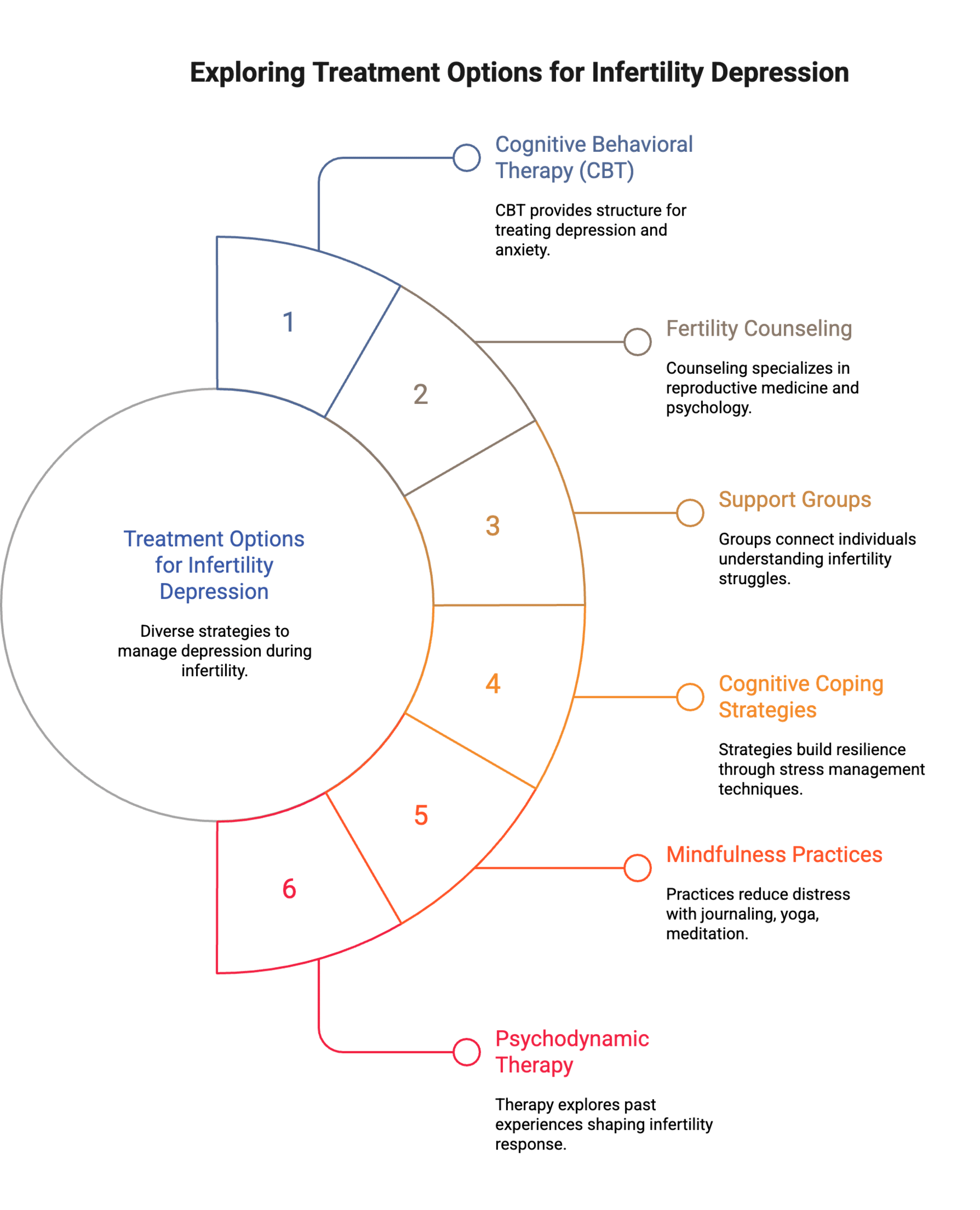
Cognitive behavioral therapy (CBT) can offer an effective structure for treating depression and anxiety in individuals dealing with infertility. Providing psychological treatment may improve quality of life and fertility outcomes for those experiencing depression. Different types of therapy for anxiety and depression can offer a safe space to process grief, frustration, and anxiety related to infertility.
Evidence-based approaches for managing infertility depression include:
- Fertility counseling with mental health professionals who specialize in reproductive medicine and the psychological aspects of infertility
- Support groups that connect individuals with others who deeply understand their situation during infertility struggles
- Cognitive coping strategies and stress management techniques to build resilience
- Mindfulness practices including journaling, yoga, and meditation to reduce psychological distress
Psychodynamic therapy is particularly well-suited for the emotional complexity of infertility. Unlike approaches focused solely on symptom reduction, psychodynamic therapy explores how past experiences, family history, and unconscious patterns shape your response to fertility struggles. This approach offers a unique opportunity to fully elaborate the complex realities faced throughout the infertility experience—including grief over pregnancy loss, identity shifts, and the deeper meaning of parenthood. For many experiencing infertility, the layers of loss extend beyond the present moment, touching on earlier experiences of disappointment, family dynamics, and long-held dreams.
Building a personal support system with family members and mental health care providers is an essential coping strategy for those dealing with mental health challenges during fertility treatment. Online therapy options and in-person counseling can provide ongoing support for individuals undergoing assisted reproductive technologies. Access to mental health services is crucial for female patients and all individuals experiencing infertility-related emotional distress.
How to cope with the sadness of infertility?
Taking care of mental health can positively impact one’s fertility journey. While infertility grief doesn’t simply “go away,” developing healthy coping strategies can reduce the intensity of depression symptoms and improve quality of life. Access to mental health support through fertility counseling and therapy is crucial for women experiencing infertility, as research shows it can improve their emotional well-being and treatment outcomes.
Building effective coping strategies involves both professional support and self-directed practices. The combination of therapy, support groups, and evidence-based self-care techniques offers the most comprehensive approach to managing infertility depression. For those experiencing relationship strain due to the stress of fertility treatments, addressing these challenges through couples counseling can be an important part of the healing process.
Infertility is a challenging experience that carries significant mental health implications, but support and treatment are available. Understanding the connection between infertility and depression is the first step toward getting the help you need.
Get Support for Infertility Depression in Washington, DC
If you’re experiencing depression related to infertility, you don’t have to navigate this alone. Our therapists at Therapy Group of DC understand the unique challenges of infertility and offer compassionate, evidence-based treatment for depression tailored to your needs. Contact us today to schedule a consultation and begin your path toward healing.
Common Questions About Infertility Depression
Can infertility make you depressed?
Yes, infertility can absolutely cause depression. The high prevalence of depression and anxiety among infertile women demonstrates this strong connection. Studies show that the psychological effects of infertility include major depression, with rates significantly higher than in the general population. The repeated disappointment of unsuccessful fertility treatments, combined with the physical demands of assisted reproductive technologies like in vitro fertilization, creates conditions that frequently lead to depressive symptoms. This is why treating depression during fertility treatment is so important for overall quality of life.
Why do people get so sad about infertility?
Infertility represents a profound loss that affects multiple dimensions of a person’s life. The impact of infertility extends beyond the inability to have biological children—it challenges personal hopes, identity, relationships, and life plans. Infertile patients often experience grief similar to other major losses, compounded by the ongoing nature of fertility treatments and the uncertainty of outcomes. The psychological distress also stems from societal expectations, potential pregnancy loss during early pregnancy attempts, and the physical and financial burden of medical fertility treatment. These factors together create the conditions for significant sadness and depression.
How to deal with depression during infertility?
Dealing with depression during infertility requires a multi-faceted approach. First, consider working with mental health professionals who understand reproductive medicine and can provide fertility counseling. Cognitive behavioral therapy has proven effective for managing depression symptoms in fertility treatment patients. Stress management techniques, including mindfulness and relaxation practices, can help regulate mood swings and reduce psychological stress. Building a support system through support groups where you can connect with others experiencing infertility provides validation and reduces isolation. Don’t hesitate to discuss antidepressant medications with your healthcare provider if needed—some selective serotonin reuptake inhibitors can be safely used during fertility treatment. Finally, ensure you receive mental health services alongside your fertility clinic care for the best outcomes.
This blog provides general information and discussions about mental health and related subjects. The content is not intended to be a substitute for professional medical advice, diagnosis, or treatment. Always seek the advice of your physician or other qualified health provider with any questions you may have regarding a medical condition.
Last updated: November 2024