

Graduating from college should feel exciting, but for many recent graduates, the months after graduation bring unexpected feelings of sadness, anxiety, and confusion. You might hear people call this experience “post-grad depression” or “post-graduation depression,” and while it’s not an official mental health diagnosis, it describes something very real that affects countless young adults during this major life transition.
Post-graduation depression refers to the emotional difficulties many college graduates face as they leave behind the structure, social connections, and clear sense of purpose that defined their college years. This period can trigger genuine depression symptoms, intense feelings of loss, or simply the normal (but still difficult) stress of adjusting to adult life. Understanding what you’re experiencing and when to seek help can make all the difference.
What Exactly Is Post Grad Depression?
Post-grad depression isn’t a medical diagnosis you’ll find in clinical manuals, but it’s a useful way to describe the mental health challenges that emerge during the transition from college to post-college life. The experience can range from temporary sadness and adjustment struggles to clinical depression that requires professional treatment.
Many young adults report feeling lost, unmotivated, or inadequate after graduation, even when things seem to be going well on the surface. These feelings often stem from losing the daily structure, social network, and clear goals that college provided. Some recent graduates experience what’s sometimes called “hidden depression”—appearing to thrive on the outside while struggling internally with their mental health.
The distinction matters because it helps you understand your own experience. Feeling sad or anxious during a major life change is normal. Clinical depression is a mental health condition that affects your mood, energy, and ability to function for extended periods.
Mental health challenges in young adults ages 18 to 25 have increased in recent years. This developmental stage brings unique pressures that can trigger depression in college graduates who are managing multiple life changes at once.
Why Do So Many Graduates Struggle After College?
The transition after college affects mental health in ways people often don’t expect. Several factors combine to make this period particularly challenging for recent graduates.
Social Connections Disappear
The loss of social connections hits hard. College friends who were part of your daily life suddenly scatter to different cities, and building a new social network as an adult takes time and effort. Many recent graduates report feeling isolated, even when they’re in regular contact with old friends through phone or video calls. Social support plays a crucial role in mental health and personal growth during difficult transitions.
Socializing intentionally—whether in person or virtually—helps alleviate feelings of loneliness that many young adults experience in post grad life.
Structure Vanishes Overnight
College provided a clear schedule, defined goals, and regular feedback. Post grad life rarely comes with the same roadmap, leaving many graduates feeling directionless about their daily routine and future plans.
The shift from academic structure to professional ambiguity creates stress for recent grads. Having a daily schedule, even a simple one, can have beneficial impacts on many aspects of your life, including your mental health and overall well-being.
Financial Stress Compounds Everything
Student loan debt creates significant pressure, and finding a new job that pays enough to cover living expenses while managing debt can feel overwhelming. Economic uncertainty affects self-confidence and contributes to feelings of inadequacy. Financial stress from student loan debt is a major concern for many college graduates.
A lack of motivation related to depression can make the job search even more challenging, creating a cycle where depression affects your ability to find work, which then increases feelings of failure and stress.
Identity Shifts Create Uncertainty
You’re no longer a student, but you might not feel fully established in your adult identity either. This ambiguity about who you are and where you belong can trigger depression symptoms in recent grads trying to figure out life after college. The change from receiving regular academic feedback to managing professional ambiguity adds to the stress of this developmental stage.
Young adults face increased challenges during transitional periods, with double the rate of depression compared to the general population. Some people are at higher risk, especially those with a history of mental health conditions or facing additional challenges like moving to a new city or new location far from family.
In our experience working with recent graduates in DC, we see a pattern that surprises many clients. They expect to feel relieved or excited after graduation, but instead feel unexpectedly empty or anxious. We often remind them that leaving behind four years of built-in community and structure is a genuine loss worth acknowledging, not a personal failure. Grief and adjustment are normal parts of this transition.
Is It Normal to Feel Lost After Graduating College?
Yes, it’s completely normal to feel lost after college graduation. This transition represents one of the most significant shifts in adult life. You’re dealing with changes in daily life, social connections, purpose, and identity all at once.
Many people experience some combination of anxiety and depression during major life changes. The feelings of uncertainty about the future and your place in the world are shared by many recent grads, not a sign that something is wrong with you specifically.
That said, normal adjustment difficulties are different from clinical depression. Understanding the difference helps you know when feelings are a typical part of this life stage and when they signal a need for professional support.
How Do You Know If It’s Depression or Normal Adjustment?
Sadness and grief during major transitions are normal, but clinical depression is different and requires professional attention. Here’s how to tell the difference.
Normal post-graduation blues involve temporary sadness about leaving college, missing college friends, and feeling uncertain about the future. These feelings usually fade over a few weeks as you adjust to your new life and establish new routines. This temporary experience is sometimes called “post graduation blues.”
Grief can emerge when you’ve lost important relationships or the structured identity that college provided. Grief involves strong emotions including sadness, anger, or confusion. It’s a natural response to significant loss that can lead to personal growth with proper support.
Depression is a mental health condition with specific symptoms that last for weeks or months. Depression symptoms include:
- Feeling down most of the time
- Losing interest in things you used to enjoy
- Significant changes in sleep or appetite
- Difficulty concentrating or making decisions
- Feelings of worthlessness or guilt
- Thoughts of self-harm
Depression in young people significantly impairs daily functioning and doesn’t improve without intervention. Major depressive disorder requires professional treatment, which can involve therapy, antidepressant medications, or a combination of both approaches.
If your feelings make it hard to get out of bed, maintain relationships, or take care of basic responsibilities for more than two weeks, it’s time to seek help. Many young adults worry their problems aren’t “serious enough” for therapy, but reaching out for support is always appropriate when you’re struggling.
Sometimes post-graduation depression exists alongside other mental health conditions like anxiety disorders or bipolar disorder. A mental health professional can help you understand your specific situation and create an appropriate treatment plan.
How Long Does Post-Grad Depression Usually Last?
The duration varies widely depending on whether you’re experiencing normal adjustment stress or clinical depression. Post-graduation blues typically last a few weeks to a couple of months as you settle into your new routine and life after college.
Clinical depression, however, doesn’t resolve on its own with time. Depressive symptoms that persist beyond two months or significantly interfere with daily life require mental health treatment. With appropriate therapy and support, improved mental health is achievable, but professional intervention is necessary.
The good news is that early support often prevents temporary adjustment difficulties from developing into more serious mental health issues. Reaching out for help during the transition doesn’t mean you’re failing at adulthood—it means you’re being proactive about your well-being.
Is It Normal to Feel Lonely Post-Grad?
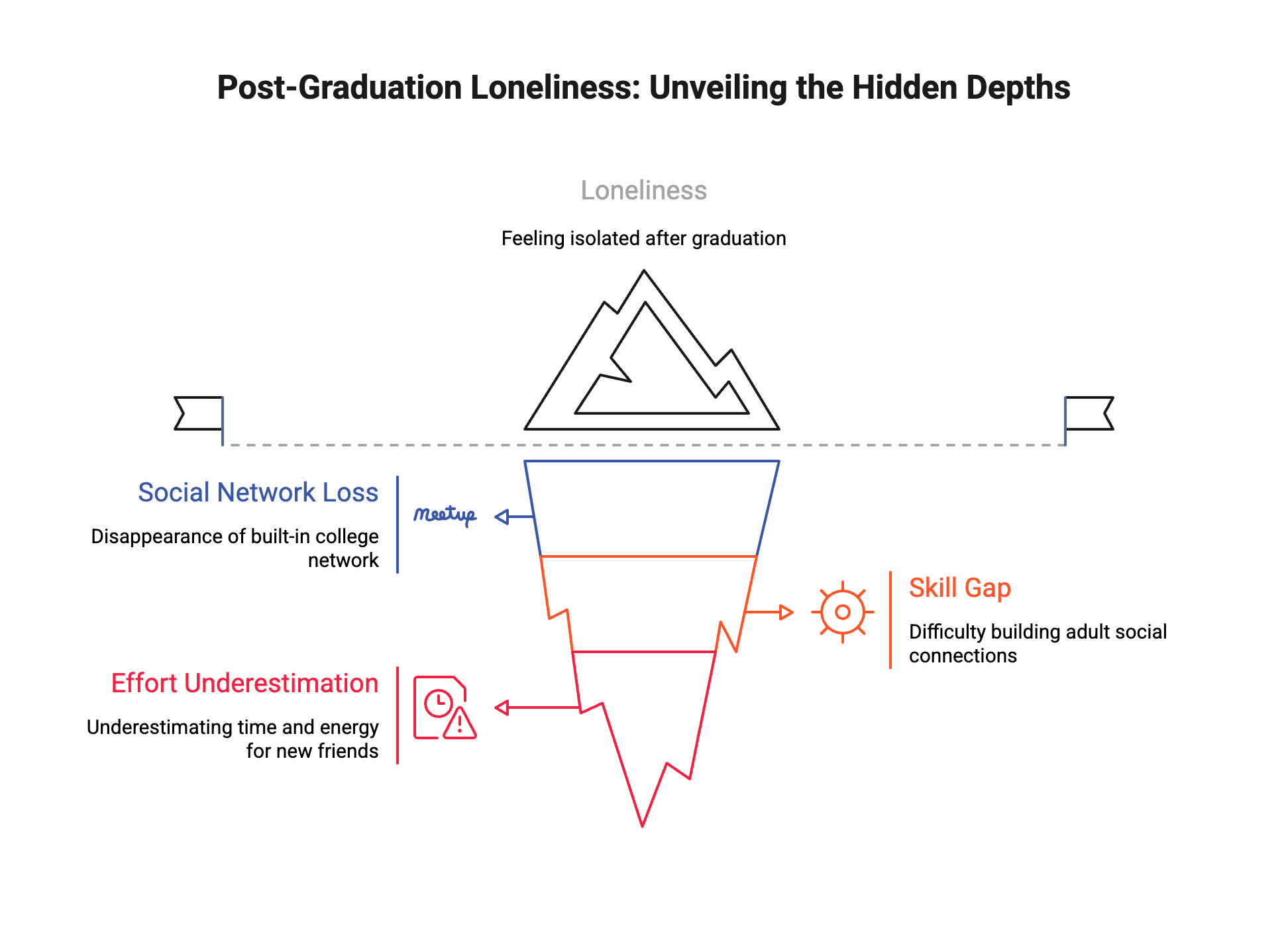
Yes, loneliness is one of the most common experiences college graduates report after leaving school. The built-in social network of college students—dorm neighbors, classmates, study groups, and clubs—disappears almost overnight.
Building a new social support system as an adult requires different skills than making friends in college. It takes more intentional effort when you’re not living and studying alongside potential friends every day. Many graduates underestimate how much time and energy this process requires, leading to frustration and increased feelings of isolation.
Staying connected with college friends helps, but it’s also important to build new relationships in your current location. This might mean joining local groups, participating in activities related to your interests, or connecting with coworkers outside of work hours.
What Actually Helps With Post-Graduation Mental Health?
Building new routines and connections makes the biggest difference for improved mental health during this transition. Here are strategies that research shows can help recent graduates cope with the challenges of post grad life.
Establish a daily schedule, even if you’re still in the middle of a job search. Having structure in your daily life helps counter feelings of aimlessness and provides a sense of control. Include time for healthy habits like regular sleep, exercise, and nutritious meals. These fundamentals support both physical health and mental well-being.
Prioritize social support actively. Don’t wait for friendships to happen naturally. Reach out to old friends through video calls, join local groups related to your interests, or connect with other recent graduates who understand what you’re going through. Social connections significantly affect mental health and well-being during life transitions.
Set realistic, small goals. Breaking down overwhelming long-term objectives into achievable steps helps you feel progress rather than paralysis. Celebrate completing each small goal rather than only focusing on distant achievements. If you’re struggling to find a new job immediately, consider volunteering for organizations that interest you—this provides a sense of purpose while you continue your search.
Practice self-compassion and self-awareness during this difficult period. Many aspects of post-graduation life feel uncertain, and being kind to yourself rather than self-critical helps reduce stress and anxiety. Practicing mindfulness can help you stay in touch with your mental health and notice when you need more support. Resilience to depression develops partly through how you respond to challenges.
Use available resources. Many colleges offer career services and counseling even after graduation through alumni services. These resources can include resume editing, career coaching, and access to mental health professionals. Online therapy platforms provide accessible mental health treatment for recent grads who may not have local connections yet.
We tell clients in our practice that the job search after college is its own source of stress, separate from other post-grad challenges. The pressure to succeed professionally while also adjusting to a new city, building friendships, and managing finances creates competing demands on your mental energy. We approach this by helping clients prioritize one or two areas at a time rather than expecting perfection across all aspects simultaneously.
When Should You Seek Professional Help?
Mental health treatment becomes necessary when sadness or anxiety significantly interferes with your life. Consider reaching out to a therapist if you experience:
- Persistent feelings of hopelessness lasting more than two weeks
- Thoughts of self-harm or suicide (call 988 immediately if you’re in crisis)
- Inability to maintain basic daily responsibilities
- Significant changes in sleep, appetite, or energy
- Loss of interest in all activities you once enjoyed
- Increasing isolation from friends and family
The 988 Suicide & Crisis Lifeline provides 24/7 confidential support if you’re experiencing a mental health crisis or emotional distress. Trained crisis counselors can help you cope with immediate difficulties and connect you with local mental health resources.
Cognitive behavioral therapy is particularly effective for treating depression and anxiety in young adults. Therapy helps you identify and change negative thought patterns, develop coping skills, and build resilience during challenging transitions. Mental health treatment often includes a combination of talk therapy and, when appropriate, medication management.
Don’t let concerns about cost or stigma prevent you from getting help. Many therapists offer sliding scale fees, and some insurance plans cover mental health services. The investment in your mental health during this crucial stage pays dividends throughout your adult life. College students and recent graduates can often access counseling services through their school’s health center or alumni network.
The most common mistake we see with recent graduates is waiting too long to reach out for support. Many clients tell us they thought they should be able to handle everything on their own, or that their struggles weren’t “bad enough” for therapy. We want you to know that seeking help during a difficult transition is a proactive choice, not a last resort. Early support prevents small challenges from becoming bigger crises.
Finding Support in DC
For college graduates in the Dupont Circle area, accessing mental health care doesn’t have to feel complicated. Local therapists understand the unique pressures facing recent grads managing post-graduation life in Washington DC, from competitive job markets to establishing independence far from family.
If you’re experiencing post-graduation depression symptoms or simply struggling with the transition to life after college, reaching out for support is a sign of strength, not weakness. Professional help provides tools and strategies that make a real difference in how you cope with this challenging period.
The therapists at Therapy Group of DC work with many young adults managing the mental health challenges of post grad life. Schedule an appointment to start building the coping skills and support system you need.
Disclaimer: This article is for educational purposes only and is not a substitute for professional medical advice, diagnosis, or treatment. Always seek the advice of your physician or qualified mental health provider with any questions you may have regarding a medical or mental health condition. If you are in crisis or experiencing thoughts of self-harm, please call 988 (Suicide and Crisis Lifeline) or go to your nearest emergency room.