

Narrative therapy helps you rewrite the story of your life by separating yourself from your problems. Instead of viewing yourself as defined by mental health difficulties like depression or anxiety, this approach treats the problem as the problem—not you. Early research suggests narrative therapy can ease depressive symptoms, with promising results for PTSD and cancer-related distress, too. In one trial for moderate depression, both narrative therapy and CBT helped, though CBT did somewhat better on one of the two main measures.
But like any therapeutic approach, narrative therapy has both strengths and limitations. Understanding what it does well—and where it may fall short—can help you decide if it’s the right fit for your needs.
What Is a Narrative Therapy Approach?
Narrative therapy is a form of psychotherapy developed by Michael White and David Epston that views people as separate from their problems. White, an Australian family therapist, and Epston pioneered it as an alternative to traditional systemic therapies. The narrative approach holds that we all tell ourselves personal stories about our lives, and sometimes these stories become “problem-saturated”—focused only on difficulties and struggles.
Narrative therapy seeks to help you become the author of your own story. Rather than acting as an expert who diagnoses and treats you, a narrative therapist engages as a collaborative partner. Through therapeutic conversations, you’ll explore events in your life, discuss aspects of your experience you may have overlooked, and create alternative stories that better reflect your values and capabilities. By developing these alternative stories, you move away from problem-saturated narratives toward more empowering ways of understanding your own life.
The general idea is simple but powerful: by externalizing problems and recognizing unique outcomes—times when you successfully managed difficulties—you can develop preferred stories that open up new possibilities for your future.
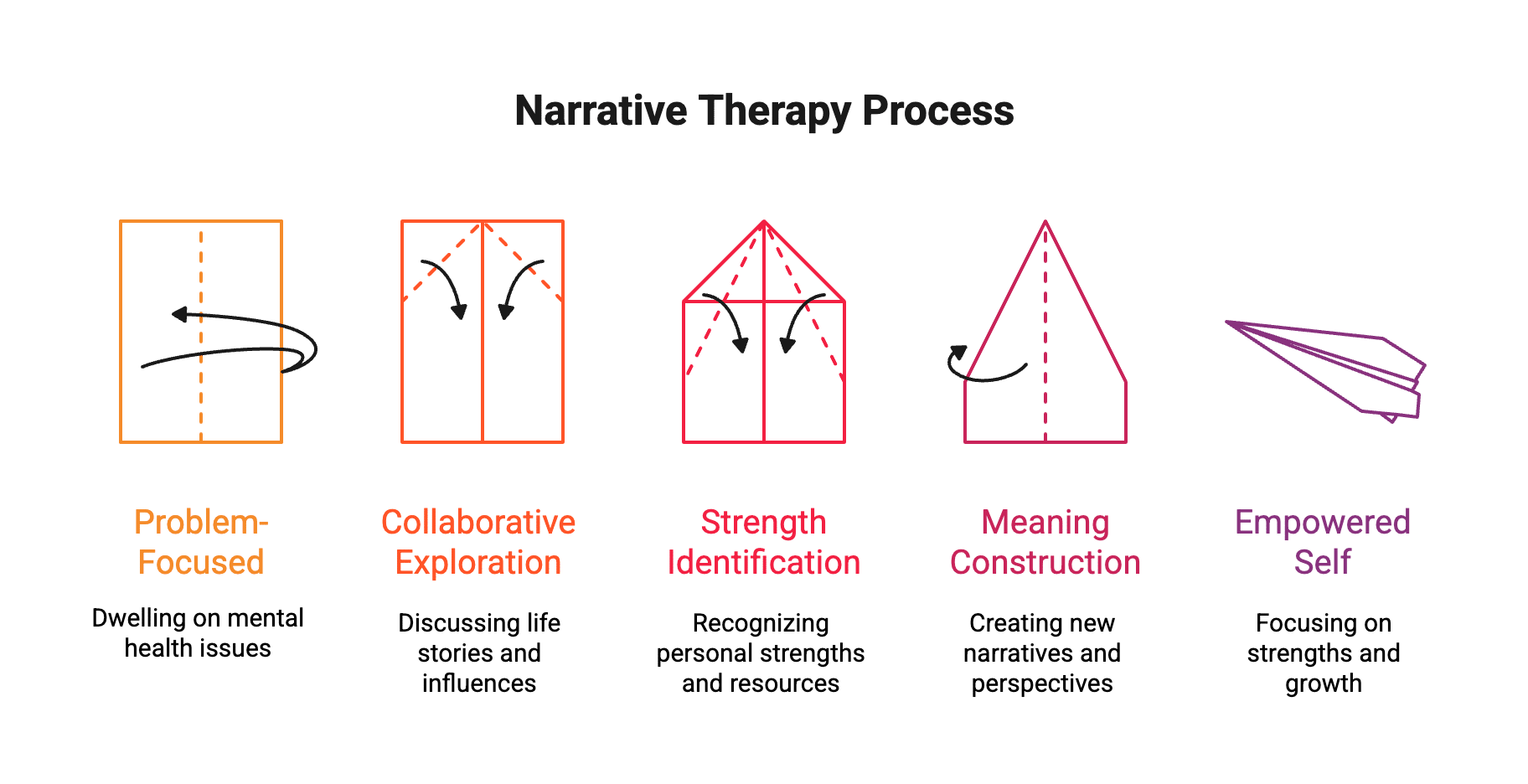
The 5 Steps of Narrative Therapy
While narrative practice varies, most narrative therapy sessions involve these core techniques:
1. Externalizing the problem. Instead of saying “I am anxious,” you learn to say “Anxiety is affecting my life.” This externalization technique helps you view problems as a separate entity rather than a core personality characteristic. The person is not the problem; the problem is the problem.
2. Mapping the influence. A narrative therapist will help you explore how the problem affects different areas of your life—your relationships, work, personal challenges, and emotional impact. This creates a broader perspective on the dominant story and its reach.
3. Finding unique outcomes. Together, you’ll identify times when the problematic stories didn’t control your life. These unique outcomes reveal many skills and strengths you already possess but may have missed in the dominant plot of your problem-saturated narrative. Discovering these moments helps you see that problematic stories don’t tell the whole truth about who you are.
4. Deconstructing problem stories. Your narrative therapist will help you examine where problem stories came from—often from societal expectations, family members, or cultural narratives about what your life should look like. This involves talking through how certain events shaped your own meaning and identity, helping you understand how your own stories developed over time.
5. Re-authoring your narrative. Narrative therapy means creating new stories that align with your preferred realities. As your story gains richness and detail, it becomes easier to live according to your values rather than the dominant story that brought you to therapy.
In our Dupont Circle practice, we work with clients who’ve spent years feeling defined by anxiety or depression. Narrative therapy helps them step back and see these struggles as challenges they face, not who they are. This shift—from “I am broken” to “I’m dealing with something difficult”—opens up space for change that many clients find deeply relieving.
Strengths of Narrative Therapy
Empowers You as the Expert
Unlike some traditional approaches, narrative therapy holds that people are the experts in their own lives. This creates a more equal therapeutic relationship where your narrative therapist doesn’t occupy a position of authority telling you what’s wrong or how to fix it. Many people find this collaborative approach less intimidating, especially if they’re seeking treatment for the first time.
Works Across Multiple Conditions
Early research suggests narrative therapy may help with several mental health concerns:
- Depression: In one small study, narrative therapy eased depression and increased hope and positive emotions. In a clinical trial for moderate depression, both narrative therapy and CBT helped, though CBT did somewhat better on one of the two main measures. If you’re struggling with persistent low mood, depression therapy in DC can help you explore whether narrative therapy is right for you.
- PTSD: In a small pilot study of veterans, 3 of the 11 who completed narrative therapy no longer met criteria for PTSD. For trauma-related concerns, combining narrative therapy with trauma-informed therapy often provides comprehensive support.
- Cancer-related distress: In one trial of hospitalized cancer patients, a month of narrative therapy eased anxiety and depression and improved self-confidence.
- Relationship issues: Narrative therapy can help couples re-author their shared life story and explore alternative stories about their relationship. For relationship concerns, couples counseling can incorporate narrative therapy techniques alongside other approaches like family therapy.
Considers Social and Cultural Context
Narrative therapy encourages attention to how broader social forces—like gender roles, sexual identity, cultural expectations, and systemic inequalities—shape personal stories and mental health. This social justice orientation makes narrative therapy particularly effective for people whose struggles stem partly from marginalization or discrimination. The narrative ideas behind this approach recognize that some “problems” are really responses to unjust systems rather than individual failings.
We’ve noticed that narrative therapy resonates particularly well with DC professionals who feel trapped by career expectations. When clients realize they can question whose story they’re living—their own or someone else’s—it often becomes a turning point in therapy.
Short-Term and Accessible
Most narrative therapy sessions occur weekly over one to two months—a relatively brief timeline compared to some therapeutic approaches. This makes narrative therapy more accessible for people with time or financial constraints. In one small study of veterans with PTSD, participants reported high satisfaction and few dropped out, a hint that the approach resonates with many clients.
Focuses on Strengths, Not Deficits
Rather than diagnosing what’s “wrong” with you, narrative practice emphasizes your existing capabilities, values, and resilience. This strength-based focus can be refreshing if you’re tired of being defined by diagnoses or symptoms. The emphasis on positive stories and many alternative stories (not just one dominant narrative) creates hope and new possibilities.
Weaknesses of Narrative Therapy
Limited for Crisis Situations
If you’re experiencing severe depression with suicidal thoughts, active psychosis, or acute trauma responses, narrative therapy may not provide the immediate stabilization you need. Narrative therapy and other systemic therapies work best when you have some emotional stability to engage in reflective therapeutic conversations about your life stories and mental health.
Requires Verbal and Abstract Thinking
The narrative therapy approach involves substantial talking, metaphor, and abstract thinking about stories and their meanings. This can be challenging if you have cognitive impairments, language barriers, or simply prefer more concrete, action-oriented approaches. Some people find the constant discussion of “stories” and “narratives” too abstract or intellectually demanding.
Less Structured Than Other Approaches
Unlike CBT or dialectical behavior therapy, narrative therapy doesn’t follow a rigid manual or teach specific coping skills. There’s no homework, no worksheets, no clear curriculum. While this flexibility appeals to some, others may feel lost without more structure and concrete tools to use between sessions.
Limited Research Base
While emerging research is promising, narrative therapy has fewer large-scale studies compared to therapies like CBT or psychodynamic therapy. The effectiveness of narrative therapy varies considerably depending on the narrative therapist’s skill, training in narrative therapy techniques, and the specific application. More research on narrative therapy is needed across different populations and mental health conditions.
May Not Address Underlying Biology
For conditions with strong biological components—like bipolar disorder, schizophrenia, or severe OCD—narrative therapy alone may be insufficient. The focus on stories and meaning-making doesn’t directly address neurochemical imbalances or genetic factors. Narrative therapy often works best as part of a broader treatment plan that may include medication.
What Is the Difference Between Narrative Therapy and CBT?
Narrative therapy and cognitive behavioral therapy (CBT) are both effective mental health treatments, but they take fundamentally different approaches to helping people change.
CBT focuses on changing thought patterns. In CBT, your therapist helps you identify negative or distorted thoughts and teaches you skills to challenge and replace them with more balanced thinking. You’ll typically get homework assignments, worksheets, and specific coping techniques to practice between sessions. CBT follows a structured manual and measures progress through symptom reduction.
Narrative therapy focuses on changing your story. Rather than targeting specific thoughts, narrative therapy helps you examine the broader narratives you tell about yourself and your life. There’s no homework or structured curriculum. Instead, you and your narrative therapist engage in open-ended conversations about how problematic stories developed and what alternative stories might better reflect who you are.
The therapeutic relationship also differs significantly. In CBT, your therapist takes an expert role, teaching you skills and guiding you through exercises. In narrative therapy, your narrative therapist acts as a collaborative partner who treats you as the expert on your own life. Narrative therapy emphasizes that you already possess the skills and knowledge you need—they just may be hidden by problem-saturated stories.
CBT has strong research evidence for depression and anxiety, and narrative therapy’s smaller evidence base is promising. In one study of moderate depression, both helped, though CBT did somewhat better on one of the two main measures. The best choice often depends on your preferences: if you want concrete tools and structured sessions, CBT may fit better. If you prefer exploratory conversations and examining how culture and society shaped your personal stories, narrative therapy might resonate more.
Many people benefit from combining both approaches—using narrative therapy to explore their life stories and mental health while learning specific CBT skills for managing symptoms.
Is Narrative Therapy Right for You?
Narrative therapy works best if you:
- Want to focus on personal strengths rather than just fixing mental health problems
- Prefer collaborative therapeutic conversations to expert-driven treatment
- Are interested in how family, culture, and society shaped your current situation
- Can engage in reflective discussions about life stories, personal stories, and their meanings
- Have some emotional stability to do exploratory narrative therapy work
It may be less ideal if you:
- Need immediate crisis intervention or symptom management
- Prefer structured, skill-building approaches with clear homework
- Find abstract discussions frustrating or prefer concrete action steps
- Have severe symptoms requiring more intensive intervention
In our practice, we frequently combine narrative therapy with other therapeutic approaches. This integrated narrative therapy approach often yields the strongest results.
The best approach is often combining narrative ideas with other evidence-based treatments. For instance, you might use narrative therapy to explore how you want your own life story to unfold while also learning skills from anxiety therapy for managing symptoms.
Getting Started With Narrative Therapy in Washington, DC
If narrative therapy sounds like a good fit, the first step is finding a qualified narrative therapist. During your initial narrative therapy session, expect your narrative therapist to ask you to share your story, discuss how problems are affecting your mental health and life, and explore what you hope to achieve. You’ll likely also discuss practical matters like session frequency and how your work together may evolve.
In a city as achievement-focused as DC, narrative therapy can offer a refreshing alternative to the constant pressure to optimize and perform. The approach invites you to question whose expectations you’re living up to and what your own values actually are—essential questions in a place where career identity often overshadows everything else.
Ready to Rewrite Your Story?
If you’re tired of feeling defined by your struggles—or living up to expectations that don’t feel like yours—our therapists at Therapy Group of DC can help. We work with people who are questioning whose story they’re really living, separating themselves from problem-saturated identities, and finding more authentic narratives in a city where career achievements often overshadow personal meaning. Learn more about therapy in Dupont Circle.
Common Questions About Narrative Therapy
What specific narrative therapy techniques do therapists use?
Beyond the core steps of externalizing and re-authoring, narrative therapists use several specialized narrative therapy techniques. The Statement of Position Map helps you evaluate how problems affect your life and what position you want to take toward them. The Tree of Life exercise helps you visualize your values, skills, and identity—with roots representing your history, trunk showing your strengths, and branches symbolizing your hopes. Many narrative therapists also create therapeutic documents—letters or certificates that mark your progress and document your journey toward preferred stories.
Who developed narrative therapy and what influenced it?
Narrative therapy was developed by Michael White and David Epston. They drew from various philosophers and theorists, including Michel Foucault’s ideas about power and discourse, and Jerome Bruner’s work on how people construct meaning through stories. Michael White emphasized a non-blaming, non-pathological approach that views clients as experts in their own lives. This marked a significant shift in psychotherapy toward more collaborative, respectful therapeutic conversations.
What actually happens in a narrative therapy session?
Narrative therapy sessions involve primarily talking and storytelling. Your narrative therapist will ask thoughtful questions to help you explore your experiences and the meanings you’ve made of them. Rather than giving advice or teaching skills, your therapist listens closely and asks questions that help you discover unique outcomes—times when you successfully dealt with challenges. Sessions focus on externalizing problems, mapping their influence on your life, and developing alternative stories that reflect your values and preferred realities.
Can I do narrative therapy online or does it have to be in-person?
Narrative therapy works well in both online and in-person formats. Since narrative therapy emphasizes therapeutic conversations rather than physical exercises or activities, it translates effectively to video sessions. Many narrative therapists now offer telehealth options, making narrative therapy more accessible if you live outside major cities or have scheduling constraints. The collaborative nature of narrative therapy and focus on storytelling can work just as effectively through a screen.
What’s the difference between narrative therapy and other systemic therapies?
Narrative therapy is one of several systemic therapies that consider how relationships, culture, and social context shape mental health. While family therapy often works with entire family systems directly, narrative therapy typically works with individuals but still considers family and social influences. Compared to other systemic therapies, narrative therapy places unique emphasis on language, stories, and how dominant cultural narratives shape personal identity and mental health concerns.
Can narrative therapy help with severe mental health conditions?
For severe mental health conditions like bipolar disorder, schizophrenia, or severe OCD, narrative therapy typically works best as part of a comprehensive treatment plan rather than as a standalone approach. While narrative therapy can help you develop more empowering stories about living with these conditions, it doesn’t address the biological components that often require medication. Many people combine narrative therapy with psychiatric medication and other therapeutic approaches for optimal mental health outcomes.
This blog provides general information and discussions about mental health and related subjects. The content is not intended to be a substitute for professional medical advice, diagnosis, or treatment. Always seek the advice of your physician or other qualified health provider with any questions you may have regarding a medical condition.