

Last updated: November 2025
The holiday season is often called the most wonderful time of year, but for many people, it brings unexpected mental health challenges. While many U.S. adults report feeling stressed around the holidays, deeper factors are at play. Individuals with mental illness often feel their conditions worsen around the holidays, pointing to forces beyond busy schedules and family gatherings. Understanding these hidden impacts on holidays and mental health can help you recognize what you’re experiencing and find support.
Why Do the Holidays Affect Mental Health?
The holidays affect mental health through reduced sunlight, disrupted routines, and pressure to appear happy. The season creates a unique mix of environmental, social, and psychological stressors that intensify existing mental health challenges or trigger new ones.
One of the most overlooked factors is sunlight. Fewer hours of daylight during winter months lead to depression symptoms. Social connection impacts wellbeing, but the pressure to be social makes it difficult to express feelings of sadness when everyone else seems to be celebrating. Many people struggle with feeling isolated during this time, even at holiday gatherings.
The commercialization of the holidays adds another layer. Financial pressure from gift-giving expectations, combined with images of “perfect” celebrations, creates unrealistic expectations that leave people feeling inadequate. From twinkling lights to picture-perfect family scenes, the holiday imagery can make matters worse for those experiencing difficult emotions.
In our practice, we notice a significant uptick in new client inquiries starting in mid-November. What’s striking is how many people apologize for seeking help during what’s “supposed to be” a happy time. We remind them that the holiday season creates real psychological pressure—the expectation to feel joyful when you’re struggling actually intensifies distress. You’re not failing at the holidays if you’re finding them difficult; you’re experiencing a common response to very real stressors.
What Is Seasonal Affective Disorder?
Seasonal affective disorder (SAD) is depression that follows a seasonal pattern, typically worsening during fall and winter when natural light is limited. SAD affects a significant portion of the population, and because its symptoms can look like ordinary holiday stress or the winter blues, it is easy to overlook.
Less exposure to sunlight affects your brain’s production of serotonin and melatonin, which regulate mood and sleep. People with SAD may experience:
- Persistent low mood or loss of interest in usual activities
- Changes in sleep patterns and difficulty concentrating
- Low energy despite adequate rest
Getting as much sunlight as possible helps manage symptoms. Even on cloudy days, spending time outdoors in natural light supports mental well being—whether walking through Dupont Circle or sitting near a window. Light therapy using special lamps that mimic sunlight has proven to be one of the effective treatments for seasonal affective disorder.
Don’t dismiss winter sadness as “just” holiday stress. If you notice persistent mood changes starting in fall and lifting in spring, seasonal affective disorder may be affecting you—and it’s treatable.
How Does Social Isolation Impact Mental Health During the Holidays?
Social isolation increases the risk of both depression and anxiety, particularly when society emphasizes togetherness. The paradox of the holiday season is that while it’s meant to bring people together, many experience profound loneliness.
Many Americans report that their mental health is negatively impacted by the holidays. For those living far from family members, experiencing grief and loss, or feeling isolated, the emphasis on family gatherings and holiday events intensifies feelings of disconnection. Staying connected with even one person boosts well being, whether through in-person visits or video chat.
Social isolation doesn’t just affect mood—it impacts mental and physical health. Chronic loneliness can weaken immune function and increase inflammation, demonstrating the connection between behavioral health and physical illness.
The Pressure to Hide Difficult Emotions
The cultural expectation that holidays should be joyful creates additional mental health challenges. When everyone around you appears to embrace the holiday spirit, admitting you’re struggling feels impossible. This pressure prevents many people from seeking the support they need.
People may feel obligated to attend holiday gatherings even when feeling overwhelmed. They compare their grief to others’ joy and feel even more isolated. Acknowledging that difficult emotions can coexist with moments of joy is an important part of self care during this season. The most important thing is honoring your genuine feelings rather than forcing yourself to feel happy.
We often tell clients that it’s okay to opt out of traditions that don’t serve you anymore. Many people continue hosting, attending, or participating in holiday activities out of obligation rather than genuine desire. What surprises them when they finally say no is how often others are relieved too—they’ve been feeling the same pressure but didn’t want to be the first to break the pattern. We’ve seen this repeatedly: the obligation to maintain certain traditions often causes more stress than the actual change would create.
Are Holidays Good for Your Mental Health?
Holidays can support or harm mental health depending on individual circumstances. For some people, the holiday season provides meaningful opportunities for connection, gratitude, and rest. For others, increased stress, unrealistic expectations, and disrupted routines around the holidays contribute to anxiety and depression.
Research indicates that major holidays don’t universally worsen mental health—holidays like Christmas and Thanksgiving aren’t linked to more psychiatric emergencies. However, individual experiences vary widely based on existing mental illness, recent loss, financial pressure, and family dynamics.
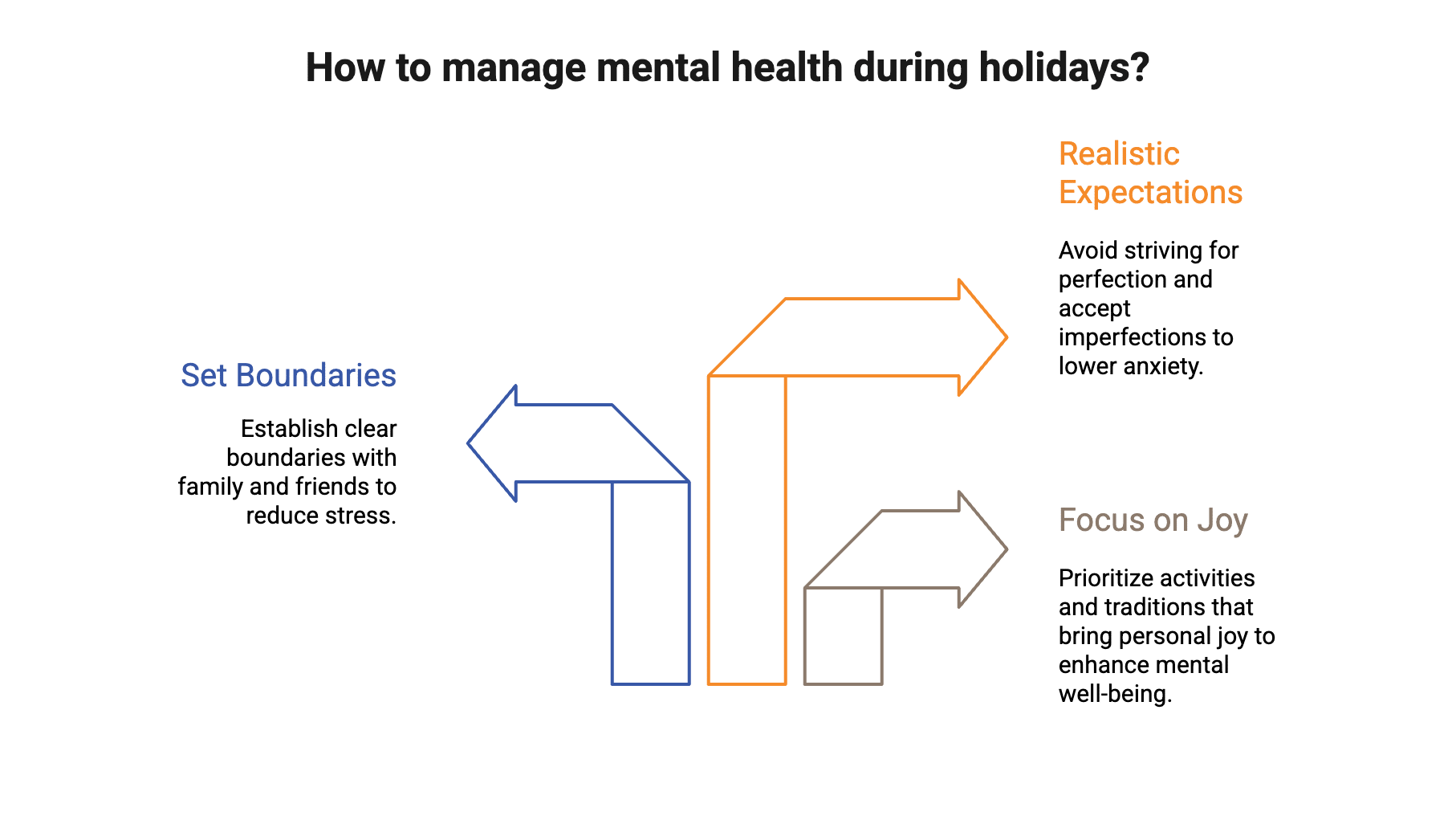
The key is setting realistic expectations for yourself. Instead of trying to create a “perfect” holiday experience, focus on what truly brings you joy. This might mean:
- Choosing which holiday events to attend rather than saying yes to everything
- Setting boundaries with family members about topics or activities
- Creating new traditions that feel more authentic to your current life
You don’t have to match anyone else’s idea of the “right” way to celebrate. Protecting your mental health matters more than maintaining appearances.
What Mental Health Resources Can Help During the Holiday Season?
Multiple evidence-based resources can support your mental health during the holidays, from talk therapy and support groups to self-care practices and digital tools. Recognizing when you need help and taking action before stress levels become unmanageable is key.
Professional Support Options
Talk therapy provides consistent space to process difficult emotions and develop coping strategies. Maintaining therapy during holidays offers crucial support when navigating increased stress. If you’re new to therapy, the holiday season can be an ideal time to start—you’ll have immediate opportunities to apply what you’re learning.
Support groups connect you with others who understand your experience. Whether for grief and loss, anxiety, depression, or other mental health challenges, support groups reduce the isolation that makes holiday stress worse. Many communities, including the DC area, offer both in-person and virtual options.
Self-Care Practices That Make a Difference
Maintaining healthy habits during the holiday season protects both mental and physical health. Focus on these key practices:
- Get fresh air and natural light: Even 15-20 minutes outdoors improves mood and reduces stress while helping regulate your body’s internal clock
- Practice self care through movement: Regular physical activity reduces anxiety and serves as effective stress reduction—walking your neighborhood or home yoga both work
- Limit alcohol and sugar: Holiday events often center around food and drinks, but excess worsens mood and disrupts sleep
- Keep a balanced diet and sleep schedule: Maintaining healthy habits helps stabilize mood and energy levels
Home-based wellness activities like exercise and relaxation support mental health when you can’t access other resources.
Digital Mental Health Tools
Apps for stress management offer accessible support between therapy sessions or when you need immediate coping strategies. Look for apps that protect your privacy and use evidence-based techniques like mindfulness, breathing exercises, or mood tracking. While these tools don’t replace professional support, they complement your existing mental health care.
Practical Strategies for Protecting Your Mental Health
Small, intentional actions can significantly reduce stress and support your well being. Rather than overhauling your entire approach, focus on one or two changes that feel manageable.
Setting realistic expectations starts with acknowledging no holiday will be perfect. Instead of comparing your experience to idealized social media images or memories, define what would make this season meaningful for you. This might mean scaling back on holiday cards, choosing a Secret Santa gift exchange instead of buying expensive gifts for everyone, or limiting social obligations to events that truly matter.
Financial pressure causes significant holiday stress for many families. Creating a budget for gifts, travel, and holiday events helps manage spending anxiety. Remember that thoughtful, modest gifts often carry more meaning than expensive ones. Many people appreciate handmade items or spending time with friends and family over material presents.
If you’re experiencing grief and loss, give yourself permission to adapt traditions. The first holiday season without a loved one can be especially challenging, and it’s okay to skip certain activities or create new traditions that feel less painful. Spending time with friends and family who understand your situation helps you honor your loved one while taking care of yourself. This is a difficult time, and there’s no “right” way to grieve.
From a clinical perspective, we encourage clients to identify their non-negotiables versus their flexibles during the holidays. Maybe cooking a special meal matters deeply to you, but attending every party doesn’t. Or perhaps video-calling distant relatives is essential, but sending cards isn’t. When you’re clear about what truly nourishes you versus what drains you, it becomes easier to say no without guilt. We’ve worked with many people who discovered that scaling back actually made their holidays more meaningful, not less.
When you feel overwhelmed by mental health challenges, seeking professional help is a sign of strength. If your conditions worsened around the holidays or you’re noticing increased symptoms, reaching out for support can prevent a crisis.
Reach out to us if you need extra support
If you’re looking for support navigating the mental health challenges of the holiday season, the therapists at Therapy Group of DC are here to help. Schedule an appointment to get started.
Disclaimer: This article is for educational purposes only and is not a substitute for professional medical advice, diagnosis, or treatment. Always seek the advice of your physician or qualified mental health provider with any questions you may have regarding a medical or mental health condition. If you are in crisis or experiencing thoughts of self-harm, please call 988 (Suicide and Crisis Lifeline) or go to your nearest emergency room.