Unique Challenges Interracial Couples Face (And How Counseling Helps)

Interracial couples counseling provides specialized support for partners navigating cultural differences, family dynamics, and societal pressures. This guide is for interracial and intercultural couples in Washington, DC who want to strengthen their relationship and build resilience together. You’ll learn about the most common challenges these couples face, evidence-based strategies for navigating cultural differences, how counseling can help, and how to find the right therapist.
Interracial couples are partners from different racial or ethnic backgrounds who bring distinct cultural traditions, values, and experiences to their relationship. Approximately 11% of adults in the United States are married to someone from a different racial or ethnic group, with this number rising to 19% among new marriages, according to research on multi-heritage couples.
While every relationship faces challenges, interracial couples often encounter unique pressures related to cultural differences, family acceptance, and experiences with discrimination. Understanding these challenges—and knowing how counseling can help—is the first step toward building a stronger, more resilient partnership.
What Makes Interracial and Intercultural Relationships Unique?

Interracial and intercultural relationships bring together partners with different racial backgrounds, cultural traditions, and often distinct communication styles. These differences can enrich your connection, but they also require intentional navigation. You and your partner may differ in race, ethnicity, religion, national origin, language, or cultural practices—each dimension adding complexity to how you build a shared life together.
Cultural differences may span values and philosophies around money, independence versus interdependence, children’s discipline, and gender roles. For most of U.S. history, engaging in an interracial relationship was looked down upon and discriminated against. It was only on June 12, 1967, that the U.S. Supreme Court struck down all state laws against interracial marriage in the landmark case Loving v. Virginia. Now, a little more than 50 years later, one-in-six newlyweds are married to someone of a different race or ethnicity.
These relationships exist within a broader social and cultural context that shapes your daily experiences. Research shows that couples often experience most daily issues as cultural differences, while race becomes more prominent during interactions with others outside the relationship, studies on interracial couple dynamics have found.
What Challenges Do Interracial Couples Face?
Interracial couples face unique challenges that same-race couples may not encounter. Understanding these struggles helps you recognize what you’re experiencing and know you’re not alone. Here are the five most common challenges:
Family and Social Acceptance
Non-acceptance by family members or friends can create significant stress in your relationship. Extended family members may express disapproval, make insensitive comments, or struggle to accept your partner. Many interracial couples experience increased resistance from family compared to same-race couples, affecting everything from holiday gatherings to life transitions like marriage or having children.
Family dynamics can become particularly complex around major milestones. Parents and extended family may have concerns rooted in their own cultural values, fears about grandchildren’s identity, or internalized biases. These tensions can leave you feeling caught between your partner and your family of origin.
In our work with interracial couples, we often see partners struggling to balance family loyalty with relationship commitment. The key is learning to present a united front while still honoring your connection to your family of origin—it’s not about choosing sides, but about building something new together.
Cultural Values and Traditions
Disagreements about cultural norms, rules, rituals, or religious practices can create friction even in loving relationships. You and your partner may have different expectations about how to celebrate holidays, raise children, manage money, or make decisions. Your own traditions may conflict with your partner’s, requiring ongoing negotiation about which practices to maintain, adapt, or blend.
One partner may feel pressure to assimilate while the other feels their culture is being erased. Finding common ground while honoring both backgrounds requires patience, flexibility, and often professional support.
Communication Differences
Language barriers—either between partners or with extended family members—can complicate connection. Even when you speak the same language, different cultural communication styles can lead to misunderstandings. Some cultures value direct communication while others prefer indirect approaches. Some emphasize emotional expression while others prioritize restraint.
These differences affect how you express feelings, resolve conflict, and communicate expectations. Effective communication (sharing thoughts and feelings clearly while truly hearing your partner) requires understanding that what feels like active listening to one partner may feel dismissive to another. What seems like healthy emotional expression may register as overwhelming intensity.
Experiences with Racism and Discrimination
Encounters with discrimination or bias from others outside your relationship add an external stressor that same-race couples don’t navigate. You may face microaggressions, stares, or outright hostility in public spaces. The outside world may question your relationship’s legitimacy or make assumptions about your dynamics.
For the partner who experiences racism, these encounters can be emotionally exhausting. For the partner with more privilege, learning to recognize and respond to discrimination—and understanding its emotional toll—is essential. Research on culturally relevant factors in couples therapy emphasizes that therapists must help couples process how racism and cultural stress affect their emotional well-being and relationship security.
We find that many couples struggle with how to discuss experiences of discrimination without blame or defensiveness. Creating a shared language for these conversations—one that acknowledges both partners’ emotional realities—is essential work in therapy.
Building a Shared Future
Deciding how to blend different cultural traditions and values in your life together requires ongoing conversation. Questions about where to live, how to raise children, which traditions to pass down, and how to navigate holidays can become sources of tension without a clear framework for decision-making.
Interracial marriage involves creating something new—a family culture that honors both backgrounds while building shared meaning. This creative process can be exciting, but it also requires skills that many couples haven’t developed.
While these challenges are real, research shows that intercultural couples can build thriving partnerships using specific, evidence-based strategies.
How Can Interracial Couples Navigate Cultural Differences Successfully?
Despite these challenges, many intercultural relationships thrive through intentional strategies. Here’s how successful couples manage their differences, based on research on how couples manage cultural differences:
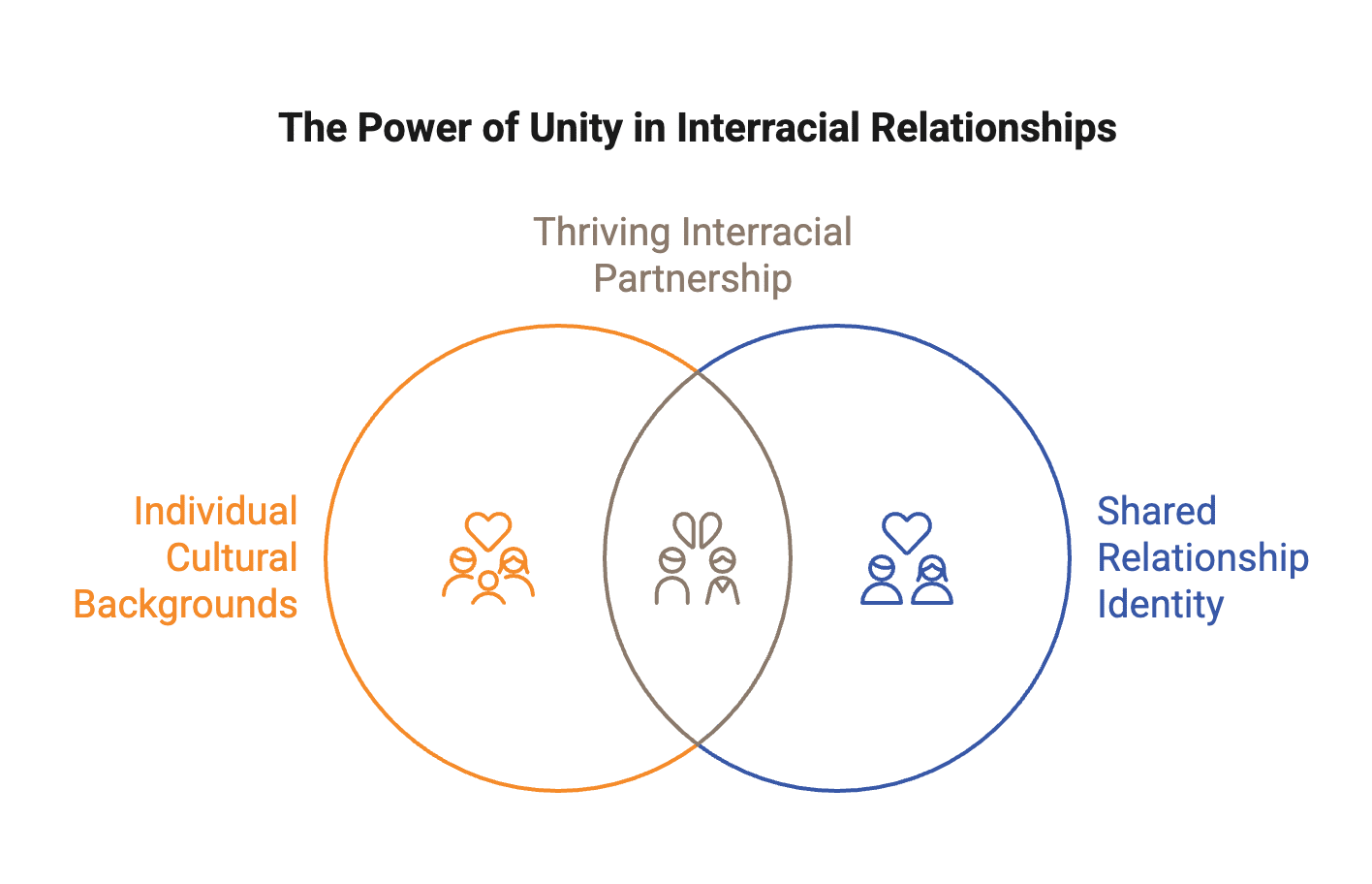
Creating a “We” Identity
Building a shared identity as a couple while honoring individual cultural backgrounds is foundational. This means developing your own relationship culture—complete with shared values, rituals, and meaning—that draws from both backgrounds without requiring either partner to abandon their heritage.
Biracial couples often create new rituals and traditions that honor and blend both of their backgrounds, helping to build this shared identity. This might mean celebrating holidays from both cultures, creating fusion traditions, or developing entirely new practices that feel authentic to your unique partnership.
Reframing Differences as Strengths
Viewing cultural differences as strengths rather than problems shifts your perspective from conflict to collaboration. Your different backgrounds give you access to multiple ways of seeing the world, solving problems, and experiencing life. Intercultural couples may have more experience developing cultural sensitivity and humility due to their unique relationship dynamics.
Providing Emotional Support
Validating your partner’s experiences—especially when they encounter discrimination or cultural stress—builds trust and connection. This means creating a safe space for your partner to share experiences with racism and microaggressions without defensiveness. When the outside world is hostile, your relationship becomes a refuge.
Learning Together
Actively learning about each other’s cultures, traditions, and experiences demonstrates commitment and respect. This ongoing education helps you understand your partner’s perspective, anticipate potential conflicts, and navigate family dynamics with greater skill.
Fighting Together
Approaching challenges as a team rather than as opponents helps you weather external pressures and family disapproval while presenting a united front. Instead of “your family vs. my family” or “your culture vs. my culture,” successful couples frame issues as “us vs. the problem.” This includes recognizing small gestures and bids for connection that strengthen your bond daily.
How Does Counseling Help Interracial Couples?
Marriage counseling provides a safe space for intercultural couples to explore their unique challenges and celebrate their differences. Culturally competent counseling recognizes that your relationship exists within a broader social context shaped by race, culture, and identity.
Building Communication Skills
Counseling helps interracial couples improve their communication skills, ensuring both partners feel heard and understood. Couples therapy techniques like active listening exercises and perspective-taking help you communicate expectations, navigate different communication styles, and develop effective conflict resolution strategies. Evidence-based approaches like Emotionally Focused Therapy (EFT) help couples identify underlying emotional patterns, while the Gottman Method provides practical tools for managing conflict and creating shared meaning. The therapeutic relationship provides a model for how to discuss difficult topics with empathy and respect.
We see transformation when couples learn that cultural differences don’t have to be sources of conflict—they can become opportunities for deeper understanding. The goal isn’t to erase differences, but to build a relationship strong enough to hold them both.
Processing Discrimination and Bias
A culturally competent therapist can help partners process the emotional toll of experiencing racism and discrimination. For interracial couples, therapy addresses both individual sensitivities and external stressors, helping you develop coping strategies to handle societal pressures and prejudices you may face.
Guidelines on culturally competent mental health care emphasize that when therapy is adapted to your cultural backgrounds, you are more likely to stay in treatment and experience better outcomes.
Navigating Family Dynamics
Counseling can assist interracial couples in addressing complex family dynamics and fostering healthier relationships with extended family members. Understanding these family dynamics—from different cultural expectations to generational conflicts—helps you set boundaries, prepare for difficult conversations, and develop strategies for managing family resistance while maintaining your connection.
Developing Resilience
Marriage counseling provides tools for couples to develop resilience against external stressors. You’ll learn to recognize and challenge internalized negative beliefs about your relationship, address self-blame when facing external prejudice, and build a strong social support network.
Creating Shared Meaning
Couples therapy helps you understand each other’s cultural backgrounds (the traditions, values, and experiences shaped by your heritage), expectations, and emotional needs, which is crucial for building a strong relationship. You’ll work together to create shared rituals, blend traditions, and build a relationship structure that works for both of you—whether that’s integrated, coexisting, or another approach entirely.
Understanding how counseling helps is important—but finding the right therapist makes all the difference in your experience and outcomes.
What Should You Look for in a Therapist?
Finding a culturally competent counselor is crucial for interracial couples to navigate your unique challenges. Not all therapists have training in cultural sensitivity or experience with interracial relationship dynamics.
Key Qualities in a Culturally Competent Therapist
A culturally competent therapist will:
- Create a safe, welcoming environment that shows understanding and acceptance of your unique backgrounds
- Ask about your cultural identities and how they affect your relationship
- Explore how racism and discrimination impact your lives, per professional guidelines on discussing race in therapy
- Avoid making assumptions based on stereotypes
- Practice cultural humility by continuously learning about your experiences
- Tailor treatment to your specific cultural backgrounds and preferences
Important Questions to Ask During Your Initial Consultation
Questions to ask potential therapists:
- What experience do you have working with interracial or intercultural couples?
- How do you incorporate cultural differences into couples therapy?
- Are you familiar with the specific cultural backgrounds we bring to our relationship?
- How will you address experiences of racism or discrimination in our therapy?
The DC metro area has many therapists specializing in multicultural and interracial relationship dynamics, making it easier to find a good therapeutic fit.
Understanding what to look for in a therapist is the first step—now let’s explore how to strengthen your relationship regardless of where you are in your journey.
Building Your Relationship Strengths
Interracial couples counseling isn’t about fixing something broken—it’s about building skills, deepening understanding, and creating resilience together. Your cultural differences can be a source of strength when you have the right support and strategies.
Counseling provides essential tools and techniques to enhance communication skills, navigate life transitions, and manage the unique pressures you face. Whether you’re newly dating, engaged, married, or facing specific struggles, therapy offers a path forward.
Ready to Get Started?
If you’re looking for couples counseling in DC that understands the unique dynamics of interracial and intercultural relationships, our therapists provide a safe space to explore your backgrounds, process external stressors, and build the connection you want.
This blog provides general information and discussions about mental health and related subjects. The content is not intended to be a substitute for professional medical advice, diagnosis, or treatment. Always seek the advice of your physician or other qualified health provider with any questions you may have regarding a medical condition.