What Are Silent Panic Attacks? Symptoms, Causes, and Treatment

If you’ve experienced intense fear, a racing heart, or trouble breathing without anyone noticing, you may be having a silent panic attack. Silent panic attacks are panic attacks where overwhelming physical and emotional symptoms happen internally, without obvious outward signs others can see. While you might feel your heart pounding or struggle to breathe, these symptoms often remain hidden.
This guide is for anyone experiencing anxiety or suspecting they’re having panic attacks—especially if no one else seems to notice. We’ll cover what makes panic attacks “silent,” their symptoms and causes, and evidence-based treatments that work. Understanding silent panic attacks matters because recognizing these hidden symptoms is the first step toward effective treatment and reclaiming control over your life.
You might appear calm during a meeting on Capitol Hill while experiencing intense fear inside. Many people worry they’re “making it up” because no one else can see what’s happening. The distress is just as real as more visible panic attacks—the difference lies in external presentation, and both experiences are equally valid and treatable.
In our practice, we see high-achieving professionals who experience silent panic attacks in meetings or presentations. Acknowledging this disconnect between internal experience and external appearance is often the first step toward effective treatment.
Understanding Silent Panic Attacks

A silent panic attack is characterized by internal symptoms such as overwhelming fear, heart palpitations, chest pain, and dizziness, but lacks visible signs like hyperventilation or crying. Research on anxiety disorders shows that people can report fear and anxiety even without visible physiological changes.
During silent panic attacks, you might experience heart palpitations, overwhelming fear, chest pain, dizziness, or feelings of unreality—yet appear calm to observers. Unlike traditional panic attacks where symptoms like hyperventilation or visible shaking alert others, silent panic attacks remain largely invisible.
This creates profound isolation. You appear calm while experiencing what feels like a life-threatening emergency, making it harder to recognize what’s happening and receive support from others. Silent panic attacks are sometimes called “internal panic attacks” because the distress happens entirely inside your body and mind. Understanding how silent panic attacks differ from traditional panic episodes can help you recognize what you’re experiencing.
Silent vs. Traditional Panic Attacks: What’s the Difference?
The key difference between silent panic attacks and traditional panic attacks lies in their outward expression—silent attacks are internalized and less visible to observers. Both types involve intense physical sensations and emotional distress, but traditional panic attacks include readily apparent signs like hyperventilation, visible trembling, crying, or obvious agitation. Someone might grab their chest or struggle visibly to breathe, prompting others to offer help.
Silent panic attacks feature internalized symptoms. Your heart races or you experience trouble breathing, but these symptoms don’t produce obvious external signs. You appear calm while internally struggling with overwhelming panic.
Research on panic disorder shows symptom expression varies significantly. Some people experience greater frequency of internal symptoms like derealization (feelings of unreality) or depersonalization (feeling detached from yourself), while physical symptoms remain less visible. Without obvious signs, getting professional help is often delayed because the severity isn’t apparent to others. Knowing the specific symptoms can help you identify when silent panic attacks are occurring.
Common Symptoms of Silent Panic Attacks
Silent panic attacks involve the full range of panic attack symptoms, but these physical sensations and emotional symptoms remain primarily internal.
Physical Symptoms
Physical symptoms you might experience include:
- Heart palpitations or a pounding heart
- Chest pain or discomfort
- Shortness of breath or feeling like you can’t breathe
- Sweating or chills
- Trembling internally
- Nausea or stomach upset
- Dizziness or feeling faint
- Numbness or tingling sensations
Emotional Symptoms
Emotional symptoms often include:
- Overwhelming feelings of intense fear or dread
- Fear of losing control or “going crazy”
- Fear of dying
- Feelings of unreality (derealization)
- Feeling detached from yourself (depersonalization)
- Racing thoughts or difficulty concentrating
These symptoms typically peak within minutes and last from a few minutes to longer periods. What makes them “silent” is they occur without readily apparent external manifestations. Your heart might be racing, but others can’t see it. This internal nature can make silent panic attacks feel isolating and confusing. Some people experience additional types of panic attacks with distinct characteristics.
We often see people who’ve experienced silent panic attacks for months before seeking help. Many are surprised to learn that others had no idea they were struggling, which can reduce the shame about not seeking treatment sooner.
What Is a Dissociative Panic Attack?
A dissociative panic attack involves significant dissociative symptoms during the episode—derealization (feelings of unreality or dreamlike surroundings) and depersonalization (feeling detached from yourself or observing yourself from outside your body).
During a dissociative panic attack, you might feel like you’re watching yourself from a distance. Time might feel distorted, or familiar places might suddenly seem strange. These experiences add another layer of distress to overwhelming physical symptoms. Dissociative panic attacks can be especially “silent” because the experience is internal and cognitive rather than producing visible behavioral changes. Recognizing these different forms of panic attacks helps inform understanding of their underlying causes.
What Is a Rolling Panic Attack?
A rolling panic attack refers to panic symptoms that come in waves over an extended period rather than peaking quickly. Instead of one intense episode, you experience multiple waves rising and falling over hours.
During rolling panic attacks, you might feel brief relief between waves, only to have symptoms return. This pattern makes it harder to identify when the attack ends. The unpredictable nature creates additional anxiety, significantly affecting your ability to engage in normal activities.
Rolling panic attacks can be particularly silent because fluctuating intensity means you appear functional during lower-intensity periods. Others might notice you seem “off” but won’t recognize you’re experiencing an extended episode. Understanding these different manifestations of silent panic attacks highlights the need to explore what might be causing them.
What Causes Silent Panic Attacks?
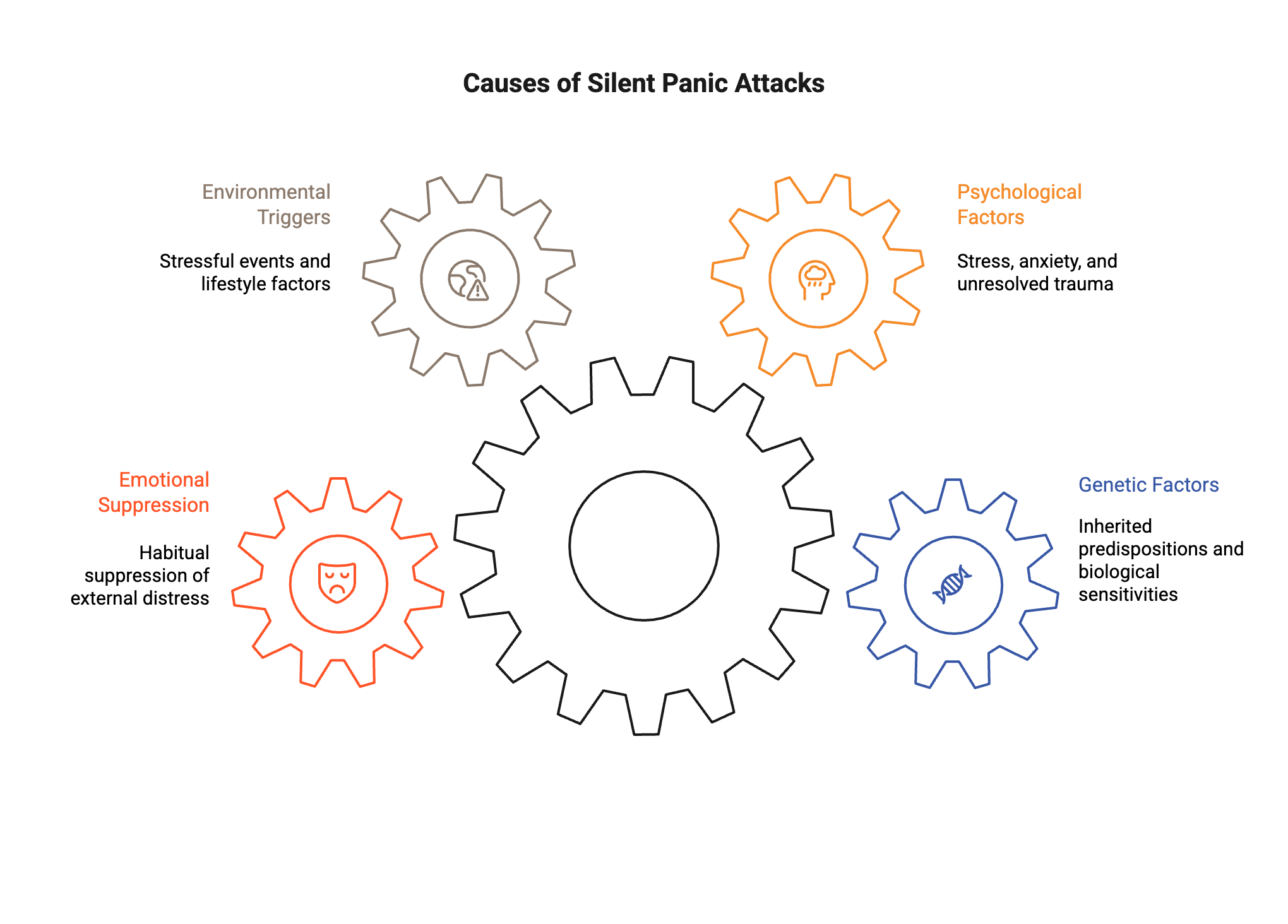
Silent panic attacks arise from a combination of genetic, environmental, and psychological factors. The primary triggers include underlying stress, daily pressures, substances like caffeine, as well as inherited predispositions and learned patterns of emotional expression.
Genetic and Biological Factors
Individuals may have an inherited predisposition to anxiety disorders. Studies have identified sensitivity to carbon dioxide levels and pH balance in the brain as potential contributors. The autonomic nervous system, which controls heart rate and breathing, can become dysregulated during panic attacks.
Psychological Factors
Underlying stress, anxiety disorders, unresolved trauma, or chronic stress can contribute to silent panic attacks. The fight-or-flight response can be triggered even without life-threatening danger present, resulting in what experts call a “false alarm.”
Environmental Triggers
Stressful life events, major transitions, work pressures, caffeine, or lack of sleep can trigger panic attacks. However, silent panic can also occur without clear external triggers, making them unpredictable.
The internal nature may be influenced by learned patterns of emotional expression. Some people develop habits of suppressing external displays of distress, causing panic symptoms to remain internalized. This pattern is especially common among high-functioning individuals who feel pressure to maintain composure. Fortunately, several evidence-based treatments can help manage silent panic attacks.
We’ve learned that the internalized response pattern making these attacks “silent” can be an asset in treatment. People with strong self-regulation skills often respond well to therapies that redirect those skills toward managing anxiety.
What You Can Do About Silent Panic Attacks
If you experience silent panic attacks, effective strategies include:
- Practice grounding techniques like the 5-4-3-2-1 method to stay present when symptoms begin
- Use deep breathing and mindfulness exercises to calm your nervous system during episodes
- Engage in regular exercise such as walking, yoga, or swimming to reduce overall anxiety levels
- Limit caffeine and get adequate sleep to minimize physical triggers
- Seek professional help if attacks become frequent or interfere with daily life
Treatment approaches like cognitive behavioral therapy, acceptance and commitment therapy, and mindfulness-based programs have strong research support. Medication may also help when recommended by a healthcare provider. Remember that silent panic attacks are real and can significantly affect quality of life—but with proper recognition and treatment, you can regain control.
Evidence-Based Treatment Options
Multiple evidence-based treatments effectively manage silent panic. While cognitive behavioral therapy (CBT) is well-known, several other approaches have strong research support.
Psychotherapy Approaches
Panic-Focused Psychodynamic Psychotherapy
This therapy explores how early life experiences, relationships, and emotions might contribute to panic attacks. Studies show 73% of patients respond to this treatment, which focuses on understanding what panic symptoms might mean emotionally.
Acceptance and Commitment Therapy (ACT)
ACT teaches you to accept anxiety-related thoughts rather than fighting them, helping you stay present and align actions with your values. Research demonstrates ACT works as well as CBT for anxiety disorders.
Mindfulness and Relaxation Techniques
Applied Relaxation Training
Applied Relaxation uses specific techniques to reduce physical symptoms like rapid heartbeat and shortness of breath through deep breathing and breathing exercises. Research shows 63% of patients improve with these relaxation techniques.
Mindfulness-Based Stress Reduction (MBSR)
MBSR is an 8-week program teaching guided meditation and mindful relaxation techniques. Studies show MBSR can be as effective as antidepressant medication for treating anxiety disorders.
Trauma-Focused and Interpersonal Therapies
Eye Movement Desensitization and Reprocessing (EMDR)
EMDR was originally developed for trauma but effectively treats panic disorder. This approach recognizes panic attacks can feel life-threatening and that panic memories resemble traumatic memories. Research confirms EMDR is as effective as CBT for reducing panic symptoms.
Interpersonal Psychotherapy
Interpersonal Psychotherapy improves relationships and communication. Since panic attacks often start during relationship stress, addressing interpersonal issues can reduce panic symptoms.
Lifestyle and Self-Help Strategies
Exercise and lifestyle approaches help you become less afraid of body sensations during panic attacks. Regular exercise, a healthy diet, adequate sleep, and consistent stress management support mental health and reduce anxiety levels—essential for preventing silent panic attacks over time.
Most psychotherapy treatments for panic disorder involve 8 to 24 sessions, with many people seeing improvement within weeks. Many therapists teach coping strategies and grounding techniques for managing silent panic attacks in daily life. Taking the first step to seek help is crucial for recovery.
How to Get Help in Washington DC
If silent panic attacks are affecting your daily life, seeking professional help is essential. A mental health professional can provide proper diagnosis and develop a tailored treatment plan.
Where to Start
Start by contacting your primary care provider to rule out other medical conditions and receive referrals to mental health specialists. Medical evaluation provides reassurance and accurate diagnosis.
Finding a Therapist in DC
Look for therapists in Washington DC who have training in treating panic disorder and anxiety disorders. Contact Therapy Group of DC to connect with therapists who provide comprehensive, evidence-based care.
Taking the Next Step
Effective treatments exist. With the right professional support, you can reduce anxiety, significantly decrease the frequency and severity of silent panic attacks, and regain control over daily life.
Disclaimer: This article is for informational purposes only and does not constitute medical advice. If you are experiencing panic attacks or other mental health concerns, please consult with a qualified mental health professional for proper diagnosis and treatment. In case of a mental health emergency, call 988 (Suicide & Crisis Lifeline) or go to your nearest emergency room.