Why Do I Feel Guilty After Breaking Up? Understanding Post-Breakup Guilt
Feeling guilty after a breakup is very common and psychologically normal. Guilt is a natural emotional response when you feel responsible for hurting someone or ending a relationship, even when the decision was right. Many people wonder if they did something wrong, but relationships end for many reasons—and not all are in your control.
Breakup guilt often prompts useful self reflection about future relationships. But feeling guilty for too long can leave you stuck, anxious, or sad. Understanding where your guilt comes from and how to work through it makes a significant difference in your healing process.
What Is Breakup Guilt?

Breakup guilt is the uncomfortable feeling of responsibility, regret, or self blame that often follows the end of a relationship. This guilt can show up whether you initiated the break up or were on the receiving end, manifesting in different ways—from questioning if you tried hard enough to worrying that you’re a horrible person for causing someone pain.
After ending a relationship, you might feel guilty about causing your ex partner hurt, especially if the break up was sudden or if they didn’t want it to end. You may ruminate on things you said or did, obsessing over whether you could have done more to save the relationship. Some people experience guilt tied to unmet commitments made during the relationship, or they feel they’ve failed because societal norms suggest relationships should last forever.
Guilt can also arise from feelings of relief or even joy after a break up. You might think these positive emotions minimize the importance of your past relationship or your ex’s feelings, creating an additional layer of feeling guilty. Feelings of shame about how the relationship ended—perhaps involving arguments, infidelity, or other painful moments—can compound these emotions. These patterns often emerge in toxic relationships where guilt becomes especially complicated.
We often hear clients say, “I thought I’d feel relieved, but now I just feel guilty about feeling relieved.” This double-layered guilt catches people off guard. What we help clients understand is that relief and sadness aren’t mutually exclusive—they can coexist. Relief frequently signals that the relationship wasn’t meeting fundamental needs, which is valuable self-knowledge. The guilt you feel about experiencing relief doesn’t mean you’re a bad person; it means you care. That’s actually a sign of emotional health, not moral failing.
Is It Normal to Feel Guilty After a Breakup?
Yes, it is completely normal to feel guilty after a breakup, even when ending the relationship was the right decision. Guilt shows you care about others and want to do the right thing. The fact that you’re reflecting on your actions demonstrates emotional awareness, not moral failure.
Guilt is a common emotion after breakups, regardless of who initiated the split. People often feel responsible for the pain their partner experiences, even when the relationship was no longer healthy. This responsibility can be particularly strong if you decided to break up, but even those who didn’t initiate it can feel guilt about their role in the relationship’s problems.
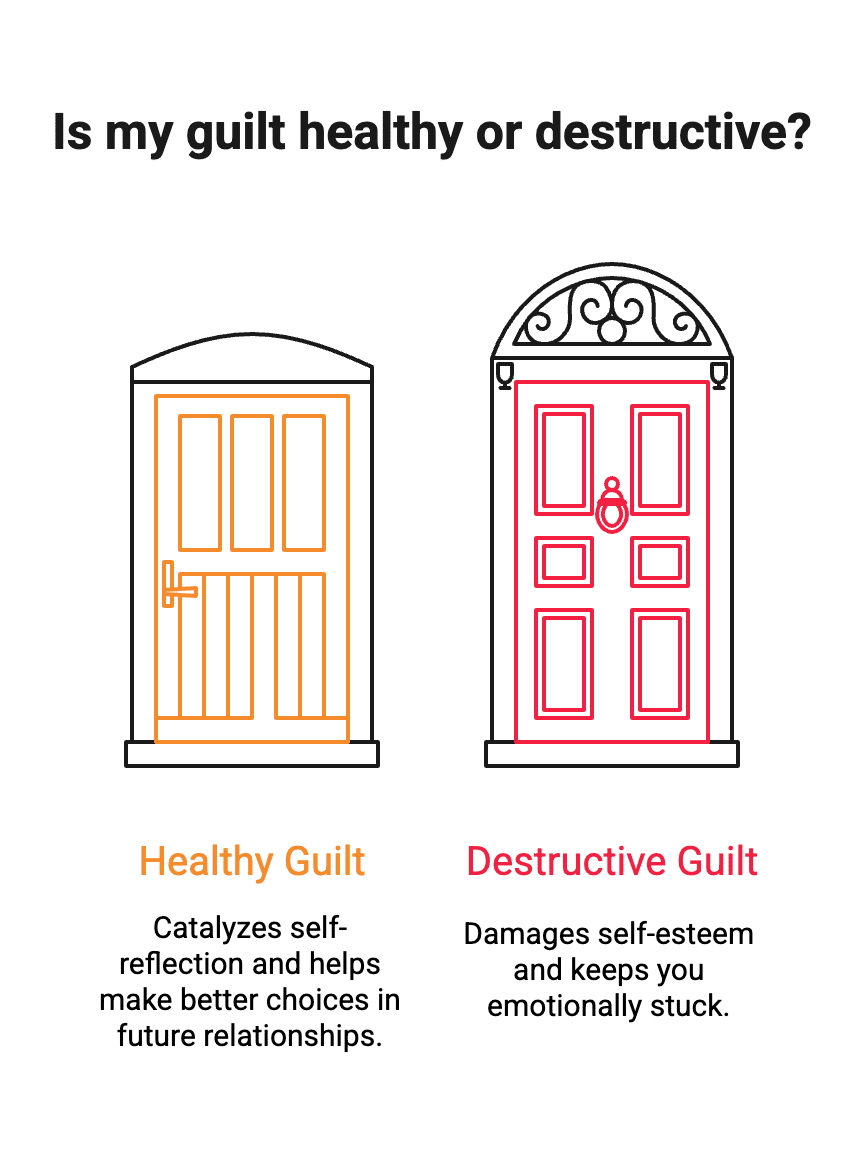
It’s important to distinguish between guilt that serves a purpose and guilt that becomes destructive. Healthy guilt catalyzes self reflection and helps you make better choices in future relationships. However, persistent, overwhelming guilt can damage your self-esteem and keep you emotionally stuck.
Why Do Breakups Trigger Guilt?
Guilt after ending a relationship can stem from several sources:
- Broken promises or commitments – Plans for a future together or implicit agreements about staying together
- Societal messages – Internalizing the belief that ending a relationship represents failure
- Excessive self blame – Taking on disproportionate responsibility for the relationship’s problems
Self blame is a powerful driver of post breakup guilt. If you tend to take on excessive responsibility or habitually replay conversations, you may find yourself caught in cycles of “what if” thinking. This rumination can intensify the feeling guilt and make it incredibly difficult to move forward. Many people feel guilt even when they know the relationship ending was necessary.
We work with clients caught in what we call “the replay loop”—endlessly reviewing the relationship to determine exactly what went wrong and who’s at fault. This pattern reflects difficulty accepting that some relationships simply run their course. In therapy, we help clients see that not every ending requires assigning blame. Sometimes two people are no longer compatible, and that’s a neutral fact rather than anyone’s failure. Accepting this brings significant relief.
How to Overcome Breakup Guilt
If you’re struggling with guilt after ending a relationship, here are evidence-based strategies that can help you overcome guilt:
Talk about your feelings. Sharing your thoughts with a trusted friend, family member, or therapist can help you see things more clearly and feel less alone. Talking about feelings of guilt is therapeutic and helps you process complex emotions that feel impossible to work through alone.
Practice self compassion. Instead of harsh self-judgment, treat yourself with the kindness you’d offer a close friend. Acknowledge you made the best decision you could with the information you had. Self compassion means recognizing your humanity. When feeling guilty becomes overwhelming, self compassion helps you overcome guilt more effectively than criticism ever could.
Focus on what you can and cannot control. Not every problem in a relationship is your fault, and sometimes things just don’t work out despite everyone’s best efforts. Remind yourself that both partners contribute to relationship dynamics, and that ending a relationship that no longer serves either person can be the right call.
Challenge thoughts that make you feel like a horrible person. When you notice yourself thinking “I’m a horrible person” or “I ruined everything,” pause and examine the evidence. Are these thoughts accurate, or are they distortions driven by feeling guilt and self blame? Remind yourself of the valid reasons you had for breaking up, and acknowledge that prioritizing your needs doesn’t make you selfish. You should not feel guilty for putting your happiness first.
Release responsibility for your ex partner’s feelings. While it’s natural to care about your former partner’s pain, you cannot control how they process the break up or how long they heal. Your responsibility is to treat them with respect and honesty during the breakup itself, not to prevent them from experiencing hurt or sadness. Those emotions are part of their own healing process.
Engage in self-care. Prioritizing your physical and mental health after a break up is essential. Get enough rest, spend time with friends and family members, engage in activities that bring joy, and maintain healthy routines. Taking care of yourself isn’t selfish—it’s necessary for healing and moving forward.
Write about your experience. Journaling helps you process feelings and gain clarity. Writing allows you to externalize your thoughts, reducing rumination and helping you identify patterns that may not be serving you.
Focus on personal growth. Use what you’ve learned from this relationship to make better choices moving forward. Reflect on what worked and what didn’t, and what you want differently in your next relationship. This reflection should be constructive, not punitive. The goal is growth and overcoming guilt, not endless self-punishment.
One thing we notice in therapy is that clients who struggle most with breakup guilt often have a history of putting others’ needs before their own. They’ve internalized the message that prioritizing themselves is selfish. We work to reframe this: ending a relationship that isn’t serving you is honest, not cruel. It creates space for both people to find more compatible partners. When clients can see their decision as an act of integrity rather than betrayal, the guilt often lessens considerably.
When to Seek Professional Help
If your guilt is making you feel overwhelmingly sad, anxious, or stuck, a counselor or therapist can help you work through these feelings. A mental health professional can help you distinguish between normal post breakup guilt and excessive self blame patterns.
Therapy provides a safe space to explore your guilt, challenge unhelpful thought patterns, and develop balanced perspectives on the break up. Professional support can help if guilt prevents you from moving forward or affects your ability to trust yourself in future relationships. Different therapy approaches can address anxiety and guilt in ways tailored to your specific needs.
Remember, healing takes time, and emotions—including guilt—are temporary and will pass. Most people feel better with time, especially when they care for themselves and learn from their experiences. Reaching out for help is a sign of strength.
Find Support for Post-Breakup Guilt in Washington, DC
If you’re struggling with guilt after a break up, our experienced psychologists and therapists at Therapy Group of DC can help. We offer compassionate, evidence-based support to help you process complex emotions, develop self compassion, and move forward with clarity and confidence. Contact us today to schedule a consultation.
Common Questions About Breakup Guilt
How to overcome breakup guilt?
Overcoming guilt after a break up involves acknowledging that guilt is simply a feeling—it doesn’t define your character. When feeling guilty persists, practice self compassion by treating yourself with kindness. Focus on what went right alongside what went wrong, and engage in self reflection without getting stuck. Talk with a close friend, family members, or a clinical psychologist. Remember: you’re not obligated to stay in a relationship that no longer serves your needs. Prioritizing your well-being is not selfish, and feeling guilty about this choice doesn’t make you wrong.
How to deal with dumpers guilt?
“Dumpers guilt” refers to the specific guilt felt by the person who initiated the break up. If you’re experiencing this, remind yourself that you are not a horrible person for ending the relationship that wasn’t working. Ending a relationship that is no longer healthy or fulfilling is valid, and breaking up when the relationship is no longer right is actually a caring thing to do for both you and your partner in the long run. Acknowledge that the spark in a relationship can fade over time, and that doesn’t make you wrong or unkind. You have every right to let go of a relationship that doesn’t serve your needs. You deserve to be with someone who brings you happiness, and your ex deserves the same opportunity. The guilt serves a purpose if it prompts reflection, but it shouldn’t keep you trapped in endless self blame. Remember: you should not feel guilty for choosing happiness and authenticity over staying in a relationship ends that wasn’t fulfilling for either person.
What is the 72 hour rule after a breakup?
The “72-hour rule” is an informal guideline suggesting you wait 72 hours before reaching out to your ex after a break up. This cooling-off period gives both people space to process their initial emotions and can prevent impulsive decisions made in moments of intense feeling. However, there’s no one-size-fits-all rule for post breakup contact—what matters most is that you’re making decisions based on genuine reflection rather than guilt or fear. Some people find that maintaining distance for longer helps them heal, while others may need to stay in contact if they share mutual friends or family members. The key is to make choices that support your healing process rather than acting from a place of feeling guilty about how your ex partner might be feeling.
What is the 65% rule of breakups?
The “65% rule” isn’t a widely recognized psychological concept, but some relationship experts use variations of this idea to suggest that if you’re 65% sure or more that the relationship isn’t working, it may be time to seriously consider ending it. The underlying principle is that chronic ambivalence—persistently feeling unsure about whether to stay—often signals deeper incompatibility. However, rather than focusing on arbitrary percentages, it’s more helpful to reflect honestly on whether the relationship is meeting your fundamental needs and whether both partners are willing and able to address ongoing issues. If you find yourself constantly weighing whether to stay or go, that ambivalence itself is important information. Remember that ending the relationship when you’re not on the same page emotionally is often the right thing to do, even though it may feel incredibly difficult at the moment. You should not feel guilty for making a decision that honors your authentic needs and creates space for both people to find more compatible partners.
This blog provides general information and discussions about mental health and related subjects. The content is not intended to be a substitute for professional medical advice, diagnosis, or treatment. Always seek the advice of your physician or other qualified health provider with any questions you may have regarding a medical condition.