

The break up happened and suddenly you don’t recognize yourself anymore. Self-esteem after a breakup often drops because we tie so much of our identity and self-worth to our relationships — but this dip is temporary and you can rebuild stronger than before. Research shows most people’s self-esteem recovers within a year, especially when they use healthy coping strategies and reach out for support.
If you’re struggling with low self-esteem after a breakup, you’re not broken. You’re human. And there’s a clear path forward.
Is it normal to not feel like yourself after a breakup?
Yes — it’s completely normal to lose your sense of self after a relationship ends. Many people experience an identity crisis when a relationship ends because they’ve woven their partner into their daily life, future plans, and even how they see themselves. You might catch yourself thinking “I don’t know who I am anymore” or feeling lost without the routines and roles the relationship provided. Sometimes this confusion connects to deeper questions about identity that surface when major life structures shift.
This happens because relationships shape how we spend our time, who we spend it with, and how we define ourselves. When the relationship ends, all those familiar touchpoints disappear at once. In a city like DC where so much of our identity gets wrapped up in career achievement, losing the relationship part of your identity can feel especially destabilizing.
The good news? This confusion doesn’t last forever. Your sense of self will come back, often clearer and stronger than before.
We often see people after a breakup feeling completely unmoored from their sense of self. This disorientation — the feeling that you don’t know who you are anymore — is actually the beginning of growth. In our practice, we help people use this turning point to rebuild their self-esteem on a foundation that’s truly their own, not dependent on anyone else’s validation or presence. The confusion you’re experiencing now can become clarity.
Why do breakups destroy self-esteem?
Breakups can make you doubt yourself and feel rejected because you’ve invested emotional energy and vulnerability into someone who’s no longer in your life. When a relationship ends, your brain doesn’t just lose a partner — it loses validation, routine, and often a major source of self-worth. Many of us unconsciously measure our value through our relationships, so when the relationship fails, we think we’ve failed too.
You might find yourself spiraling into thoughts like “What’s wrong with me?” or “I’m not good enough.” These thoughts can turn into a self-betrayal spiral where you blame yourself for everything that went wrong. You start obsessive thoughts about what you could have done differently, picking apart your own behavior while your confidence crumbles.
It doesn’t help that breakups often come with real rejection — someone you loved decided they didn’t want to continue the relationship. That hurts, and your self-esteem takes the hit. Your inner critic gets loud, and suddenly you’re questioning your worth, your attractiveness, your personality — everything.
But here’s the truth: feelings of rejection don’t define your value. Everyone experiences relationship loss, and these painful feelings are part of the healing process, not evidence that something’s wrong with you.
The stages of a breakup and your self-esteem
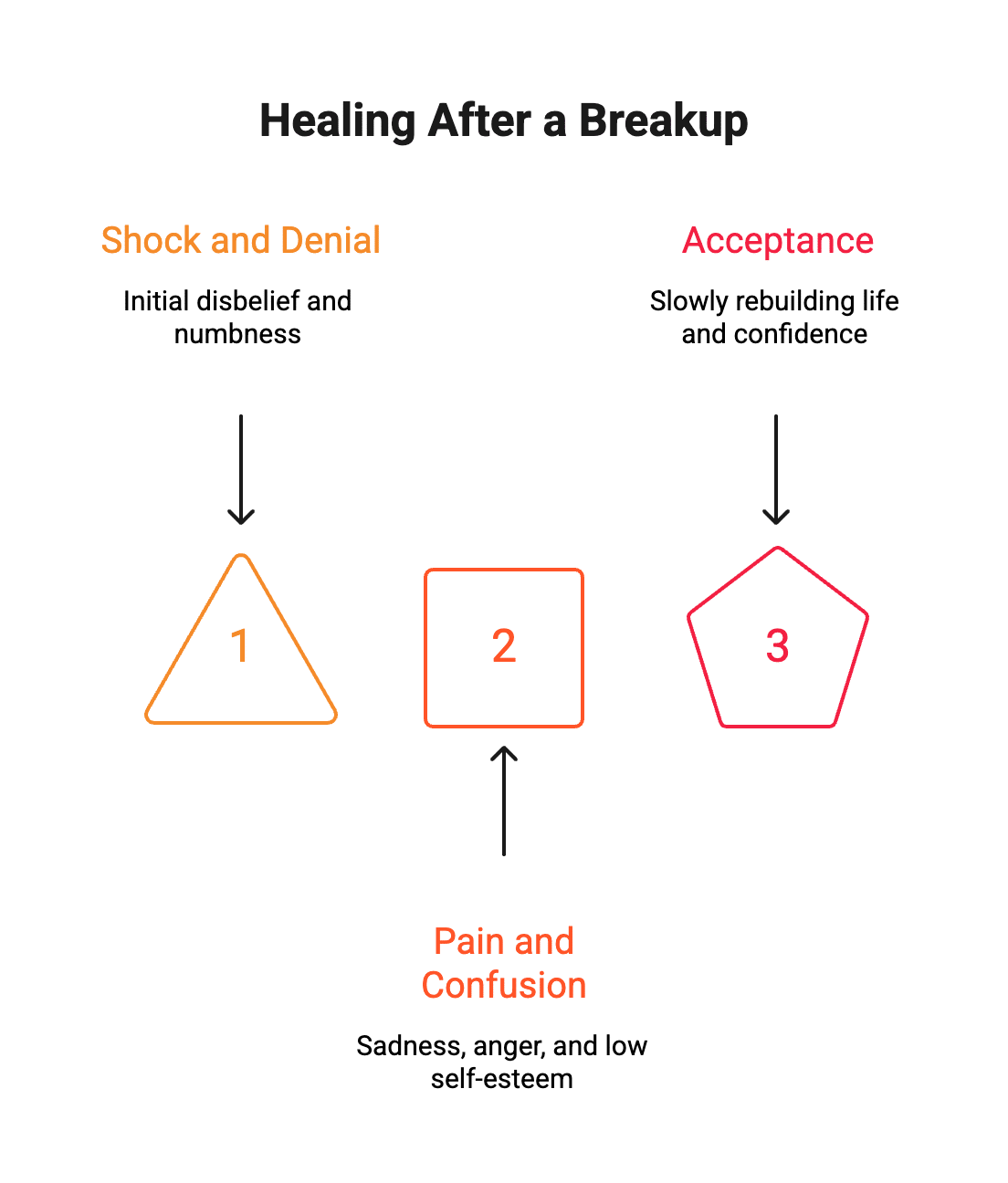
While everyone’s healing process looks different, breakups typically follow some common patterns. At first, you might feel shock or denial. Then comes the pain — the sadness, anger, and confusion that can make your low self-esteem feel overwhelming. This is often when people struggle most with their sense of self.
As time passes, you start to accept what happened. You begin slowly rebuilding your life and confidence. Finally, you reach a place of personal growth where you can look back and realize the breakup, as painful as it was, taught you something important about yourself.
Understanding these stages doesn’t make the pain disappear, but it helps you realize you’re not stuck. You’re moving through a process, and each stage brings you closer to feeling like yourself again.
How to regain your sense of self after a breakup
Regaining your sense of self starts with practicing self-compassion — treating yourself with the same kindness you’d offer your best friends. Research shows that self-compassion is one of the strongest predictors of emotional recovery after a relationship ends. This means speaking to yourself gently, acknowledging your hurt without judgment, and recognizing that struggle is part of being human.
Start by challenging your inner critic. When you catch yourself thinking “I’m not worthy of love” or “I’ll never find anyone,” stop and ask: Would I say this to a friend going through a breakup? Probably not. You’d remind them they’re worthy of respect and love, that this pain won’t last forever, and that healing takes time. You deserve that same compassion.
Here are practical ways to rebuild your self-esteem and self-worth:
Create space for your feelings. Don’t rush the healing process or pretend you’re fine when you’re sad. Allow yourself to feel the full range of emotions — anger, sadness, relief, confusion. Journaling can help you process these feelings and realize you’re making progress, even when healing doesn’t feel that way.
Reconnect with who you were before the relationship. What did you enjoy doing before your ex came into your life? What friendships did you let slide? What hobbies or interests got pushed aside? This is your chance to rediscover those parts of yourself and maybe explore new ones too.
Set small goals and achieve them. Rebuilding self-esteem means rebuilding trust in yourself. Start with manageable goals — go for a walk three times this week, cook a new recipe, reorganize one room. Each small achievement reminds you that you’re capable and worthy of your own effort.
Invest in self-care that actually helps. Real self-care isn’t just bubble baths (though those can be nice). It’s maintaining healthy habits like exercise, which can act as a natural antidepressant, getting enough sleep, eating well, and doing things that genuinely make you feel good about yourself. Self-love means treating your body and mind with respect.
In our work with clients recovering from breakups, we frequently see that the people who bounce back strongest are those who use this time to rebuild their identity independently. They stop trying to fill the void with a new partner right away. Instead, they invest in friendships, pursue interests they’d set aside, and learn to enjoy their own company. This isn’t about being alone forever — it’s about building self-respect and self-worth that doesn’t depend on being in a relationship.
What is the 72-hour rule after a breakup?
The 72-hour rule suggests limiting or eliminating contact with your ex for at least 72 hours immediately after the breakup to give yourself emotional space. Some therapists and coaches specialize in extended “no contact” periods that last weeks or months. The idea is that continued contact keeps reopening the wound and prevents you from starting the healing process.
During this time, you’re not just avoiding your ex — you’re creating the mental and emotional distance needed to start thinking clearly about what you want and need. It gives you space to stop obsessive thoughts about reconciliation and start focusing on your own healing.
That said, there’s no magic timeline. Some people need more than 72 hours. Some need to set boundaries but maintain some contact due to shared responsibilities. The key is recognizing when contact with your ex is hurting rather than helping your recovery.
Getting support during the healing process
You don’t have to rebuild self-esteem after a breakup alone. In fact, research shows that being satisfied with your social support network — whether that’s friends, family, or community — makes recovery significantly easier. Talking about your feelings with people who care about you helps you process what happened and reminds you that you’re not alone.
If friends and family aren’t enough (and that’s okay — they’re not therapists), experienced therapists can provide guidance and a safe space to explore your feelings. Therapy can help you work through codependency patterns, identify what you really want in a partner, and understand aspects of the relationship that weren’t meeting your needs. Some people benefit from trauma-informed therapeutic approaches that address how past experiences and unhealthy relationship patterns may have shaped the relationship.
Professional counseling is especially helpful if you notice:
- You’re stuck in obsessive thoughts about your ex or the breakup
- Your self-doubt is affecting other areas of your life like work or friendships
- You’re struggling with depression or anxiety that feels overwhelming
- You’re repeating unhealthy relationship patterns
- You’re turning to unhealthy coping mechanisms
We work with people every day who are navigating the painful process of rebuilding after a breakup. What makes the difference isn’t the absence of pain — it’s the presence of support and the willingness to do the hard work of examining what happened and learning from it. The clients who make the most progress are often those who stop treating the breakup as purely negative and start seeing it as a catalyst for personal growth and self-discovery.
Moving forward with confidence
Rebuilding self-esteem after a breakup isn’t a straight line. Some days you’ll feel strong and hopeful. Other days you’ll feel lost again. That’s normal — it’s part of the process, not a sign you’re doing something wrong. Most people find their self-esteem improves with time, especially when they’re patient with themselves and use healthy coping strategies.
Research consistently shows that people who stay optimistic and persistent, who learn to regulate their emotions instead of suppressing them, and who focus on personal growth rather than just moving on to a new partner — these are the people who come out stronger. They discover that the end of a relationship, as painful as it is, can be a turning point toward a more authentic, confident version of themselves.
You deserve to feel worthy of love and happiness. You deserve to rebuild your confidence and sense of self on your own terms. And you deserve support as you do it.
Get Support at Therapy Group of DC
If you’re struggling with self-esteem after a breakup, you don’t have to heal alone. Our doctoral and master’s-level therapists specialize in helping people navigate relationship loss, rebuild confidence, and develop healthier patterns for the future. We offer a free consultation to help you find the right therapist for your needs. Reach out today — we’re here to help.
This blog provides general information and discussions about mental health and related subjects. The content is not intended to be a substitute for professional medical advice, diagnosis, or treatment. Always seek the advice of your physician or other qualified health provider with any questions you may have regarding a medical condition.
Common Questions About Self-Esteem After a Breakup
Should I use positive affirmations after a breakup?
Yes, positive affirmations can help remind you of your inherent worth during this painful time. When you’re feeling lost and struggling, simple statements like “I am worthy of love and happiness” or “I acknowledge my pain and give myself permission to heal” can counter the negative thoughts. Start writing these down when you wake up or before bed. The goal isn’t to pretend you’re not hurt — it’s to slowly rebuild your confidence by recognizing the truth about your value, even when it doesn’t feel real yet.
How do I stop feeling stuck in the same place anymore?
Feeling stuck is common, but creating small shifts helps. Consider participating in community events or activities you enjoyed before the relationship. Join a book club, take a class, or volunteer. These new connections remind you there’s a whole world beyond your ex and the relationship. You’ll realize you’re capable of finding joy and purpose independently. When you’re no longer defining yourself solely by the breakup, you naturally start making progress toward hope and healing.
Is it normal to feel like something is wrong with me?
Absolutely nothing is wrong with you. The pain you’re feeling is a normal response to relationship loss. You’re not broken for struggling or for needing time to heal. Many people describe feeling confident one day and then completely lost the next — that’s part of the healing process, not evidence of failure. Give yourself the same compassion you’d offer your best friends going through a breakup. With time and support, you’ll slowly rebuild and discover you’re stronger than you realized.
Should I forgive my ex to move forward?
Forgiving yourself and your ex-partner isn’t about excusing what happened or pretending the hurt wasn’t real. It’s about releasing yourself from the anger and pain that keeps you stuck. You don’t need to reconcile or even communicate forgiveness directly — this is an internal process for your own healing. When you’re ready, acknowledging that both of you are imperfect humans can create emotional freedom. But there’s no timeline for this. Focus first on treating yourself with compassion and building your happiness independently.
Last updated: November 2024