

A work stress therapist specializes in helping people manage workplace stress, burnout, and work-related mental health challenges. If you’re feeling overwhelmed at your job, struggling with anxiety about work, or noticing that stress is affecting your personal life, therapy can provide practical tools to regain control. Work stress therapy focuses on identifying the root causes of your stress and developing coping strategies that work for your specific situation. work-related causes of mental health conditions
Can a Therapist Help with Work Stress?
Yes, therapists can effectively help you manage work stress through evidence-based approaches used in different types of therapy for anxiety, including Cognitive Behavioral Therapy (CBT), mindfulness-based techniques, and Acceptance and Commitment Therapy (ACT). Work stress therapy helps you recognize and challenge negative thought patterns, develop healthy boundaries, and build emotional resilience. individual-level interventions for reducing occupational stress
Therapists work with you to understand the deeper reasons behind your stress. Most people discover that workplace stress isn’t just about workload—it often involves unrealistic expectations, difficulty setting boundaries, or challenges in managing relationships with colleagues. A mental health professional can help you identify these patterns and create strategies to cope more effectively.
Therapy provides a safe space to process feelings of being overwhelmed, stuck, or burned out. Whether you’re dealing with chronic fatigue, muscle tension, or anxiety that spills into every aspect of life, a work stress therapist gives you practical tools to manage these physical symptoms and emotional challenges. Research shows that therapy approaches like CBT and mindfulness can significantly reduce stress and improve overall well being. the benefits of interventions for work-related stress workplace interventions for common mental disorders
In our practice, we often see professionals who’ve been managing stress on their own for months or years before seeking help. The most common pattern we notice is that people wait until they’re deeply burned out before reaching out. Starting therapy earlier makes the process easier and helps you regain balance before stress affects your health and relationships.
What Are 5 Signs of Work-Related Stress?
Recognizing the signs of work-related stress is the first step toward getting help. Workplace stress often shows up in multiple ways—affecting your body, emotions, thoughts, and relationships. Here are five key signs to watch for:
Physical Symptoms
Chronic work stress can cause headaches, muscle tension, stomach problems, and sleep disturbances. You might notice your heart racing before meetings or feel exhausted even after a full night’s rest. Physical well being suffers when stress becomes chronic, and unchecked work stress can even contribute to serious health issues like high blood pressure and heart disease.
Emotional Overwhelm
Feeling constantly anxious, irritable, or on edge points to work-related stress. You might find yourself struggling with motivation, feeling stuck in negative emotions, or experiencing mood swings that affect your personal life and family relationships. Many people report feeling overwhelmed by tasks that used to feel manageable.
Difficulty Concentrating
Work stress affects your ability to focus, make decisions, and think clearly. You might notice yourself dwelling on unhelpful thoughts, having trouble remembering details, or feeling mentally foggy throughout the day.
Behavioral Changes
Changes in behavior—like withdrawing from colleagues, avoiding certain work tasks, or relying on alcohol or food to cope—often signal deeper stress. You might find yourself procrastinating more, missing deadlines, or struggling to maintain the quality of your work.
Relationship Strain
When workplace stress follows you home, it can damage your most important relationships. You might have less patience with loved ones, withdraw from social connections, or feel too exhausted to engage meaningfully with the people who matter most.
Common Techniques Work Stress Therapists Use
Work stress therapists draw from several evidence-based approaches to help you manage workplace pressure and build resilience. The techniques your therapist uses will depend on your specific challenges, but most mental health professionals combine multiple strategies to address both immediate symptoms and underlying patterns.
Cognitive Behavioral Therapy (CBT) is one of the most effective methods for managing work stress. CBT helps you identify and challenge unhelpful thoughts that fuel anxiety and overwhelm. For example, if you find yourself thinking “I have to be perfect or I’ll get fired,” a therapist can help you examine the evidence for this belief and develop more balanced perspectives. You’ll learn practical tools for problem-solving, managing your time more effectively, and building confidence in stressful situations. Studies show that CBT can significantly reduce workplace stress and job burnout. the benefits of interventions for work-related stress workplace interventions for common mental disorders
Mindfulness-based techniques teach you to stay grounded in the present moment rather than spiraling into anxiety about deadlines or dwelling on workplace conflicts. Through breathing exercises, meditation, and body awareness practices, you learn to recognize when stress is building and respond with calm instead of reactivity. These approaches help you manage emotions more effectively and reduce the physical symptoms of stress. nature and mindfulness to cope with work-related stress
Acceptance and Commitment Therapy (ACT) focuses on accepting difficult feelings while taking actions that align with your values. Instead of fighting against workplace stress or trying to eliminate all negative emotions, ACT helps you clarify what matters most in your work life and make choices that support those priorities. This approach is particularly helpful for professionals who feel stuck between competing demands. online acceptance and commitment therapy
Psychodynamic therapy explores how past experiences and unconscious patterns might contribute to your current workplace stress. If you find yourself repeatedly struggling in similar work situations—like conflicts with authority figures or difficulty advocating for yourself—psychodynamic approaches can help you understand these patterns and make lasting changes. This therapy focuses on exploring emotions and relationships in depth, which can provide insight into why certain work situations feel particularly triggering.
Many therapists also teach specific coping skills like setting boundaries, assertive communication, and relaxation techniques such as progressive muscle relaxation. The goal is to give you a toolkit of strategies you can use both in therapy sessions and in your daily work environment.
We frequently combine multiple approaches based on what each person needs. Some clients benefit most from CBT’s practical tools, while others find that exploring deeper patterns through psychodynamic work creates lasting change. The key is finding what resonates with you and helps you build the resilience to handle workplace challenges.
How Work Stress Therapy Works
Work stress therapy uses several evidence-based treatment approaches to help you manage stress more effectively. The specific approach depends on your needs, but most therapists work with clients to develop coping skills, challenge negative thoughts, and create lasting change.
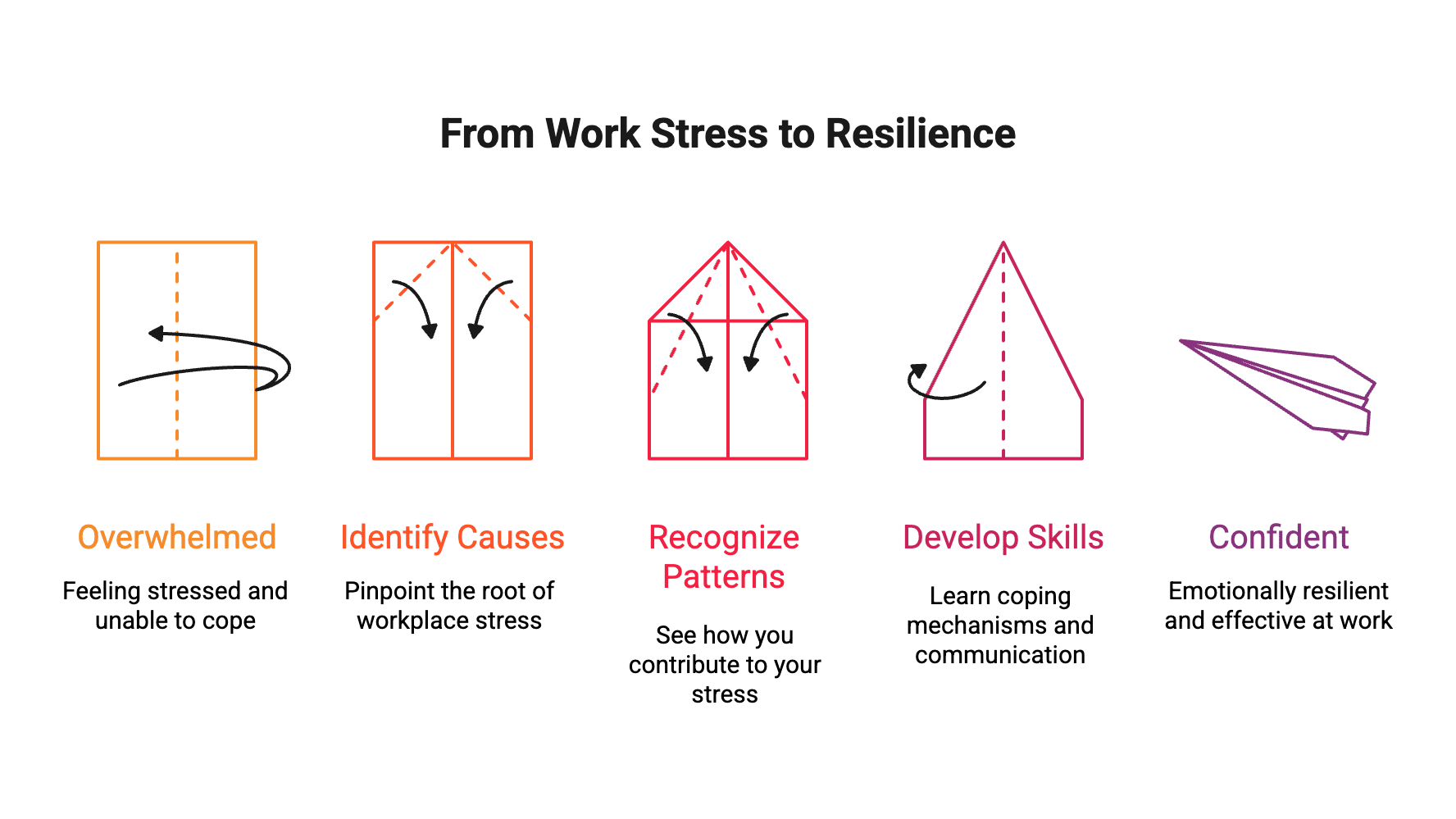
Your therapist will start by helping you identify the root causes of your workplace stress. Is it unrealistic deadlines? Difficult relationships with supervisors? A mismatch between your values and your work environment? Understanding these underlying issues helps you develop targeted strategies rather than just managing symptoms.
Treatment typically involves learning to recognize patterns that contribute to your stress. You might notice that you take on too much responsibility, avoid difficult conversations, or struggle with perfectionism. A mental health professional can help you see these patterns clearly and develop healthier alternatives.
Some therapists offer work-focused approaches that directly address job-related challenges like workload management and communication skills. These programs can help you feel more confident at work while building the emotional resilience to handle inevitable stressors. effects of a multidisciplinary stress treatment programme work-focused versus generic internet-based interventions.
What to Look for in a Work Stress Therapist
Finding the right mental health professional makes a significant difference in your progress. Look for a licensed therapist with an advanced degree who has specific experience working with work-related stress, burnout, or workplace conflict.
Experience with employee assistance programs can indicate a deeper understanding of workplace dynamics and organizational stress. Some therapists specialize in helping professionals in high-pressure environments—like DC’s federal and political sectors—navigate the unique challenges of demanding careers.
The therapeutic relationship matters as much as credentials. You want someone who creates a sense of safety, listens without judgment, and offers both empathy and practical guidance. Consider logistics like cost, location, and whether they offer online therapy for scheduling flexibility.
In high-pressure DC, we see many accomplished professionals who struggle to admit they need support. The reality is that seeking help demonstrates self-awareness and commitment to your well being. Therapy isn’t about fixing something broken—it’s about developing skills to manage stress effectively and live a more balanced life.
Getting Started with Work Stress Therapy in DC
In a city as demanding as DC, where professional identity often feels inseparable from personal worth, acknowledging that work stress is affecting your mental health takes courage. But seeking support is a sign of strength, not weakness.
Mental health services for workplace stress are widely available, and many professionals find that therapy combined with healthy self-care and professional strategies is most effective. Early intervention can prevent stress from escalating into more serious mental health conditions like depression or chronic anxiety disorders.
Ready to Address Your Work Stress?
If work stress is affecting your health, relationships, or sense of peace, reaching out to a therapist can help. The professionals at Therapy Group of DC understand the unique pressures facing high-achieving individuals and can provide the support you need to regain control of your work life and overall well being.
This blog provides general information and discussions about mental health and related subjects. The content is not intended to be a substitute for professional medical advice, diagnosis, or treatment. Always seek the advice of your physician or other qualified health provider with any questions you may have regarding a medical condition.