

If you’ve ever felt sad, anxious, or empty after sex—even when the experience itself was good—you might wonder if something is wrong with you. You’re far from alone. These feelings are more common than most people realize, and they have a name: postcoital dysphoria.
You’re Not Alone: Postcoital Dysphoria Affects Nearly Half of All People
Postcoital dysphoria (PCD) describes feelings of sadness, depression, or anxiety after a sexual encounter. Also called post-sex blues or postcoital tristesse, this experience is surprisingly common. Surveys of women and men show that approximately 46% of women and 41% of men report experiencing PCD at some point in their lives.
These feelings can happen in any sexual context—within an intimate relationship, during casual sex, or even after masturbation. The experience doesn’t necessarily indicate a problem with your relationship or your mental health.
What Is Postcoital Dysphoria (PCD)?
Postcoital dysphoria involves feelings of sadness, depression, anxiety, or emotional distress that emerge after sexual activity. What makes PCD particularly confusing is that it happens even after consensual sex that was physically satisfying. You might reach orgasm, feel pleasure during the sexual experience, and still find yourself overcome with negative feelings immediately afterward.
The feelings associated with post coital dysphoria can last anywhere from a few minutes to several hours after the sexual encounter ends.
What Does PCD Feel Like? Common Symptoms
The symptoms of postcoital dysphoria vary from person to person. Common experiences include:
- Sadness, crying fits, or mood swings that seem to come out of nowhere
- Regret, guilt, shame, or self-loathing that contradict the intimacy you just shared
- Emptiness, numbness, or a sense that something is missing despite experiencing pleasure
You might feel the greatest sadness just when you expected to feel closest to your partner.
Studies of postcoital symptoms found that the most common PCD symptoms in women were mood swings and sadness, while in men, unhappiness and low energy were most frequently reported. Some people experience PCD symptoms primarily after orgasm, while others may feel sad after sex regardless of whether they climaxed.
Why Do I Feel Sad After Sex? Understanding the Causes
If you experience PCD, you might spend considerable time trying to understand why these feelings arise. The psychological factors behind postcoital dysphoria are complex, and multiple elements may contribute to your experience. Understanding the psychological correlates can help you feel less alone and more empowered to seek support.
Hormonal Changes During the Resolution Phase
During and after sexual activity, your body goes through significant hormonal fluctuations. Neuroscience research on orgasm suggests that orgasms trigger a massive release of opioids that then inhibits dopamine and oxytocin transmission in the brain.
After climax, there’s a drop in other hormones like oxytocin and endorphins—the same hormones that create feelings of bonding and pleasure during sex. When these hormones decline during the resolution phase, some people experience mood swings, anxiety, and sadness.
Think of it like an emotional letdown after an intense experience. Research on sexual behavior shows that oxytocin levels rise during orgasm. One theory is that the shift as they fall again can stir up unexpected emotions, even when nothing else is “wrong.”
Past Trauma and Sexual Abuse
For people who have experienced sexual trauma or sexual abuse, consensual intimate experiences can sometimes trigger painful memories or feelings. Even in a safe, trusted relationship, past trauma can surface during or after sex, producing feelings of vulnerability, fear, and guilt.
If you’ve experienced sexual abuse—whether childhood abuse or trauma later in life—your body and mind may react to intimacy in ways that feel confusing or distressing. Studies on postcoital dysphoria found associations between experiencing PCD and childhood sexual abuse. This is a normal response to a traumatic event, and it doesn’t mean your current relationship is unhealthy or that you’re “damaged.”
Body Image Issues and Physical Insecurity
Body issues often surface during and after sexual experiences. If you have negative feelings about your physical appearance, these concerns may intensify during intimate moments when you feel exposed. Anxiety about how your partner perceives your body can overshadow the sensual pleasure of the experience.
These feelings aren’t always rational—your partner may find you attractive even when you struggle with your own body image. But the emotions are real and can contribute to feeling sad after sex.
Relationship Difficulties and Unmet Expectations
Relationship issues don’t always announce themselves during arguments. Sometimes relationship difficulties appear as negative feelings after sex. If you’re experiencing broader relationship challenges—such as communication problems, trust issues, or concerns about your partner’s commitment—these anxieties may emerge during vulnerable moments of intimacy.
While PCD can occur in satisfying close relationships, it’s more common when there are underlying relationship issues or when relationship satisfaction is lower. Unmet expectations about the sexual encounter itself can also contribute to post-coital feelings of disappointment or sadness.
Psychological Distress and Mental Health Conditions
If you’re living with depression, anxiety, or other mental health conditions, you might be more susceptible to experiencing postcoital dysphoria (PCD). Research on male postcoital dysphoria found that PCD was associated with current psychological distress.
That said, many people who experience postcoital dysphoria don’t have diagnosed mental health conditions or sexual dysfunctions—PCD can affect anyone, regardless of their mental health status. The connection goes both ways: depression and anxiety can contribute to post-sex blues, and regularly experiencing PCD can increase stress and psychological distress in your life.
Why Do I Feel Shame After Sex?
Shame is one of the most painful feelings associated with PCD, and many people struggle to talk about it. If you feel shame after sex, several factors might be at play.
Societal and cultural messages about sexuality can create internalized negative thoughts about sexual activities. Religious or cultural upbringings may have taught you that sex is wrong, dirty, or shameful—even within committed relationships. These messages don’t disappear just because you intellectually believe sex is healthy and normal.
In our work with clients experiencing postcoital dysphoria, we often see how deeply cultural and religious messages about sexuality become embedded. This usually shows up as shame that feels automatic and disconnected from current beliefs. What helps most is recognizing that these messages were learned, which means they can be examined and gradually unlearned through compassionate self-reflection and therapy.
Personal judgments about your own sexuality can also trigger shame. You might judge yourself for having sexual desires, for the type of sexual experiences you enjoy, or for having sex outside certain contexts. This can show up around masturbation, too: a study of postcoital dysphoria found that people with more negative attitudes toward masturbation were more likely to feel low afterward—a sign that cultural taboos can create guilt even around normal sexual activities.
Shame can also arise from fears about your performance during the sexual encounter, concerns about your partner’s perception of you, or worries that something about your sexuality is “wrong.” These feelings are common psychological correlates of PCD, and they don’t reflect any actual truth about your worth or your sexuality.
How Common Is It to Experience PCD?
The research on what’s sometimes called postcoital dysphoria reveals just how widespread this experience truly is. Studies have found that almost half of both men and women report experiencing these feelings at some point in their lives—46% of women and 41% of men.
But lifetime prevalence only tells part of the story. In one large survey of men, about 20% had experienced PCD in the previous four weeks, so for many people these aren’t just isolated incidents from years past.
PCD occurs across different sexual contexts. Whether you’re in a long-term intimate relationship, engaging in casual sexual encounters, or masturbating alone, postcoital symptoms can emerge. Published research has documented PCD following all types of sexual activities, challenging the assumption that these feelings only happen in certain situations.
These Feelings Are More Common Than You Think
Our therapists help people navigate the emotional complexity of intimacy every day.
Can PCD Happen to Anyone?
Yes. Postcoital dysphoria can affect anyone, regardless of gender, age, or relationship status. While early research focused primarily on women, more recent studies show that males experience PCD at nearly the same rate.
You can experience PCD whether you’re single, in a new relationship, or in a long-term partnership. It can happen whether or not you have sexual dysfunction or other sexual difficulties. PCD doesn’t discriminate, and experiencing it doesn’t mean something is fundamentally wrong with you or your relationship.
Importantly, PCD is not considered a disease or disorder. It’s a common human experience that can range from occasional to frequent, from mildly uncomfortable to deeply distressing. The fact that you experience these feelings doesn’t define you or limit your capacity for intimate, satisfying close relationships.
We regularly work with people who feel broken or abnormal because they experience sadness after sex. What we help them understand is that PCD is a widespread response to complex biological, psychological, and relational factors. This shift in perspective often reduces shame and opens the door to addressing the underlying causes rather than judging yourself for the feelings.
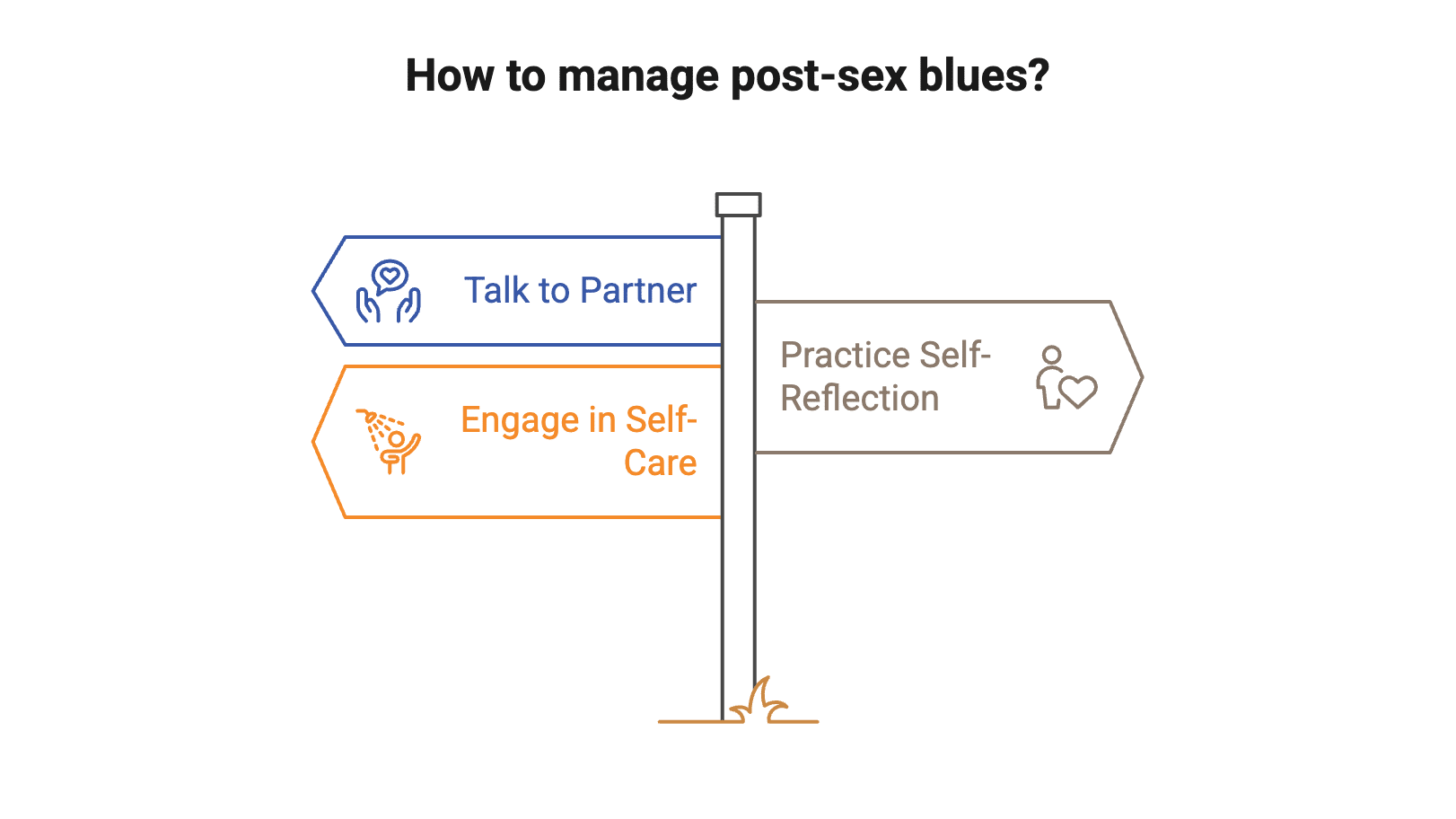
How to Deal with Post-Sex Blues: Treatment Options and Coping Strategies
If you’re experiencing PCD, you have options. While these feelings can be painful, effective strategies exist for managing postcoital dysphoria and improving your sexual experiences.
Talk to Your Partner About Your Feelings
Open communication with your partner is crucial for managing postcoital dysphoria. When you feel sad, anxious, or distant after sex, your partner might interpret your emotions as a reflection of their performance or your feelings toward them. This can create distance and relationship difficulties over time.
Having a supportive partner who understands what you’re experiencing can make a significant difference. Consider talking to your partner when you’re not in an intimate moment—perhaps over coffee or during a calm conversation. Explain that your feelings aren’t about them or the quality of your sexual encounter, but rather something you’re working through.
Discuss what would help you in those moments. Some people benefit from physical closeness and aftercare after sex—cuddling, reassuring words, or simply having their partner stay present with them. Others need space to process their emotions. Your partner can’t read your mind, so clear communication about your needs is essential.
When working with couples navigating postcoital dysphoria, we’ve found that timing and framing make all the difference. Partners often personalize post-sex sadness as rejection. Choosing calm moments for conversation and leading with reassurance before explaining your experience helps—most partners respond with support once they understand PCD isn’t about them.
Practice Self-Reflection and Self-Care
Self-awareness is a powerful tool for understanding and managing PCD symptoms. Consider keeping a journal to track when postcoital feelings occur, what circumstances surround them, and what patterns you notice.
Ask yourself: Do these feelings happen more frequently with certain sexual activities? After particularly stressful days? In specific relationship contexts?
This reflection isn’t about judging yourself—it’s about gathering information that can help you understand your experience better. You might notice that PCD occurs more often when you’re already feeling anxious or stressed in other areas of your life, or that certain triggers make the symptoms more intense.
Self-care practices can also help manage the feelings when they arise. This might include deep breathing, taking a warm shower, engaging in a comforting activity, or reaching out to a trusted friend. Over time, you can develop strategies that help you move through difficult post-coital emotions more easily.
Work with a Clinical Psychologist or Therapist
Professional help from a qualified healthcare professional can be invaluable, especially if you feel sad after sex frequently or if PCD causes significant distress in your life. A clinical psychologist or therapist specializing in sexual medicine or marital therapy can help you explore the underlying causes of your postcoital symptoms.
If you’ve experienced sexual trauma, working with a trauma-informed therapist can help you process past experiences and develop healthier responses to intimacy. Therapy can address body image concerns, relationship dynamics, and psychological factors contributing to your PCD symptoms. Treatment options may include cognitive-behavioral approaches, trauma-focused therapy, or couples counseling depending on your needs.
For couples, marital therapy offers a space to improve communication, strengthen intimacy, and work through relationship issues that may be contributing to post-sex blues. A therapist can help you and your partner develop strategies for managing PCD together.
At Therapy Group of DC, our therapists understand the complex relationship between mental health, trauma, and sexuality. We offer evidence-based treatment options tailored to your specific needs and circumstances.
Living with PCD: You Deserve Support
Experiencing what’s called postcoital dysphoria doesn’t mean you’re broken, abnormal, or destined for unsatisfying relationships. These feelings are common, understandable, and manageable. Whether your PCD stems from hormonal changes, past trauma, body image concerns, relationship difficulties, or a combination of factors, you deserve compassion—both from yourself and from others.
You don’t have to navigate these feelings alone. Talking openly about your experience, whether with a trusted partner or a therapist, is an important first step. The shame and isolation many people feel around sad after sex experiences often diminish simply by learning they’re not the only ones experiencing these emotions.
If postcoital dysphoria is affecting your quality of life, your relationships, or your sense of self, reaching out for professional support is a sign of strength, not weakness. The therapists at Therapy Group of DC are here to help you understand your experiences, develop coping strategies, and build the intimate, fulfilling relationships you deserve.
You Deserve Support That Understands
If postcoital dysphoria is affecting your life or relationships, our Dupont Circle therapists are here to help.