

Living in DC means navigating a world of high achievers and constant comparison. If you’re struggling with low self-esteem, you’re not alone. Many people in our city feel unworthy despite their accomplishments.
The good news? There are proven ways to build self worth that last.
Self worth is your inner sense that you matter as a person, regardless of what you achieve or how others see you. When you develop healthy self worth, you feel more self confidence in relationships, handle challenges better, and experience greater happiness in your own life.
Why Is My Self-Worth Low?
Your sense of self worth can feel low for many reasons. Negative messages from childhood, difficult relationships, or constant comparison to others can all chip away at how you feel about yourself and your self esteem.
In DC’s high-pressure environment, it’s easy to let external factors define your value. When self esteem depends too heavily on job performance, academic performance, or what others think, you’re building on shaky ground. Low self esteem often develops when we base our worth on things outside our control.
Common triggers for low self worth include:
- A bad performance review or career setback
- A relationship ending or conflict with friends
- Starting a new job that feels overwhelming
- Comparing yourself to others on social media
- Childhood experiences with criticism or neglect
Research shows that low self-esteem can affect your mood, relationships, and overall wellbeing, making it harder to enjoy life or handle everyday stress. The important difference is this: you can’t control external sources of validation, but you can develop self worth from within.
What Are the 3 C’s of Self-Esteem?
While there isn’t one definitive “3 C’s” model, therapists often focus on three key components when building self esteem:
Competence means recognizing your skills and abilities. You don’t have to be perfect, but you can identify what you do well and develop new skills. Building this competence strengthens self confidence and self worth.
Connection refers to your relationships with supportive people who value you. These relationships remind you that you matter and support healthy self esteem.
Control is about recognizing what you can influence and letting go of what you can’t. This helps you focus energy where it makes a difference to your self worth.
In the same vein, building self esteem requires you to practice these elements daily. Focus on small wins that boost your competence and self confidence, spend time with friends who lift you up, and realize which aspects of your life you can actually control.
How to Develop Your Self-Worth?
Building self worth takes consistent practice, but you can start today. Here are evidence-based strategies that help you feel worthy from the inside out and strengthen your self esteem.
Challenge and Replace Negative Thoughts
Notice when negative self talk creeps in. That inner voice saying “I’m not good enough” or “I always mess up” isn’t truth—it’s repeating old patterns that damage self esteem.
Studies show that practicing positive self-statements and restructuring negative thoughts can increase self-esteem. When you catch a negative thought, replace it with a more realistic one. This practice builds self worth over time.
Try these swaps to improve your self esteem:
- Instead of: “I’m terrible at my job” → Try: “I made a mistake, but I’m learning and improving”
- Instead of: “Nobody likes me” → Try: “Some people appreciate me, and I’m working on new relationships”
- Instead of: “I always fail” → Try: “Everyone makes mistakes, and each one teaches me something”
This isn’t about toxic positivity. It’s about seeing yourself clearly as a human being who deserves kindness. The more you practice self-compassion, the easier it becomes to maintain healthy self worth.
Practice Self-Acceptance Daily
Self acceptance means acknowledging your whole self—strengths, flaws, quirks, and everything in between. You don’t have to love every part of yourself to accept that you’re worthy of respect. Practicing self acceptance is essential for building self worth and lasting self esteem.
Taking a step back to view yourself with perspective can help you see your own value more clearly. When you practice self acceptance, you stop waiting to feel good until you’re “perfect.” You realize that only you can decide your worth, not your boss, your partner, or your social media followers.
Daily Self-Acceptance Practice
Each morning or evening, write down three things about yourself you accept today. They don’t have to be things you love—just things you’re no longer fighting against.
Examples might include:
- “I accept that I need quiet time to recharge”
- “I accept that I’m still figuring out my career path”
- “I accept that I’m not a morning person, and that’s okay”
Small acts of acceptance add up over time.
Set Small Goals You Can Achieve
Nothing builds self confidence like actually doing what you set out to do. Pick small goals that challenge you slightly but feel achievable.
Setting and achieving realistic goals helps build confidence in your abilities. Maybe your to do list includes walking around Dupont Circle three times this week, or finally organizing one drawer in your apartment.
Good starting goals for building self worth and self confidence:
- Walk or move your body 10 minutes, three times this week
- Text one friend you’ve been meaning to reach out to
- Complete one small task you’ve been avoiding
- Try one new recipe or restaurant
- Read for 15 minutes before bed instead of scrolling
When you achieve these small goals, celebrate them. You’re training your brain to see yourself as someone who follows through, which reinforces self esteem. Many people with low self worth set impossible standards and feel worse when they fall short. Start small. Build momentum.
Connect with Supportive People
Your relationships matter enormously to your sense of self worth and self esteem. Spending time with people who genuinely value you helps you internalize that you matter.
Social connection and sharing experiences with others can boost your sense of belonging and self-esteem. Good friends and supportive people challenge you when needed, but they do it from a place of care.
If you’re in DC working long hours and feeling isolated, prioritize connection to support your self worth:
- Meet a friend for coffee in Dupont Circle or Logan Circle
- Join a book club, running group, or hobby class
- Reach out to someone you’ve been meaning to call
- Attend a community event or volunteer opportunity
These moments of genuine connection remind you that you’re valued and strengthen your self esteem.
Do Things That Make You Feel Good
Make time for activities you actually enjoy. Whether it’s running along the National Mall, trying a new restaurant in Shaw, or losing yourself in a creative project, enjoyable activities matter for your self worth.
Engaging in pleasurable activities can improve mood and help counter negative thinking patterns. When you feel worthy of pleasure and joy, you’re reinforcing healthy self esteem and self worth.
This isn’t selfish—it’s recognizing you’re a human being who needs joy, rest, and fun to thrive. Your self esteem grows when you treat yourself like someone worth taking care of.
Permission Slip
You don’t have to earn the right to enjoy yourself. Rest, play, and pleasure aren’t rewards for productivity—they’re part of being human.
Use Tools and Resources That Help
Some people find apps, online programs, or guided exercises helpful for building self esteem and self worth. Digital tools can provide reminders, exercises, and support throughout your day, making it easier to practice these skills consistently.
Whether it’s a journaling app, a meditation program, or structured online therapy, these can be a great tool for reinforcing what you’re learning. The key is consistency—using them regularly enough that new thought patterns become habits and your self confidence grows.
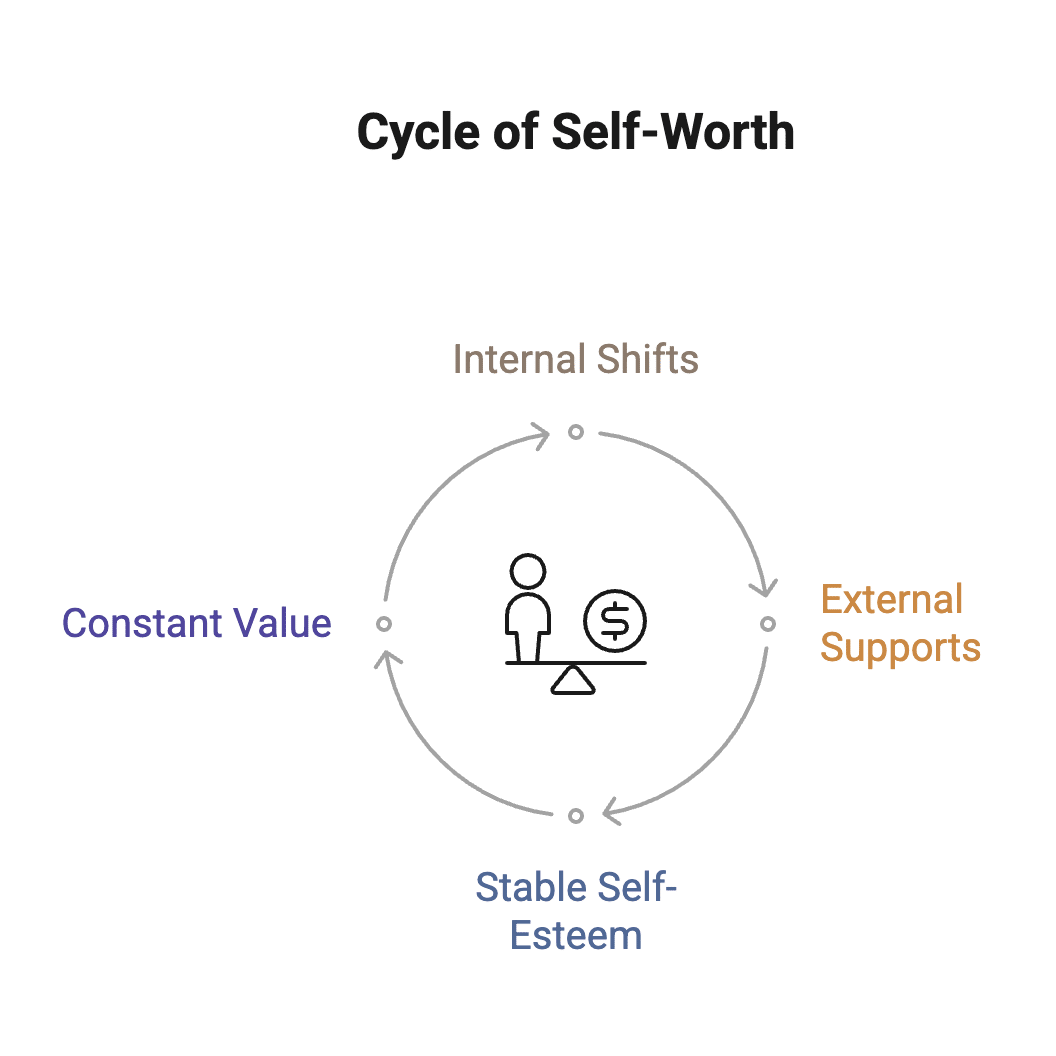
What Promotes Self-Worth?
Healthy self worth comes from multiple sources working together. You need both internal shifts (how you talk to yourself, practice self compassion, and view your value) and external supports (relationships and community). Both elements build strong self esteem.
The difference between fleeting confidence and lasting self worth is where you place your sense of value. When self esteem depends entirely on external factors—your job title, your appearance, others’ approval—it remains fragile and low self esteem can develop quickly.
But when you develop a core sense of self worth from within, external challenges don’t destroy you. A person with healthy self worth can have a bad day, make a mistake, or face rejection without feeling fundamentally broken. They recognize that one moment doesn’t define their worth. Their self esteem stays stable even when life throws challenges their way.
Bad habits and negative thinking can be changed with practice. Life throws challenges at everyone, but your value stays constant when you’ve built solid self worth.
When Professional Help Makes Sense
If low self confidence or low self esteem is making it hard to enjoy life, work, or relationships, therapy can help. Cognitive-behavioral therapy and other structured approaches have strong evidence for improving self-esteem.
A therapist can help you identify where your negative self talk comes from, challenge the negative messages you’ve internalized, and build skills for lasting change in your self worth. You don’t have to figure this out alone.
Signs therapy might help improve your self esteem:
- Your low self worth interferes with work or relationships
- You avoid social situations because you feel unworthy
- Negative thoughts about yourself dominate most days
- You’ve tried self-help strategies but aren’t seeing progress
- You experience depression, anxiety, or other mental health symptoms
Building Self-Worth in DC’s Demanding World
Living in Washington means navigating a culture that often ties your value to your job or achievements. It’s easy to lose yourself in the hustle and forget that you matter simply because you exist. This environment can trigger low self esteem even in accomplished people.
Building self worth here means actively pushing back against that narrative. It means recognizing that your value doesn’t rise and fall with your career. It means cultivating self compassion when you stumble and maintaining relationships that see the real you.
Remember: developing healthy self worth is a process, not a destination. There will be days when you feel confident and days when negative thoughts win. What matters is that you keep practicing and moving toward a greater sense of your own value and self esteem.
If you’re looking for support with building self esteem or working through low self worth, the therapists at Therapy Group of DC are here to help. We understand the unique pressures of life in the capital and can work with you to develop lasting self confidence and self-acceptance. Schedule an appointment to get started.
Frequently Asked Questions About How to Raise Self Worth
What is the difference between self-worth and self-esteem?
Self-worth is a deep recognition that you are a valuable and lovable human being, independent of your abilities or achievements. Self-esteem often reflects how you think and feel about yourself based on your accomplishments and social comparisons. While they are related, self-worth is more unconditional, whereas self-esteem can fluctuate with external factors.
How can positive thinking boost your self-worth?
Positive thinking helps replace negative self talk and negative thinking patterns that damage self-esteem. By focusing on realistic and compassionate thoughts about yourself, you can improve your mood and build a greater sense of self confidence and self worth over time.
Why is it important to practice self-acceptance in building self-worth?
Practicing self acceptance means acknowledging your strengths and flaws without judgment. This helps you realize that only you can decide your value as a person, not external factors like job performance or others’ opinions. Self acceptance is foundational to developing healthy self worth.
How do supportive people influence your sense of self-worth?
Spending time with supportive people who value and respect you helps internalize that you matter. Social connection combats feelings of isolation and low self confidence, reminding you that you are worthy of love and respect regardless of external circumstances.
Can setting small goals help improve my self-confidence?
Yes, setting and achieving small, realistic goals builds competence and reinforces your belief in your abilities. These small wins boost your confidence and contribute to a stable sense of self worth, helping you feel more capable in social situations and other areas of life.
Disclaimer: This article is for educational purposes only and is not a substitute for professional medical advice, diagnosis, or treatment. Always seek the advice of your physician or qualified mental health provider with any questions you may have regarding a medical or mental health condition. If you are in crisis or experiencing thoughts of self-harm, please call 988 (Suicide and Crisis Lifeline) or go to your nearest emergency room.