

High-functioning PTSD describes people who experience post traumatic stress disorder symptoms while maintaining their careers, relationships, and daily responsibilities. From the outside, everything may appear fine. Inside, they’re struggling with unresolved trauma, emotional exhaustion, and internal struggles that others rarely see.
This disconnect between outward success and inner turmoil makes high-functioning PTSD particularly challenging. Many people with high-functioning PTSD push through traumatic memories and anxiety without realizing they’re living with a common mental health condition that’s treatable.
What Does High-Functioning PTSD Look Like?
High-functioning PTSD looks like someone who meets their daily responsibilities while battling symptoms that others don’t see. They may excel at work, maintain relationships, and appear successful, but internally they’re managing distressing memories and avoiding reminders of traumatic events.
The term “high-functioning” doesn’t mean the symptoms are mild. It means the person has developed coping strategies—often unhealthy ones—to keep functioning despite significant distress. Research shows PTSD impacts daily functioning even when symptoms aren’t immediately visible.
People with high-functioning PTSD often experience emotional exhaustion from the constant effort to appear okay. They might succeed at work while struggling with physical symptoms including:
- Sleep problems and nightmares
- Muscle tension and headaches
- Feelings of being on edge or hypervigilant
The Hidden Nature of These Symptoms
Unlike more visible mental health conditions, high-functioning PTSD symptoms often remain hidden. Someone might attend meetings, meet deadlines, and handle their daily responsibilities while experiencing severe anxiety and avoidance behaviors internally.
This invisibility creates isolation. Others assume they’re “fine” based on external appearances, leaving the person struggling alone with their trauma and ptsd symptoms.
Is High-Functioning PTSD Real?
High-functioning PTSD is real, though it’s not an official diagnostic term in the DSM-5-TR. Mental health professionals use this description to explain how some people with PTSD continue to function effectively in everyday life while experiencing significant trauma symptoms internally.
The official diagnostic term remains post traumatic stress disorder, which can present differently across individuals. Some people develop PTSD after single traumatic events, while others experience symptoms following multiple traumatic events. PTSD symptoms fall into four groups—reliving the trauma, avoidance, negative changes in thinking and mood, and feeling on edge—and how much they interfere with daily life varies from person to person. Whether someone appears high-functioning or not, their ptsd symptoms are valid and deserve treatment.
Holding it together while struggling underneath?
Our DC trauma therapists help you treat what's beneath the surface — without your life falling apart in the meantime.
What Are the Common Symptoms of High-Functioning PTSD?
Common symptoms of high-functioning PTSD include intrusive thoughts, emotional numbness, hypervigilance, and physical symptoms like headaches or gastrointestinal issues. People may also experience irritability, difficulty concentrating, and avoidance behaviors around reminders of trauma.
These ptsd symptoms often manifest differently than people expect. Instead of obvious distress, you might see someone who:
- Seems fine but is constantly busy
- Avoids certain topics or places
- Has difficulty connecting emotionally with others
- Is easily startled or on edge
- Struggles with self esteem and self doubt internally
Physical symptoms are particularly common with unresolved trauma. Many people experience chronic pain, digestive problems, or muscle tension without connecting these issues to PTSD. PTSD can wear on the body, too: across 62 studies, it was linked to more chronic pain and more heart and breathing complaints—one more reason not to put off getting help.
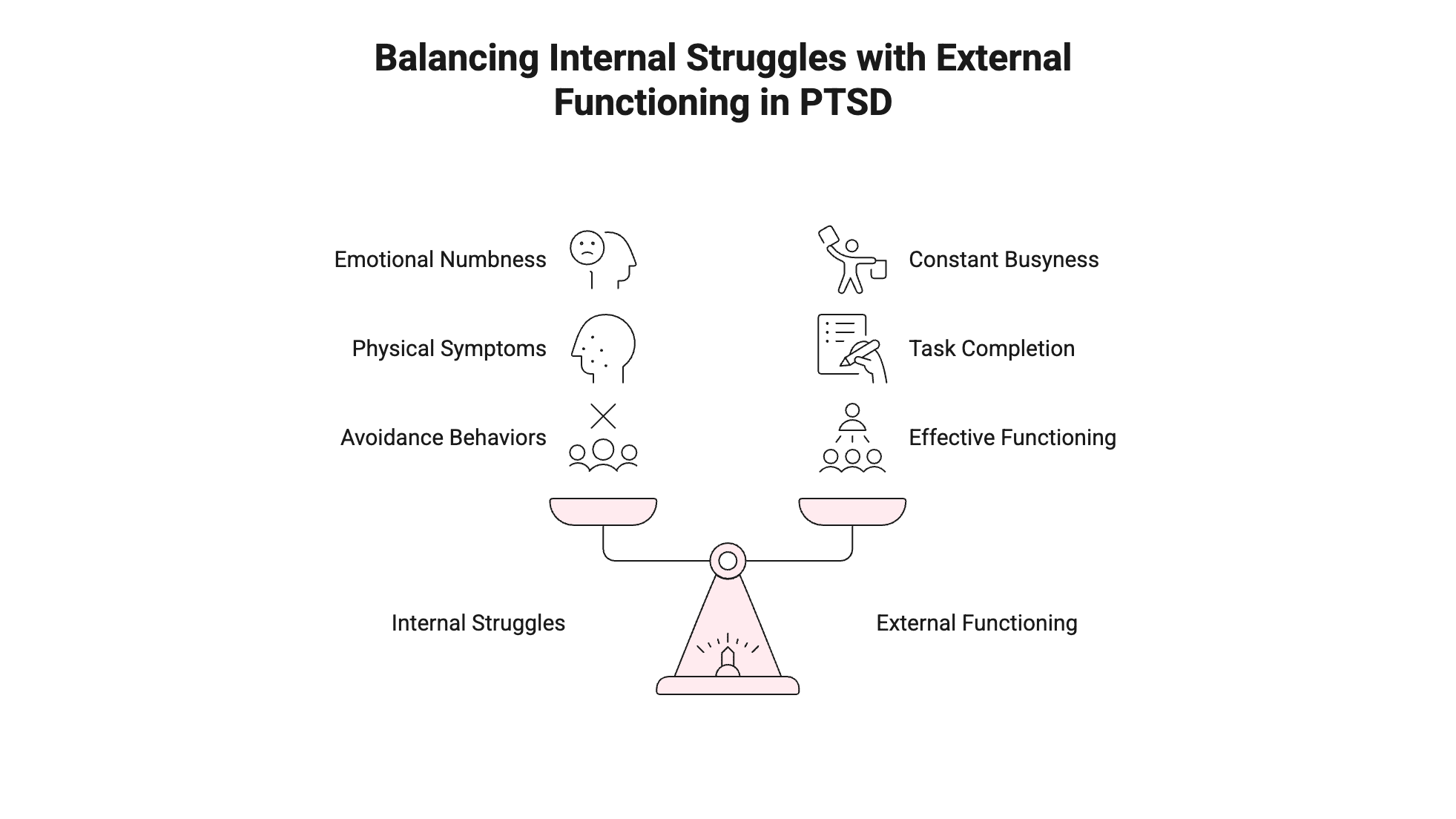
In simple terms, high-functioning PTSD creates constant internal management. Someone might complete their work tasks and daily functioning while battling anxiety and exhaustion. The effort required to function effectively takes a toll, leading to emotional exhaustion over time.
Can You Have PTSD and Still Function?
Yes, you can have PTSD and still function in your career, relationships, and daily tasks. Many people with post traumatic stress disorder maintain jobs, care for families, and meet their responsibilities while experiencing significant trauma symptoms internally.
Here’s why this matters: The ability to function despite PTSD often comes at a cost. People may develop coping strategies like staying extremely busy to avoid painful memories, or numbing feelings to get through the day. These approaches help maintain daily functioning but don’t address the root causes of distress.
Untreated PTSD often lingers for years rather than fading on its own. Seeking treatment early can prevent more serious complications and improve well being significantly.
What’s the Difference Between PTSD and Complex PTSD?
The difference lies in the trauma’s nature and duration. PTSD typically develops after a single traumatic event like a car accident or natural disasters. Complex PTSD, or complex trauma, develops from repeated trauma over time, often in childhood or through prolonged abusive situations.
Complex PTSD involves additional symptoms beyond standard PTSD diagnosis criteria. People with complex trauma often struggle more with emotion regulation, maintaining relationships, and persistent negative self-image. Complex PTSD is usually treated in stages, starting with safety and skills for managing emotions before moving on to processing the trauma, with attention to relationships throughout.
Both conditions share core symptoms like intrusive thoughts and avoidance. Understanding whether someone experienced a single traumatic event or repeated trauma helps mental health professionals choose appropriate treatment options.
How Does High-Functioning PTSD Affect Relationships?
High-functioning PTSD affects relationships through emotional numbness, irritability, and difficulty connecting authentically with others. Partners, friends, and family may feel shut out or confused when someone appears capable but struggles to share feelings or be emotionally present.
People with high-functioning PTSD often have trouble experiencing positive emotions fully. They might participate in activities but feel disconnected or numb. Avoidance behaviors also impact relationships—someone might avoid conversations or situations that trigger memories of their traumatic experiences.
The disconnect: When someone with high-functioning PTSD appears successful, friends and family may not recognize their need for seeking support. The pressure to maintain appearances and daily responsibilities can prevent people from being vulnerable or reaching out for professional help.
What Are Effective Treatment Options for High-Functioning PTSD?
Effective treatment options include trauma focused therapy approaches like Trauma-Focused Cognitive Behavioral Therapy, Trauma-Focused Psychodynamic Therapy, Cognitive Processing Therapy, Prolonged Exposure (exposure therapy), and Eye Movement Desensitization and Reprocessing (EMDR). These evidence-based therapies help process traumatic memories and reduce symptoms.
Trauma-focused therapies are first-line treatments with strong evidence for effectiveness. Talk therapy provides a space to address internal struggles that may be invisible to others.
A mental health professional can help you:
- Identify and process unresolved trauma
- Develop healthy coping strategies
- Reduce avoidance behaviors
- Address negative thought patterns
Even when you’re managing daily responsibilities, therapy offers significant benefits. It can reduce the exhaustion of maintaining appearances, improve emotional connections in relationships, and address physical symptoms linked to trauma. The goal isn’t just to keep functioning but to reduce suffering and improve your emotional well being and quality of life.
For people in demanding careers—common in Washington DC—therapy offers a chance to address the toll that maintaining high performance while managing trauma takes.
When Should You Seek Professional Help?
You should seek professional help if trauma symptoms are affecting your well-being, relationships, or quality of life—even if you’re still managing daily responsibilities. Signs include persistent anxiety, emotional numbness, sleep problems, intrusive thoughts, or finding it increasingly difficult to maintain your usual functioning.
Don’t wait until functioning breaks down completely. Many people with high-functioning PTSD benefit most from therapy when they still have energy and resources to engage in treatment. Early intervention can prevent worsening symptoms and reduce the increased risk of developing other health conditions like substance abuse or depression.
Taking the next step: If you’re in the Washington DC area and recognize these patterns in yourself, the therapists at Therapy Group of DC understand the unique challenges of maintaining high performance while managing trauma and mental health conditions. Located in Dupont Circle, we offer evidence-based treatment for PTSD and related mental health conditions.
Schedule an appointment to start your path toward healing.
You don't have to keep white-knuckling it.
Our Dupont Circle therapists offer evidence-based trauma and PTSD care for people who look fine on the outside. Reach out when you're ready.
Last updated: July 2026
Disclaimer: This article is for educational purposes only and is not a substitute for professional medical advice, diagnosis, or treatment. Always seek the advice of your physician or qualified mental health provider with any questions you may have regarding a medical or mental health condition. If you are in crisis or experiencing thoughts of self-harm, please call 988 (Suicide and Crisis Lifeline) or go to your nearest emergency room.