

You’ve made the resolution, downloaded the app, told your friends about your goals, and promised yourself this time would be different. But here you are again, wondering how can I change when nothing seems to stick. If you’ve tried to transform your life multiple times without success, you’re not alone. The truth is, change is one of the hardest things we face as humans, and previous failures don’t mean you’re broken or lack willpower. Reflecting on how change affects our lives as a whole can help us see the bigger picture and motivate us to keep moving forward.
The difference between temporary motivation and lasting change comes down to understanding the process of transformation itself. When you know why change is so hard and what actually works, you can create a realistic plan that respects your challenges while giving you the power to grow. Even small steps, when taken consistently, can lead to a changed outlook or situation over time.
How Can I Truly Change?
True change happens when you set small, specific goals that align with your values and get the right support along the way. Instead of trying to overhaul your entire life overnight, lasting transformation comes from building one healthy habit at a time and treating yourself with respect when you face setbacks.
Research shows that setting small, specific goals that are realistic and meaningful to you makes change much more likely to stick. For example, instead of “I will exercise more,” try “I will walk for 10 minutes after dinner three times this week.” This level of detail gives your brain a clear action to focus on rather than an overwhelming abstract idea.
Tracking your progress and celebrating small successes is important, as achieving each milestone brings a sense of satisfaction and motivates you to keep going.
The key is knowing that change takes time and effort, and that’s completely normal. You’re not failing when progress feels slow. You’re actually doing the hard work that leads to real, lasting results, which can help you feel happier and more content in your life.
Why Is Change So Hard?
Change is hard because your brain prefers familiar patterns, even when those patterns no longer serve you. Your mind has spent years creating neural pathways around your current habits and behaviors, and it takes focused effort to build new ones.
Here’s what makes personal transformation particularly challenging:
- Goals that are too big or vague – “Be healthier” sounds good but gives your brain no clear action to take
- Trying to change everything at once – This overwhelms your mental resources and sets you up to fail
- Beating yourself up after mistakes – Harsh self-criticism actually makes it harder to get back on track
- Obsessing over past mistakes or negative thoughts – When you obsess over what went wrong, it can increase stress and make it harder to move forward
Here’s why this matters: many people also don’t realize that underlying issues like anxiety, depression, or unresolved stress can make behavior change much more difficult. When you’re struggling with your mental health, even small changes can feel impossible. That doesn’t mean you’re doing something wrong. It means you might need to identify the root problem and address what’s underneath first.
What Should I Focus On When I’ve Failed Before?
Focus on understanding why previous attempts didn’t work rather than jumping into the next solution. Take time to reflect honestly on these questions:
- Were your goals too ambitious?
- Did you try to change too many things at once?
- Did life circumstances get in the way?
- Were you dealing with mental health challenges that needed attention first?
Finding the answer to what was missing in your previous attempts is crucial for making real progress.
In simple terms, this kind of self-reflection isn’t about finding what’s wrong with you. It’s about discovering your true needs and motivations to succeed. Maybe you need more accountability from a friend or therapist. Maybe you need to address your anxiety before you can maintain new habits. Maybe you need to create a plan that fits your real life instead of an idealized version of your life.
Tracking your progress and celebrating small successes can make a significant difference in maintaining motivation over time. Write down your goals and notice when you meet them, no matter how minor they seem.
How Can I Change Myself Without Giving Up?
Change yourself by treating the process like a learning experience rather than a test you can pass or fail. Every attempt teaches you something valuable about what works for your unique situation and what doesn’t.
Start by picking just one area to focus on. Maybe it’s building healthier sleep habits, managing stress better, or connecting more with friends. Choose something that matters to you personally, not what you think you “should” do. When your motivation comes from your own values rather than external pressure, you’re much more likely to maintain the effort needed for lasting change. Focusing on your own values can make you feel free from external expectations, allowing you to grow authentically.
Put differently, build in support systems from the beginning:
- Ask friends or family to encourage you – Share your goals with people who want you to succeed
- Join a support group – Connect with others who understand your specific challenges, where you can feel truly heard and supported
- Consider working with a therapist – Professional guidance can make the difference when you feel stuck
Don’t try to do this alone just to prove you’re strong enough. We all need help, and accepting support is a sign of wisdom, not weakness.
What About When I Keep Making the Same Mistakes?
Repeated mistakes often signal that something deeper needs attention. If you find yourself in the same patterns despite wanting to change, it might be time to explore what’s driving those behaviors with a mental health professional.
Sometimes what looks like a lack of willpower is actually anxiety, depression, trauma, or learned patterns from your past. Working with a healthcare provider can help you create a realistic plan that addresses both your goals and any underlying mental health concerns.
How to Bring Change in Life That Actually Lasts
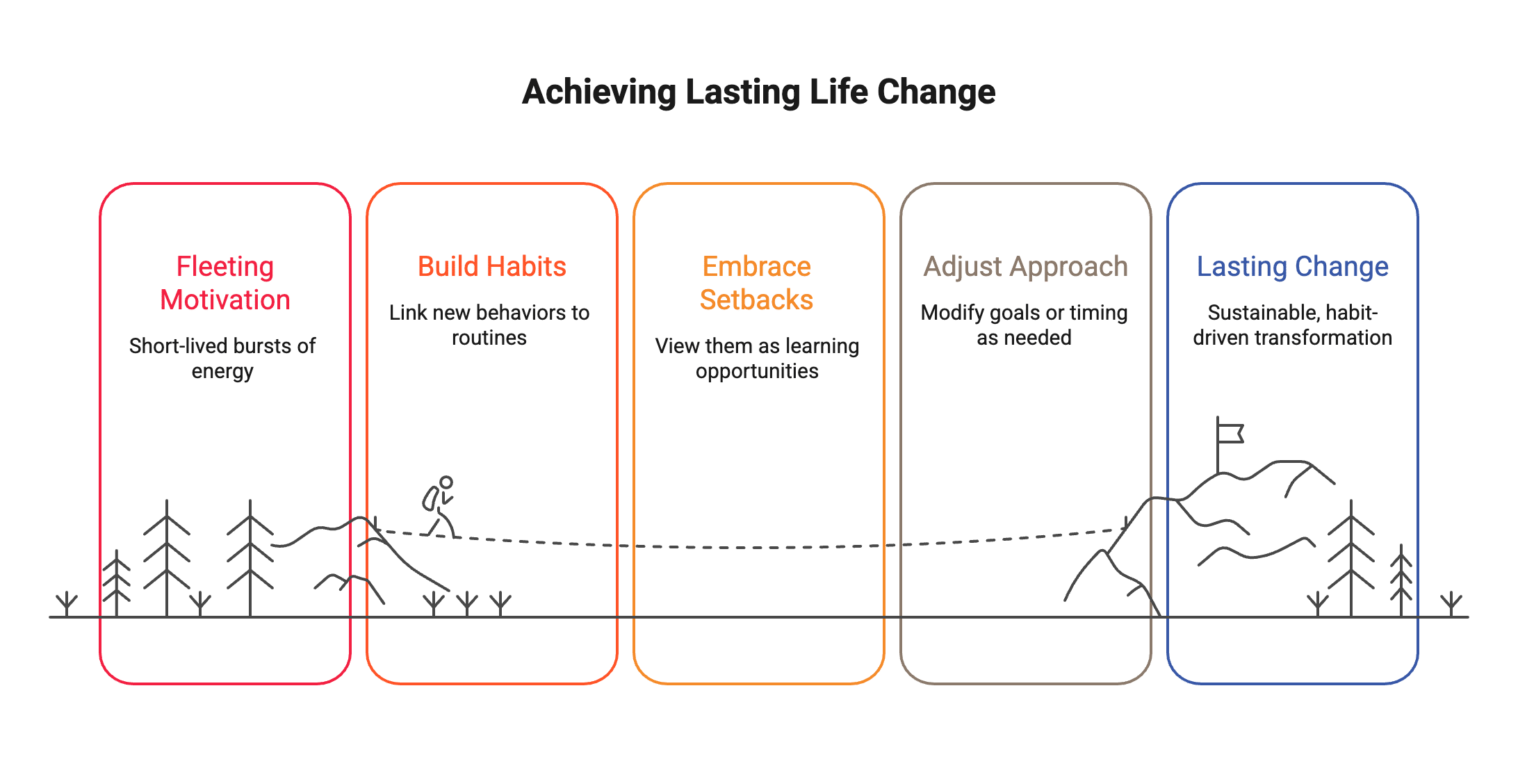
Bring lasting change by creating habits rather than relying on motivation alone. Motivation gets you started, but habits keep you going when motivation disappears.
Research on behavior change shows that successful transformation happens when you make small adjustments to your daily routine and build from there. Link new behaviors to existing habits. For instance, if you want to practice gratitude, do it right after you brush your teeth each night. Your brain already knows the teeth-brushing routine, so attaching a new behavior to it makes it easier to remember. Sometimes, people use games or other distractions to avoid facing the discomfort that comes with change, but building habits helps you move through that discomfort instead of escaping it.
Here’s why setbacks matter: be prepared for them, because they’re not a sign that you’re failing. They’re a normal part of any change process. When you stumble:
- Notice what happened without harsh judgment – Get curious instead of critical
- Adjust your approach if needed – Maybe your goal needs to be smaller or your timing needs to shift
- Keep going – The goal isn’t perfection, it’s progress
If you don’t adjust your approach after a setback, your progress can turn in the wrong direction, making it harder to reach your goals.
The pattern of falling and getting back up is exactly how lasting change happens.
Can Therapy Help Me Change?
Yes, therapy can be incredibly helpful when you’ve tried to change on your own without success. A therapist can help you:
- Identify obstacles you might not see yourself – Sometimes we’re too close to our own patterns to recognize them
- Address underlying mental health concerns – Anxiety, depression, or trauma that make change harder
- Develop strategies tailored to your specific situation – What works for someone else might not work for you. Therapy can also support your career development and growth, helping you navigate life changes and achieve your career goals.
Approaches like cognitive behavioral therapy, mindfulness-based interventions, and motivational interviewing have strong research support for helping people create lasting behavior change. These aren’t just talk sessions. They’re structured approaches that teach you specific skills for managing thoughts, emotions, and behaviors differently.
In simple terms, therapy also provides accountability and encouragement during the hard moments when you want to give up. Having someone in your corner who believes in your ability to grow can make all the difference in the world when your own hope feels shaky.
What If I’m Afraid Nothing Will Ever Change?
Fear that nothing will change often comes from a place of exhaustion after trying so hard for so long. That fear makes sense, and it doesn’t mean your situation is hopeless.
Here’s what this fear might be telling you: consider whether the fear itself might be something to address. Sometimes anxiety or depression colors how we see our possibilities, making change feel impossible even when it isn’t. If you’re feeling stuck in hopelessness, that’s a good reason to reach out for professional support.
Remember that you don’t have to change everything about your life to feel better. Sometimes the most powerful transformations come from small shifts that create space for larger ones to follow. You don’t need to have it all figured out before you begin. You just need to take one next step.
What Really Matters When I Want to Change My Life?
What really matters is self-compassion. Change doesn’t happen because you berate yourself into transformation. It happens when you treat yourself with kindness while you learn and grow.
Notice when you’re being harsh with yourself and try a different approach. Instead of “I’m so lazy for not exercising,” try “I’m having trouble getting started, and that’s hard. What’s one small thing I could do today?” This shift in your internal dialogue creates space for actual change instead of keeping you stuck in shame. Sometimes, repeating a helpful phrase like “progress, not perfection” can remind you to be gentle with yourself and focus on growth.
Here’s what you can actually control:
- Your effort today – Not the outcome, but how much you try
- Your choices in this moment – Not past mistakes or future fears
- Whether you ask for help – Support is always an option
Put differently, you can’t control every outcome, but you can control where you focus your energy. When distractions or judgments pop up, gently turn your attention back to your own growth and values.
How Can I Change My Life ASAP?
Real change doesn’t happen overnight, but you can start making meaningful progress immediately by choosing one specific action to take today. Not tomorrow. Not next Monday. Today. Telling someone else about your commitment can help reinforce it.
That action should be small enough that you know you can do it even on a bad day:
- A five-minute walk around the block
- Calling one friend you’ve been meaning to talk to
- Practicing one deep breathing exercise when you feel stressed
- Writing down one thing that went well today
Small, consistent actions build momentum that leads to bigger transformations over time. Here’s why this matters: if you’re feeling urgent about needing change in your life, that urgency might also be worth exploring with a therapist. Sometimes the desire for immediate transformation comes from distress that needs direct attention. There’s no shame in that. Getting support isn’t giving up on change. It’s choosing the most effective path to get where you want to go. If you need help, consider sending a message or request for help to a therapist or support group.
Reach out when you’re ready
If you’ve been trying to change on your own and feel stuck, the therapists at Therapy Group of DC are here to help. We understand how frustrating it is when nothing seems to work, and we can help you figure out what’s getting in the way. Schedule an appointment to get started.
Frequently Asked Questions About How Can I Change
How can I create lasting change in my behavior?
Creating lasting change involves setting small, specific goals that align with your values and building one healthy habit at a time. It’s important to focus on the process rather than the outcome, treat yourself with self-compassion, and embrace setbacks as part of the learning experience. Tracking your progress and celebrating small successes can also provide motivation and proof of your efforts.
What role does mindset play in changing myself?
Your mindset is critical. Training your brain to be optimistic and focusing on what’s working helps you maintain motivation. Avoid obsessing over failures and instead embrace a positive attitude that encourages growth. Self-love and self-esteem are foundational to believing you can change and are worthy of the benefits that come with it.
How can I manage setbacks without giving up?
Setbacks are normal and expected in any change process. When problems arise, try to notice what happened without harsh judgment and adjust your approach if needed. Confirm your goals are realistic and manageable. Keep going by focusing on progress, not perfection, and seek support from friends, therapists, or support groups if needed.
How important is feedback and accountability in change?
Feedback and accountability are powerful tools for change. Sharing your goals with trusted friends or professionals provides encouragement and helps you stay on track. Logging your progress and receiving constructive feedback can reinforce your commitment and help you manage challenges effectively.
What are some practical steps to start changing today?
Start by selecting one small action you can do immediately, such as taking a short walk, practicing deep breathing, or calling a friend. Write your goals in a journal or app to track your progress. Build a routine by linking new behaviors to existing habits. Remember, the key is to begin now and build momentum gradually.
Can addressing mental health improve my ability to change?
Yes, underlying mental health issues like anxiety or depression can make change harder. It’s important to take these challenges seriously and seek professional help if needed. Therapy can provide tailored strategies and support to overcome obstacles that may have previously held you back.
Disclaimer: This article is for educational purposes only and is not a substitute for professional medical advice, diagnosis, or treatment. Always consult your physician or a qualified mental health professional if you have any questions about a medical or mental health condition. If you are in crisis or experiencing thoughts of self-harm, please call 988 (Suicide and Crisis Lifeline) or go to your nearest emergency room.