

Purpose: A practical, script‑ready guide for friends, partners, and family on talking so the person feels seen—while encouraging care, protecting safety, and avoiding burnout.
Intro: What this guide helps you do
Direct answer: You can’t cure depression for someone you love, but your steady, kind presence lowers shame and makes help feel doable. Depression is a medical condition—one that responds to care—not a personal failure. Clinical depression is a diagnosable mental health condition that can significantly impact a person’s mood, thoughts, and daily functioning. People often feel ashamed about their depression and believe they should be able to overcome it alone, which can make seeking help even harder.
Major depression, also known as major depressive disorder, is a severe form of depression and is one of the most common mental disorders, affecting people of all backgrounds. Depression affects both emotional and physical well-being, and not everyone experiences the same symptoms or severity. Women are diagnosed with depression more often than men, but men can also experience depression, though they may be less likely to seek help.
This guide shows what to say, how to listen, when to bring up treatment, and what to do if you’re worried about safety.
How do I spot signs of depression without overreacting?
Answer: Look for patterns that last most days for two weeks or more: low mood, loss of interest or pleasure, sleep or appetite changes, low energy, trouble concentrating, feelings of worthlessness, and thoughts of death. Depression symptoms can vary widely, and not everyone will display the same specific symptoms. Children and teens may show depression as irritability instead of sadness, which can sometimes make it harder to recognize.
- Everyday signs: skipping activities they used to enjoy, pulling away from friends, moving or thinking more slowly.
- Anhedonia (plain English: not enjoying things that used to feel good) is common.
- Some medical problems can look like depression. A clinician can sort that out and guide next steps; this NEJM overview for primary care explains common symptoms and workups. Depression can also occur alongside other mental health disorders or chronic illnesses like diabetes, cancer, and heart disease.
- If the person mentions hopelessness or wanting to die, take it seriously and move to safety steps below.
A depression diagnosis is made by a healthcare professional based on the presence and duration of specific symptoms. It’s important to seek professional evaluation to distinguish depression from other conditions.
What should I say first so they feel seen—not judged?
Answer: Start with specific observations and care, not fixes. Keep it short and kind.
- “I’ve noticed you’ve been quieter and skipping things you usually enjoy. I care about you.”
- “You’re not a burden. I want to be here with you.”
- “What you’re feeling makes sense given what you’re carrying.”
- “We don’t have to solve anything right now—I can just sit with you.”
- “It’s okay to have negative feelings—acknowledging them can help you feel understood.”
Avoid: “Cheer up,” toxic positivity, excessive advice, or comparisons to others. For many people, clear, validating language reduces shame and helps them accept care. Dismissing negative feelings can make someone feel unheard; instead, gently recognize them.
How can I listen so they feel understood?
Answer: Listen more than you speak; reflect feelings and summarize. Let silences be okay.
- Reflect: “It sounds like everything feels heavy and slow.”
- Name feelings: “That sounds lonely and exhausting.”
- Check you heard them right: “Did I get that?”
- Pace yourself: Match their energy; keep your voice steady and warm.
- Remember: Living with depression can feel isolating, and empathetic listening helps reduce that sense of isolation.
Don’t: Debate their feelings, rush to silver linings, or turn it into your story. Skills like reflecting feelings and problem‑solving work best alongside evidence‑based depression care.
What if they say “I’m fine” or push me away?
Answer: Stay gentle and consistent. Offer presence plus one tiny, doable option.
- “Talking might feel hard. We can just sit and watch something together.”
- “Could one small thing help—like a short walk or making tea?”
- “I’ll check in again tomorrow. You don’t have to reply.”
Small behavioral activation steps—tiny actions that break through inertia—are often helpful alongside therapy.
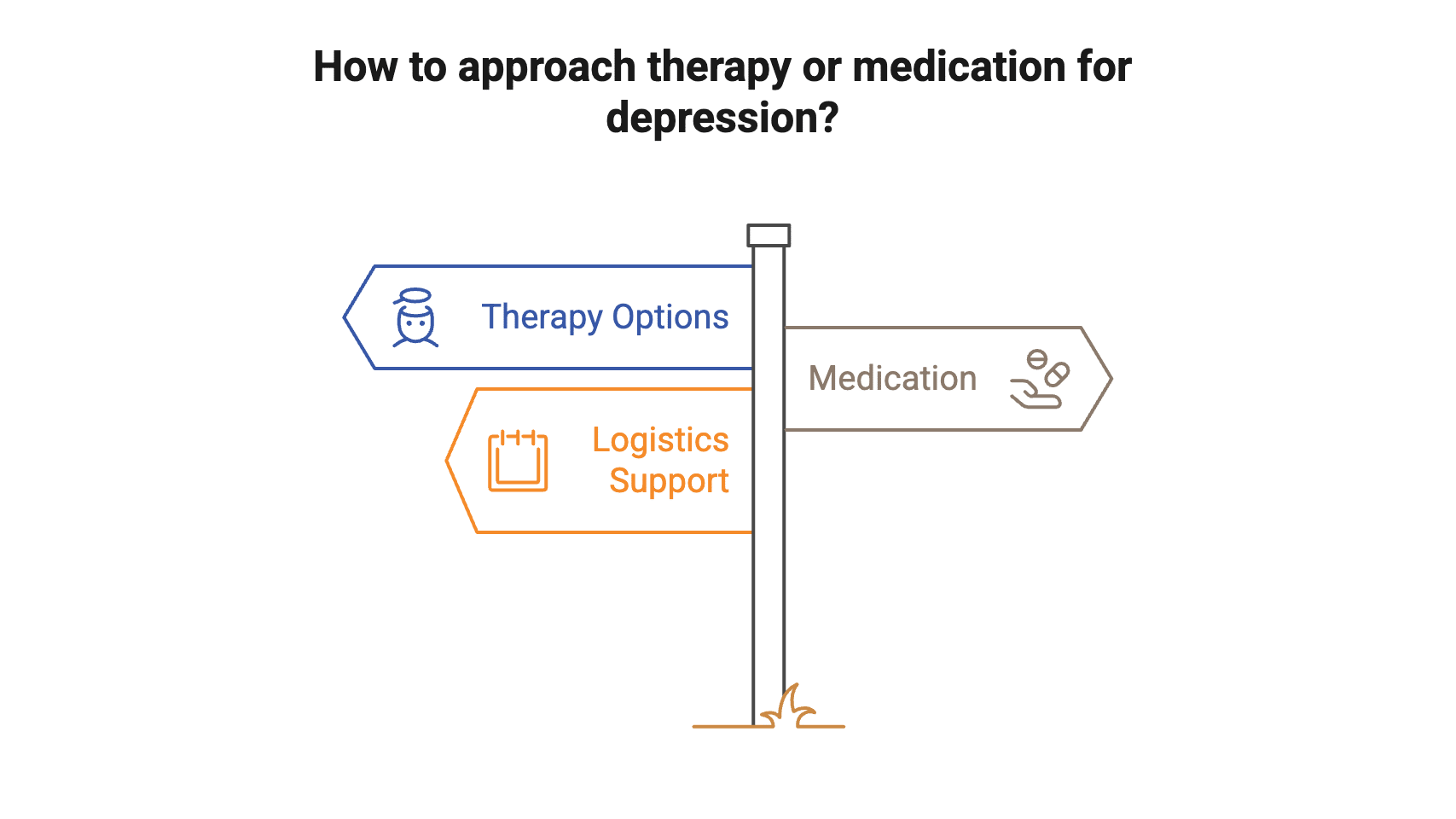
How do I bring up therapy or medication without pressure?
Answer: Treat help like normal care for a health condition. Emphasize choice and offer logistics support.
- “Depression is treatable. Would it help to look at therapy options together?”
- “If you’d like, I can help with the first appointment—forms, calendar, whatever makes it easier.”
- “If meds come up, a primary‑care doctor or psychiatrist can explain options. Certain medications may interact with other treatments or supplements, so it’s important to consult a healthcare provider. Antidepressants typically take 4–8 weeks to work, and problems with sleep, appetite, and concentration often improve before mood lifts.”
Why this works: Approaches like CBT and behavioral activation and interpersonal therapy have strong evidence, and many people benefit from combining therapy with medication when symptoms are moderate to severe.
Other treatments, such as brain stimulation therapies, may be considered when standard approaches do not adequately treat depression. Regular depression screening in adults is also recommended in healthcare settings, which can open the door to care.
What should I do if I’m worried about suicide?
Answer: Ask directly and calmly, stay with them, and get crisis help right away if they may be at risk.
- 1. Ask: “Have you had thoughts about wanting to die or hurting yourself?” Depression is associated with an increased risk of suicidal thoughts and behaviors, so timely intervention is critical.
- 2. If yes / not sure: Stay with them; remove immediate dangers if possible; call or text the 988 Suicide & Crisis Lifeline, or call 911 or go to the nearest emergency room if they are in immediate danger.
- 3. Follow up after the crisis with practical help and warmth.
Tip: Speak in plain language, keep your tone steady, and avoid debates. Your goal is safety, not persuasion.
What small, concrete supports actually help day to day?
Answer: Pair connection with tiny actions that beat isolation and inertia.
- Do‑together basics: make a simple meal, tidy one surface, take a 10‑minute walk, or sit in daylight. Doing things together like this often helps more than offering advice.
- Help with overwhelm: sort mail, drive to appointments, set gentle reminders (with permission).
- Protect sleep and routine; celebrate any step taken.
These small actions echo behavioral activation—doing a little, even when you don’t feel like it, to help mood catch up over time.
How do I help without burning out?
Answer: Support works best with boundaries. Protect your sleep, work, and relationships. Taking care of yourself is essential to avoid caregiver burnout, as it ensures you can provide consistent and sustainable support over time.
- Micro‑boundaries: “I’m free 7–8 tonight; let’s talk then.”
- Make a support team: with their permission, loop in trusted friends/family so you’re not the only helper.
- Keep your own care: movement, regular meals, and—if needed—your own therapy.
Why it matters: Consistent, sustainable support beats heroic, one‑time efforts.
Where to find help in DC (and how we can support)
Answer: Local care makes follow‑through easier.
Therapy Group of DC: Inclusive, evidence‑based therapy in Dupont Circle with clinicians experienced in depression care. We can help you (or your loved one) get started and coordinate care with other providers as needed.
If you’re unsure where to begin, we can talk through options and next steps together.
Quick scripts you can use today (cheat‑sheet)
- “You’re not a burden. I’m here.”
- “What you’re feeling makes sense.”
- “Let’s pick one tiny thing and do it together.”
- “Depression is treatable; want to look at options together?”
- “Are you having thoughts about wanting to die?”
- “I care about you. I’m checking in again tomorrow.”
Wrap‑up: What matters most
Answer: Your steady, non‑judgmental presence can lower shame and help them take the next step toward care. Your encouragement and support can offer hope, even during the most difficult moments. Encourage treatment, protect safety, and keep the connection going. If risk rises, act now and loop in professional help.
Frequently Asked Questions about Supporting Someone with Depression
What are the common symptoms of depression I should look out for?
Symptoms of depression can vary but often include persistent low mood, loss of interest in usual activities, changes in sleep or appetite, trouble concentrating, feelings of worthlessness or low self-esteem, and physical problems such as aches or digestive issues. These symptoms frequently occur during a depressive episode, which can last for weeks or even longer. Recognizing these symptoms early can help in suggesting seeking professional help.
How can I encourage a family member or friend to attend therapy appointments?
You can offer practical advice by helping them organize therapy appointments and attending family therapy sessions with them if appropriate. Significant life events, such as stressful changes or losses, can trigger or worsen depression, and therapy can help address these challenges. Emphasize that depression is a treatable mental health condition, and your support can make the healing process easier.
What should I do if I notice suicidal thoughts or suicide risk in someone with depression?
If you observe any signs of suicidal thoughts or suicide attempts, take them seriously and act immediately. Ask directly and calmly about their feelings, stay with them, remove any immediate dangers, and contact a health care professional or crisis lifeline for urgent support.
How can I help with everyday tasks for someone experiencing depression?
Offering to help with household chores, suggest specific tasks, or organize small tasks like preparing healthy meals or managing appointments can alleviate their overwhelm. These practical supports can make a significant difference in their daily life and contribute positively to their mental health.
What are some ways to support my own mental health while helping someone with depression?
Taking care of yourself is crucial to avoid burnout. Set boundaries around your availability, engage in physical activity, maintain healthy meals, and seek your own support network or therapy if needed. Prioritizing your well-being helps you provide consistent and sustainable support.