What Is Climate Grief? A Complete Guide to Ecological Grief

Climate grief is the emotional response to environmental loss caused by global warming and climate change. This guide is for people in Washington, DC and beyond experiencing sadness, worry, or distress about climate disruption. You’ll learn what climate grief is, why it’s a normal response, who’s most affected, and evidence-based strategies for coping.
Climate grief, also called ecological grief, refers to the sense of loss that arises from experiencing or learning about climate disruption, habitat loss, and environmental change. This can include grief over disappearing ecosystems, lost animal species, changing landscapes, and ways of life threatened by ecological loss. Research shows that climate grief is a normal human reaction to loss or anticipated loss, not a mental health disorder. For many people, climate emotions and climate-related feelings can motivate positive environmental action and connection to the natural environment.
What Is Climate Grief?

Climate grief is the sorrow and mourning people experience in reaction to global warming and environmental changes. It arises when individuals observe or anticipate the loss of species, ecosystems, and meaningful landscapes due to acute or chronic environmental changes.
The term encompasses several types of grief. Bereavement-like grief occurs when people witness the actual loss of a beloved natural place or species. Transitional grief happens as familiar seasonal patterns and landscapes change over time. Anticipatory grief involves mourning future losses you know are coming but haven’t yet occurred.
Climate grief is often described as disenfranchised grief because it lacks cultural support and social acknowledgment. Unlike traditional grief, there are no established rituals like funerals or memorials for processing ecological losses. This absence of communal support can lead to feelings of isolation and a lack of understanding from friends and family who may not recognize climate grief as valid.
The ongoing nature of climate change makes it difficult for individuals to reach closure, as the losses are not final and continue to evolve. Many people experiencing climate grief feel isolated and unsupported due to this lack of cultural framework for processing their emotions.
Common Experiences of Climate Grief
People experience climate grief in different ways, and individual responses may include multiple emotional and physical symptoms. Here’s how to recognize if you’re experiencing climate grief:
Psychological Symptoms
Psychological symptoms commonly include anxiety and depression, eco anxiety, climate depression, fear, hopelessness, and numbness. Some people experience feelings of powerlessness, despair, anger, or confusion in response to environmental changes. The emotional responses to climate change can manifest as sadness about changes witnessed directly, mourning for ecosystems or places that are disappearing, or distress from learning about climate impacts through news and media.
Physical Symptoms
Physical symptoms associated with climate grief can include fatigue, headaches, and sleep disturbances. Mental health risks related to climate grief include increased risk of anxiety, post traumatic stress, and post-traumatic stress disorder, particularly following exposure to extreme weather events and extreme weather.
Emotional Impacts
Emotional responses often include worry about the future for yourself, your children, or future generations, anger about climate inaction or environmental destruction, and feelings of helplessness or being overwhelmed. Among younger generations, climate grief can lead to feelings of betrayal—a sense that adults have failed to address climate change adequately.
Recognizing and honoring climate grief can improve mental health and well being and connect individuals to values that motivate climate action. The emotional responses associated with climate grief can serve as a catalyst for pro-environmental behavior.
In our practice, we’ve noticed that many people feel relief just learning there’s a name for what they’re experiencing. Climate grief isn’t a sign of weakness or dysfunction—it’s evidence that you’re emotionally connected to the world around you. That connection is actually a strength, even when it hurts.
Who Is Most Affected by Climate Grief?
While anyone can experience climate grief, certain groups are particularly vulnerable to climate-related emotional distress. Here’s what makes some populations more affected by ecological grief:
Young People and Climate Grief
Young people are especially affected by climate grief due to feelings of betrayal from the lack of environmental action by adults. Children and teens are at risk for climate grief, with many expressing feelings of anxiety and depression related to climate change. Research shows that young people and women are more likely to report feelings of ecological grief, particularly in relation to environmental changes.
Indigenous Communities and Environmental Loss
Indigenous communities experience climate grief intensely because their identities are closely tied to their environments, which are being degraded by climate change. Indigenous people, particularly those in Arctic regions, are considered among the most vulnerable to ecological losses due to climate change. Their close connection to the land means that environmental degradation threatens not just their surroundings but their cultural identity and traditional ways of life.
Climate Scientists and Researchers
Climate scientists are vulnerable to climate grief because they often witness firsthand the impacts of climate change and biodiversity loss through their work in climate science. Many people engaged in climate science or activism report experiencing climate grief, highlighting the emotional toll of witnessing climate disruption.
Other Vulnerable Populations
Other vulnerable groups include individuals with close relationships to the land, those who have directly experienced extreme weather events, people with pre-existing mental health conditions, marginalized communities, and communities already facing environmental change.
Individuals with less psychological distance from climate change—such as climate scientists and indigenous communities—report stronger feelings of grief compared to those less directly connected to environmental impacts, according to environmental psychology research.
We see clients from all backgrounds struggling with climate grief, but younger clients often carry an additional burden: the sense that they’ll inherit a problem they didn’t create. Validating this grief—rather than dismissing it as “eco-anxiety”—is an important first step in processing these complex emotions.
What Is Solastalgia?
Solastalgia is a specific type of climate grief that occurs when your home environment changes in distressing ways while you remain in place. The term describes the homesickness you feel when you’re still at home, but your home has changed around you.
Unlike nostalgia (homesickness when you’re away from home), solastalgia is the distress caused by environmental change affecting your lived environment. Examples include watching familiar green spaces disappear to development, experiencing seasonal changes that no longer match your childhood memories, witnessing the loss of urban green spaces, or observing local wildlife decline.
This concept is particularly relevant in urban environments where rapid development, rising temperatures from urban heat island effects, and loss of familiar green spaces and natural landmarks can create a sense of displacement without physical relocation. The term helps validate feelings of loss even when the changes seem subtle or gradual.
The Five Stages of Climate Grief
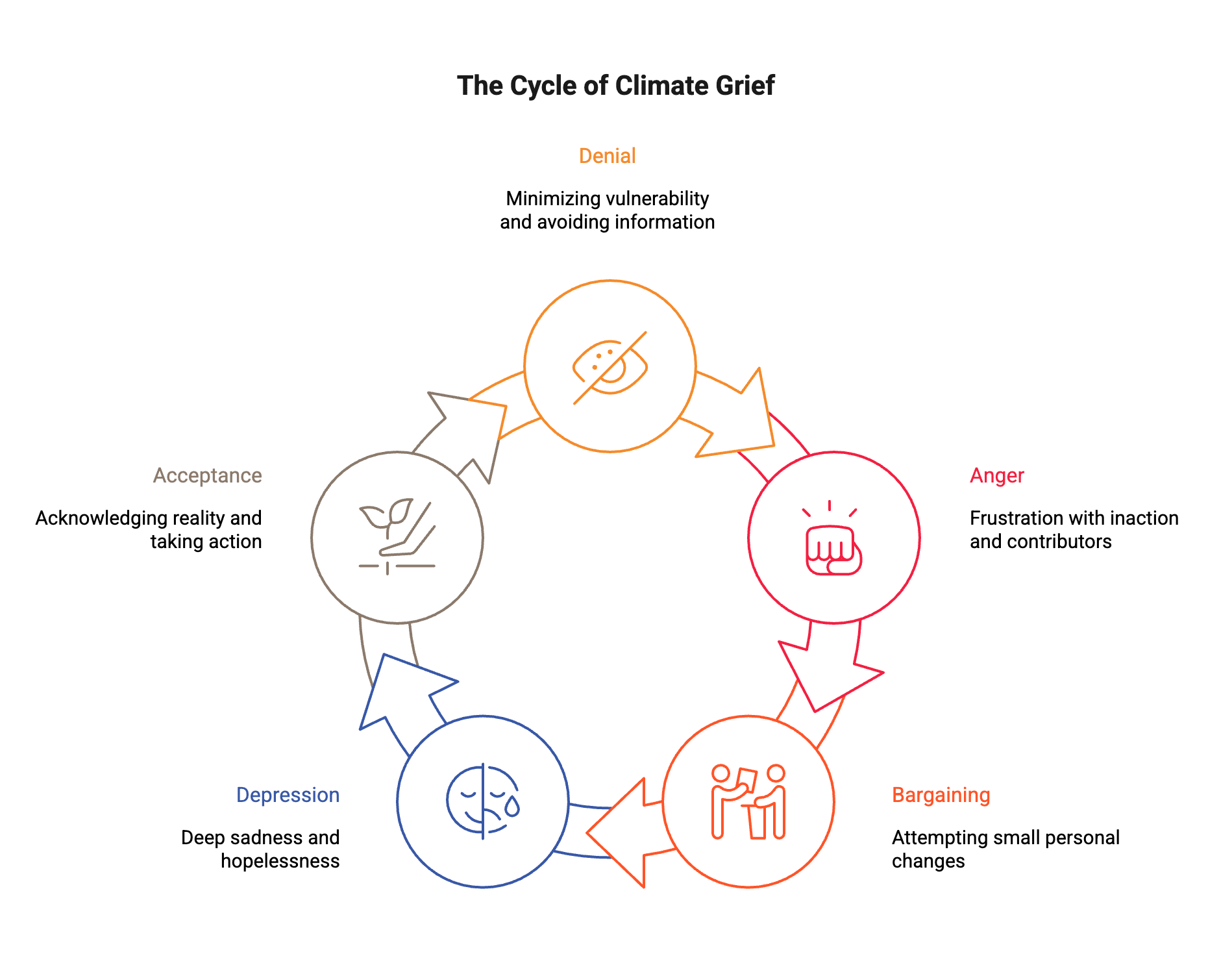
While grief doesn’t follow a linear path, understanding common stages can help you make sense of your climate grief journey. Here’s what the grief process might look like:
Denial often appears as minimizing personal vulnerability to climate impacts or avoiding climate-related information. You might think “it won’t affect me” or “it’s not that urgent.” This protective response can help manage overwhelming emotions but may prevent meaningful engagement with the climate crisis.
Anger emerges as frustration with climate inaction, political failures, or individuals and corporations contributing to environmental destruction. This anger can feel directed at leaders, older generations, or yourself. While uncomfortable, anger can fuel advocacy and demand for change.
Bargaining involves attempting to negotiate with the reality through small personal changes while hoping they’ll be enough. Thoughts like “if I just recycle more” or “if I buy carbon offsets” represent this stage. Bargaining acknowledges the problem but seeks individual solutions to systemic issues.
Depression manifests as deep sadness, hopelessness, or despair about environmental futures. This stage involves confronting the magnitude of losses and potential futures. The weight of climate change can feel crushing, leading to withdrawal or paralysis.
Acceptance doesn’t mean resignation but rather acknowledging the reality of climate change while choosing meaningful responses. Acceptance can lead to purposeful action, community engagement, and building resilience despite uncertainty. This stage often involves integrating climate awareness into daily life while maintaining hope and agency.
The process of grieving ecological losses can lead to a deeper understanding of the interconnectedness of social and environmental issues, motivating sustained engagement rather than despair.
How to Cope with Climate Grief
Coping strategies for climate grief include validating feelings, connecting with nature and community, and seeking professional support when needed. Here’s what you can do to cope with climate grief effectively:
Connect with Community Support
Talk with friends, family, or support groups who share your concerns. Joining with like-minded people can help you work through climate grief and reduce feelings of isolation. Social connection and community support are important for coping with climate-related distress. Creating a space for people to discuss their feelings is especially important for those struggling with climate grief.
Take Meaningful Climate Action
Taking concrete action, such as advocacy, conservation, and engaging with climate solutions, can build agency and reduce feelings of helplessness regarding climate grief. Participating in community initiatives and advocating for policy change can help transform feelings of helplessness into purpose while building individual and community resilience. Climate grief can galvanize action on behalf of the ecological world. Taking action to address climate change can empower you and help you connect with others, which may alleviate feelings of helplessness.
Spend Time in Nature
Spending time in nature is beneficial for mental health and may help alleviate feelings of climate grief. Connecting with the natural world and natural environment can provide comfort and perspective, helping you maintain connection to what you’re working to protect.
Maintain Mental Health Through Self-Care
Maintain healthy routines including sleep, exercise, and activities you enjoy. Trusting in the grief process and your capacity to abide with significant loss can build resilience in the face of climate grief. Self care and limiting exposure to climate news if it becomes overwhelming can help—you can stay informed without constant immersion.
Engage in Creative Expression
Engaging in creative expression can help you process climate grief and shift focus from despair to action. Art, writing, music, or other creative outlets provide ways to externalize and transform difficult emotions.
Community programming focused on ecological grief can provide support and help individuals process their emotions related to climate change. Collective grief can motivate individuals to engage in solidarity work and climate activism.
One thing we emphasize in therapy is that coping with climate grief doesn’t mean making the feelings go away. It means learning to hold both grief and hope simultaneously—mourning what’s lost while staying engaged with what can still be protected. This balance is difficult but achievable with support.
When to Seek Professional Support
Climate grief is a normal response to real environmental losses, but if it’s significantly affecting your daily functioning, professional mental health support can help. Here’s how to know if you need professional support:
Seeking support from climate-aware mental health professionals can assist individuals experiencing significant distress from climate grief. Consider reaching out to a mental health professional if you experience:
- Persistent sadness or anxiety that interferes with daily activities
- Difficulty sleeping or concentrating
- Withdrawal from relationships or activities you once enjoyed
- Feelings of hopelessness that don’t improve
- Thoughts of harming yourself
Coping with climate grief effectively involves recognizing that feelings of grief, fear, and frustration are reasonable responses to the climate crisis. A therapist can help you process these emotions, develop coping strategies, and find ways to channel your concerns into meaningful climate action without becoming overwhelmed.
Remember that experiencing climate grief doesn’t mean you’re weak or unable to cope—it means you’re paying attention to something important. Framing climate-related distress as grief can help you make meaning of difficult emotions and inspire action.
Ready to Get Started?
If climate grief is affecting your well-being, our therapists understand the mental health impacts of environmental concerns and can provide support.
Connect with our DC therapists →
Frequently Asked Questions About Climate Grief
Is climate grief the same as climate anxiety?
No, climate grief and climate anxiety (also called eco anxiety) are related but distinct experiences. Climate anxiety and eco anxiety involve worry and fear about future climate impacts, while climate grief is mourning for environmental losses that have already occurred or are anticipated. Many people experience both climate anxiety and climate grief simultaneously, and both are part of the broader spectrum of climate emotions that mental health professionals recognize as normal responses to the climate crisis.
What is disenfranchised grief and how does it relate to climate grief?
Disenfranchised grief refers to grief that lacks cultural practices or social acknowledgment, making it difficult for individuals to openly process their emotions. Climate grief is often considered a form of disenfranchised grief because there are no established rituals or widespread social support to validate the emotional pain caused by environmental loss and climate disruption.
How can processing climate grief improve mental health and well-being?
Processing climate grief allows individuals to acknowledge their emotional pain and connect with their values, which can improve mental health and foster resilience. Engaging in social support, community programs, and creative expression can help people navigate emotional challenges and transform grief into motivation for climate action.
Who are the groups most vulnerable to experiencing climate grief?
Young adults, Indigenous communities, climate scientists, and those with close relationships to the land are particularly vulnerable to climate grief. These groups often experience stronger feelings of anxiety and grief due to their direct exposure to environmental changes, cultural impacts, and the anticipation of future ecological losses.
Can climate grief lead to positive outcomes like post traumatic growth?
Yes, when supported properly, climate grief can lead to post traumatic growth—a positive psychological change resulting from struggling with difficult life circumstances. This growth often includes increased self-compassion, a deeper connection to the natural world, and strengthened motivation for meaningful climate adaptation and action.
This blog provides general information and discussions about mental health and related subjects. The content is not intended to be a substitute for professional medical advice, diagnosis, or treatment. Always seek the advice of your physician or other qualified health provider with any questions you may have regarding a medical condition.