

If you’ve noticed that stress, anxiety, or past trauma shows up in your body—maybe as tension in your shoulders, a knot in your stomach, or shallow breathing—you’re experiencing what somatic therapy addresses. Somatic therapy is a body-centered approach that helps you work through emotional and psychological challenges by connecting with physical sensations. Unlike traditional talk therapies that focus primarily on thoughts and behaviors, somatic therapy recognizes that trauma and stress live in the body, and healing requires addressing both mind and body together.
More people are discovering somatic therapy as a way to address persistent physical symptoms, post traumatic stress disorder, chronic pain, and anxiety that haven’t fully responded to other treatments. This guide explains what somatic therapy is, how it works, and who can benefit.
What Is Somatic Therapy?
Somatic therapy helps you understand and manage physical symptoms related to stress, emotions, or trauma by focusing on the mind body connection. The word “somatic” comes from the Greek word “soma,” meaning body. This therapeutic approach uses both talk therapy and body-based exercises to help you become aware of how your body holds emotional experiences.
A somatic therapist guides you through paying attention to bodily sensations—like tension, warmth, tightness, or relaxation—while exploring the emotions and memories connected to these physical feelings. The goal is to release stored trauma and develop new ways of responding to stress that feel safer and more manageable.
Somatic therapy often alternates talk with body-based exercises to help people notice how thoughts and feelings affect physical health. This approach is often used for persistent somatic symptoms that medical tests can’t fully explain, as well as conditions like post traumatic stress disorder, anxiety, and chronic pain.
In our Dupont Circle practice, many clients arrive feeling disconnected from their bodies after trauma. They describe feeling numb or constantly on edge, unable to relax even when safe. Somatic therapy helps rebuild that connection by teaching clients to listen to what their body communicates. We see clients regain a sense of control as they learn to work with their physical sensations rather than fight them.
How Does Somatic Therapy Differ from Traditional Talk Therapy?
While traditional talk therapies like cognitive behavioral therapy focus on changing thought patterns and behaviors through discussion, somatic therapy brings body awareness into the healing process. The key difference is that somatic therapy treats the body as an active participant in healing, not just a vessel for the mind.
In talk therapy, you might discuss a traumatic event and work to reframe how you think about it. In somatic therapy, you might notice where you feel that trauma in your body—perhaps as tightness in your chest or tension in your jaw—and learn techniques to release those physical holdings. Somatic therapies emphasize that the body holds and expresses experiences, not just the mind. Both approaches have value, and many somatic therapists integrate elements of cognitive behavioral therapy and other modalities.
How Does Somatic Therapy Work?
Somatic therapy works by helping you develop body awareness and recognize how your nervous system responds to stress and traumatic material. When you experience a traumatic event or chronic stress, your body’s autonomic nervous system can get stuck in a protective state—either hyperaroused (anxious, on edge, unable to relax) or hypoaroused (numb, disconnected, shut down).
Somatic therapists use various techniques to help your nervous system find balance again. This process involves:
- Tracking bodily sensations – noticing physical feelings without judgment
- Pendulation – moving between discomfort and safety to build resilience
- Titration – working with traumatic material in small, manageable amounts
- Resource activation – identifying internal and external resources that help you feel grounded and safe
Studies indicate that somatic approaches like Somatic Experiencing use interoception (internal body awareness) and proprioception (sense of body position) as core elements of trauma therapy. By directing attention toward internal sensations rather than focusing solely on thoughts, your body releases trauma gradually and safely.
The healing process in somatic therapy focuses on completing physiological defensive reactions that got interrupted during traumatic experiences. When you face a threat, your body prepares to fight, flee, or freeze. If these natural responses can’t complete, the energy stays trapped in your nervous system, leading to symptoms like hypervigilance, anxiety, or emotional numbness.
What Are Examples of Somatic Therapy Techniques?
Somatic therapy techniques vary widely depending on the specific approach and your needs, but all share a focus on connecting physical sensations with emotional experiences. Common somatic practices include:
Breathwork and Grounding
Controlled breathing exercises calm the nervous system and release tension held in the body. A somatic therapist might guide you through deep breathing while noticing where you feel the breath. Grounding techniques help you stay connected to the present moment, preventing overwhelm when working with traumatic memories.
Body Awareness and Sensation Tracking
You’ll learn to notice physical sensations—like muscle tension, warmth, tingling, or tightness—and explore what emotions or memories connect to these feelings. This awareness helps you recognize when your body signals stress or safety. Some somatic therapists use body mapping, where you draw physical sensations and emotions on an outline of the body to increase awareness of where trauma lives in your own body.
Gentle Movement and Somatic Practices
Movement exercises help complete stress responses and release pent up tension. This might include simple gestures, stretching, or mindful movement practices like gentle yoga or Tai Chi. The goal isn’t exercise but rather listening to what your body needs to feel comfortable and safe. These somatic practices help regulate the nervous system and cultivate body awareness.
Touch and Boundary Work
Some somatic therapists incorporate therapeutic touch (with clear consent and boundaries) to help you reconnect with your body and establish safety. This is particularly helpful for people who experienced trauma that violated physical boundaries. The use of touch in somatic therapy can help release chronic muscle tension and re-establish a sense of safety in the body.
Pendulation and Titration
These signature somatic therapy techniques involve moving between sensations of discomfort and comfort (pendulation) and approaching traumatic material in small doses (titration). This prevents overwhelm while still making progress in healing. A trauma therapist guides you to focus on traumatic memory or sensation in manageable amounts, avoiding re-traumatization.
What Is Somatic Experiencing?
Somatic Experiencing (SE) is a specific form of somatic therapy developed by Dr. Peter Levine to treat trauma and stress-related disorders. It’s one of the most researched somatic approaches and is particularly effective for post traumatic stress disorder and traumatic stress.
Somatic Experiencing focuses on the body’s natural ability to regulate the nervous system and process traumatic experiences. The approach is based on observing how animals in the wild release traumatic stress—they literally shake it off after a threat passes. Humans often suppress this natural release, leading to symptoms of post traumatic stress disorder and other mental health conditions.
In SE sessions, a trained somatic therapist helps you:
- Notice subtle shifts in your nervous system and bodily sensations
- Complete protective responses that got interrupted during a traumatic event
- Build resilience by strengthening your connection to internal and external resources
- Gradually work through traumatic material without re-traumatizing yourself
Early evidence is promising: in one randomized trial, Somatic Experiencing eased post-traumatic stress and depression symptoms compared with a waitlist.
SE emphasizes resource orientation—helping you identify what makes you feel safe, grounded, and strong before working with difficult material. This might include pleasant memories, supportive relationships, or places where you feel calm. You learn to pendulate between uncomfortable sensations and these resources, building your capacity to handle distress.
What Are Other Types of Somatic Therapy?
Beyond Somatic Experiencing, several other body psychotherapy approaches address the mind body connection:
Sensorimotor Psychotherapy integrates cognitive and somatic techniques to address how trauma impacts the body and nervous system. This approach pays close attention to how traumatic experiences affect physical sensations, movement patterns, and posture.
The Hakomi Method combines mindfulness with somatic techniques to explore physical mannerisms as clues to unconscious beliefs. A Hakomi therapist helps you notice small gestures, muscle tension, or breathing patterns that reveal deeper emotional patterns.
EMDR (Eye Movement Desensitization and Reprocessing) uses bilateral stimulation while the client focuses on a traumatic memory to help reprocess it. Some therapists in DC integrate EMDR with other somatic therapies like Brainspotting for comprehensive trauma therapy.
Each somatic psychotherapy approach has its own key factors that make it effective, but all share the understanding that the body holds important information about emotional experiences and healing.
Who Can Benefit from Somatic Therapy?
Somatic therapy helps people with a range of conditions, particularly those who haven’t found complete relief through traditional talk therapies alone. Research shows that when basic medical care isn’t enough, targeted psychological treatment can help with persistent physical symptoms.
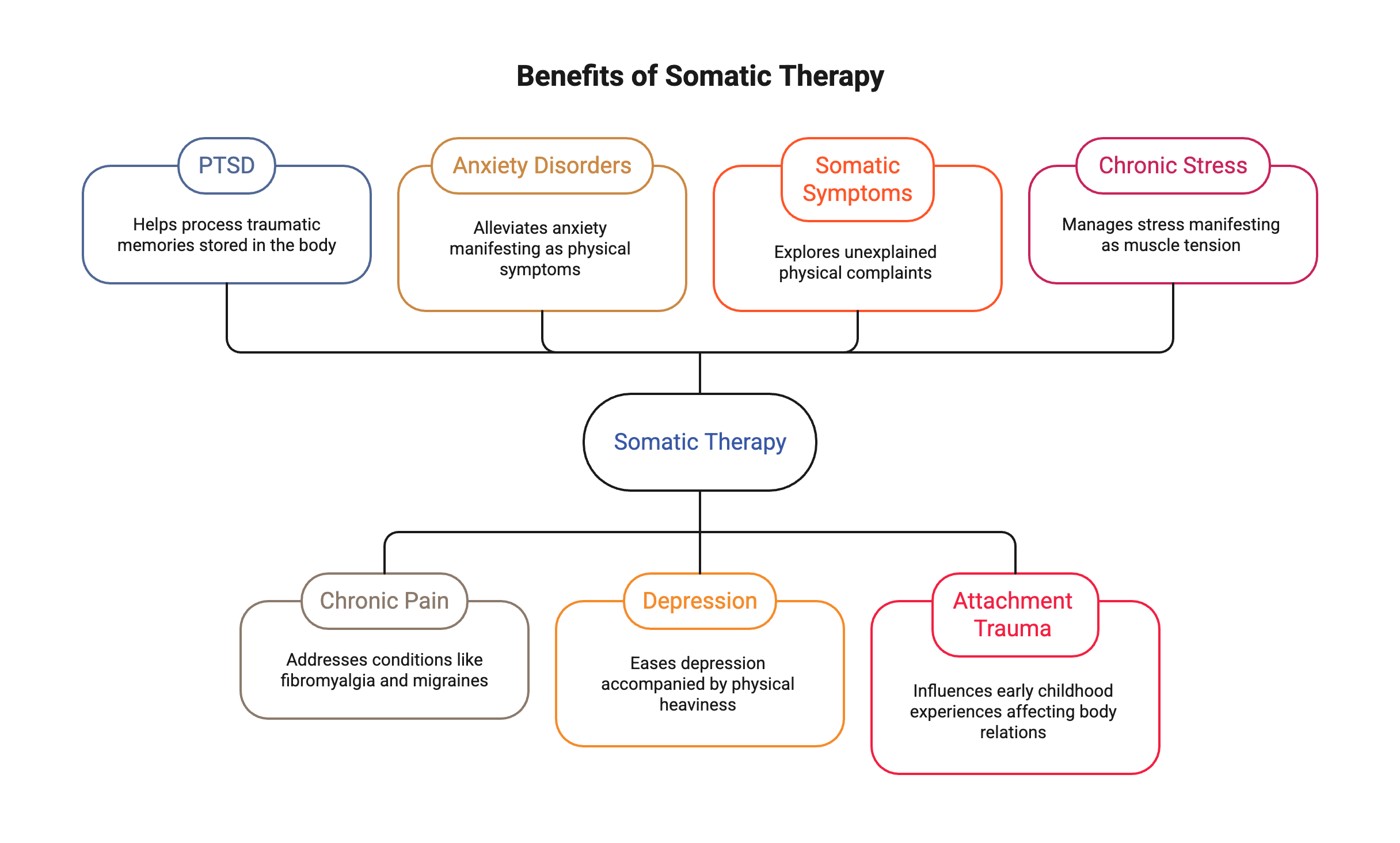
Conditions That Respond to Somatic Therapy:
- Post traumatic stress disorder (PTSD) – processing traumatic memories stored in the body
- Chronic pain – including fibromyalgia, migraines, and unexplained pain
- Anxiety disorders – especially when anxiety shows up as physical symptoms
- Depression – particularly when accompanied by physical heaviness or numbness
- Somatic symptoms – physical complaints medical tests can’t fully explain
- Attachment trauma – early childhood experiences affecting how you relate to your body
- Chronic stress – when stress manifests as persistent muscle tension or illness
Somatic therapy improves emotional regulation and awareness, allowing you to process feelings more effectively. It’s particularly helpful if you:
- Feel disconnected from your body or numb
- Experience physical symptoms that worsen with stress
- Have a history of traumatic experiences or traumatic events
- Find yourself stuck in patterns of anxiety or hypervigilance
- Notice your body holds tension even when your mind feels calm
- Haven’t found complete relief through traditional talk therapy
Studies show that mindfulness-based approaches modestly reduce pain, symptom severity, and depression in people with somatization disorders, with the most consistent results for irritable bowel syndrome.
Somatic therapy can reduce chronic stress, hypervigilance, and physical symptoms of anxiety by helping regulate a hyperactive nervous system. When you experience post traumatic stress symptoms, your body stays in a state of high alert even when threats have passed. Body oriented trauma therapy helps your nervous system recognize safety again.
What to Expect in Somatic Therapy Sessions
In somatic therapy, you’ll work with a trained mental health provider who guides you through both verbal discussion and body-based exercises. Sessions typically last 45–50 minutes and create a safe container for exploring the connection between physical sensations and emotional experiences.
Your first few sessions focus on building trust and safety—key factors in effective somatic psychotherapy. Your therapist will explain how somatic therapy works and begin teaching you to track bodily sensations. You might start with simple exercises like noticing where you feel your breath or identifying areas of tension.
As therapy progresses, you’ll:
- Learn to recognize how your body signals stress, safety, and emotion
- Practice somatic therapy techniques like grounding and pendulation
- Explore connections between physical sensations and memories or feelings
- Develop new behavior patterns for responding to stress and uncomfortable sensations
- Build skills for emotional regulation and self-soothing
The therapeutic approach emphasizes going at your pace. A skilled somatic therapist never pushes you into overwhelming experiences but instead helps you build capacity gradually. In one study of body-oriented therapy, patients named a good relationship with their therapist as one of the things that helped most.
We tell clients their first somatic session might feel different from other therapy. You might spend time in silence, noticing sensations. We’ll ask you to slow down when describing something emotional so you can notice what’s happening in your body. Many clients worry they’re “doing it wrong” at first. Reconnecting with your body is a skill that develops over time, especially if past experiences taught you that feeling was unsafe.
SE sessions often involve noticing where you feel safety in your body first before working with traumatic material. You might notice physical and emotional signs when your body releases trauma—like warmth, tears, spontaneous deep breaths, or changes in muscle tension. These are signs that your nervous system is completing interrupted stress responses and finding balance.
Can I Do Somatic Therapy on Myself?
While certain somatic practices can be helpful for self-care, comprehensive somatic therapy requires working with a trained professional, especially if you’re dealing with trauma or significant mental health conditions. The presence of a skilled therapist provides safety, guidance, and the co-regulation your nervous system needs to process difficult material.
That said, you can incorporate body awareness practices into your daily life:
- Practice noticing physical sensations without judgment several times a day
- Use deep breathing to help your nervous system shift from stress to calm
- Try gentle movement or stretching when you notice tension
- Use grounding techniques to stay connected to the present moment
- Notice what helps your body feel safe and comfortable
These self-directed somatic practices can support your well-being and complement work with a somatic therapist. However, if you’re experiencing symptoms of post traumatic stress disorder, severe anxiety, chronic pain, or other mental disorders, professional guidance is important. A trained somatic therapist knows how to help you work with traumatic material safely, preventing re-traumatization.
Many mental health practitioners integrate somatic approaches into their work, but specialized training makes a difference. Look for therapists trained through organizations like the United States Association for Body Psychotherapy or certified training programs in specific modalities.
How Does Somatic Therapy Compare to CBT?
Somatic therapy and cognitive behavioral therapy (CBT) are complementary approaches that address different aspects of healing. Many therapists integrate both, and expert guidance on persistent physical symptoms supports adding psychological treatment when basic care isn’t enough.
Cognitive Behavioral Therapy focuses on identifying and changing thought patterns and behaviors. It’s highly structured, often involves homework, and emphasizes the connection between thoughts, feelings, and actions. CBT is effective for anxiety, depression, and many mental health conditions.
Somatic Therapy focuses on the body’s role in holding and processing emotional experiences. It’s less structured than CBT and emphasizes awareness of physical sensations, nervous system regulation, and completing interrupted protective responses. Somatic therapy is particularly effective for trauma and conditions where the body’s stress response is dysregulated.
Studies show that cognitive behavioral therapy effectively reduces physical symptoms in somatization and related syndromes. However, some people find that adding body-based approaches helps them access emotional experiences that talk therapies alone don’t reach.
We’ve worked with many clients who tried CBT and found it helpful for understanding their thought patterns, but something still felt unresolved. They could identify anxious thoughts but couldn’t shake the physical anxiety. That’s often when body-based work makes the difference. The most effective therapy addresses how you think, what you do, and what you feel in your body. Both approaches have value, and we often integrate them.
You don’t necessarily have to choose between somatic therapy and CBT. Many mental health practitioners in DC integrate somatic therapy techniques into CBT frameworks, creating a more comprehensive therapeutic approach that addresses both cognitive patterns and physical holdings.
What Does Research Say About Somatic Therapy?
Research on somatic therapy shows promising results, though future research is needed to establish more comprehensive evidence. Combining cognitive and body-based techniques can address both the physical and emotional sides of these conditions.
Key research findings:
- Somatic Experiencing shows significant reductions in post-traumatic stress symptoms
- Mindfulness-based approaches modestly reduce pain and depression in somatization disorders
- Body-oriented therapies improve quality of life and help with emotional regulation
- The therapeutic relationship and resource orientation are key factors in treatment success
- Benefits often extend beyond initial targets, improving overall well-being
Early evidence suggests that somatic therapy can ease depression as well as PTSD symptoms. Study quality varies, with more rigorous clinical trials needed to establish comprehensive evidence. However, findings provide preliminary evidence that body psychotherapy approaches offer unique benefits for trauma-related stress response and affective and somatic symptoms.
Clinical guidelines recommend body-oriented approaches as part of comprehensive treatment for non-specific and somatoform complaints. Many people find that working with the mind body connection through somatic therapy techniques adds something that talk therapy alone may not, particularly for releasing tension and completing the body’s natural stress responses.
Getting Started with Somatic Therapy in DC
If you’re interested in exploring somatic therapy, look for a licensed mental health provider with specialized training in body psychotherapy approaches. Several organizations offer training for somatic therapists, including programs in Somatic Experiencing, Sensorimotor Psychotherapy, and other body oriented trauma therapy methods.
When choosing a therapist, consider asking:
- What somatic therapy training have you completed?
- Do you integrate somatic approaches with other modalities?
- What does a typical session look like?
- How do you work with traumatic material safely?
Remember that improvement takes time, and your active participation is important for the best results. The healing process in somatic therapy isn’t linear—some sessions will feel more productive than others, and that’s completely normal. What matters is the gradual rebuilding of your capacity to feel safe in your body and to process emotions as they arise.
If you’re looking for support with trauma, anxiety, chronic pain, or persistent physical symptoms, the therapists at Therapy Group of DC in Dupont Circle are here to help. Our team can work with you to address both the mental and physical aspects of healing. Schedule an appointment to get started.
Disclaimer: This article is for educational purposes only and is not a substitute for professional medical advice, diagnosis, or treatment. Always seek the advice of your physician or qualified mental health provider with any questions you may have regarding a medical or mental health condition. If you are in crisis or experiencing thoughts of self-harm, please call 988 (Suicide and Crisis Lifeline) or go to your nearest emergency room.