Why Relationships Feel Like Work: Understanding Relationship Burnout

Feeling exhausted by your relationship doesn’t mean you’ve stopped loving your partner—it often means you’re experiencing something akin to relationship burnout. This guide is for people in Washington DC who feel emotionally drained by their romantic relationships. You’ll learn what relationship burnout is, why it happens, and when seeking professional help makes a difference.
If you’re reading this because you’re exhausted by your relationship, wondering if what you’re feeling is normal, or trying to decide whether to seek help—you’re in the right place. This guide will help you understand what’s happening and show you paths forward.
Relationship burnout is a state of emotional exhaustion that develops when the pressures and demands of maintaining a relationship outweigh the energy you have to give. Even healthy relationships can go through periods of burnout—it doesn’t happen overnight, but builds gradually from chronic stress and unmet needs. Studies indicate that 70% of couples who seek therapy see positive benefits, especially when they get help early before deeper damage occurs.
Understanding the signs and causes of relationship burnout is the first step toward recovery. Whether you’re trying to save your current relationship or prevent dating fatigue after a difficult partnership ends, recognizing these patterns can help you build healthier connections moving forward.
Why Do I Feel Tired of My Relationship?

Feeling tired of your relationship is a sign of emotional exhaustion, not necessarily a sign the relationship is wrong for you. When you feel emotionally drained thinking about your partner or notice interactions feel more like obligations than moments of connection, burnout may be taking hold.
The exhaustion from experiencing relationship burnout stems from several underlying factors. Chronic stress from work, family pressures, or other external demands leaves little emotional energy for your romantic relationship. In DC’s high-pressure professional culture where careers dominate identity and time, many couples find themselves running on empty.
Unmet needs also play a major role. When your emotional needs for support or intimacy go unfulfilled over time, you feel disconnected. When partners can’t express their needs or don’t feel heard, emotional exhaustion sets in quickly.
Communication breakdown is another common cause. If you struggle to resolve conflicts or fall into patterns of blame, the constant friction becomes depleting. Couples who struggle with problem-solving and have high levels of conflict report more relationship dissatisfaction, which directly contributes to feeling burned out.
The reality is that feeling tired of your relationship is your mind and body telling you something needs to change. This doesn’t automatically mean ending the relationship—it means the dynamic needs attention, care, and possibly outside support to reset before deeper damage occurs.
What Is Relationship Burnout?
Relationship burnout is a state of emotional, mental, and physical exhaustion that develops within a romantic relationship due to prolonged stress, unresolved issues, and emotional disconnection. It mirrors workplace burnout but occurs in the context of personal intimacy.
When you’re experiencing relationship burnout, you feel emotionally drained by interactions that once brought joy. The relationship feels like another item on your to-do list rather than a source of support. You might notice detachment or numbness where there used to be warmth.
Relationship burnout happens when the emotional energy required to sustain the relationship exceeds the energy you’re receiving from it. Over time, partners become emotionally depleted, leading to withdrawal, resentment, and a sense that the relationship is more work than it’s worth. It builds gradually as frustrations and unmet needs accumulate over time.
We see couples in our Dupont Circle practice who don’t realize they can get burned out from their relationships the same way they burn out from demanding federal jobs. Just as you can recover from work burnout, you can also recover in your relationship—or recognize when it’s time to move on.
The Difference Between Burnout and Falling Out of Love
Relationship burnout is not the same as falling out of love, though it can feel similar. When partners experience burnout, they care deeply about each other but feel hopeless about their ability to fix recurring problems or reconnect emotionally. The exhaustion comes from trying hard to improve things without seeing meaningful change.
In contrast, falling out of love involves a fundamental shift in feelings where romantic attachment and desire fade. With burnout, the underlying love remains—it’s just buried under layers of frustration, exhaustion, and emotional disconnection.
Understanding what burnout is helps you recognize it. So what causes these patterns to develop?
Why Does Relationship Burnout Happen?
Relationship burnout happens when one or more factors create sustained emotional strain. Understanding these causes of relationship burnout can help you identify which patterns are affecting your relationship.
When Communication Breaks Down
Ineffective communication is one of the most common causes of relationship burnout. When partners can’t express needs without defensiveness or blame, frustration builds. Research on emotion regulation shows that people who struggle to identify their emotions are more vulnerable to experiencing burnout.
Small moments of connection—what researchers call bids for connection—become fewer and less responded to. Over time, this creates emotional distance as partners either shut down to avoid conflict or escalate arguments in desperate attempts to be understood.
Common External Stressors
Chronic stress from external sources—work demands, financial pressures, family conflicts—drains emotional resources available for your relationship. In DC, where federal jobs and demanding careers dominate daily life, couples find themselves depleted before they walk through the door.
When both partners are overwhelmed by life circumstances outside the relationship, they become emotionally unavailable to each other. This external stress creates a particularly challenging dynamic because the relationship itself isn’t necessarily broken—the partners are just too exhausted to maintain connection.
Unmet Needs and Emotional Neglect
Unmet needs create a painful cycle: you feel neglected, so you invest less, which reduces connection further. Unmet needs don’t always stem from intentional neglect—partners simply don’t know what the other needs because it hasn’t been clearly communicated.
If you’re recovering from a toxic relationship, you may be especially vulnerable to burnout in future partnerships. The patterns from past relationships can make it harder to communicate needs clearly or trust that they’ll be met.
Lack of Balance and Inequitable Effort
When one partner feels they’re carrying more emotional labor or household responsibilities, resentment builds. This “mismatched energy” signals to the overburdened partner that their efforts aren’t valued, leading to a desire to stop trying.
Research shows that this imbalance is particularly damaging because it creates a dynamic where one person feels taken for granted while the other may be unaware of the disparity or feel criticized despite doing their best.
The Role of Authenticity
Loss of authenticity happens when partners feel they can’t express genuine thoughts or feelings without negative consequences. Recent research on couple burnout shows that couples who maintain authenticity—where both partners feel safe being emotionally honest—are significantly less likely to experience burnout.
When partners lose their sense of individuality or feel they must hide parts of themselves to keep the peace, burnout accelerates. This self-silencing is exhausting and creates deep resentment that erodes connection over time.
Unrealistic Expectations and Disappointment
Entering a relationship with unrealistic expectations—about how conflict should be handled, how much quality time you’ll have, or how your partner should meet your needs—sets you up for chronic disappointment. When reality repeatedly fails to match these expectations, the gap creates frustration and emotional exhaustion.
In our practice, we remind couples that relationship burnout doesn’t mean you’ve failed or chosen the wrong partner. Even the healthiest relationships can experience periods of burnout when external pressures overwhelm your capacity to connect. Recognizing the causes is the first step toward addressing them together.
Now that you understand what causes relationship burnout, let’s look at how to recognize the specific signs in your own relationship.
How to Tell If You’re Burnt Out in a Relationship
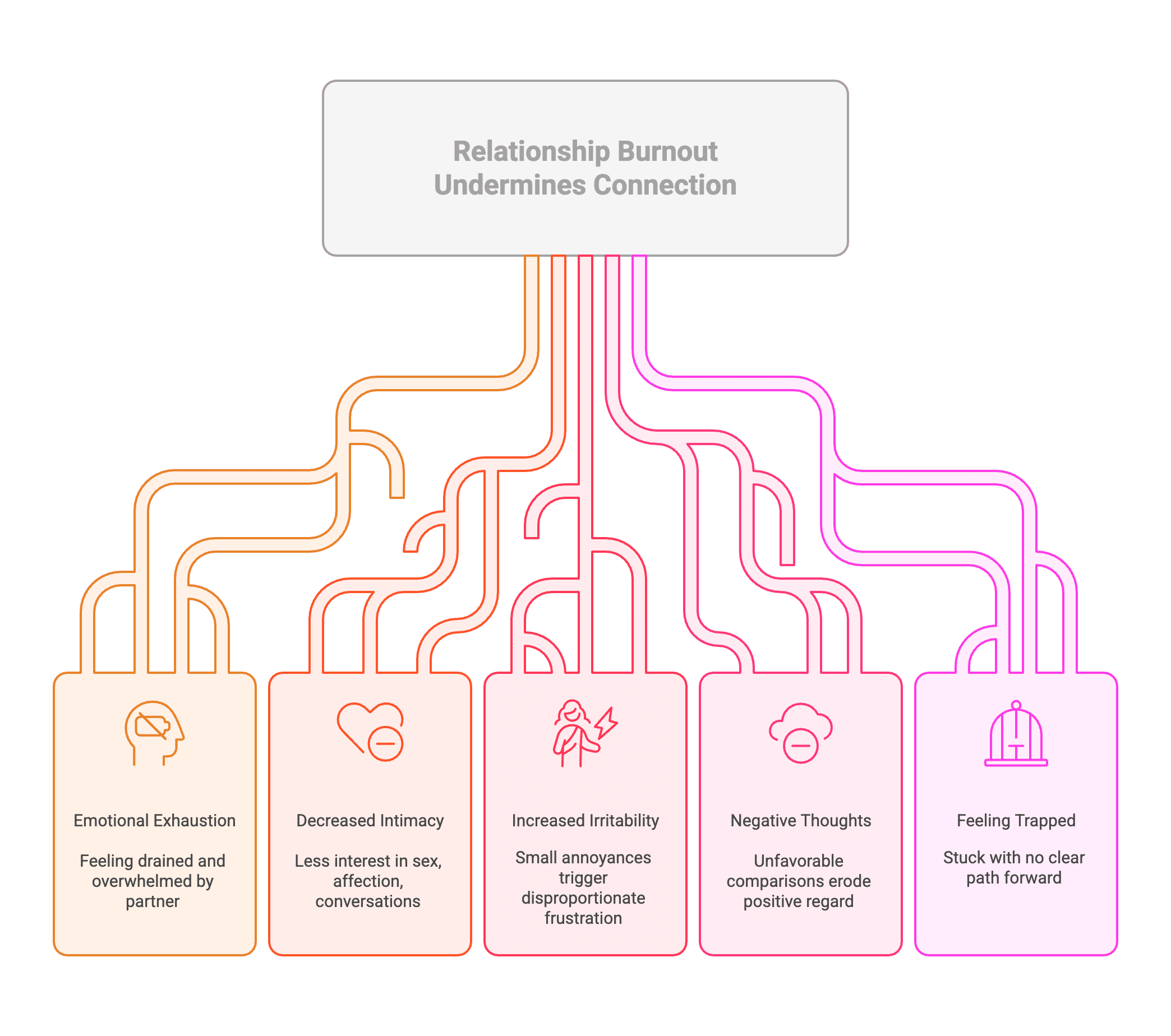
Several clear signs indicate you’re experiencing relationship burnout rather than just going through a rough patch.
Physical and Emotional Signs
Emotional exhaustion manifests as feeling drained or overwhelmed thinking about your partner. You might feel numb or indifferent—not angry, just emotionally flat. You find yourself avoiding your partner or minimizing time together.
This emotional depletion creates a strong desire to disengage. You might make excuses to stay late at work, spend more time with friends, or lose yourself in distractions rather than engaging with your partner.
Changes in Intimacy
Decreased intimacy is a clear sign. You have less interest in sex, affection, or deep conversations. Research shows burnout has real impacts on intimacy—when partners experience emotional exhaustion, it leads to emotional withdrawal, decreased libido, and decline in both intimacy and sexual activity.
The emotional and physical connection that once defined your relationship has diminished significantly or disappeared entirely. What used to feel natural now feels forced or like another obligation.
Mental and Emotional Patterns
Increased irritability means small annoyances now trigger disproportionate frustration. You have reduced empathy or patience toward your partner. Things that seemed endearing now feel annoying—a hallmark of burnout.
Negative thoughts about your partner or mentally comparing your relationship unfavorably to others signal that burnout has eroded your positive regard. You might romanticize being single or imagine life with someone else.
Feeling Trapped
One of the most telling signs is feeling trapped—stuck in a depleting situation with no clear path forward. Left unchecked, this creates its own chronic stress and can lead to anxiety or depression. The relationship feels like it’s become a source of stress in your life rather than a refuge from external pressures.
Recognizing these signs is important because relationship burnout doesn’t exist in isolation—it’s connected to patterns in dating as well.
The Connection Between Dating Fatigue and Relationship Exhaustion
Dating fatigue and relationship burnout occur in sequence or reinforce each other. Dating fatigue is a burned-out emotional state where you feel disillusioned and completely over the process of searching for a romantic relationship. It manifests as emotional exhaustion, mindless swiping on dating apps, and strong dread about logging on or going on dates.
A hallmark of dating fatigue is having a strong urge to give up on dating altogether. Common signs include feeling drained by dating, seeing it as a chore rather than an opportunity, and secretly hoping dates cancel.
How the Cycle Perpetuates
When you exit a relationship while experiencing burnout, you carry that exhaustion into dating. The emotional depletion doesn’t reset automatically. Additionally, relationship burnout creates negative expectations—if you’ve struggled with chronic stress or poor communication, you might unconsciously expect these patterns to repeat.
Conversely, dating fatigue can set you up for future relationship burnout. When exhausted from dating, you might rush into a relationship before you’re emotionally ready or settle for a connection that doesn’t meet your needs. Starting a relationship with depleted emotional reserves makes you vulnerable to experiencing burnout early on.
Breaking the Pattern
Setting boundaries around dating—limiting time on dating apps, clarifying what you want from potential partners, prioritizing quality over quantity—helps manage dating fatigue effectively. These same boundary-setting skills prevent relationship burnout in committed partnerships.
Taking breaks when you recognize signs of either dating fatigue or relationship burnout allows you to process experiences and reset before re-engaging. This intentional pause creates space to approach relationships from a healthier place.
Recovery Strategies and When to Seek Couples Therapy
Recovering from relationship burnout requires intentional effort from both partners and sometimes professional support. These strategies can help you move from disconnection to connection.
Prioritize Open Communication
Open communication with your partner is crucial to maintaining a healthy relationship. Create space for honest conversations about feelings and needs. Use “I” statements to express your experience without blaming your partner.
Engaging in active and reflective listening skills ensures both parties understand the context. When your partner shares, focus on truly hearing them rather than planning your response. Feeling heard is one of the most important factors in relationship satisfaction.
Make Time for Self-Care
Self-care is vital to a healthy relationship. Taking time for yourself—”me time” for hobbies, friends, or alone time—helps recharge your energy so you can give to your partner without feeling resentful or burned out.
Many people mistakenly believe good relationships require constant togetherness. In reality, maintaining individual identity prevents the loss of self that contributes to burnout.
Set Boundaries Around External Stress
Setting boundaries around work and external stressors protects energy for your relationship. This might mean establishing clear work-life separation or consciously creating space for couple time that’s protected from other demands.
In DC’s demanding professional environment, this boundary-setting is especially important. Your relationship needs dedicated time and attention that isn’t squeezed between meetings or dominated by work stress. Prioritizing couple time is crucial for preventing burnout.
Try New Activities Together
Trying new activities together can help reignite connection and excitement in a relationship. When relationships fall into routines, they lose novelty. Creating new experiences—exploring a new neighborhood, taking a class together, or planning regular date nights—combats the boredom that contributes to burnout.
When Couples Therapy Can Help
Seeking professional help with a couples therapist can provide strategies to manage burnout and reconnect emotionally and sexually. Seeking therapy early when burnout first appears can help reset relationship dynamics and prevent deeper damage.
We encourage couples to seek support early rather than waiting until burnout has created deep disconnection. Many couples tell us they wish they’d come to therapy sooner—before resentment hardened and emotional distance became the norm. Asking for help is an act of commitment, not an admission of defeat.
Consider couples therapy if:
- You’ve tried to address burnout on your own without seeing improvement
- Communication has broken down to the point where conversations consistently escalate
- You feel stuck in negative patterns you can’t break without outside help
- One or both partners are considering ending the relationship
Types of Evidence-Based Couples Therapy
Several types of couple therapy have strong research support, including Emotionally Focused Therapy (which strengthens emotional connection), Behavioral Couple Therapy (which focuses on changing communication patterns), and Insight-Oriented Couple Therapy (which helps couples understand relationship patterns).
Research shows psychodynamic couple therapy can be particularly effective for long-term success. In one study, couples receiving psychodynamic therapy had lower divorce rates (3%) compared to behavioral therapy (38%) at four-year follow-up.
Individual Therapy for Relationship Patterns
If you’re experiencing relationship burnout after a relationship ends, individual psychotherapy can help. Psychodynamic therapy (a type of talk therapy that explores how past experiences influence current patterns) helps you understand how your past relationships affect current ones and identify recurring themes over time.
Research shows short-term psychodynamic therapy (typically 8-40 sessions) can effectively reduce fatigue symptoms and improve emotional well-being. Other evidence-based approaches include cognitive behavioral therapy (CBT), interpersonal therapy, and acceptance and commitment therapy.
Recognizing that the relationship has gotten to a state of burnout is the first step to addressing it. Recovery is a process that won’t happen overnight, but with commitment and appropriate support, it’s possible to move from exhaustion back to connection.
Ready to Get Started?
If you’re experiencing relationship burnout, don’t wait until the damage becomes irreparable. Our team at Therapy Group of DC specializes in helping couples navigate burnout and rebuild connection. We offer both couples therapy and individual therapy to address relationship exhaustion at its roots.
Frequently Asked Questions About Dating and Relationship Burnout
What is the 3-3-3 rule for dating?
The 3-3-3 rule for dating suggests waiting three days after a first date before reaching out, having three dates before deciding if there’s potential, and waiting three months before exclusivity. While some find this structure helpful, it’s not universal. Healthy relationships are built on honest communication rather than arbitrary timelines.
If you’re experiencing dating fatigue, rigid rules can add unnecessary stress to the process. Focus on what feels right for you and communicate openly with potential partners about your pace and needs.
What is the 24 hour rule in dating?
The 24 hour rule in dating refers to waiting at least 24 hours after a first date before texting or calling. The idea is to avoid appearing too eager. However, this rule can contribute to dating fatigue by adding game-playing to early connections.
If you enjoyed a date and want to reach out, there’s no reason to wait an arbitrary amount of time. Authenticity reduces stress and helps you connect with people who appreciate genuine communication.
What is the 3 6 9 rule in dating?
The 3 6 9 rule (sometimes called the 3 6 9 month rule in a relationship) suggests relationship milestones at three months (exclusivity), six months (saying “I love you”), and nine months (meeting families or discussing long-term plans).
However, every relationship moves at its own pace. Forcing your relationship to meet external timelines creates unnecessary pressure and contributes to relationship burnout. What matters is that both partners feel comfortable and communicate openly about expectations.
How can I prevent dating fatigue?
To prevent dating fatigue, take intentional breaks when you feel overwhelmed, set clear boundaries around how much time you spend on dating apps each week, and prioritize quality connections over quantity. Understanding your reasons for dating can help clarify intentions and increase engagement.
Setting daily time limits for dating app usage can prevent emotional exhaustion. If you notice signs like feeling drained or seeing dating as a chore, take a break to recharge. Engaging in hobbies and interests outside of dating can lead to organic connections with new people.
These dating rules can add unnecessary pressure. Instead, focus on authentic connection and addressing burnout when it appears.
This blog provides general information and discussions about mental health and related subjects. The content is not intended to be a substitute for professional medical advice, diagnosis, or treatment. Always seek the advice of your physician or other qualified health provider with any questions you may have regarding a medical condition.