

Low libido—wanting sex less often or less intensely than before—is one of the most common sexual concerns people experience, affecting both women and men. While physical health problems and medications can contribute, psychological and emotional factors often play a major role. Depression, anxiety, work stress, and relationship issues are strong predictors of reduced sexual desire.
How Do I Know If I Have Low Libido?
The main symptom of low libido is wanting sex less often or less strongly than before. This isn’t about comparing yourself to others or meeting some arbitrary standard—it’s about noticing a change in your own level of sex drive and interest in sex.
You might have low sexual desire if you’ve noticed:
- Decreased interest in sexual activity compared to your past
- Loss of sexual fantasies or thoughts about sex
- Little to no interest in initiating sex with your partner
- Reduced response to your partner’s sexual advances
- Feeling distressed or concerned about your lack of interest
Low libido becomes a problem when it causes you personal distress or creates tension in your relationship. Low libido can affect a person’s overall well-being and lead to anxiety about their relationship. Many people experience temporary dips in sex drive during stressful periods, but when low sex drive persists and affects your well-being or intimacy, it may be time to seek help. In some cases, chronic low libido can be diagnosed as hypoactive sexual desire disorder (HSDD), a recognized sexual dysfunction that responds well to treatment.
In our Dupont Circle practice, we regularly remind clients that low libido isn’t about meeting someone else’s expectations. What matters is whether the change bothers you or affects your relationship. When clients stop comparing themselves to cultural narratives about sex and focus on their own experience, they often find clarity about next steps.
What Causes Low Libido?
Low sexual desire rarely has a single cause. Common causes of low libido include mental health issues, physical health problems, certain medications, lifestyle factors, and relationship issues.
Physical and mental health conditions can both decrease sex drive. Chronic illnesses such as diabetes, high blood pressure, obesity, and heart disease are linked to low libido. Hormonal changes during menopause or andropause can impact sex drive as hormone levels shift, particularly when estrogen levels drop in women or testosterone levels decline in men.
Many medications can have side effects that lower libido, including some antidepressants and hormonal contraceptives (birth control). If you’ve recently started a new medication and noticed changes in your sexual desire, this connection is worth discussing with your healthcare professional.
Lifestyle factors play a significant role. Lack of sleep, too much alcohol consumption, and physical inactivity all negatively affect sex drive. Recreational or illicit drug use can also interfere with sexual function and contribute to low sex drive.
How Do Stress and Anxiety Affect Sexual Desire?
Mental health issues such as anxiety, depression, and stress are among the strongest predictors of low desire. In one study of people with untreated major depression, more than 40% of men and half of women reported decreased sexual interest. These conditions create a two-way relationship—mental health problems can cause low libido, and sexual problems can worsen anxiety and depression.
Stress and anxiety affect sex drive through multiple pathways:
When you’re dealing with work stress, financial worries, or major life changes, your body remains in a state of heightened alertness. This chronic stress response redirects energy away from sexual function and desire. In a city as high-pressure as DC, where professional demands can feel relentless and many people experience what we call “functional anxiety,” it’s common for sex drive to decline and sexual intimacy to take a back seat to career responsibilities.
Anxiety also creates negative thought patterns that interfere with sexual response. Worrying about sexual performance, feeling self-conscious about body image, or experiencing low self esteem during intimacy creates a cycle where anxiety itself becomes a barrier to desire.
Depression diminishes interest in activities that once brought pleasure, including sex. The emotional numbness and fatigue that accompany depression often result in decreased sex drive and reduced sexual desire. When you’re struggling just to get through the day, sexual intimacy can feel like yet another demand.
Poor sleep and exhaustion compound these effects. Fatigue from daily responsibilities and lack of adequate rest reduce both the physical energy and emotional bandwidth needed for sexual connection. Getting enough sleep is one of the most fundamental lifestyle changes that can help improve libido.
We frequently see professionals in DC dealing with what they call “too tired for sex.” The pattern is striking: work stress bleeds into evening hours, sleep suffers, and sex becomes one more thing on the to-do list. When clients address their anxiety and sleep habits, sexual desire often returns naturally.
How Relationship Issues Impact Sex Drive
Relationship problems can significantly lower a person’s sex drive. Poor communication with your partner, feeling emotionally disconnected, unresolved conflicts, and lack of trust create barriers to sexual desire. Low libido can lead to significant distress and relationship problems for both partners.
When emotional closeness fades, sexual intimacy often follows. You might notice:
- Reduced attraction or sexual boredom over time
- Differences between partners in desire for sex
- Feeling emotionally disconnected from your partner
- Avoiding physical intimacy due to unresolved tension
- Difficulty expressing your needs and preferences
These relationship issues don’t just affect your sex life—they can affect intimacy across all aspects of your connection. Open communication with a partner about desires and needs can improve emotional intimacy and enhance libido, but this requires vulnerability and often benefits from professional support. Exploring these dynamics in therapy—including how emotional barriers affect men’s intimacy and sexual connection—can create meaningful change.
How Can I Get My Libido Back?
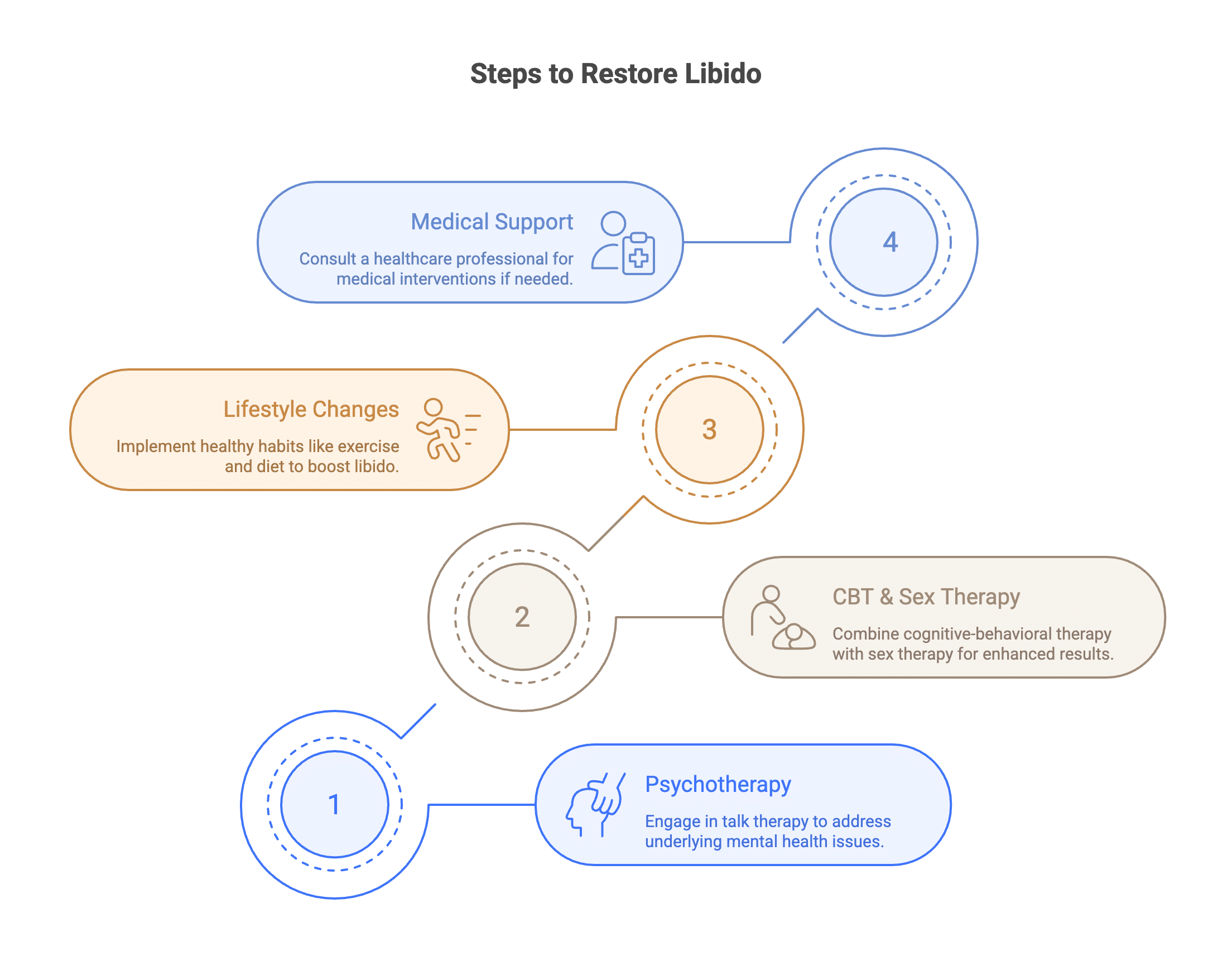
Psychotherapy (talk therapy) is an effective treatment for low sexual desire. Research shows that psychological interventions can significantly improve both sexual symptoms and sexual satisfaction. For people experiencing low libido related to stress, anxiety, or depression, addressing these underlying mental health conditions is often the most effective path forward.
Therapy Approaches That Work
Cognitive-Behavioral Therapy (CBT) helps you identify and change thoughts and behaviors that interfere with sexual desire. This approach focuses on recognizing unhelpful beliefs about sex, addressing unreasonable expectations about sexual performance, and improving communication with your partner.
Sex therapy often includes specific techniques to reduce pressure and increase awareness of what feels pleasurable. Studies combining CBT and sex therapy show that many women improve their sexual and relationship satisfaction.
Individual or couples therapy can address the specific factors affecting your desire—whether that’s processing past trauma through psychodynamic therapy, working through relationship conflicts, or developing better stress management techniques such as meditation and self-care practices.
What helps most in our practice is treating low libido as a signal rather than a problem to fix. When we explore what stress or relationship issues are creating the disconnect, clients often find that their libido returns as they address those underlying concerns. The desire was there—it just got buried.
Lifestyle Changes That Help
Healthy lifestyle changes can make a real difference in combating low libido:
- Regular physical activity improves mood, body image, and hormone balance, thereby enhancing libido
- Eating a nutritious diet may help increase interest in sex and improve overall health
- Reducing or cutting out alcohol may help improve libido
- Improving sleep habits can help increase sexual desire
- Managing stress through mindfulness, exercise, or therapy
When to Consider Medical Support
While psychological factors are often primary, many people benefit from combining psychological therapy with other treatments. A healthcare professional can help develop a treatment plan that may include:
- Addressing underlying medical conditions that affect sex drive
- Adjusting medications that lower sex drive
- Blood tests to check hormone levels and testosterone levels if indicated
- Exploring whether hormone therapy or other medical interventions make sense for your situation
For women experiencing chronic low libido that meets criteria for hypoactive sexual desire disorder, medications like Addyi and Vyleesi are available specifically to treat this sexual dysfunction and boost libido. A sexual health specialist or sexual dysfunction specialist can work with you to identify the root cause and develop a tailored treatment plan.
Taking the Next Step
If low libido is affecting your life or causing distress in your relationship, you don’t have to face this alone. Many people have never been asked about their sexual health by their healthcare teams, which can make bringing it up feel awkward—but seeking professional help can be the start of getting back something important.
Talking about a low sex drive should not cause embarrassment. Sexual concerns are common, treatable, and nothing to be ashamed of. Consultation with a healthcare professional is recommended to identify the underlying causes of low libido. A therapist can help you understand what’s contributing to your low sex drive and create a path forward.
Ready to Reclaim Your Sexual Well-Being?
Our experienced therapists in DC understand how stress, anxiety, and the demands of high-pressure careers can impact your sex life and overall well-being. We offer evidence-based treatment for low sex drive and low libido, helping individuals and couples address the psychological factors that affect sexual desire. Contact our DC practice to schedule a consultation with a therapist experienced in anxiety, stress, and relationships.
This blog provides general information and discussions about mental health and related subjects. The content is not intended to be a substitute for professional medical advice, diagnosis, or treatment. Always seek the advice of your physician or other qualified health provider with any questions you may have regarding a medical condition.