

Feeling nervous before therapy is normal. In about 10 minutes, you can confirm logistics, bring or upload essentials (ID/insurance, meds list), and set 1–2 aims so your first—or next—therapy session feels focused and productive. Feeling overwhelmed is also common when starting therapy, but taking these small steps can help ease the process.
What should you do before a therapy session?
In the 10 minutes before your appointment, confirm logistics, set 1–2 clear aims, and get your basics ready so you can focus on the conversation. This simple prep lowers stress and helps you use your time well. This applies to ongoing therapy sessions and your first therapy session alike—tiny habits make a big difference.
You play a big part in how therapy goes, and showing up prepared helps.
How do you confirm the basics (time, place, format)?
Check your appointment time and time zone. For in‑person sessions, confirm the address, suite, and how you’ll get into the building. For telehealth, test your link and audio, and have a backup phone number ready. A little structure reduces pre‑session anxiety and improves engagement. Research shows that clear, collaborative framing supports stronger participation in care.
What essentials should you bring—or upload ahead of time?
If you didn’t already upload them to your portal, bring your photo ID and insurance card, a payment method (HSA/FSA if you use one), a list of current medications and doses, and an emergency contact you’re comfortable sharing. Knowing the ground rules—like consent and confidentiality—also helps you feel safer going in. Readable overviews of informed consent and patient rights show why this matters for trust and safety.
How do you set 1–2 aims for today’s therapy session?
Write one plain sentence: “By the end, I’d like to ____.” Keep it small and specific—learn one coping skill, decide between two options, or understand one pattern. Brief, goal‑focused prep is linked with better session outcomes and engagement.
What are three things you want to talk about today?
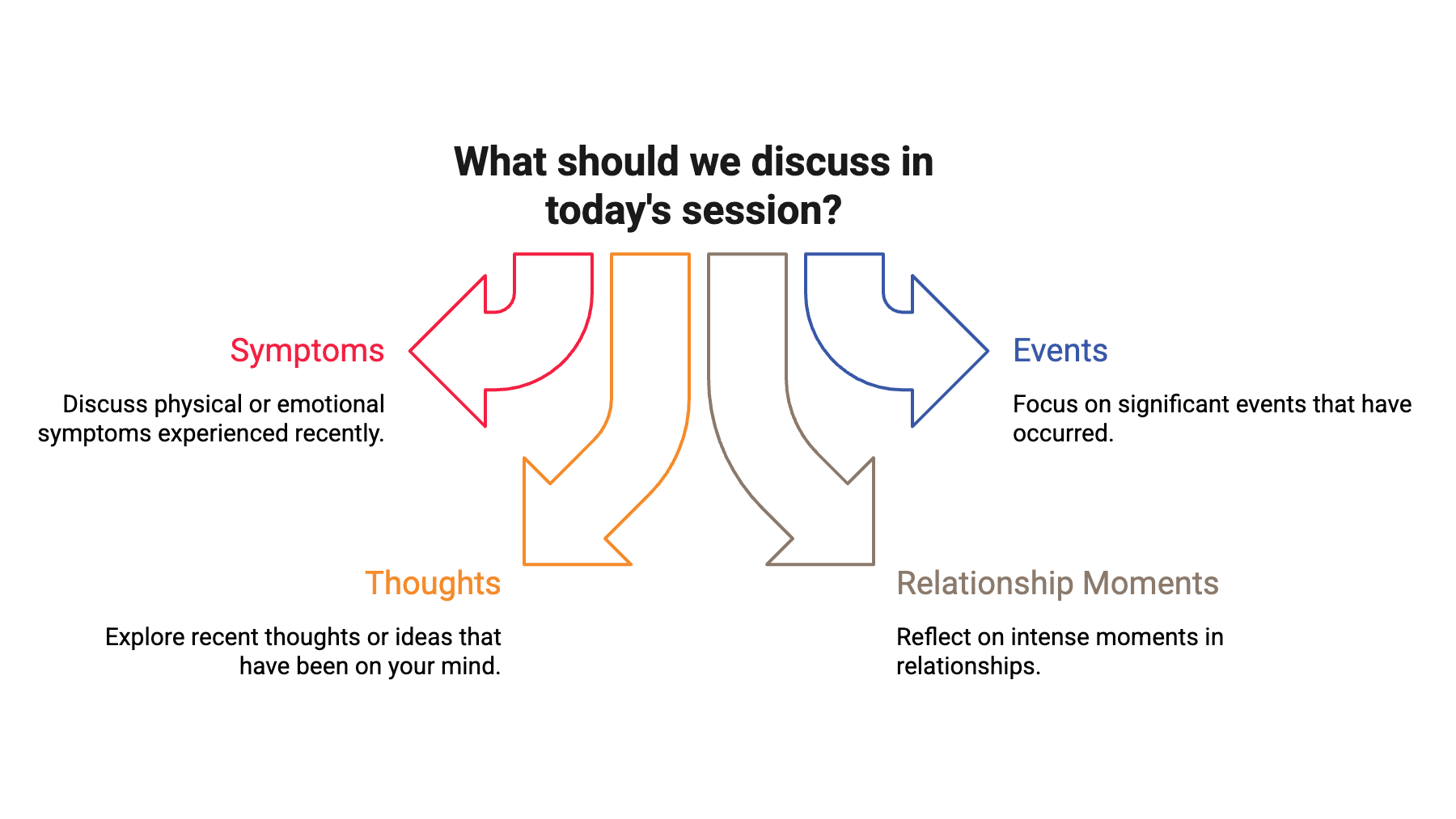
Jot quick bullets—symptoms, events, thoughts, or relationship moments. If you’re unsure, pick one recent moment that felt intense (good or hard) and start there. Clients who can name concrete moments tend to collaborate more effectively in session.
What changed for your mental health since last time?
Any shifts in mood, sleep, stress, or energy? Any wins or triggers? Flag any safety concerns first. This snapshot helps your therapist track progress and tailor the plan. Monitoring small changes is a core part of effective therapy planning.
How should you prep your space—or plan your route?
Telehealth: choose a private spot, use headphones, place your camera at eye level, and keep tissues and water nearby. In person: plan your route, add a 10‑minute buffer, and bring a light layer if you tend to run cold. A supportive setup helps you settle and speak more freely. Research suggests that coming to therapy prepared helps people stick with it.
What’s one respectful question to bring to the session?
Try: “How will we measure progress?” “What should I practice between sessions?” or “What might a plan look like for someone like me?” Questions make therapy a collaborative process and keep you oriented between sessions. Collaboration and clear expectations strengthen the working alliance.
What’s a 60‑second calm‑down before you start?
Take slow breaths (in 4, out 6) or do the “5‑things‑you‑see” grounding exercise. Name one feeling and one need you’re bringing with you. Even a minute of steadying can help you begin with clarity. Simple pre‑session routines support focus and follow‑through.
Pocket recap
- Confirm time/place/link and entry.
- Bring/upload ID, insurance, payment, meds list, emergency contact.
- Write 1–2 session aims + top 3 topics.
- Note changes since last time; flag safety.
- Prep space or travel buffer for therapy sessions.
- Bring one question.
- Do a one‑minute calm‑down.
This guide is for general support and isn’t a substitute for professional advice. Your therapist will tailor recommendations to your needs.
What if this is your first therapy session?
Do the same 10‑minute prep: confirm logistics, bring ID and insurance if not already uploaded, and write one small aim. Expect a brief discussion of consent, confidentiality, and your goals; asking how progress will be measured is appropriate. These basics help you start your first therapy session feeling oriented and safe. Clear consent and expectations build trust and safety.
Frequently Asked Questions About Preparing for a Therapy Session
What should I expect during my first therapy appointment?
During your first therapy appointment, also known as the intake appointment, your therapist will ask questions about your current concerns, family history, and symptoms to understand your specific needs. Therapists often use questionnaires to better understand what you’re struggling with during the initial assessment. This session helps establish therapy goals and begins the collaborative process of creating a treatment plan tailored to you.
How can I approach therapy with an open mind?
Approaching therapy with an open mind means being willing to discuss sensitive topics, reflect on your emotions, and explore new coping skills. Starting with less sensitive topics can make it easier to open up in therapy. It’s important to feel comfortable sharing at your own pace and to understand that therapy is a process aimed at achieving positive changes and better mental health.
What types of therapy might I encounter?
There are various types of therapy, including psychodynamic therapy and cognitive-behavioral therapy. Each approaches therapy differently, focusing on learning skills, understanding past experiences, or managing symptoms like depression or obsessive-compulsive disorder. Discussing the type of therapy with your therapist can help ensure a good match for your needs.
How can I prepare questions to ask my therapist?
Preparing questions such as “What is your role in my treatment?” or “How will we measure progress?” can be incredibly helpful. Asking your therapist about their approach, therapy goals, and what to expect during the therapy process can help you feel more comfortable and engaged in your therapeutic journey.
What if I feel uncomfortable during therapy?
Feeling uncomfortable is common when discussing personal challenges. It’s important to communicate these feelings with your therapist so they can adjust the pace or approach. Be honest with your therapist for the best outcomes in therapy. Therapy is a safe space designed to support you, and addressing discomfort can lead to a more positive experience and better outcomes.
How do I know if I have found the right therapist?
Finding the right therapist involves feeling heard, respected, and supported. Therapists understand they may not be a good fit for everyone. If, after a few sessions, you don’t feel like a good match, it’s okay to seek another professional who better fits your specific needs and goals. The right fit is essential for a successful treatment plan and positive therapy experience.