

When your partner comes out as gay, lesbian, or bisexual, the revelation can shake everything you thought you knew about your relationship. If you’re the straight spouse in a mixed-orientation marriage, focusing on your own well-being means giving yourself permission to feel complex emotions, seeking support without shame, and making choices that honor both your needs and your values. Research shows straight spouses often experience anxiety and depression, especially when they feel pressure to keep the situation private.
This post focuses primarily on situations where one partner discovers or discloses their sexual orientation during the marriage, often unexpectedly. If you knowingly entered a mixed-orientation marriage with both partners aware from the beginning, much of the emotional content about betrayal and grief may not apply to your situation, though some of the practical guidance on relationship dynamics and support resources may still be helpful.
What is a mixed-orientation marriage?
A mixed-orientation marriage is a relationship where partners have differing sexual orientations—for example, when one partner is straight and the other is gay, lesbian, or bisexual. These marriages are more common than many realize, but stigma and secrecy often prevent couples from talking openly about their experiences.
Mixed-orientation marriages happen for many reasons. Sometimes one partner didn’t fully understand their sexual orientation when they married. Other times, societal or religious pressure led someone into a heterosexual relationship even when they experienced same-sex attraction. A gay husband, bisexual wife, or lesbian wife might have hoped their feelings would change, or they may have genuinely loved their partner and wanted to build a life together.
Your questions about what this means for your relationship, your family, and your future deserve attention and space.
In our practice, we often see straight spouses who feel they should suppress their own hurt to be supportive partners. But your pain deserves acknowledgment too. Processing feelings of betrayal, confusion, or grief doesn’t make you unsupportive—it makes you human. We work with couples and individuals to create space for both partners’ experiences without diminishing either one. Many straight spouses tell us they feel relief when they realize they don’t have to choose between supporting their partner and honoring their own needs.
How long do mixed-orientation marriages last?
There’s no single answer because every relationship is unique. Some couples divorce soon after disclosure, while others remain married for decades. Research on relationship quality shows that commitment, forgiveness, and communication influence outcomes more than sexual orientation differences alone.
What determines whether a mixed-orientation marriage lasts is whether the relationship meets both partners’ needs. If you’re the straight spouse, this requires honest self-reflection:
- Do I feel emotionally connected to my partner?
- Can we communicate openly about our needs and boundaries?
- Am I staying because I want to, or because I feel I should?
- What would a fulfilling relationship look like for me?
Some mixed-orientation couples maintain intimacy and connection, sometimes by redefining their relationship to include openness or non-monogamy. Others realize that staying together means sacrificing needs fundamental to their well-being. Neither path is inherently right or wrong.
What percentage of mixed-orientation marriages end in divorce?
Reliable divorce statistics are difficult to find because many couples don’t publicly identify as mixed-orientation, and circumstances vary widely. Fear of judgment from family, friends, or religious communities often keeps these relationships private.
What we do know: relationship dynamics in mixed-orientation marriages face significant challenges—including differences in sexual desire, navigating identity after coming out, and managing external social pressures. These challenges require intentional effort and support.
Rather than fixating on statistics, examine your own relationship. Can you and your partner address these challenges together? Do you both feel heard and valued? These questions tell you more than any divorce rate.
What is the difference between a mixed-orientation marriage and a lavender marriage?
A lavender marriage is a specific arrangement where both partners knowingly enter the relationship to hide their sexual orientations—historically used by gay men and lesbian women to avoid discrimination. In contrast, most modern mixed-orientation marriages involve one partner discovering or disclosing their sexual orientation during the marriage, often surprising the straight spouse. The key difference is intent and disclosure at the beginning of the marriage.
How do I take care of my mental health as a straight spouse?
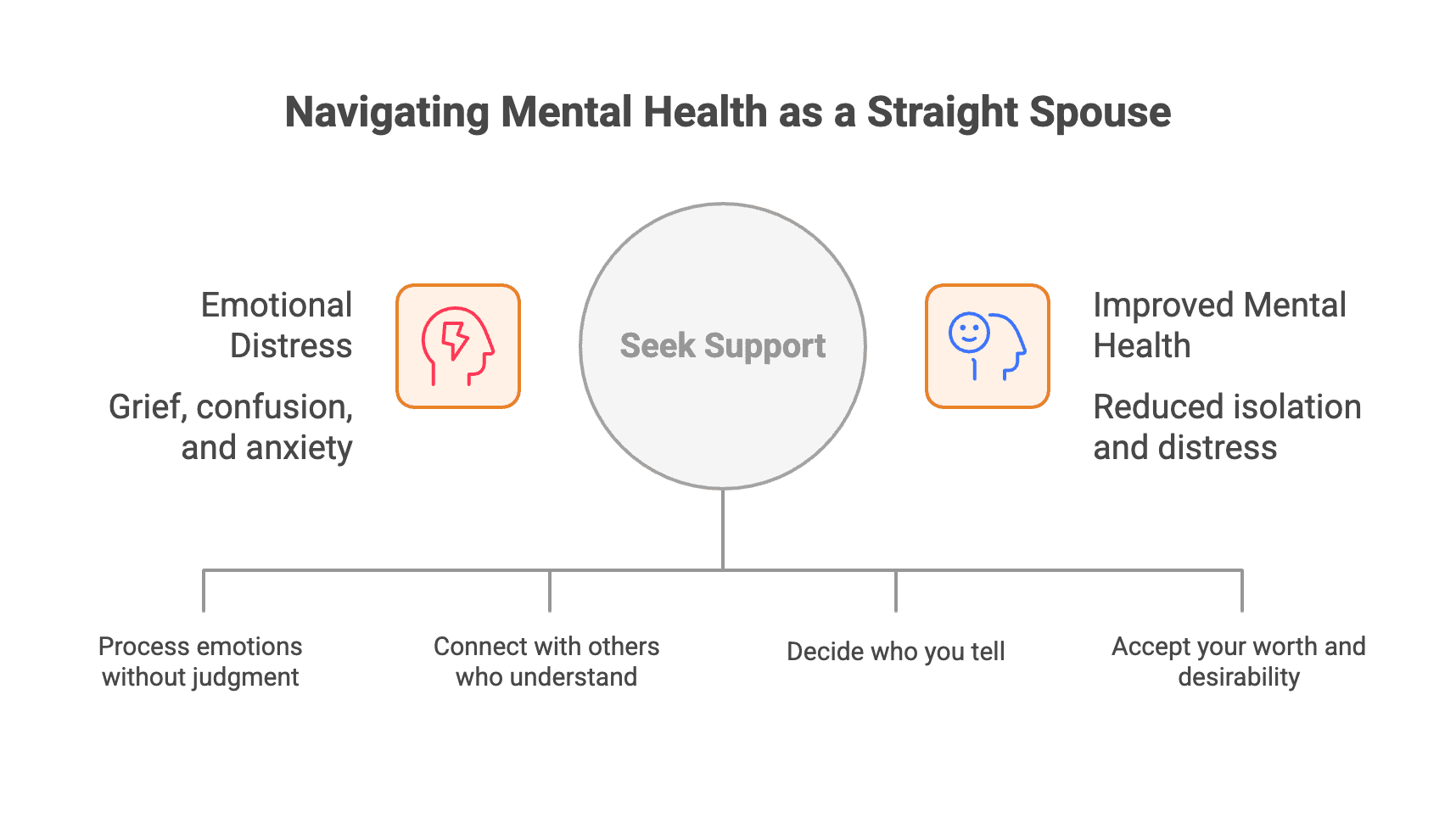
Start by acknowledging that your feelings are legitimate. Many straight spouses experience grief over the relationship they thought they had, confusion about what the disclosure means, and anxiety about the future. You might feel betrayed, even if your partner didn’t intentionally deceive you. Mental health challenges are common in mixed-orientation relationships, and you shouldn’t navigate these emotions alone.
Consider these approaches:
- Find a therapist who understands mixed-orientation relationships. Individual therapy helps you process complex emotions without judgment.
- Join a support group for straight spouses. Organizations like OurPath provide peer support specifically for straight people in mixed-orientation marriages. Connecting with others who understand reduces isolation.
- Set boundaries around disclosure. You decide who you tell and when. Openness can reduce distress, but you’re not obligated to share your situation before you’re ready.
- Practice self-compassion and self-acceptance. This situation reflects your partner’s identity, not your worth, attractiveness, or desirability.
We regularly work with straight spouses who feel guilty for feeling hurt or angry after their partner comes out. One partner’s disclosure doesn’t negate the other partner’s right to grieve what they thought they had. In therapy, we help straight spouses identify what they need—whether that’s time, space, information, or reassurance—and communicate those needs clearly. This isn’t selfish; it’s foundational for any healthy path forward. Your emotional wellbeing deserves attention, not apology.
What if my partner is bisexual?
If your bisexual husband or partner recently came out, you might struggle with stereotypes about bisexuality. Relationships with bisexual people sometimes face negative assumptions—that bisexual women or bisexual men can’t be satisfied with one partner, or that bisexuality is just a phase. These stereotypes harm bisexual people and their relationships.
A bisexual person’s attraction to multiple genders doesn’t mean they can’t be committed or faithful. What it does mean is that your partner experiences attraction differently than you understood. You might wonder whether you can meet their needs, or whether they’ll eventually want to explore relationships with people of other genders. These concerns deserve honest conversation with your partner, not assumptions based on stereotypes.
What about our relationship dynamics and sexual intimacy?
Mixed-orientation couples often face challenges with sexual desire, intimacy, and satisfaction. If your partner is gay or lesbian, they may not experience sexual attraction to you. If your partner is bisexual, you might wonder whether their bisexuality means the relationship can’t meet their needs.
Your sexual and emotional needs matter in this relationship. Some couples maintain physical intimacy that works for both partners. Others decide that opening the relationship or separating is the most honest path. Couples who reconstruct relationships often redefine what commitment means and how they express love.
This requires honest conversations. What do you need from a romantic partnership? What compromises are you willing to make, and which needs are non-negotiable? Whether partners involved can be sexually compatible depends on each person’s needs, boundaries, and willingness to adapt.
Should I stay or should I leave?
This is your decision to make, and neither choice is morally superior. Staying doesn’t make you a martyr, and leaving doesn’t make you unsupportive. What matters is whether you can build a relationship that honors both partners’ authentic selves.
Questions to guide you:
- Can we both be our authentic selves in this relationship?
- Do I feel emotionally and physically fulfilled?
- Am I staying out of love and commitment, or out of fear, obligation, or shame?
- What does my intuition tell me about whether this relationship can work?
- What would need to change for this marriage to feel sustainable?
Commitment and forgiveness matter in any relationship, but commitment shouldn’t require sacrificing your fundamental needs. You deserve a relationship where you feel wanted, valued, and loved in the ways that matter to you.
In our practice, we help individuals and couples explore what staying together might look like without pressuring either path. Sometimes that means redefining the relationship—shifting to co-parents or close friends rather than romantic partners. Other times, couples find new ways to maintain connection. We frequently see clients worry that leaving means they’re abandoning their partner or family. We support clients in making the choice that aligns with their values and needs, not what others expect of them.
Where can I find support in Washington, DC?
If you’re in the DC area, several resources can help:
- Therapy Group of DC offers individual and couples therapy with therapists experienced in LGBTQ+ issues and mixed-orientation relationships
- Whitman-Walker Health provides affirming healthcare and counseling for both LGBTQ+ individuals and their families
- PFLAG DC offers support for families navigating sexual orientation and gender diversity
- OurPath (online) is a volunteer-run support organization specifically for straight spouses in mixed-orientation marriages
The queer community and LGBTQ+-affirming organizations offer resources even for straight partners navigating these relationship dynamics. Finding support doesn’t mean you’ve failed—it means you’re taking care of yourself during a challenging time.
Whether you choose to stay in your mixed-orientation marriage or decide to separate, you deserve compassion, support, and room to honor your own needs. Your experience as the straight spouse matters, and prioritizing your well-being isn’t selfish—it’s necessary for whatever path you choose.
If you’re navigating a mixed-orientation marriage and need support, our therapists at Therapy Group of DC understand the complexity of these relationships. We offer individual therapy to help you process your emotions and couples therapy to help you and your partner communicate about your needs and future. Schedule an appointment to start getting the support you deserve.
Disclaimer: This blog provides general information and is not a substitute for professional mental health care. If you’re experiencing a mental health crisis, please call 988 (Suicide & Crisis Lifeline) or go to your nearest emergency room. The content on this page is not intended to diagnose or treat any mental health condition. Always seek guidance from a qualified mental health professional for your specific situation.