

Many women in their 40s and 50s notice emotional shifts that feel different from their usual selves—more irritability, unexpected tears, anxiety that wasn’t there before, or a sense that coping with daily stress has become harder. These perimenopausal mood changes are among the most common menopausal symptoms women report.
You should seek professional help when symptoms interfere with your daily life, relationships, or work, or when you experience persistent sadness, loss of interest in activities, or thoughts of harming yourself.
Research shows that perimenopause increases vulnerability to mental health conditions, with women experiencing twice the risk of major depression during this transition. Around 40% of women have mood symptoms during perimenopause that resemble premenstrual syndrome.
Knowing when mood symptoms cross from manageable to requiring professional support isn’t always clear. This guide helps you understand what’s happening during perimenopause and when it’s time to reach out for help.
Why Do Mood Changes Happen During Perimenopause?
Perimenopause involves both hormonal fluctuations and significant life transitions that together create conditions for mood instability and affect mental health. Declining estrogen affects mood by influencing neurotransmitters like serotonin that stabilize emotions. Fluctuations in reproductive hormones, particularly estrogen levels, can also disrupt the body’s stress response, potentially leading to higher levels of the stress hormone cortisol. Hot flashes and night sweats disrupt sleep, which compounds emotional challenges and makes it harder to regulate feelings. Many women find that hot flashes themselves contribute to mood swings and irritability.
Sleep problems are more common in perimenopausal women compared to premenopausal women. Poor sleep and inadequate rest lead to difficulties in decision-making and emotional regulation, creating a cycle where mental health worsens. But the story doesn’t end with biology. Midlife coincides with life events including children leaving home, caregiving responsibilities for aging parents, or shifts in relationships. Research from the SWAN study found that stressful life events and financial strain conveyed greater risk for depressive symptoms than menopausal stage itself.
The Identity Shift of Midlife
Perimenopause brings identity change. Women often rethink their sense of self during this time—questions about purpose, meaning, and “what comes next” naturally arise. The transition prompts existential concerns about aging, identity, and life goals, sometimes leading to a sense of loss. For some women, this convergence of biological, psychological, and social changes feels overwhelming. Mental health changes during this period reflect not just hormonal shifts but deeper questions about identity and life direction. Perimenopausal mood shifts can intensify these existential concerns.
In our practice, we see women who worry that something is “wrong” with them emotionally during perimenopause. We help them understand that mood changes during this transition are common and reflect both hormonal shifts and the real challenges of dealing with multiple life transitions at once. Hot flashes, night sweats, and other physical symptoms can significantly affect mental health and make emotional challenges feel more intense. Recognizing both dimensions—the biological and the existential—helps women feel less alone and more equipped to address what they’re experiencing.
How Do You Deal with Perimenopause Mood Swings?
Managing mood swings starts with lifestyle approaches that support both physical and mental health. Regular physical activity releases endorphins, improves sleep quality, and reduces stress. Even 30 minutes of walking most days can make a noticeable difference in mood regulation. Regular exercise has been shown to improve mood regulation in premenopausal women and continues to help perimenopausal women during the transition to menopause.
Sleep hygiene becomes especially important when addressing symptoms of perimenopause. Night sweats and sleep disturbances worsen mood symptoms, creating a cycle that’s hard to break. Keeping your bedroom cool, maintaining regular sleep schedules, and limiting caffeine in the afternoon can improve both sleep and emotional well-being. Improving sleep hygiene can help manage physical symptoms like hot flashes as well as emotional symptoms like irritability and anxiety.
A balanced diet focusing on anti-inflammatory foods—fruits, vegetables, lean protein, and omega-3 fatty acids—supports brain health and women’s health. Some women find that reducing alcohol and stopping smoking also helps with mood regulation and menopausal symptoms. Stopping smoking can reduce symptoms associated with mood disorders during perimenopause, and limiting caffeine may also improve symptoms.
Stress reduction activities like mindfulness meditation, yoga, or tai chi can help manage emotional ups and downs as women approach menopause. Cognitive Behavioral Therapy techniques have proven effective not just for depression and anxiety, but also for managing hot flashes and sleep problems during the menopausal transition. These stress reduction techniques are particularly helpful for severe hot flashes that affect mental health.
What Are the Signs You Should Seek Professional Help?
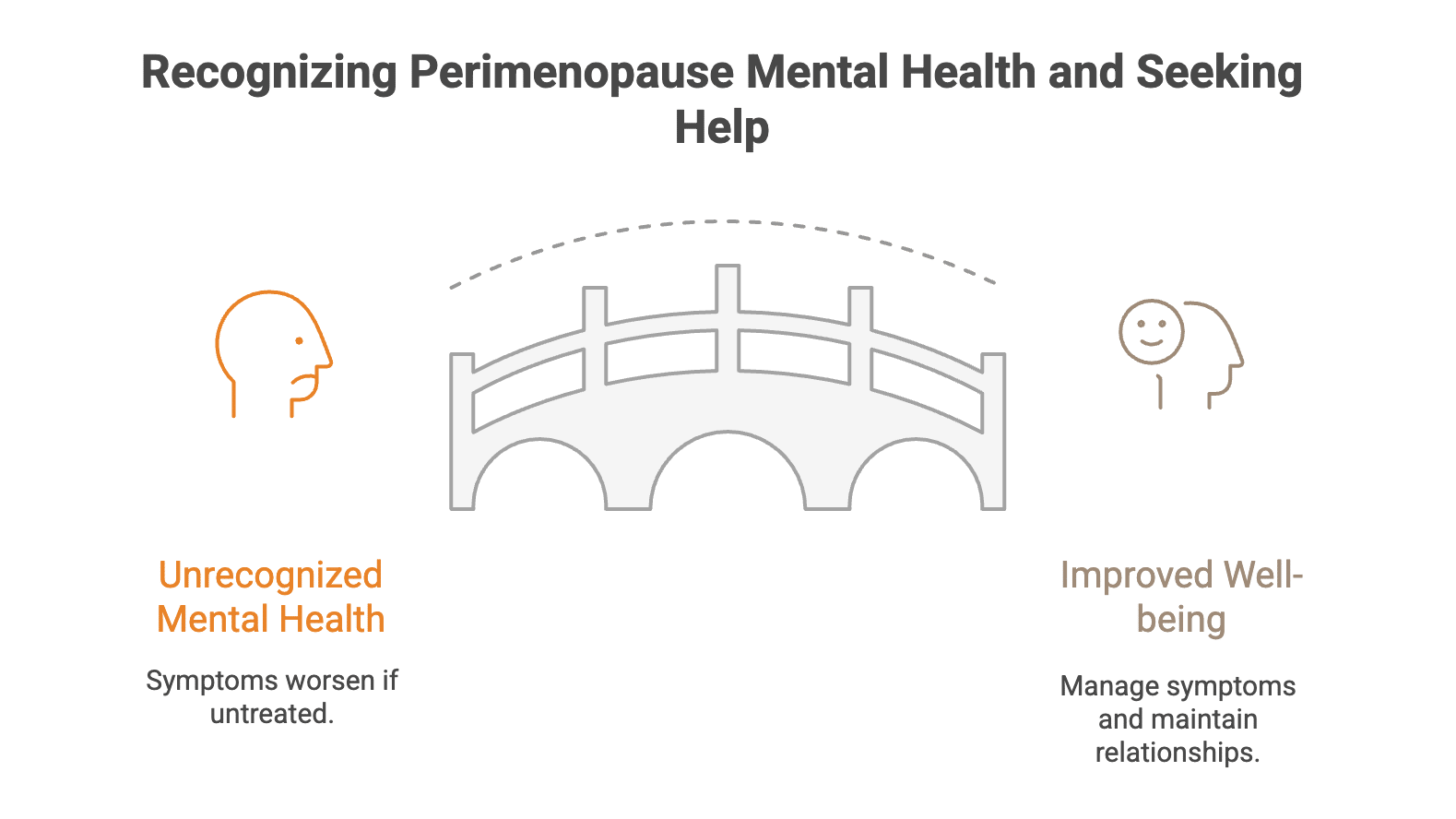
Recognizing when to seek professional support is crucial because perimenopause is a time of increased risk for mental health conditions including major depressive disorder and anxiety. Mental health conditions during perimenopause are treatable, and early intervention leads to better outcomes. The risk of major depression increases during the menopause transition, and mood disorders become more common.
Seek professional help if you experience:
- Persistent sadness, emptiness, or hopelessness lasting more than two weeks
- Loss of interest in activities you used to enjoy
- Significant changes in appetite or weight gain
- Sleep disturbances beyond typical night sweats or hot flashes
- Feeling worthless or having thoughts of death or suicide
- Difficulty concentrating or completing daily tasks
- Irritability affecting your relationships
- Anxiety symptoms like constant worrying or panic attacks that interfere with functioning
- Severe symptoms that make it hard to work or maintain relationships
- Emotional symptoms that feel unmanageable
Symptoms of depression can include crying a lot, feeling hopeless or worthless, and losing interest in normal activities. These perimenopause symptoms can sometimes make symptoms worse if left untreated. Women may experience first-onset depression during perimenopause, so previous mental health history isn’t required to justify seeking help. Women with previous histories of major depressive disorder or bipolar disorder are at higher risk for relapse during this transition. Women who have experienced postpartum depression may also find that perimenopause triggers similar mood changes.
Women with bipolar disorder should pay particular attention to mood changes during perimenopause, as hormonal fluctuations can trigger mood episodes. If you have bipolar disorder, work closely with your mental health provider during this transition to monitor symptoms and adjust treatment as needed. Mental health conditions like bipolar disorder may require specific adjustments to medication or therapy during perimenopause.
If you’re experiencing suicidal thoughts or a mental health crisis, call the 988 Suicide & Crisis Lifeline.
Stigmas surrounding mental health and perimenopause can prevent women from seeking care, but mental health support is essential during this transition. Support networks, including friends and local resources, can help women cope with the emotional symptoms of perimenopause. Discussing emotional symptoms and mental health concerns with healthcare providers is critical during perimenopause.
We often work with women who delayed seeking mental health support because they thought they “should” be able to handle perimenopause on their own, or worried their symptoms weren’t “serious enough” to warrant therapy. Many women tell us they wish they had reached out sooner, especially when dealing with persistent hot flashes, mood swings, or sleep problems. The truth is that mood symptoms during perimenopause respond well to treatment—whether through therapy, hormone therapy, or a combination of approaches—and you don’t need to wait until you’re in crisis to get support.
What Are the Mood Stabilizers for Perimenopause?
Treatment options include both hormonal and non-hormonal approaches, and the right choice depends on your specific symptoms, health history, and preferences. Medical treatments can address both the physical and emotional aspects of perimenopausal symptoms.
Hormone replacement therapy can help improve mood symptoms by addressing underlying hormone levels and hormonal fluctuations. Transdermal estradiol with progesterone has been shown to prevent severe depression among perimenopausal women. Both estrogen and progesterone play roles in mood regulation. Menopausal hormone therapy isn’t appropriate for everyone—particularly women with certain health conditions or those who’ve had cancer treatment—so discussing risks and benefits with your healthcare provider is essential.
Antidepressant medications, particularly selective serotonin reuptake inhibitors, can help with depressive and anxious symptoms. Vortioxetine has been shown to significantly decrease depressive symptoms in perimenopausal women. Some serotonin norepinephrine reuptake inhibitors also treat both mood symptoms and hot flashes, making them valuable treatment options for women experiencing multiple menopausal symptoms.
Cognitive-behavioral therapy is recommended as a first-line treatment for major depressive disorder among perimenopausal women. Cognitive behavioral therapy (CBT) has strong evidence for treating mood disorders during this transition. Other therapeutic approaches like mindfulness-based stress reduction, psychodynamic therapy, and existential therapy can address both emotional symptoms and the identity questions that arise during midlife transitions.
How Do You Treat Low Mood in Perimenopause?
A comprehensive approach combines professional support with self-care strategies. The most effective treatment plans address both the biological and psychosocial factors that contribute to mood changes and affect how menopause affects mental health.
Psychotherapy provides a space to process the emotional and existential dimensions of perimenopause. Cognitive behavioral therapy assists you in recognizing and challenging negative thought patterns that can worsen depression. Existential therapy explores questions about meaning, purpose, and identity that naturally arise during midlife. Psychodynamic therapy examines how past experiences affect current feelings.
Medical treatments like hormone therapy or antidepressants work best when combined with lifestyle changes and psychological support. Regular exercise, stress reduction practices like massage therapy, maintaining social connections, and getting adequate sleep all contribute to better emotional health during the menopausal transition. These combined approaches help address the multiple factors that contribute to perimenopausal mood changes.
Research from the Seattle study documents the multiple co-occurring stressors women face—caring for children and aging parents, managing work demands, dealing with relationship changes. Addressing these life stressors through therapy and social support helps reduce the overall burden on your mental health.
In therapy, we regularly help women distinguish between symptoms that are primarily hormone-driven—like hot flashes and night sweats affecting sleep—and those that reflect the weight of life stressors or existential questions about this life stage. This clarity often brings relief because it helps women understand what kind of support will be most helpful for their mental health. Some women benefit most from a combination of medical treatment and therapy, while others find that addressing life transitions and identity questions makes the biggest difference in how they feel. For women with conditions like bipolar disorder, this integrated approach is particularly important.
What is the Average Age for Perimenopause to Start?
Perimenopause typically begins between ages 45 and 55, though early perimenopause can start in the early 40s for some women. The transition usually lasts several years—anywhere from 4 to 10 years—before reaching menopause, defined as 12 consecutive months without a menstrual period.
Some women experience early menopause due to medical treatments like cancer treatment, surgical removal of ovaries, or other health conditions. Early menopause can bring more severe symptoms and increased emotional challenges, making professional support especially important. Perimenopausal and postmenopausal women may experience different symptom patterns.
The menstrual cycle becomes irregular during perimenopause, with menstrual periods that may be heavier or lighter, and cycle lengths that shorten or lengthen. Irregular periods are one of the most common physical symptoms during the menopausal transition. These physical symptoms often coincide with mood symptoms, creating a constellation of menopausal symptoms that affect women’s health in multiple ways. Other symptoms during this time may include vaginal dryness, hot flashes, night sweats, and changes in sexual function. Some women experience menopause-like symptoms even in early perimenopause.
Mood changes during perimenopause are treatable. You don’t need to wait until symptoms become severe before seeking help. Understanding both the biological factors—like hormonal shifts, declining estrogen levels, and sleep disturbance—and the life transition factors helps you make informed decisions about support. Whether you’re dealing with hot flashes, mood swings, irregular periods, or muscle tension, treatment options are available to help you feel better during this transition.
Getting Support in Washington, DC
If you’re experiencing mood changes during perimenopause—whether related to hot flashes disrupting your sleep, hormonal fluctuations affecting your mood, or life transitions raising existential questions—our therapists in Dupont Circle specialize in helping women address this transition. We offer evidence-based approaches including cognitive-behavioral therapy, psychodynamic therapy, and existential therapy. We understand the complex interplay of hormonal changes, life stressors, and identity questions that characterize this life stage. We can also help you coordinate care with providers offering hormone therapy or other medical treatments for menopausal symptoms. Schedule an appointment to discuss how therapy can support your mental health during perimenopause and beyond.
Disclaimer: This article is for educational purposes only and does not constitute medical or mental health advice. Perimenopause affects each woman differently, and mood symptoms can be caused by various factors beyond hormonal changes. If you’re experiencing mood changes, sleep problems, or other symptoms of perimenopause, consult with qualified healthcare providers including your doctor and a mental health professional. In a mental health crisis or if experiencing thoughts of suicide, call 988 (Suicide & Crisis Lifeline) or go to your nearest emergency room immediately.