

Emotionally focused therapy (EFT) is a research-backed approach that helps people improve relationships and manage difficult emotions by addressing attachment needs. Studies show that 70-75% of couples recover through emotion focused therapy, with around 90% experiencing significant improvements. EFT has become a leading evidence-based treatment for relationship distress, depression, and anxiety, though it requires emotional vulnerability and time commitment that doesn’t work for everyone.
This guide explores both the strengths and limitations of emotionally focused therapy so you can make an informed decision about whether this approach fits your needs.
What are the benefits of emotionally focused therapy?
Emotionally focused therapy stands out for its strong research foundation and proven effectiveness. Research demonstrates that EFT works effectively in numerous randomized clinical trials for relationship problems, depression, and anxiety.
Research-backed success rates
A review of EFT research found that emotionally focused couple therapy produces significant improvements in relationship satisfaction that hold up over time. The approach is recognized by the American Psychological Association as an evidence-based treatment. For individuals, randomized controlled trials show that emotionally focused individual therapy reduces depression and anxiety symptoms while improving overall well being. People seeking anxiety therapy often find EFT helpful for managing emotional distress.
Creates secure attachments and healthier relationships
Emotion focused therapy is rooted in attachment theory. EFT helps people develop secure attachments by addressing the emotional experiences that drive negative interaction patterns in relationships. The approach strengthens emotional bonds and builds healthier relationships by creating a safe environment where partners can express primary emotions like fear and hurt rather than getting stuck in secondary emotions like anger. This transformation improves communication and conflict resolution by helping partners understand the emotions beneath their reactions.
Research on EFT’s effectiveness shows that creating these secure emotional bonds doesn’t just improve relationships—these secure attachments build resilience that helps people handle future challenges and foster healthier relationships over time.
In our practice, we see couples break free from negative cycles they’ve been stuck in for years. Once partners understand that their anger or withdrawal masks deeper fears about emotional connection, they can finally respond to each other’s actual needs instead of reacting to surface behaviors.
Addresses root causes through emotional processing
Unlike approaches focusing primarily on thoughts or behaviors, emotion focused therapy treats emotions as valuable messengers revealing unmet needs. An EFT therapist helps you identify and work with emotional responses rather than suppressing them. Research on EFT processes shows this focus on emotional experiences creates lasting change by addressing underlying causes rather than surface symptoms.
Works for multiple contexts
The flexibility of emotionally focused therapy is a key strength:
- Emotionally focused couple therapy helps partners identify negative patterns, express vulnerable emotions, and rebuild emotional connection
- Emotionally focused family therapy extends these principles to family relationships, helping family members strengthen emotional bonds and develop healthier communication patterns.
- Emotionally focused individual therapy applies the same framework to depression, anxiety, trauma, and other mental health challenges
Promotes personal growth and emotional intelligence
Beyond addressing specific problems, EFT cultivates emotional regulation and emotional awareness skills that support overall well being. Client experience studies reveal that many people report lasting personal growth extending beyond their original therapy goals, including improved emotional regulation and healthier relationships across all areas.
What are the weaknesses of emotionally focused therapy?
Understanding the limitations of emotion focused therapy helps you determine whether this approach fits your situation and readiness for deep emotional work.
Emotional intensity can feel overwhelming
The core of emotion focused therapy involves diving deep into difficult emotions many people have spent years avoiding. Client experience research shows that while most find this helpful, some initially feel overwhelmed by the intensity. For people dealing with trauma or who have difficulty managing intense emotions, this can be particularly challenging and may temporarily affect their sense of well being. If you’re in active crisis, you might need to stabilize first.
Requires significant time and commitment
Emotionally focused therapy is not a quick fix, but that’s true of any approach that creates lasting change. Research shows that meaningful change typically takes several months of consistent work. Between-session practice is common in emotion focused therapy for depression, where you actively engage with your emotional experiences outside sessions.
The therapy builds progressively through stages, so consistent attendance helps maintain momentum. If you’re looking for immediate symptom relief or a brief intervention, other therapeutic approaches might better fit your timeline.
May not suit everyone’s preferences
Emotion focused therapy’s emphasis on emotional experiences makes it a poor fit for people who strongly prefer cognitive or solution-focused approaches. Research indicates that EFT works best when people are genuinely ready to explore their emotional world and willing to be vulnerable. Some people also need more active skills training or concrete behavioral strategies than emotion focused therapy typically provides.
How does emotionally focused therapy work?
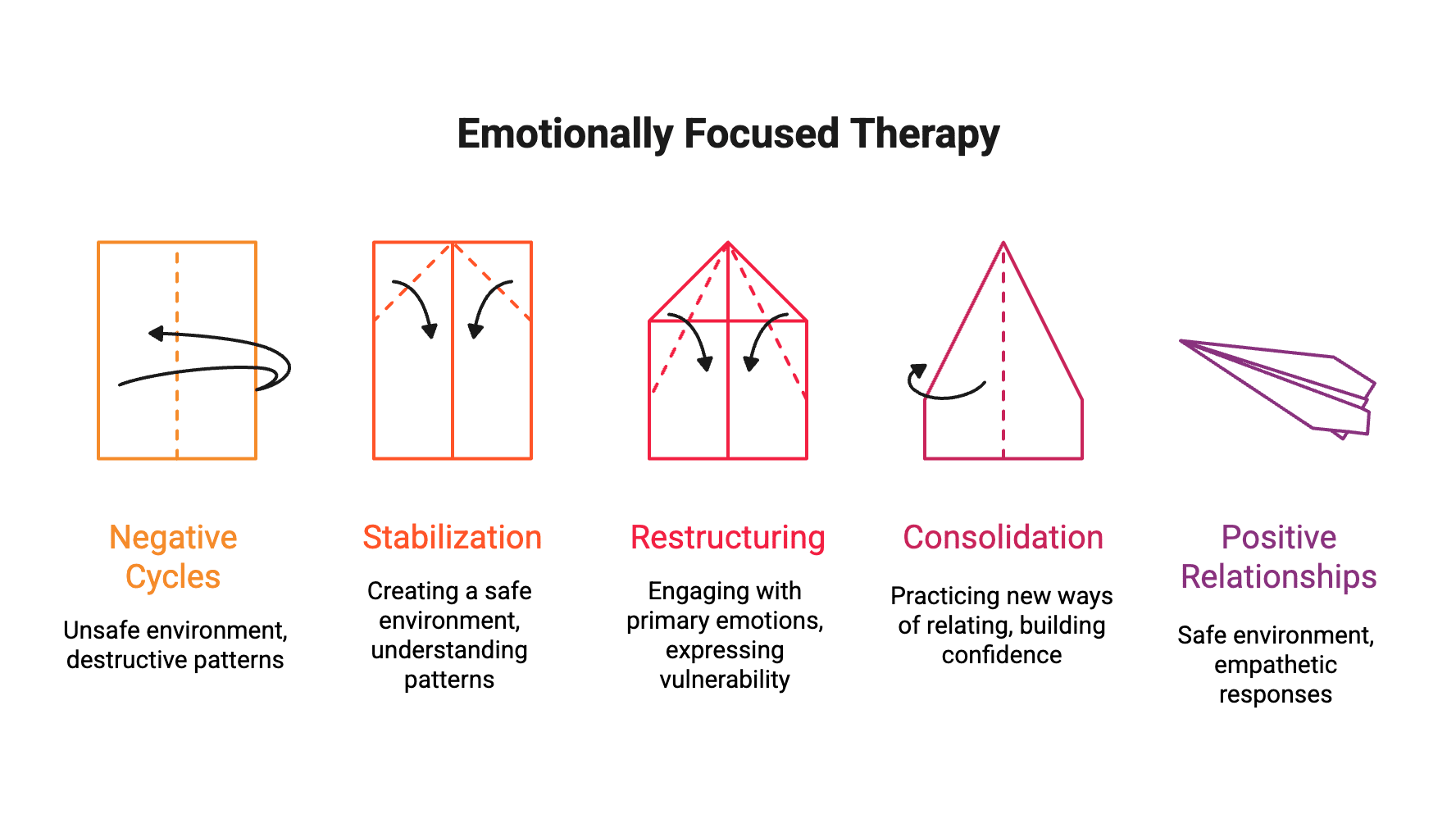
Emotionally focused therapy typically progresses through three main stages: stabilization, restructuring, and consolidation.
Stage 1: Stabilization focuses on creating a safe environment and understanding patterns. Your therapist helps identify negative cycles and assesses how early attachment experiences shaped current emotional responses.
Stage 2: Restructuring is where transformative emotional processing happens. You engage directly with primary emotions that hide beneath secondary emotions. In couples therapy, partners express vulnerable emotions while learning to respond with empathy, creating corrective emotional experiences that break destructive patterns.
Stage 3: Consolidation reinforces new ways of relating through practice in real-life situations, building confidence in maintaining changes.
We guide clients through emotional processing at a pace they can handle. The goal isn’t to overwhelm but to gradually build capacity for staying present with difficult emotions. This measured approach allows people to develop confidence in their ability to process feelings without becoming flooded or shutting down.
What are the skills of emotion-focused therapy?
Emotion focused therapy develops core skills that enhance mental health and interpersonal relationships.
Key skills include:
- Emotional awareness means learning to identify and name emotions accurately beyond vague descriptions like “stressed.” Building this self awareness is foundational to emotional regulation
- Emotional regulation teaches you to manage difficult emotions without suppressing or being overwhelmed by them. Strong emotional regulation skills help you stay present with feelings and choose how to respond, supporting both individual well being and relationship health
- Accessing primary emotions means moving beyond defensive secondary emotions to understand what you actually need
- Empathic communication skills for expressing emotional needs clearly and responding supportively to others. These communication skills create the emotional connection that characterizes healthier relationships
What is the primary goal of an emotion-focused therapist?
The primary goal of an emotion-focused therapist is to help clients create secure emotional bonds and transform maladaptive emotions into adaptive ones. In couples work, the EFT therapist helps partners develop a secure attachment bond where both feel safe expressing vulnerable emotions.
For individuals, emotion focused therapy aims to develop a secure sense of self and capacity for emotional healing. The EFT therapist facilitates emotional regulation and self awareness that support overall well being. According to research on EFT outcomes, this focus on attachment and emotional connection through EFT influences not just psychological well being but also physical health and overall resilience.
Who is emotionally focused therapy best for?
EFT works particularly well for people struggling with relationship distress, attachment issues, or emotional difficulties rooted in unmet attachment needs. Whether seeking couples therapy or individual support, this approach offers a structured path toward healing.
Couples experiencing communication difficulties, emotional disconnection, or recurring conflicts often find significant benefit from emotionally focused couple therapy. Many couples seek marriage counseling specifically for EFT’s proven track record. Emotion focused couples therapy also helps partners healing from specific injuries like infidelity by providing a framework for processing pain and rebuilding trust.
For individuals, emotion focused therapy for depression has shown strong effectiveness, particularly when depression involves difficulty processing emotions or stems from relationship problems. Emotion focused therapy also helps people dealing with anxiety, trauma, or low self esteem related to early attachment experiences—all of which impact interpersonal relationships and overall well being.
However, the approach requires willingness to engage with difficult emotions. If you’re in acute crisis or dealing with active substance abuse, other approaches might be more appropriate initially.
Making the decision: Is EFT right for you?
Consider both the strengths and limitations of emotion focused therapy against your specific needs, preferences, and readiness for deep emotional work.
EFT offers strong research backing if you want evidence-based treatment. A comprehensive research review shows real, lasting results for both couples therapy and individual work. However, EFT requires emotional intensity and time commitment that demand genuine engagement.
People dealing with attachment issues or wanting to improve overall well being and relationship quality may find EFT particularly helpful. Like psychodynamic therapy, EFT focuses on underlying emotional patterns, though it emphasizes attachment bonds specifically. Remember that different types of therapy serve different purposes—the “best” approach is the one you’ll actually engage with.
Getting started with EFT in Washington DC
If you’re considering emotionally focused therapy, connecting with a therapist trained in the EFT model is the next step. At Therapy Group of DC, our therapists work with individuals and couples using evidence-based approaches including EFT. Connect with our therapy specialists to discuss whether emotionally focused therapy would best support your goals.
This blog provides general information and discussions about mental health and related subjects. The content is not intended to be a substitute for professional medical advice, diagnosis, or treatment. Always seek the advice of your physician or other qualified health provider with any questions you may have regarding a medical condition.