Understanding Scromiting: When Cannabis Use Becomes a Problem

If you’re Googling “scromiting” at 2am between trips to the bathroom, spending hours in hot showers because it’s the only thing that helps, and wondering why the cannabis you use to calm your anxiety is making you violently ill—you’re not alone. Scromiting (screaming while vomiting) is the colloquial term for symptoms of cannabinoid hyperemesis syndrome (also called cannabis hyperemesis syndrome or CHS), and it often catches people completely off guard. Cannabinoid hyperemesis syndrome typically develops after years of regular marijuana use, causing cycles of persistent nausea and vomiting. While doctors handle the physical symptoms, we often see the psychological side: the confusion, the denial, the fear of facing anxiety without your usual coping tool.
The Paradox That Brings People to Therapy

Here’s what we often hear in our practice: “I use cannabis for my anxiety. It helps me relax after work, sleep better , deal with Sunday scaries. But now I’m getting sick—really sick—and my doctor says it might be the cannabis. That doesn’t make sense.”
This cognitive dissonance—knowing something is helping AND hurting you—is incredibly difficult to sit with. Cannabis is often seen as a wellness tool, especially in DC where it’s been decriminalized since 2014. When your stress-management strategy becomes the source of severe physical distress, it creates a psychological knot that’s hard to untangle.
Doctors call this condition cannabis hyperemesis syndrome (cannabinoid hyperemesis syndrome or CHS). It develops in people who’ve used marijuana daily or nearly daily for several years, particularly as products have become more potent. Common risk factors include the frequency and duration of cannabis use. But beyond the medical diagnosis, there’s a deeper story about self-medication, avoidance, and what happens when a coping mechanism stops working.
In our practice, we work with many high-functioning professionals who initially used cannabis to manage work stress. The transition from occasional use to daily dependence happens gradually. By the time physical symptoms appear, the psychological dependence is deeply entrenched—making quitting feel overwhelming.
Recognizing the Pattern: More Than Just Being Sick
The hallmark of cannabis hyperemesis syndrome isn’t just vomiting—it’s the compulsive hot showers and baths. If you find yourself taking multiple hot showers or baths throughout the day, planning your day around access to hot water, experiencing temporary relief only while the water is running, and feeling relatively okay between episodes—these behaviors strongly indicate cannabinoid hyperemesis syndrome.
The physical symptoms include severe, cyclical vomiting episodes and intense abdominal pain lasting hours or days. Between episodes, you might feel mostly normal, making the pattern harder to recognize. Many chronic cannabis users go through extensive medical testing before anyone asks about marijuana use. Over time, repeated episodes can lead to weight loss and other complications.
Why the Delay in Recognition?
Several psychological barriers keep people from connecting their symptoms to cannabis use:
“But it’s natural” – Cannabis is widely perceived as harmless, making it hard to accept that something “natural” could cause severe illness. In DC’s post-legalization culture where colleagues and neighbors use cannabis regularly, it doesn’t feel like a problem behavior.
“It helps my anxiety” – If you started using cannabis to manage mental health symptoms, stopping feels threatening. This fear often keeps cannabis users continuing even after symptoms begin.
Shame about dependence – Many people don’t see themselves as someone with a “drug problem.” They’re successful professionals who happen to use marijuana regularly. Admitting problematic use challenges their self-perception.
The Self-Medication Cycle
Understanding scromiting often means understanding why you started using marijuana in the first place. People with anxiety, depression, and chronic stress are increasingly likely to develop problematic cannabis use patterns. When depression, anxiety, or stress increases, substance use often increases as a coping mechanism.
This is where therapy becomes essential. While doctors treat the physical symptoms of CHS, we work with the underlying patterns: What are you using cannabis to avoid feeling? How did occasional use become daily dependence? What will it mean to face your anxiety without it?
Studies indicate that anxiety sensitivity—the fear of anxiety symptoms themselves—can drive marijuana use as a way to cope with distress. In DC, where “functional anxiety” is almost a badge of honor, many professionals use cannabis to manage high-stakes job pressure. Cannabis works by affecting the endocannabinoid system—the body’s natural control system regulating stress response and mood through cannabinoid receptors. Medical research suggests that chronic overstimulation of the endocannabinoid system may contribute to CHS development. The problem isn’t that you used a coping tool—it’s that chronic cannabis disrupts this system, and the tool becomes unsustainable for your body.
What Doctors Say About CHS
To be clear: we’re not medical providers, and we don’t diagnose or treat cannabis hyperemesis syndrome. That’s your doctor’s role. But understanding the medical context helps make sense of what’s happening.
Healthcare providers diagnose hyperemesis syndrome (CHS) based on:
- A history of chronic, heavy marijuana use (typically daily use for several years)
- The characteristic pattern of cyclical nausea and vomiting with abdominal pain
- Relief from hot showers or hot baths (which healthcare providers recognize as a diagnostic indicator of CHS)
- Improvement when cannabis use stops
Your doctor will likely conduct a physical exam and review your medical history. Because cannabinoid hyperemesis syndrome (CHS) is sometimes misdiagnosed as cyclical vomiting syndrome, being open about your cannabis use is crucial for a correct diagnosis. Unlike cyclical vomiting syndrome, cannabinoid hyperemesis syndrome (CHS) resolves when you stop using cannabis.
According to medical guidelines published in major journals like Gastroenterology and the New England Journal of Medicine, CHS symptoms are becoming more common as cannabis potency increases and legalization expands access. Traditional anti-nausea medications often don’t work well for symptoms of CHS, which is why many chronic cannabis users end up in the emergency department multiple times before healthcare providers identify the correct diagnosis. Some emergency departments use capsaicin cream as an alternative treatment for symptom relief.
The Medical Risks
CHS is increasingly reported across all age groups, with some risk factors including frequency of cannabis use, potency of cannabis products, and duration of use. Medical literature describes CHS in phases: a prodromal phase with mild morning nausea, followed by severe vomiting episodes, and then a recovery phase once cannabis use stops. Many people experience multiple emergency department visits before symptoms of CHS are correctly identified.
The physical dangers of scromiting can become serious: severe dehydration leading to kidney problems, electrolyte imbalances affecting heart rhythm, and physical damage from severe vomiting including injuries to the esophagus and dental erosion. In severe cases, dehydration can lead to shock or organ failure. During acute episodes, some people experience repeated episodes of vomiting that can occur several times an hour.
If you experience signs of serious dehydration—extreme thirst, very dark urine, dizziness when standing, or confusion—seek emergency medical care immediately. Call 911 or go to the nearest emergency room.
For acute nausea and vomiting episodes, emergency departments typically provide IV fluids and medications to manage symptoms. Healthcare providers may also recommend hot water therapy (compulsive bathing behavior) for temporary relief. But according to medical research, these are temporary measures. The only definitive treatment is stopping all marijuana use completely.
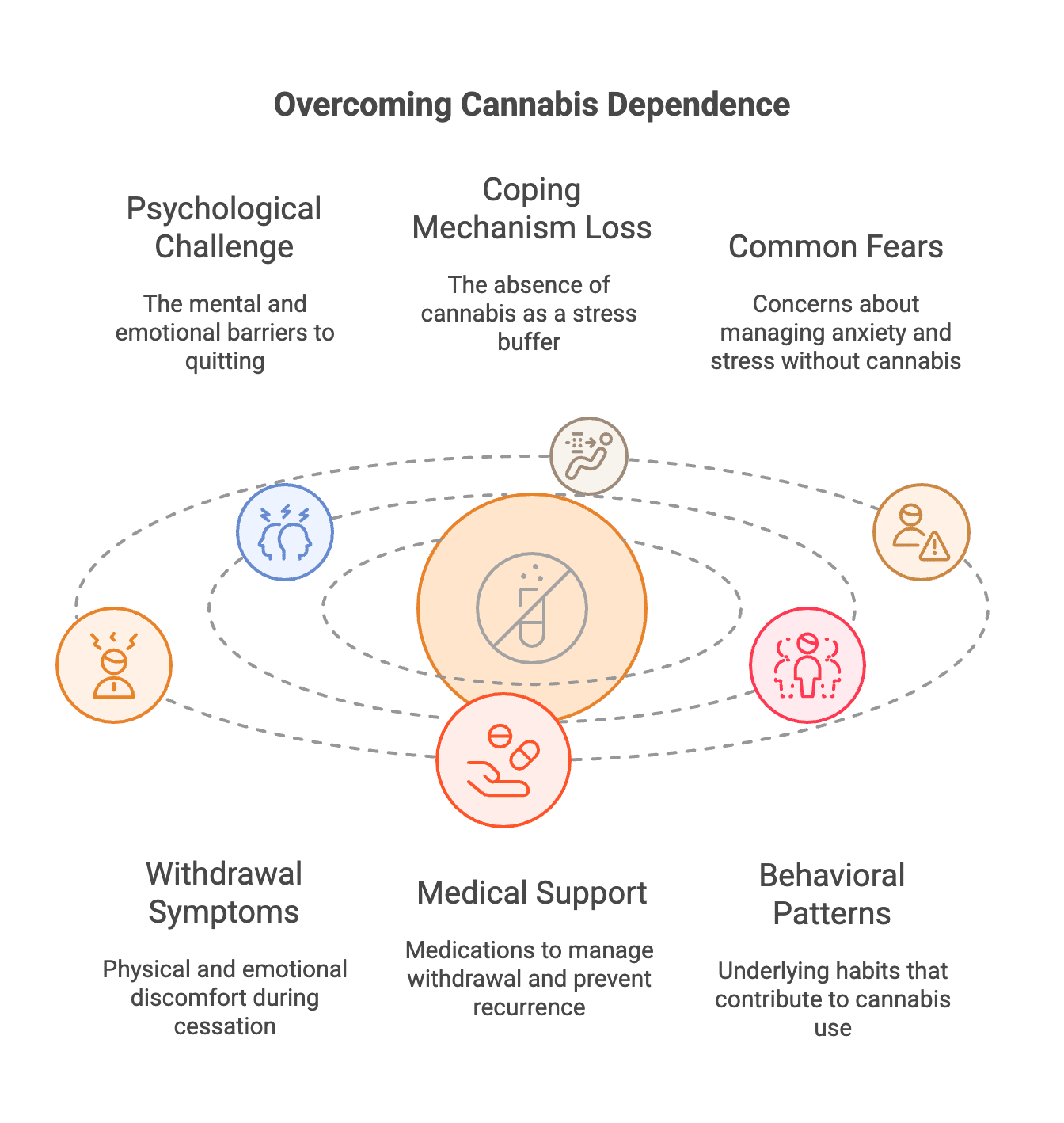
The Psychological Challenge of Quitting
Here’s where the work we do in therapy becomes crucial. Even when people intellectually understand that cannabis is causing their symptoms, actually stopping feels impossible.
You’re not just quitting a substance—you’re losing your primary coping mechanism. If you’ve been using marijuana to manage anxiety, stress, or insomnia for years, stopping means facing all of those feelings without your usual buffer.
Common fears: “My anxiety will be unbearable,” “I won’t be able to sleep,” “Work stress will overwhelm me,” “I’ll have to feel everything I’ve been avoiding.”
These fears are valid. Cannabis likely WAS helping you cope—until it wasn’t. The question is finding support that’s sustainable and doesn’t destroy your health.
Medical literature notes that quitting marijuana after chronic use can cause withdrawal symptoms including irritability, insomnia, and increased anxiety. Your doctor may recommend medications to manage withdrawal and prevent CHS symptoms from recurring. But medication alone doesn’t address the behavioral patterns that kept the use going.
What Therapy Can Offer
While we don’t treat the physical illness, we do help with:
Understanding your relationship with substances – We explore what cannabis was doing for you emotionally without judgment. Understanding the function helps you find healthier alternatives.
Developing new coping strategies – We work on building skills for managing anxiety, stress, and emotional intensity without substances, including mindfulness, distress tolerance, and cognitive strategies. Different types of therapy can help you develop healthier ways to manage anxiety.
Addressing underlying mental health concerns – Cannabis use often masks anxiety, depression, trauma responses, or other issues. Once you stop using, these need direct attention and treatment.
Building support and accountability – Change is hard. Having consistent therapeutic support makes the process less isolating and more sustainable.
We understand that facing emotions without your usual buffer feels vulnerable and scary. But we consistently see that once people develop healthier coping skills and address underlying anxiety or trauma, they feel more grounded and capable than they did while using.
The Mental Health Connection You Might Not Realize
Research on marijuana use and mental health shows a complex bidirectional relationship. People with anxiety and depression are more likely to become cannabis users—and more likely to develop cannabis use disorder. Recent studies indicate that prevalence of cannabis use disorder has increased significantly among people with depression, anxiety, and insomnia.
This isn’t about moral failure. It’s about how humans cope with psychological pain. When you’re dealing with intense anxiety or depression, anything that provides relief feels essential. Cannabis can help in the short term—until chronic marijuana use changes the body’s endocannabinoid system and creates cannabinoid hyperemesis and other problems. Like other substances that impact mental health, the relationship between cannabis and psychological wellbeing is complex.
What we see in therapy: the person who started using cannabis to manage work stress now can’t function without it. The person who used it to fall asleep now has severe insomnia without it. The person who used it to calm social anxiety now avoids social situations unless they’re high. The substance that once expanded your functioning eventually contracts it.
When cannabinoid hyperemesis develops, you’re facing a crisis: the tool you relied on is now actively harming you, but the underlying issues haven’t gone anywhere. This is exactly when therapy becomes most valuable.
Getting Support: What the Process Looks Like
If you’re experiencing scromiting or struggling with cannabis use, here’s how to move forward:
1. Get medical evaluation first – See your doctor to confirm the diagnosis and rule out other causes. Be honest about your marijuana use. Your healthcare provider will conduct a physical exam and may order tests. If you’re experiencing severe symptoms of cannabinoid hyperemesis syndrome (CHS), go to the emergency department.
2. Connect with therapy – While your doctor addresses the physical symptoms of cannabinoid hyperemesis syndrome, therapy helps with the psychological side. At Therapy Group of DC, we work with people addressing substance use concerns, anxiety, and changing long-standing coping patterns related to CHS. Finding the right mental health professional can make a significant difference in your recovery.
3. Consider additional support – For more intensive addiction treatment, the SAMHSA National Helpline (1-800-662-4357) can connect you with local services. Many people benefit from combining individual therapy, support groups, and medical management.
4. Be patient with the process – Cannabinoid hyperemesis symptoms typically improve after stopping cannabis, but sustained abstinence for at least 3 months is necessary for full recovery. You’ll move through a recovery phase where withdrawal symptoms may increase before they improve. Having support in place makes this transition more manageable.
Moving Forward Without Judgment
Seeking help doesn’t mean you’ve failed. It means you’re paying attention to what your body is telling you and you’re ready to find more sustainable ways to manage stress and anxiety.
Cannabis use in DC is incredibly normalized. You’re surrounded by colleagues, friends, and neighbors who use it without problems. That can make it harder to recognize when your own use has crossed a line. But if you’re experiencing scromiting—if you’re spending hours in hot showers and hot baths, missing work, ending up in the ER—your body is sending a clear message that something needs to change.
Find Support in DC
Therapy Group of DC works with individuals navigating substance use concerns, anxiety, stress management, and the challenge of building healthier coping strategies. We’re not a substance abuse treatment center, but we help people develop a more conscious relationship with substances and better understand what drives their use patterns.
This blog provides general information and discussions about mental health and related subjects. The content is not intended to be a substitute for professional medical advice, diagnosis, or treatment. Always seek the advice of your physician or other qualified health provider with any questions you may have regarding a medical condition.
Common Questions About Scromiting and Cannabis Use
Is scromiting a real thing?
Yes. Scromiting describes the severe, painful vomiting episodes characteristic of cannabinoid hyperemesis. The term emerged online from people screaming while vomiting due to intense abdominal pain. Medical research confirms cannabinoid hyperemesis syndrome as a recognized condition linked to chronic marijuana use.
How do you know if you have CHS?
The most distinctive sign is compulsive hot water use for symptom relief—specifically, frequent hot showers or hot baths throughout the day. Combined with cyclical vomiting, severe abdominal pain, and years of regular marijuana use, hyperemesis syndrome (CHS) is a strong possibility. Only a healthcare provider can confirm the diagnosis.
Does cannabinoid hyperemesis syndrome ever go away?
Yes. Cannabis hyperemesis syndrome resolves with complete cannabis abstinence. Most people improve within days to weeks of stopping all marijuana use, with symptoms typically remitting after about two weeks of complete abstinence. Sustained abstinence for at least 3 months is recommended to confirm the diagnosis and ensure full recovery. If you resume using cannabis, symptoms of CHS will likely return. Note that CHS is distinct from cyclic vomiting syndrome, which does not improve with cannabis cessation.
What foods trigger CHS?
Cannabinoid hyperemesis syndrome (CHS) isn’t triggered by foods—it’s triggered by cannabis use. The only way to prevent episodes of cannabinoid hyperemesis is to stop using all cannabis products, including smoking, vaping, edibles, oils, and CBD products.
Does everyone who uses cannabis long-term get CHS?
No. Not everyone who uses cannabis chronically develops cannabis hyperemesis syndrome. However, the risk increases with heavy, prolonged use (daily or near-daily for multiple years) and with higher-potency cannabis products. As marijuana use becomes more widespread, healthcare providers are seeing more cases among chronic marijuana users and chronic cannabis users.