

Death anxiety is the sticky fear of death, dying, or nonexistence that can hijack your nights and narrow your days. You’re not broken—you’re human—and there are proven ways to loosen its grip. Research shows that structured psychotherapy, especially psychodynamic therapy or cognitive behavioral therapy (CBT) and other psychosocial approaches, can reduce death‑focused fear and worry in both medical and non‑medical settings.
Research suggests that these approaches are effective for many people. If you’re looking for a DC therapist, this guide highlights what works and how care at Therapy Group of DC approaches it.
What is death anxiety?

In simple terms: it’s a persistent fear about death or dying that shows up as worry, intrusive images, physical symptoms (like heart palpitations or shortness of breath), and sometimes panic attacks. You might also notice avoidance, health‑related Googling, and repeated seeking reassurance (from doctors, loved ones, or the internet). Those habits bring short‑term relief, which unintentionally teaches your brain to keep asking for them—so the cycle continues. CBT aims to break that loop by changing what you do in the face of fear, not just what you think, and trials show it can help in an online CBT program.
Related but distinct: some people experience health anxiety (fear of illness), OCD with death‑themed obsessions/compulsions, panic disorder, generalized anxiety disorder, or grief. If you’re unsure where your symptoms fit, a therapist can sort that out with you in a first session.
What causes death anxiety to spike?
Death worries often flare during life transitions (a new baby, milestone birthdays), after health scares (yours or a loved one’s), with major losses, or under chronic stress. Death anxiety can begin at a young age and is a common fear that can impact day to day life. Concerns about a loved one or family members, as well as facing a terminal illness, can intensify death anxiety. Some people may avoid medical checkups due to extreme fear of death.
Media exposure and late‑night scrolling can also keep mortality front‑and‑center. From a deeper, existential angle, mortality salience can stir questions about identity, attachment, unfinished business, guilt, and meaning—feelings that sometimes show up as irritability, control, or physical tension rather than “fear.” Reflecting on one’s own life and mortality can contribute to these feelings.
In some cultures, death is openly talked about and efforts are made to normalize death, while in others it is less so.
How does therapy help with death anxiety?
The short answer: a blended plan works best. We usually start with psychoeducation, then add CBT tools (thought work, graduated exposure, and response‑prevention for checking and reassurance). Mindfulness and acceptance skills help you stay in the present while you practice. And for some people, long‑term depth‑oriented therapy adds the space to explore the personal meanings of mortality—loss, control, separation, identity—and to weave those themes into a more coherent life story.
Why this mix? Across studies, psychosocial and CBT‑based approaches reduce death anxiety and related distress. In medical settings, advanced‑cancer interventions help patients and families manage mortality‑related distress. Clinical groups also highlight pairing skills‑focused care with attention to meaning and values in distress‑management guidance.
What to expect early on: we’ll map your triggers and safety behaviors, set goals, choose starter exposure targets, and build quick wins for sleep and daytime steadiness. If you prefer to go deeper, we can integrate depth‑oriented work alongside the skills so change sticks.
What CBT techniques reduce death anxiety?
What skills will I learn in CBT?
Cognitive tools: you’ll learn to spot common thinking traps (catastrophic predictions, “forever” thinking, and magical safety rules) and test them with simple experiments. These techniques are informed by terror management theory, which helps explain why our minds react so strongly to mortality cues, as seen in the above examples.
Exposure therapy: together we’ll build a ladder from lighter mortality cues (e.g., reading obituaries with timing rules) to stronger ones (e.g., hospital environments, honest conversations about wishes). The goal is to cultivate acceptance of mortality—not avoidance—so your brain relearns that you can handle these moments.
Response prevention: we’ll set checking “budgets” and waiting periods before searching or asking for reassurance, then replace those habits with values‑based actions.
Behavioral activation: we’ll rebuild a week that centers meaning—relationships, work, joy—so life grows bigger than fear.
Are mindfulness and acceptance useful for death anxiety?
Yes. Present‑moment skills steady your attention so exposure is doable and worry spirals shrink. Brief practices—paced breathing, micro‑meditations, compassionate self‑talk, and sensory grounding—are small but repeatable levers. Mindfulness and acceptance-based approaches can help cultivate acceptance of mortality, making it easier to face existential fears.
Mindfulness can also help manage physical symptoms of anxiety, such as muscle tension or rapid heartbeat, that often accompany death anxiety. A broader look at what helps includes mindfulness, relaxation, CBT, and psychoeducation, summarized in death‑anxiety interventions.
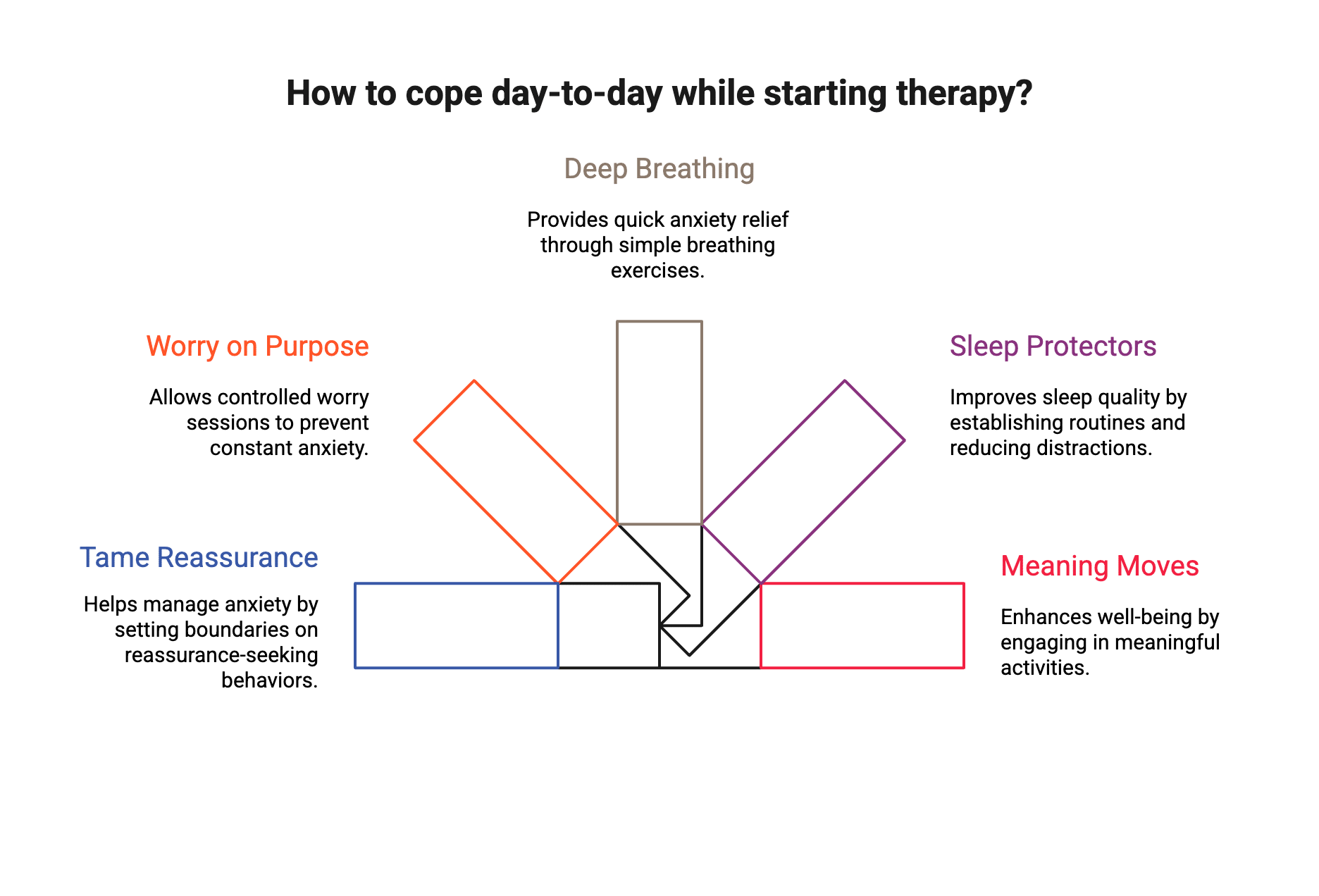
How can I cope day‑to‑day while I start therapy?
What are quick, evidence‑informed steps?
- Tame reassurance: set checking budgets and waiting periods before googling or messaging clinicians; use a one‑line note to capture the worry, then return to your task.
- Worry on purpose: schedule a 15‑minute “worry window,” then practice gentle redirection the rest of the day.
- Deep breathing: incorporate deep breathing exercises as a quick, evidence-based technique to manage anxiety and reduce death-related fears.
- Sleep protectors: create a wind‑down routine, keep phones out of bed, and reduce late‑night health content.
- Meaning moves: try values micro‑actions (gratitude notes, legacy projects, end‑of‑life preferences conversations) supported by insights from death education programs.
When should I seek professional help in DC?
Reach out if fear of death is interfering with work, study, relationships, medical care, or sleep—or you’re stuck in cycles of checking and avoidance. If you are experiencing significant distress about death or dying, consider seeking support from a mental health professional.
For those dealing with serious or terminal illness in the family, both medical professionals and family members play important roles in providing care and support. Comfort‑focused approaches that integrate symptom relief, clear communication, and meaning‑making can be effective.
What Therapy Group of DC offers: evidence‑based CBT and exposure, mindfulness‑based approaches, and depth‑oriented therapy options; in‑person in Dupont Circle and secure telehealth across DC/MD/VA.
What’s the first step?
A first appointment helps. We’ll map your goals, choose a starting point that feels doable, and build a plan that reduces fear while expanding meaning in your own life. When you’re ready, our team in Dupont Circle can get you started.
Frequently Asked Questions About Death Anxiety Therapy
What is death anxiety therapy?
Death anxiety therapy refers to psychological treatments designed to help individuals manage their intense fear of death, dying, or the dying process. It often involves cognitive behavioral therapy (CBT), exposure tasks, and psychosocial interventions aimed at reducing psychological distress and improving daily life functioning.
How can cognitive behavioral therapy (CBT) treat death anxiety?
CBT helps by addressing the unrealistic beliefs and avoidance behaviors that maintain death anxiety. Through cognitive restructuring, exposure to feared death-related situations, and response prevention of compulsive behaviors such as reassurance seeking, CBT supports individuals in cultivating acceptance and living a meaningful life despite their underlying fear.
What role do exposure tasks play in therapy for death anxiety?
Exposure tasks gradually and systematically confront individuals with their own specific fears related to death and dying. This can include imagining facing imminent death or visiting medical settings. Such tasks help reduce avoidance behaviors and severe anxiety by building tolerance and acceptance over time.
Can death anxiety therapy help with related mental health conditions?
Yes. Death anxiety often coexists with anxiety disorders, health anxiety, panic disorder, obsessive compulsive disorder, and other mental health problems. Addressing death anxiety directly can alleviate symptoms across these conditions and contribute to a more fulfilling life.
How do mental health professionals support clients in accepting death?
Therapists may use existential psychotherapy and acceptance and commitment therapy (ACT) to help clients explore existential concerns, religious beliefs, and personal values. This approach cultivates acceptance of mortality and encourages clients to focus on living a meaningful and fulfilling life despite the certainty of death.