

If you’ve experienced panic attacks, you know how disruptive they can be. The racing heart, shortness of breath, and overwhelming fear can make you worry about when the next attack might strike. Panic attack symptoms can include chest pain, sweating, dizziness, and a feeling of losing control. The physical symptoms can feel so intense that some people worry they’re having a heart attack. Building a prevention toolkit can reduce how often panic attacks occur in the first place.
A prevention toolkit isn’t about one single solution. It’s a collection of strategies that work together to manage anxiety and reduce your vulnerability to panic attacks. Some tools focus on daily habits, others on building new skills, and some involve professional support.
What Are the Best Long-Term Tools for Preventing Panic Attacks?
The most effective prevention tools include therapy, regular exercise, self-monitoring, and lifestyle adjustments that address the underlying patterns contributing to panic attacks. Cognitive-behavioral therapy is considered the gold standard for panic disorder, typically involving 8-20 sessions where you learn to challenge anxious thoughts and gradually face feared situations.
Beyond therapy, building a prevention toolkit means incorporating practices that reduce overall anxiety. Regular physical activity helps desensitize you to physical symptoms like a racing heart or shortness of breath, making these sensations less likely to trigger panic. Starting with walking and gradually increasing intensity allows your body to build tolerance to these feelings.
Self-monitoring is another essential tool. Keeping track of symptoms and triggers helps you notice patterns over time. You might discover that panic attacks happen more often when you’re sleep-deprived, have consumed caffeine, or are facing certain stressors. This awareness lets you make informed choices about preventing future attacks.
In our years working with clients who experience panic attacks, we consistently see how powerful self-awareness becomes once people start tracking their patterns. Many clients discover surprising connections—like noticing their panic attacks cluster around certain times of the month, after specific social situations, or when they’ve skipped meals. This awareness shifts the experience from feeling random and uncontrollable to something you can anticipate and prepare for. That sense of predictability alone often reduces anxiety between attacks.
Understanding Panic Disorder and Frequent Panic Attacks
Not everyone who experiences a panic attack develops panic disorder. Approximately 2% to 3% of people in the U.S. have panic disorder, while up to 11% experience a panic attack in any given year. Women are twice as likely as men to develop panic disorder.
Panic attacks occur suddenly and abruptly, often without warning. They can happen in the absence of any clear cause or trigger, which is what makes them feel so unsettling. The main difference between occasional panic attacks and panic disorder is frequency and impact. If you’re having frequent panic attacks that lead you to avoid certain places or activities, it may be time to build a more comprehensive prevention toolkit with professional help.
Risk factors for developing panic disorder can include traumatic events, family history of anxiety disorders, and other mental health conditions like depression or social anxiety disorder. Nearly 5% of the U.S. population is estimated to be affected by panic disorder at some point. Panic attacks can also occur alongside these other mental health conditions.
How Can Therapy Help Prevent Panic Attacks?
Cognitive-behavioral therapy teaches you skills that directly reduce panic attack frequency by addressing the thoughts and behaviors that fuel anxiety. CBT for panic disorder typically includes cognitive restructuring (learning to challenge catastrophic thoughts like “I’m losing control”), exposure therapy (gradually facing feared situations), and developing coping strategies you can use long-term.
The exposure component of CBT is particularly powerful for preventing future attacks. Rather than avoiding situations where you’ve had panic attacks, you learn to approach them gradually with support. This breaks the cycle of avoidance that often makes panic disorder worse over time. Exposure therapy helps reduce safety behaviors—those actions you take to feel safe in feared situations that actually reinforce anxiety.
We often tell clients in our practice that avoidance feels like it’s protecting you, but it actually teaches your brain that the situation really is dangerous. When you avoid the grocery store because you had a panic attack there once, you never get the chance to learn that the store itself isn’t the threat. Through gradual exposure in CBT, clients discover they can handle the physical sensations of anxiety without catastrophe. That realization is what creates lasting change.
Online CBT programs can be as effective as in-person or online therapy for many people. Whether you choose in-person or online therapy, the skills you learn become prevention tools you can use whenever anxiety starts to build.
Other therapeutic approaches, include short-term psychodynamic therapy and acceptance and commitment therapy (ACT), though CBT has the strongest research support for panic disorder.
What Daily Habits Help Manage Anxiety and Prevent Panic Attacks?
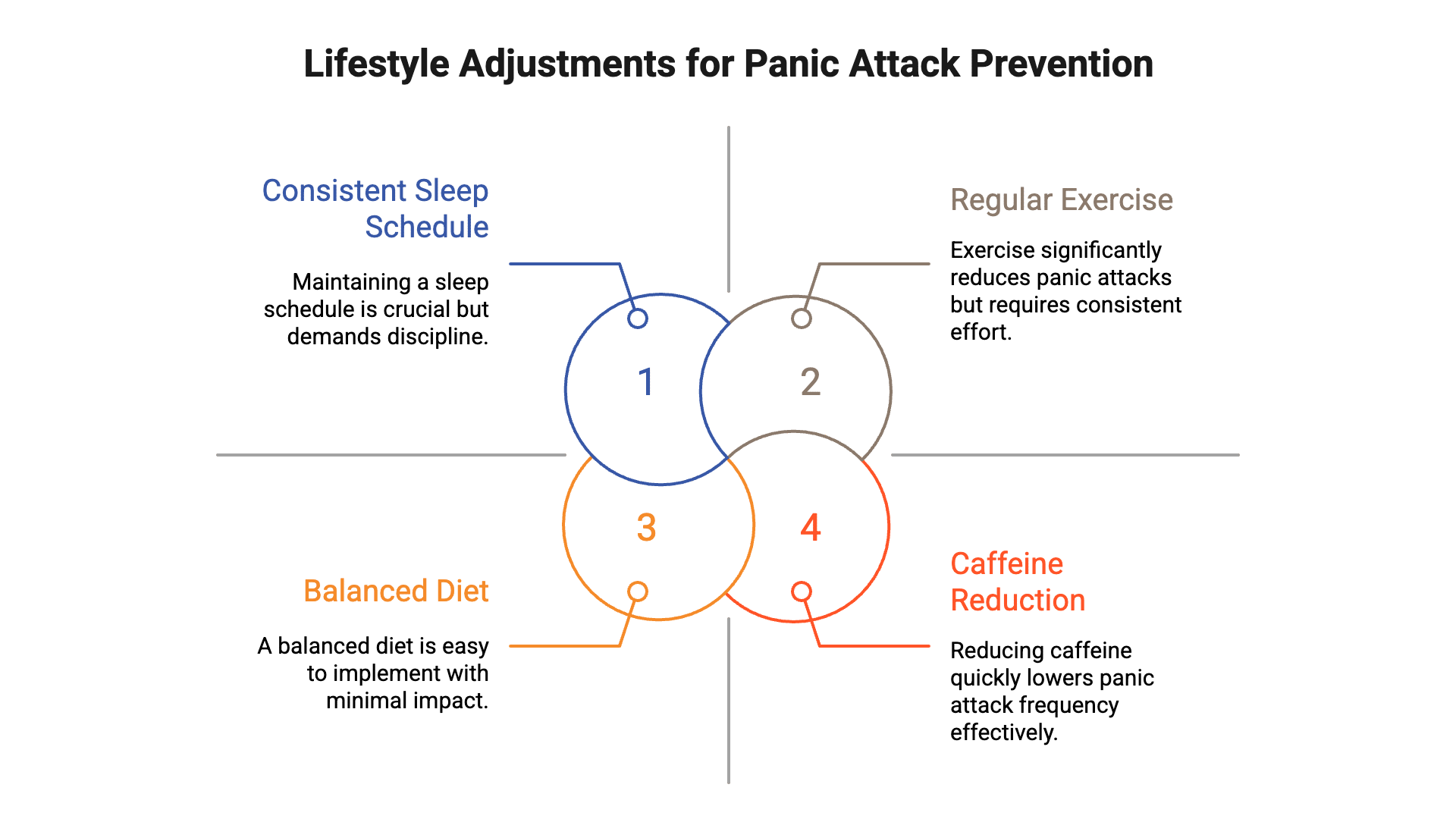
Small lifestyle adjustments can significantly impact your vulnerability to panic attacks. Sleep, caffeine intake, and stress management all play important roles in preventing panic attacks from disrupting your daily life.
Start by looking at your caffeine consumption. Caffeine can trigger physical symptoms that feel similar to panic, including rapid heartbeat, rapid breathing, and jitteriness. If you’re prone to panic attacks, limiting or eliminating caffeine may reduce the frequency of attacks.
Sleep quality matters too. When you’re sleep-deprived, your nervous system is more reactive, making you more susceptible to anxiety and panic. Aim for consistent sleep and wake times, even on weekends.
Regular exercise deserves special attention as a prevention tool. Beyond the general stress-reduction benefits, exercise specifically helps with panic attacks by exposing you to physical sensations like increased heart rate and rapid breathing in a safe context. Over time, your brain learns that these sensations aren’t dangerous, reducing the likelihood they’ll trigger panic. Walking or doing light exercise can help you manage anxiety between attacks.
A balanced diet supports stable blood sugar levels, which can help prevent the physical symptoms that sometimes trigger panic attacks. Skipping meals or eating irregularly can cause drops in blood sugar that create sensations similar to anxiety and panic.
How Do Breathing Exercises and Relaxation Techniques Prevent Panic Attacks?
When practiced regularly, breathing exercises and muscle relaxation lower your baseline anxiety and give you go-to tools when you feel panic starting to build. Deep breathing, progressive muscle relaxation, and guided imagery all help calm your nervous system when practiced consistently.
Progressive muscle relaxation involves tensing and then relaxing different muscle groups throughout your body. This teaches you to recognize the difference between when muscles tense and when they relax, giving you a concrete way to reduce tension and release physical stress before it escalates into panic. Muscle relaxation techniques can limit a panic attack’s symptoms when you catch them early.
Practice these techniques when you’re calm, not just during a panic attack. Regular practice makes them more effective when you need them most. Think of it like building muscle at the gym—the more you practice deep breathing when you’re relaxed, the more automatic it becomes during stressful moments.
When you practice deep breathing or breathing slowly, focus on breathing deeply into your diaphragm rather than shallowly into your chest. Cleansing breaths can help relax the chest muscles and allow your lungs to fill more completely. This counters the rapid, shallow breathing that often accompanies panic and helps you feel calmer during a stressful situation.
Can Mindfulness and Meditation Help Prevent Panic Attacks?
Mindfulness practices teach you to observe anxious thoughts without getting caught up in them, which can reduce overall anxiety levels and decrease panic attack frequency. Mindfulness-based stress reduction and cognitive therapy have shown benefits for anxiety in the short term.
The key difference mindfulness brings is learning to stay present rather than getting pulled into “what if” thinking. When you’re feeling anxious, negative thoughts about future panic attacks can create a cycle of worry that actually increases your risk of another attack. Mindfulness helps you notice these thoughts without immediately believing them or reacting to them.
You don’t need to meditate for hours. Even 10 minutes of daily practice can help build awareness of your thought patterns and physical sensations. Apps and online programs offer guided imagery and meditations designed for anxiety and panic.
Grounding techniques help you focus on the present moment and your immediate environment. The 5-4-3-2-1 method (identifying 5 things you can see, 4 you can touch, 3 you can hear, 2 you can smell, and 1 you can taste) is one example. These techniques help you stay present rather than spiraling into fear about symptoms of panic.
What About Medication for Preventing Panic Attacks?
For some people, medication is an important part of a panic attack prevention toolkit, particularly when combined with therapy. Selective serotonin reuptake inhibitors (SSRIs) and serotonin-norepinephrine reuptake inhibitors (SNRIs) are often prescribed by a mental health professional to help prevent panic attacks from occurring.
These medications work by adjusting neurotransmitter levels in your brain, which can reduce overall anxiety and make panic attacks less frequent. They typically take several weeks to reach full effectiveness, so they’re not for immediate relief but rather for long-term prevention and managing panic attacks over time.
Benzodiazepines like alprazolam or clonazepam may provide quick relief during acute anxiety, but they carry risks of dependence and are usually not recommended as a first-choice treatment for long-term management. Your mental health professional can help you understand whether medication makes sense for your situation and, if so, which type would be most appropriate for preventing future attacks.
Medication management should always be done under the guidance of a healthcare provider. What works for one person may not work for another, and finding the right approach to managing panic attacks sometimes involves trying different options. Some people also have medical conditions that need to be considered when choosing medication.
How Do I Know Which Tools to Include in My Prevention Toolkit?
Building an effective prevention toolkit is personal. Start with one or two tools that feel most manageable and build from there. Many people find that combining therapy with lifestyle changes creates the strongest foundation for preventing panic attacks and reducing symptoms.
Consider starting with:
- Self-monitoring to identify your potential triggers and patterns
- One regular relaxation practice (deep breathing or progressive muscle relaxation)
- A consistent exercise routine, even if it’s just daily walks
- An appointment with a therapist who specializes in anxiety disorders
As you build your toolkit, pay attention to what actually reduces your anxiety and panic attack frequency. Some coping strategies might work better for you than others, and that’s normal. The goal is to create a sustainable collection of practices that fit into your life and genuinely help you feel more in control.
We approach panic disorder with the understanding that no single tool works for everyone. Some clients find that regular exercise makes the biggest difference in their anxiety levels, while others need the structured cognitive work of therapy to feel progress. What matters most is finding the combination that you’ll actually use. A toolkit filled with techniques you never practice won’t help—but even two or three tools you use consistently can create significant change over time.
If you’re looking for support with managing panic attacks, the therapists at Therapy Group of DC are here to help. We work with clients in Dupont Circle and throughout the Washington, D.C. area to build effective strategies for anxiety and panic. Schedule an appointment to get started
Disclaimer: This article is for educational purposes only and is not a substitute for professional medical advice, diagnosis, or treatment. Always seek the advice of your physician or qualified mental health provider with any questions you may have regarding a medical or mental health condition. If you are in crisis or experiencing thoughts of self-harm, please call 988 (Suicide and Crisis Lifeline) or go to your nearest emergency room.