Low Motivation vs. Burnout vs. Depression in DC: A Simple Self‑Check

If you’re in DC and feeling stuck, here’s a plain‑English way to tell what might be going on—and what actually helps.
Quick answer
Low motivation shows up as “I can’t get started,” burnout feels like “I’m running on empty,” and depression is more like “Nothing feels worth it.” These can overlap, but you can use a few evidence‑backed steps today while you sort out which is which.
How they differ (in real‑life terms)

Low motivation: You want to act but feel stalled. Energy and focus come and go. You might procrastinate, doom‑scroll, or overthink next steps.
Burnout: Long‑term stress leaves you depleted and cynical. Weekends don’t refill the tank. You feel detached from work or school and struggle to care.
Depression: Mood and interest drop for most of the day, most days, often with sleep/appetite changes and a heavy “what’s the point?” feeling. If you notice thoughts of self‑harm, seek urgent help right away (call/text 988 in the U.S.).
It’s common to have a mix. Start with tiny actions and check in with a clinician for a clearer read.
Why you might feel stuck
Two forces often combine: overload (too much, too fast) and ambivalence (part of you wants change; part of you doesn’t). Skills that target ambivalence—like Motivational Interviewing (MI)—have solid evidence in healthcare, helping people move from “I should” to “I will” without pressure in a large MI meta‑analysis and across medical‑setting counseling trials that improve follow‑through on health behaviors (outpatient research).
Try these tiny, evidence‑informed steps
1) Name the ambivalence (two‑sided truth). Say both parts out loud: “I want to apply; I’m scared to be rejected.” That MI‑style stance reduces stuckness because it respects autonomy and explores reasons for change.
2) Shrink the task until it moves. Pick a two‑minute action (open the doc, put on shoes, send one email). Brief prevention guidance pairs micro‑goals with self‑monitoring to spark momentum in cardiovascular behavior‑change recommendations.
3) Use “if‑then” planning. “If it’s 8:30, then I draft one intro paragraph.” Implementation intentions turn intentions into action and are reflected in prevention guidelines that favor specific, scheduled behaviors over vague goals.
4) Track one behavior for seven days. A short streak builds self‑efficacy—the sense that your actions matter. Tracking plus feedback supports change in outpatient care in counseling research and across Motival Interview‑based programs.
5) Ask for collaborative help. Patient‑centered visits that ask, advise, agree on goals, assist, and arrange follow‑up—the “5 A’s”—emphasize partnership over pressure in clinical overviews of behavior‑change pathways.
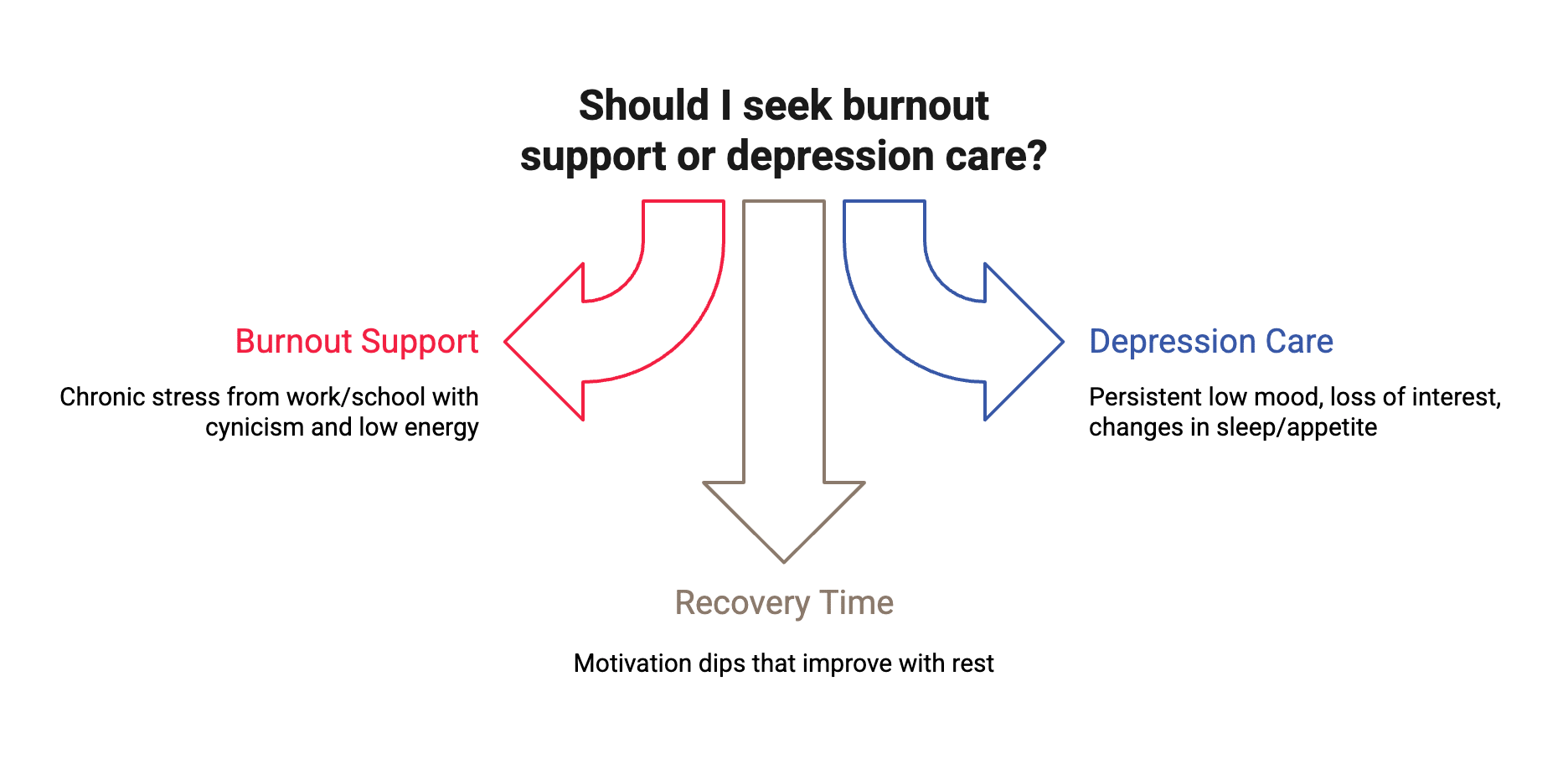
When to consider burnout support vs. depression care
- If your stress is tied mainly to chronic overload at work or school and cynicism/low energy lead the way, try workload boundaries plus the tiny steps above—and talk with a clinician about burnout.
- If you have persistent low mood, loss of interest, or big changes in sleep/appetite for two or more weeks, add a clinical screen for depression and consider therapy.
- If your motivation dips in waves and improves with rest, plan recovery time like a meeting: protected, scheduled, non‑negotiable.
What therapy looks like at The Therapy Group of DC
Sessions are warm, practical, and collaborative. We slow down enough to understand what matters to you, then use MI‑informed, patient‑centered tools—values clarification, tiny experiments, if‑then plans, and measured check‑ins—to build sustainable momentum consistent with MI evidence and with prevention‑focused care that integrates behavior‑change support from cardiovascular guidelines.
Red flags—reach out sooner
- Thoughts of self‑harm or suicide (call/text 988 now).
- You can’t get out of bed for days, or you stop eating/sleeping.
- Work/school functioning collapses, or you’re using substances to cope, which can lead to a lack of motivation.
You don’t have to solve motivation alone. Our Dupont Circle therapists regularly help students and professionals in DC get unstuck. Small steps count, and support helps them stick. Utilizing local resources like DC’s museums and free events can also break monotony and provide a fresh perspective.
Frequently Asked Questions About Low Motivation
What are the common causes of low motivation?
Low motivation can stem from a variety of common reasons, including mental health conditions like depression and anxiety, emotional exhaustion, burnout, hormonal imbalances, fear of failure, and lack of purpose or direction in daily life. Physical factors such as poor diet and sleep deprivation can also contribute to feeling unmotivated. Getting at least 7 hours of quality sleep is crucial for maintaining energy and a positive mood. Perfectionism can also create fear of failure, resulting in diminished motivation.
How can practicing self-compassion help with motivation issues?
Practicing self-compassion involves creating a kinder inner dialogue and balancing self-acceptance with self-improvement. Research shows that self-compassion increases motivation, especially when dealing with setbacks or underlying issues. It improves well-being by reducing psychological distress and helps individuals stay motivated to achieve their goals.
When should I seek professional help for lack of motivation?
If low motivation persists for weeks, significantly affects your daily functioning, or is accompanied by symptoms of mental illness such as depression or anxiety, it is important to consult a mental health professional. Professional help can provide tailored strategies to address underlying issues and support recovery.
What strategies can help me stay motivated with daily tasks?
Helpful strategies include managing your to-do list by prioritizing important things and breaking tasks into smaller steps, using the 10-minute rule to start tasks, pairing dreaded tasks with enjoyable activities, and rewarding yourself for completing tasks. Spending time in nature and maintaining a healthy diet also support motivation.
Incorporating physical activity like walking can boost endorphins and improve mood. Engaging in activities like meditation or yoga can also help manage stress levels. Seeking support from trusted friends or family is also essential for overcoming low motivation. Changing environments by exploring new neighborhoods can also help reset motivation levels.
Can emotional exhaustion cause low motivation?
Yes, emotional exhaustion, often resulting from chronic stress or burnout, can significantly reduce motivation levels. It may lead to feelings of detachment and difficulty engaging in daily tasks. Addressing emotional exhaustion through self-care and professional support can help restore motivation.