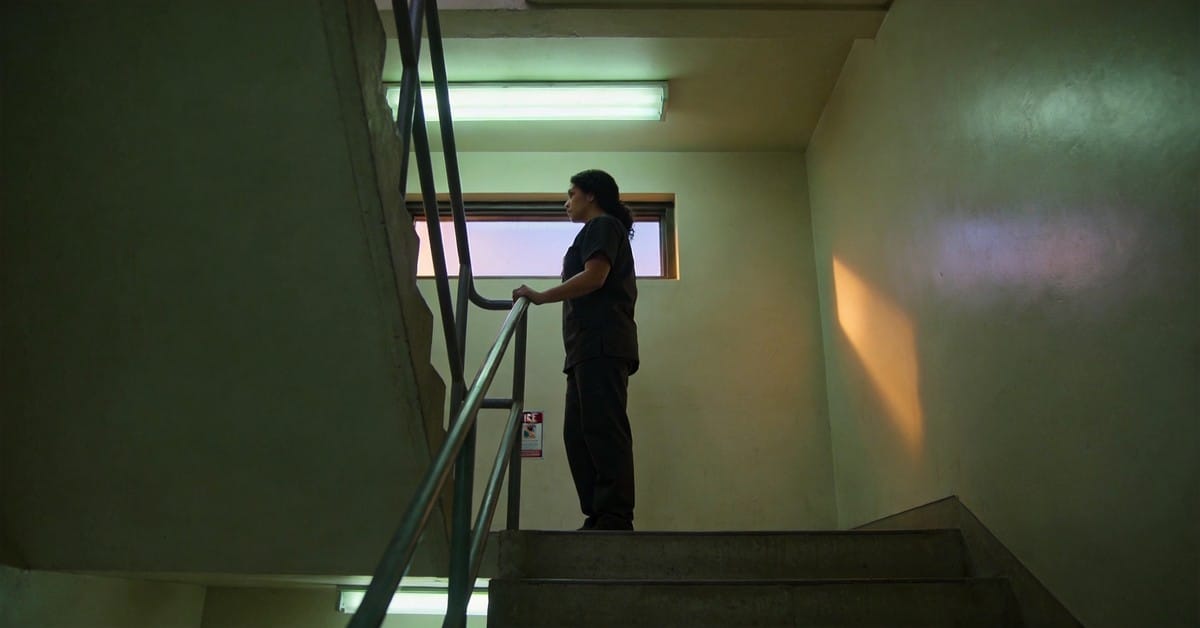

It’s 9 p.m., you’re still charting on the couch, the inbox is red, and the resentment you can’t quite name is sitting at the back of your throat. You ate a granola bar at 2 p.m. You haven’t called your kid back. You’re a physician, and somewhere in the last few years the work started costing more than it gave back.
Physician burnout is an occupational injury caused by the way medicine is structured now, not a failure of resilience. In 2023, 45.2% of U.S. physicians reported burnout, down from a 2021 peak of 62.8%, with female physicians showing nearly double the odds compared with male physicians.
The downstream stakes are serious. Burnout prospectively predicts insomnia, cardiovascular disease, and early mortality. It is sustained occupational harm, and therapy done well helps you recover from it.
Burnout Is an Occupational Injury, Not a Character Flaw
The dominant evidence on how to reduce physician burnout points in one direction: system-level interventions. A recent review of well-being interventions found that workflow redesign, reduction of documentation burden, team-based care, and the elimination of low-value work produce more durable improvements than any individual self-care intervention.
The American Medical Association, the Association of American Medical Colleges, and the National Academy of Medicine have all moved toward this framing in the last decade. Clinician burnout, in their consensus language, is a healthcare system’s problem and a patient safety problem, not a personal one.
If you practice in DC, the load has a specific texture. You’re navigating federal-payer documentation, the academic medical center standards at MedStar Georgetown, GW, Children’s National, the VA, NIH, or Walter Reed, and a referral pool concentrated with high-acuity patients who are themselves often powerful, demanding professionals. The EHR (electronic health record) eats the time you used to spend thinking. Pajama-time charting devours personal time. Long working hours bleed into the rest of one’s life until there’s nothing left to bleed into.
Roughly a quarter to a third of working adults report burnout symptoms, and without intervention, recovery typically takes months to years.
If physician burnout is an injury sustained from chronic occupational stressors, the question in therapy isn’t “how do I build more grit?” It’s: what’s been worn down, what’s been buried under the workload, and what kind of recovery is possible while you’re still inside the conditions that caused it? That’s closer to what you’d offer any patient with a chronic occupational exposure than to standard stress management. The work overlaps with burnout therapy in Washington, DC more broadly, with adjustments for the specific weight medicine carries.
We treat physician burnout the way we’d treat any chronic occupational exposure in a patient: assess the injury, identify what’s still depleting, support recovery while the exposure continues if it must. The reframe alone often shifts something. You stop interrogating your character and start asking better questions about the conditions.
Moral Injury: When “Burnout” Doesn’t Fit What You’re Actually Feeling
Some physicians, when we describe burnout to them, shake their head. The word doesn’t quite land. What they describe instead is the cumulative harm of being structurally prevented from doing what they know is right for patients. Denied admissions. Seven-minute slots. Surprise formularies. Clinical decisions repeatedly overruled by people who haven’t met the patient. EHR mandates that crowd out the exam.
That’s not burnout, exactly. That’s moral injury, and the distinction matters because burnout language locates the problem in you, while moral injury locates it accurately, in the gap between your values and the conditions you’re asked to practice medicine in. You can’t meditate your way out of a values violation. The grief is real and proportional to what’s being lost.
Burnout and depression also co-occur at high rates in healthcare workers. A recent review of depression and burnout studies finds depression carries a stronger signal for suicide risk than burnout alone, and that calling everything “job burnout” can flatten distinctions that change care. A mental health professional working with you needs to be able to tell the difference between the emotional exhaustion of overwork, the grief of moral injury, and the clinical depression that sometimes hides underneath both. If depression is doing most of the work, depression therapy in Washington DC belongs in the picture, not a stress-management workbook.
In session, this looks like making room for the anger and grief that have nowhere to go during your shift. Not reframing them. Not “challenging the cognitive distortion.” Letting them be what they are first, and then asking what they’re telling you about how you want to practice medicine going forward.
When “Doctor” Stopped Being a Job and Became the Self
For many physicians, reducing work hours, taking leave, or accepting a bad patient outcome doesn’t register as a circumstance. It registers as a threat to who you are. That’s identity fusion with the role, and it’s one of the most consistent patterns we see in our practice with physicians and other high-achieving professionals.
It makes sense given the training. Medical school selects for and rewards self-erasure. Residency teaches you to suppress bodily needs (food, sleep, urination, grief) on a schedule that pretends those needs don’t exist.
By the time you’re an attending, the practiced suppression has become invisible. You don’t notice you’re emotionally drained because the not-noticing is the skill that got you here. There’s even research showing that difficulty identifying your own emotions independently predicts burnout, separate from depression.
Perfectionism rides alongside. In one clinical sample of stress-exhausted patients, 40% met criteria for obsessive-compulsive personality features, and perfectionism predicted both vulnerability to burnout and slower recovery at seven-year follow-up. The trait that helped you survive medical school and match into a competitive program is the same trait that makes recovery harder — the cost of the selection process, compounded by years of practicing medicine inside it.
What therapy does here is slow and specific. It builds out a self that exists adjacent to the white coat rather than instead of it. The point isn’t to make you care less about medicine — it’s to give you somewhere to stand when medicine isn’t going well: a Tuesday, a relationship, a body that exists outside the role.
When the Work Has Stopped Giving Back
If the gap between why you went into medicine and how it feels now keeps widening, that's worth a conversation. We work with DC physicians on burnout, moral injury, and what recovery actually looks like — confidentially, out-of-network, on a schedule that respects how variable your week is.
The Specific Shame That Keeps Physicians Out of Therapy
Stigma escalates across the career arc in a way that should worry the whole healthcare industry. The pattern looks like this:
- About 30% of early-year medical students cite stigma as a barrier to help-seeking.
- By final year of medical school, the number rises to 53%.
- In residency, it climbs to 58%.
- Among practicing physicians, roughly two-thirds report it.
The further you get into a career organized around competence, the harder it becomes to admit you’re struggling. Impostor phenomenon makes this worse. One large study found a dose-response link between impostor feelings and burnout, with odds ratios climbing from 1.28 for moderate to 2.13 for intense, and a parallel relationship with suicidal ideation.
The higher-achieving you are, the more “I should be able to handle this” becomes its own clinical problem. The shame isn’t a side effect of burnout. For many physicians, it’s the load-bearing wall keeping help-seeking out. The pattern overlaps significantly with what we see in imposter syndrome therapy in Washington DC across other high-stakes professions.
In DC the shame has a geography. Credentialing questions on state licensing forms. Colleagues, patients, and program directors clustered in the same few hospital systems. A small professional world where a casual reference at a department meeting could become a chart note about you, somewhere. These confidentiality concerns are not paranoia. They’re rational threat assessment, and a therapist who works with high-achieving professionals should treat them that way from the first session.
We treat privacy as a clinical issue, not a quirk to reassure away. For DC physicians, that means out-of-network billing, no shared records with hospital systems, and clear conversations about what gets documented and where it lives. Confidentiality is part of the treatment, not a footnote to it.
What Therapy Actually Does (and Doesn’t Do) for Physician Burnout
Therapy calibrated to physician burnout draws on several approaches, each useful for a different piece of the injury.
Psychodynamic Therapy for the Identity Layer
Identity work tends to come first because the rest is harder to do until you have somewhere to stand outside the role. From there, values come into focus.
ACT for Moral Injury and Values
When the body is what’s giving out first — the sleep, the appetite, the unrelenting vigilance — the next layer matters most.
Mindfulness for Bodily Depletion
For the specific thought loops — patient-outcome rumination, perfectionistic standards, the 2 a.m. replay — a more targeted layer helps.
CBT for the Specific Thought Loops
Professional Coaching as an Adjunct
None of these modalities promise to fix you while your workplace remains unchanged. Therapy supports clearer decisions about the system — staying, negotiating, restructuring, leaving — and it treats the injury already sustained. It does not substitute for organizational approaches to address burnout at organizational levels.
Confidentiality, Fit, and What to Look for in a DC Therapist
The minimum bar for a physician-facing practice is straightforward. Out-of-network, private pay, and a clear conversation up front about whether you want claims filed with your insurer at all. No overlap with your hospital system. No shared patient base.
Practical considerations: in person in Dupont Circle or telehealth across DC, Maryland, and Virginia, with a schedule worked out around the way physicians actually live rather than a 9-to-5 assumption. Biweekly options when weekly isn’t compatible with call. Work-life integration that respects how variable your work life actually is. For some physicians, our teletherapy and online therapy in DC options are the only way the schedule works at all.
Physician burnout is an occupational injury that deserves real treatment, calibrated to medicine’s specific shame patterns, confidentiality demands, and impossible schedules — not generic resilience training.
Recovery Is Possible — On a Schedule That Works for You
If you're a physician in DC navigating burnout, moral injury, or the slow erosion of why you went into medicine, we'd welcome a confidential conversation about fit, scheduling, and what real recovery could look like.
Last updated: May 2026
This blog is for informational purposes only and does not constitute medical or mental health advice. Always consult with a qualified mental health professional for personalized guidance regarding your specific situation.