

If you’re struggling with compulsive sexual behavior that’s causing problems in your life, you’re not alone, and treatment can help. Cognitive behavioral therapy (CBT) is the best-supported treatment for sex addiction, with research on evaluation and treatment naming psychotherapy and CBT the preferred approaches for regaining control over sexual urges. Both individual and group therapy have proven effective, and online therapy options are also available.
“Sex addiction” is the everyday phrase, not a diagnosis. The condition it usually describes is compulsive sexual behavior disorder, which ICD-11 recognizes as an impulse control disorder: difficulty controlling sexual urges or behavior that persists despite distress or harmful consequences. Researchers have also studied it as “hypersexual disorder,” a label proposed for the DSM-5 and ultimately not included. We use “sex addiction” here because it’s the phrase most people search for, but the treatment research below was conducted under the other two names.
What Is Compulsive Sexual Behavior Disorder?
Compulsive sexual behavior disorder involves an intense focus on sexual fantasies, urges, or activities that feels impossible to control and causes significant problems in your life. You might spend excessive time thinking about sex, engaging in sexual activities, or planning sexual behavior, to the point where it interferes with work, relationships, or other important areas of life.
Sexual addiction shares some features with substance use disorders. Neuroimaging studies have found similarities in craving and attentional bias between compulsive sexual behavior and substance addiction. People with compulsive sexual behavior report strong urges that can be difficult to resist. Researchers caution, though, that significant gaps in understanding still complicate classifying it as an addiction, as discussed in a review in Addiction. Compulsive sexual behavior often continues despite negative consequences like damaged relationships, job problems, or feelings of shame and guilt.
A nationally representative survey of 2,325 U.S. adults ages 18 to 50 found that 8.6% reported clinically relevant distress or impairment from difficulty controlling sexual feelings, urges, and behaviors: 10.3% of men and 7.0% of women, a smaller gender difference than previously theorized, according to a study in JAMA Network Open. Sex addiction often coexists with other mental health conditions such as depression and anxiety, along with substance use disorders. This is why comprehensive treatment often addresses multiple conditions at once.
Sexual compulsivity involves biological, psychological, and social factors. Many individuals experience feelings of shame, guilt, and low self-esteem. Addressing these emotions is crucial to the recovery process.
What Kind of Therapist Helps with Sex Addiction?
Finding the right therapist is crucial for successful treatment. Mental health professionals who specialize in sex addiction therapy have specific training in treating compulsive sexual behavior. Look for therapists who have experience with behavioral addictions and who understand the complexities of sexual health, similar to finding the right therapist or psychologist for any mental health concern.
Sex Addiction Therapy vs. Sex Therapy
It’s important to understand the difference between sex addiction therapy and sex therapy. Sex therapy typically focuses on sexual dysfunction, intimacy issues, or improving sexual communication in relationships. Sex therapists help with concerns like low libido, performance anxiety, or relationship dynamics around sexuality.
Sex addiction therapy, on the other hand, specifically addresses compulsive sexual behavior that feels out of control and causes harm. While sex therapists can be valuable for addressing healthy sexuality and relationship issues, treating sex addiction requires specialized training in behavioral addictions and compulsive behaviors. Some therapists have training in both areas and can address multiple aspects of sexual health.
The Certified Sex Addiction Therapist (CSAT) program equips mental health professionals with advanced expertise in treating compulsive sexual behavior through evidence-based tools. To earn this certification, licensed practitioners complete four training modules over approximately 24 months. CSATs must renew their certification every 24 months by earning 15 continuing education credits.
When searching for a therapist, consider asking about:
- Their experience treating sexual addiction
- Their therapeutic approach
- Whether they’ve worked with clients facing similar challenges
Therapists specializing in sexual addiction provide a safe, confidential space for discussions about sexual health.
In our practice, we find that clients often delay seeking help due to shame around their sexual behavior. Creating a comfortable and trusting therapeutic relationship is essential. We emphasize that compulsive sexual behavior is a recognized clinical condition, not a moral failure, and that seeking support demonstrates strength.
What Treatment Options Actually Work?
Cognitive Behavioral Therapy (CBT)
CBT has more evidence behind it than any other treatment for compulsive sexual behavior, though the field is young and the total literature is still only a few controlled trials. Cognitive behavioral therapy helps you identify the thoughts and feelings that drive compulsive sexual behavior, then teaches you new coping skills to manage urges and change problematic patterns, according to research on treatments and interventions.
In CBT sessions, you’ll work with your therapist to:
- Understand triggers for your sexual behavior
- Develop strategies to handle stress without turning to sex
- Build healthier ways to meet emotional needs
- Practice skills to manage urges and handle emotions
In controlled trials, CBT significantly reduces symptoms, and those gains have held at three- and six-month follow-up. Whether they hold for years hasn’t been tested.
Group Therapy
Group therapy brings together individuals facing similar struggles. A randomized controlled study shows that group-administered cognitive behavioral therapy for hypersexual disorder produces significant improvements in symptoms.
In group settings, you benefit from shared experiences, mutual support, and connection with others who understand what you’re going through. Group therapy helps combat the isolation and shame often associated with sex addiction. Members can practice new strategies together and provide honest feedback to one another.
Online Therapy
For those who can’t easily access in-person treatment, online therapy offers an effective alternative. In a pilot study of 36 men, 12 weeks of internet-administered CBT produced large reductions in hypersexual symptoms that held three months later. That study had no control group and no face-to-face comparison, so online CBT has not been shown to equal in-person treatment, but it is a reasonable option when in-person care isn’t practical.
Online therapy provides convenience and privacy, which can be particularly important when dealing with sensitive issues around sexual behavior. You can participate from home, making it easier to fit treatment into your life and maintain consistency, which is key to recovery.
Mindfulness-Based Approaches
Mindfulness-based therapy teaches you to notice urges and desires without automatically acting on them. This approach helps you develop awareness of your sexual thoughts and feelings, recognize triggers, and respond more intentionally rather than impulsively. A small pilot study of mindfulness-based relapse prevention found less time spent viewing pornography and lower anxiety and depression after eight weeks. With 13 participants and no control group, that is early evidence rather than established.
Psychodynamic Therapy
Some people benefit from psychodynamic therapy, which explores deeper emotional patterns and past experiences that may contribute to compulsive sexual behavior, according to research on treatment effects and adherence.
Psychodynamic therapy uses a holistic approach to help you understand the root causes of your behavior and develop insight into how past experiences shape current patterns. This deeper understanding can support lasting personal growth and change.
We often see clients who’ve tried to stop problematic sexual behavior through willpower alone, only to experience unsuccessful attempts again and again. What helps in practice is addressing the underlying emotions and unmet needs driving the behavior, not just trying to suppress urges.
Ready to Get Started?
Our therapists are here to help you take the next step.
What About Medication for Sex Addiction?
While therapy is the primary treatment, medication may be helpful for some people, especially when used alongside therapy. Medications like selective serotonin reuptake inhibitors (SSRIs) or naltrexone may help reduce sexual urges, though they’re not FDA-approved specifically for sexual addiction, according to research on pharmacotherapy options.
Medication is typically considered when therapy alone isn’t providing enough relief or when you have co-occurring mental health conditions like depression or anxiety. Other agents have been tried, including topiramate, clomipramine, and N-acetylcysteine. But the most recent review of pharmacological options is blunt that the evidence for nearly all of them comes from case reports, and that medication belongs alongside psychotherapy rather than in place of it.
Your psychiatrist or prescriber will work closely with your therapist to determine whether medication might be helpful. Any medication decisions should be made in consultation with mental health professionals who can provide differential diagnosis when needed.
Understanding the Recovery Process
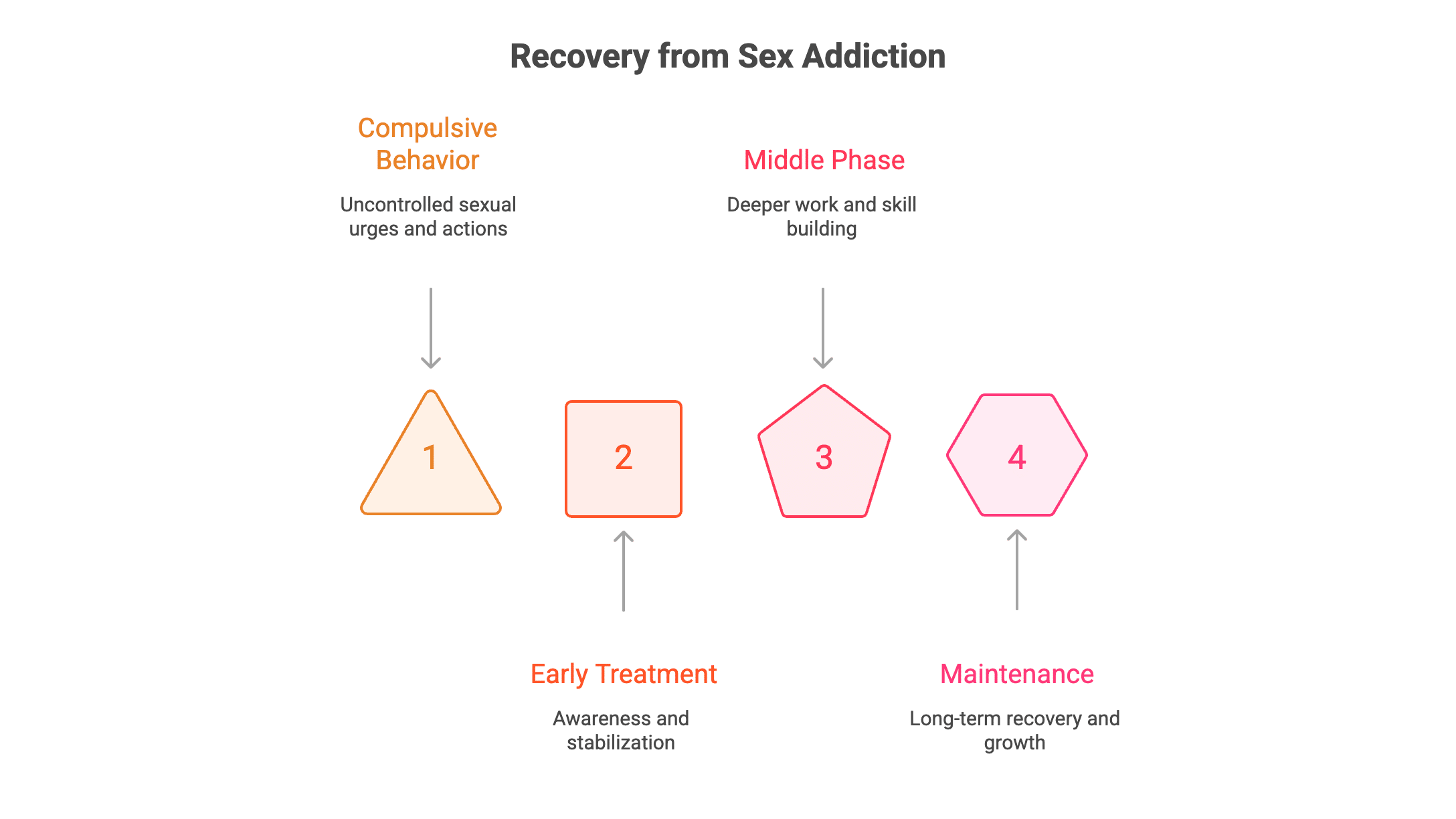
Recovery from sex addiction is a process that unfolds over time. While there’s no universally agreed-upon set of stages, most people move through recognizable phases as they work toward recovery.
Early treatment: awareness and stabilization
This phase involves honest self-assessment and building awareness. The next phase goes deeper.
Middle phase: deeper work and skill building
Therapists work with individuals and couples throughout this stage to strengthen their sense of self and build healthier relationships.
Maintenance: long-term recovery and personal growth
As individuals progress through counseling, they often notice significant improvement in their productivity and quality of life. Personal growth is a transformative aspect of sex addiction counseling, leading to self-discovery and improved self-awareness. Throughout this process, sticking with therapy is important, and people who attend regularly tend to do better.
Do Sex Addicts Ever Recover?
Yes, though “recovery” here means regaining control, not losing sexual feeling. In the largest trial to date, 137 men randomized to group CBT or a waitlist showed significantly greater reductions in hypersexual symptoms and sexual compulsivity, and those gains held at six-month follow-up. Longer-term outcomes haven’t been studied.
Recovery looks different for everyone, but many people report meaningful changes:
- Better control over sexual impulses
- Improved relationships
- Reduced shame and distress
- Overall better sense of well-being
Recovery takes time, patience, and commitment, but positive change is absolutely possible.
It’s important to understand that compulsive sexual behavior is a recognized clinical condition, classified in ICD-11 as an impulse control disorder, not a personal failure. Seeking help demonstrates strength. With effective treatment strategies and professional support, you can learn to manage compulsive behaviors and build a healthier, more balanced life.
How to Stop Enabling a Sex Addict
If someone you care about is struggling with sex addiction, knowing how to help without enabling can be challenging. The most important step is encouraging them to seek professional treatment rather than trying to control or monitor their behavior yourself.
Setting healthy boundaries is essential. This means being clear about what behaviors you will and won’t accept in the relationship while also recognizing that you can’t control another person’s actions. Understanding the difference between support and enabling is crucial for both your well-being and your partner’s recovery, particularly when navigating the psychological impact of relationship dynamics.
Couples therapy can be helpful for working through trust issues, improving communication, and rebuilding connection as your partner works on recovery. Therapists may use various therapeutic approaches, including Emotionally Focused Therapy, to help clients rebuild trust and safety in relationships.
Remember that recovery is ultimately your partner’s responsibility. Your role is to provide support and encouragement, not to become the therapist or enforcer. Taking care of your own mental health is equally important, so consider finding your own therapist or support group for partners of people with sexual addiction.
Here in Dupont Circle, we frequently work with couples navigating the aftermath of sexual addiction. The partner often struggles with whether they’re helping or enabling. We help both individuals understand that supporting recovery means encouraging professional treatment and maintaining boundaries, not monitoring or controlling behavior.
Get Help for Sex Addiction in Washington DC
At Therapy Group of DC in Dupont Circle, our doctoral-level psychologists and master’s-level clinicians help with the shame, relationship strain, anxiety, and depression that often come with compulsive sexual behavior. We understand that reaching out takes courage, and we’re here to support you with compassionate, confidential care.
Our therapists use proven approaches including cognitive behavioral therapy, mindfulness-based techniques, and trauma-informed care to help you regain control. Whether you’re just starting to recognize a problem or you’ve struggled for years, treatment can help.
Contact our DC therapists to schedule an appointment
Willpower has had its turn
Our Dupont Circle therapists help you get at what the behavior is doing for you.
Last updated: August 2026