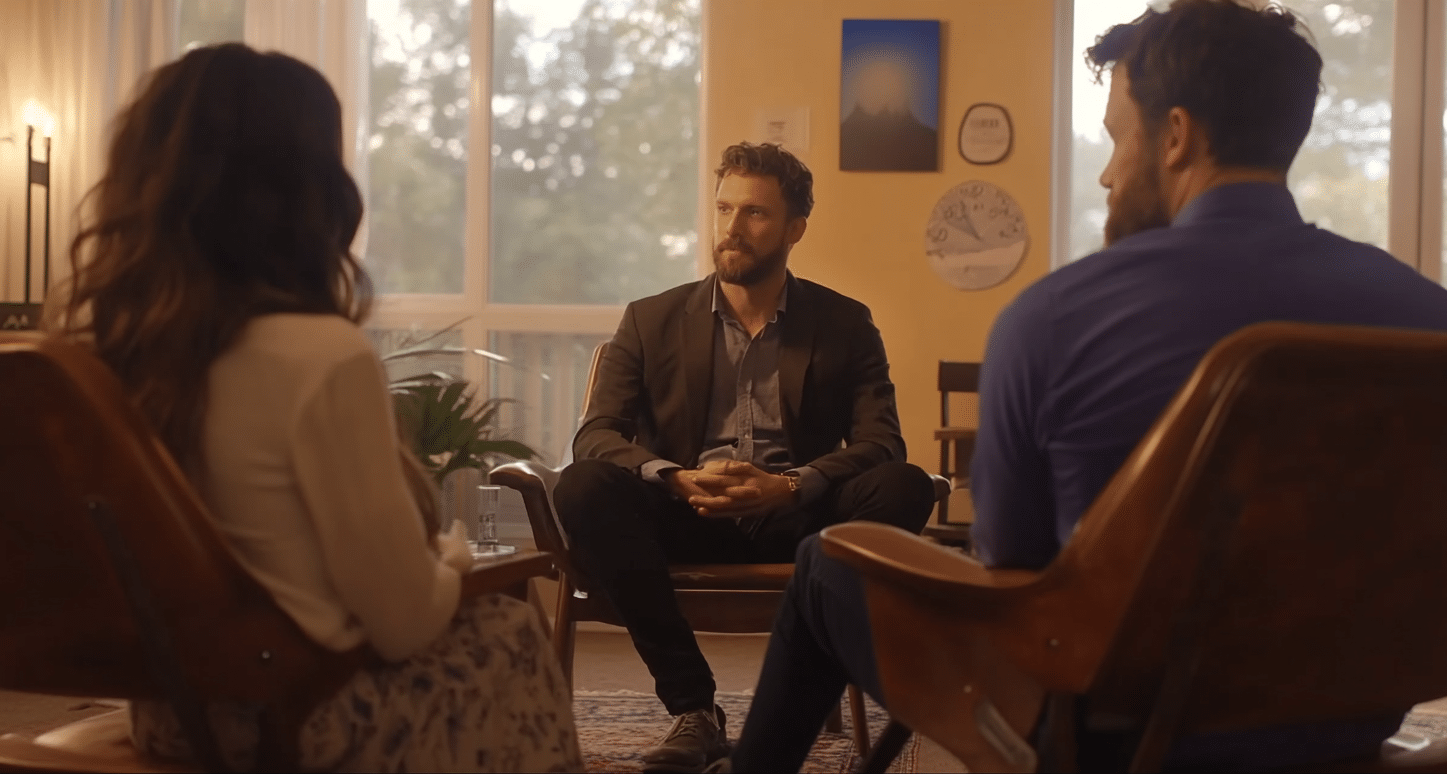



an engaged couple sitting with their therapist for a pre marital counseling session
Field Notes · Couples & Relationships

Premarital Counseling: What to Expect, How Long It Takes, and When to Start

You’ve booked the venue, settled the guest list, and realized you’ve never talked about whose career comes first if one of you gets an offer in another city. That gap is ordinary. Wedding planning is full of decisions, and most of them are about one day. Premarital counseling is for the decisions about everything after: a few focused sessions where you and your partner talk through money, family, sex, faith, and how you fight, with a therapist who keeps the conversation useful.

It’s also a common step. In a large random survey of married people in four states, those who had taken part in premarital education reported more satisfaction and commitment and less conflict, along with lower odds of divorce. A survey can’t prove the classes caused the difference, but the pattern held across race, income, and education levels. Below: what premarital counseling sessions involve, the tools counselors use, how long it takes, and when to start.

What is premarital counseling?

Premarital counseling is a form of couples therapy for partners preparing to marry. Instead of repairing damage, it looks ahead. You name the topics most likely to cause friction, learn how each of you handles disagreement, and practice talking about hard things while the stakes are still low.

It is usually led by a licensed therapist, such as a psychologist, a professional counselor, or a marriage and family therapist. Many couples also do premarital work through their place of worship, led by a religious leader. Some do both.

Premarital education is a related but different thing. It usually means a structured class or weekend workshop, often with other couples, that teaches the same set of skills to everyone. Premarital counseling is private and built around the two of you. Marital counseling, the kind most people mean by couples therapy, tends to start once a problem already exists. Premarital work is the preventive version.

Should couples get premarital counseling?

For most engaged couples, it’s worth considering. The main benefits are practical. You get better at saying what you need and hearing what your partner needs. You find the areas where you disagree before they show up as a crisis. And you learn how to fight in a way that doesn’t leave either of you feeling erased.

The research on skills-based programs is encouraging, with honest limits. A review that pooled 117 studies of marriage and relationship education found modest gains in relationship quality and larger gains in communication skills. Programs with a moderate number of sessions did better than very brief ones. Most couples in those studies were white and middle class, so the findings say less about everyone else.

That can sound backward. But a couple who is getting along has more patience for an uncomfortable topic, and more goodwill to spend on it. You’re practicing the skill before you need it.

From Our Practice

A common worry is that booking premarital counseling means admitting something is wrong. It usually means the opposite. Couples who start while things feel good can look at hard topics with curiosity instead of defensiveness, and they get to practice disagreeing when nothing much is riding on the outcome yet.

It also isn’t a test you pass or fail. Nobody grades your answers, and a counselor won’t tell you whether to get married. The goal is that you each leave knowing more about the other, and about yourself, than you did going in.

What happens in premarital counseling sessions

The first session is mostly about the two of you: how you met, what’s going well, what made you decide to come now, and what each of you hopes to get out of it. Many counselors ask you each to fill out a questionnaire early on. Most sessions are joint, and some counselors also meet with each partner alone once, so both people can speak freely.

After that, the work follows the topics that matter most to you. The ones that come up again and again include:

  • Money: debt, spending, saving, and whose income pays for what
  • Family: in-laws, holidays, and the habits each of you learned growing up
  • Children: whether, when, how many, and how you’d raise them
  • Faith and values: what you each believe and how much it shapes daily life
  • Sex and intimacy: desire, expectations, and how you talk about it
  • Careers and home: moves, travel, chores, and who does the invisible work
  • Conflict: how each of you argues, withdraws, and makes up

Your counselor’s job is to slow these conversations down. When a talk about money turns into a talk about respect, a good therapist points that out, so you can see what the argument is about underneath.

Premarital counseling tools and techniques

Premarital counseling tools vary by therapist, but a few are common.

  • Questionnaires. Sometimes called premarital inventories, these ask each of you the same questions separately. The counselor then walks through where your answers match and where they differ.
  • Structured listening. One person speaks while the other sums up what they heard before answering. It feels stiff at first. It also stops a lot of fights from starting.
  • Replaying an argument. You walk through a recent disagreement slowly and notice what each of you felt along the way, not just what you said.
  • Family history. You talk about how each of your families handled money, anger, and affection, since most people bring those patterns into marriage without noticing.

Preparing for marriage?

Premarital counseling gives you both a place to talk through the big topics before they become fights. Our DC therapists work with engaged couples at every stage of planning.

Therapists also draw on different approaches. Psychodynamic couples work looks at how your histories shape the way you love and fight. Emotionally focused therapy (EFT) looks at the needs underneath conflict. The Gottman Method teaches specific skills for starting hard conversations gently and repairing after them. Many therapists blend these, and the fit between you and your counselor tends to matter as much as the method.

How long is premarital counseling, and when should you start?

Premarital counseling is usually brief. At our practice it typically runs 4 to 8 sessions, weekly or every other week, so most couples finish in one to three months. Some couples want more time on one topic, like children or money, and add sessions. As the review above found, a handful of sessions tends to do more than a single meeting.

A good time to start is 3 to 6 months before the wedding. That leaves room to do the work without last-minute pressure. If your date is closer, a few sessions can still help, especially if you focus on one or two topics.

From Our Practice

Wedding planning tends to swallow the last few months before a wedding. We usually suggest starting before the planning gets heavy, while you still have evenings free to talk between sessions. Couples who begin a few weeks out can still do good work, though it often centers on one or two topics instead of the full list.

You also don’t need to be engaged. Some couples start premarital counseling before engagement to figure out whether marriage is right for them, which is an ordinary part of couples therapy for unmarried couples. And if the wedding has already happened, the same conversations still work. They just happen in couples therapy instead.

When premarital counseling gets hard

Premarital counseling is usually pleasant, but not always. A few things can make it harder.

One partner is reluctant. They may worry it means something is wrong, or that they’ll be blamed. It helps to frame it as preparation, the way you’d take a class before a big move. Agreeing to a set number of sessions, then deciding together, takes the pressure off.

A topic you’ve been avoiding comes up. Maybe it’s kids, or debt, or how often you see your parents. Avoiding it has kept the peace, and that counts for something. The cost is that the topic tends to come back later, at a worse time. Counseling is a safer place to open it.

You find a real difference. Sometimes you learn that you want different things. That can be scary to hear months before a wedding. Most differences can be worked with once they’re named. When one can’t, it’s better to know now.

Nerves about marriage itself. Feeling anxious before a wedding is common, and it doesn’t mean you’re making a mistake. Talking through what the worry is about, whether it’s the commitment, your parents’ marriage, or something specific between you, often makes it smaller.

How to get the most out of premarital counseling

A few habits make the sessions count:

1

Agree on why you're going

Talk before the first session about what each of you hopes to get from it. Maybe it’s fewer arguments about money, or a clear plan about kids. You don’t need the same answer. You just need to say yours.

2

Be honest, including about the awkward topics

Premarital counseling only works on what you bring into the room. If something feels too uncomfortable to raise, that’s often a sign it belongs there.

3

Keep the conversation going between sessions

The real practice happens at home. Try the listening exercise during an ordinary disagreement, or pick one topic to talk about over dinner.

4

Choose a counselor you both trust

Look for a licensed therapist with real experience in couples work, someone comfortable with sensitive topics and fair to both of you. If faith matters to you, ask how they work with it.

5

Plan for after the wedding

Before you finish, talk about how you’ll handle the next hard stretch: a new baby, a move, a loss. Some couples schedule a check-in session a year in.

If you’re still deciding who to see, our guide to choosing a counselor covers the practical questions, like training, location, and schedule. The best premarital counseling is the kind you’ll both take seriously, so pick someone you can each talk to.

Online premarital counseling

Lining up two work schedules can be the hardest part of starting. Online sessions help. Many couples find that meeting by video works well, and it saves a commute at the end of a long day. Video can also work for couples who live apart before the wedding. Our online therapy covers DC, Maryland, and Virginia.

Premarital counseling in DC

Our premarital counseling is for couples of all backgrounds, including LGBTQ+ couples, interfaith couples, and couples blending families. You can meet in person at our Dupont Circle office or by video.

From Our Practice

In Washington, premarital conversations often turn to careers. Who moves for whose job, how much travel is normal, and whether a demanding schedule leaves room for the family you want are common questions here. They are easier to talk through calmly before a job offer forces a decision on a deadline.

You don’t need a problem to start. If you’re engaged, thinking about it, or simply want to begin your marriage knowing each other better, that’s reason enough.

Start your marriage knowing each other better

Our Dupont Circle therapists help engaged couples talk through money, family, and conflict before the wedding, so you go in with a plan you both believe in.

Last updated: October 2026

This blog is for informational purposes only and does not constitute medical or mental health advice. Always consult with a qualified mental health professional for personalized guidance regarding your specific situation.

FROM THERAPY GROUP OF DC
One of Our Core Specialties

Premarital Counseling in Washington DC

Build a strong foundation for marriage — clarify values, strengthen communication, and navigate differences before saying "I do."

Frequently Asked Questions
Premarital counseling is couples therapy for partners getting ready to marry. Instead of fixing a problem, it looks ahead. You talk through money, family, kids, sex, faith, and how you handle conflict, with a therapist who keeps the conversation on track. It's usually led by a licensed therapist, and some couples do it through their place of worship.
The first session is mostly about you as a couple: your story, what's going well, and what you want from the work. After that, you pick the topics that matter most and talk them through with the counselor's help. Many counselors use a questionnaire early on, and some meet with each partner alone once.
Expect questions like: How do you each handle money? Do you want kids, and when? How did your families argue and make up? What role will faith play at home? How will you split chores and career moves? There are no right answers. The point is to hear each other's answers before life tests them.
Common ones include questionnaires you each fill out separately, structured listening exercises where one person sums up what the other said, and slow replays of a recent argument. Many counselors also talk through how each of your families handled money, anger, and affection. Tools vary by therapist, so it's fine to ask what yours uses.
Usually brief. At our practice it typically runs 4 to 8 sessions, weekly or every other week, so most couples finish in one to three months. Some couples add sessions to spend more time on a topic like money or kids.
Three to six months before the wedding is a good window. It gives you time to do the work before planning gets hectic. If your date is closer, a few sessions still help. You can also start before you're engaged, if you want to figure out whether marriage is right for you.
For most couples, yes. In a large survey, married people who'd had premarital education reported more satisfaction and less conflict, with lower odds of divorce. A survey can't prove the classes caused that. Still, it's a low-risk way to learn how you both handle hard topics before marriage tests it.
No. Many couples do premarital work through a church, synagogue, or mosque, but many others see a licensed therapist with no religious framing at all. If faith matters to you, a therapist can still make room for it. Just ask how they work with it.
Premarital counseling is preventive and looks ahead. You build skills and talk through big topics before marriage tests them. Couples therapy, sometimes called marital counseling, usually starts once a problem already exists. The methods overlap a lot, and the same therapist can do both.
Yes. Many couples find video sessions work well, and they save a commute. Our therapists see couples in person at our Dupont Circle office and by video across DC, Maryland, and Virginia. Video can also help if you live apart before the wedding.
50,000+ Monthly Readers · 169 Countries · Dupont Circle, Washington DC

Not sure where to start? Tell us what’s going on — it takes a few minutes.

Ready when you are.

Booking a first session is simple, and there’s no pressure to have it all figured out first.