

That tightness in your chest on Sunday evening isn’t just in your head. Somatic therapy for anxiety treats the physical symptoms of anxiety through body-based techniques like progressive muscle relaxation, breathing exercises, and movement that help calm your nervous system. Research shows these body-focused approaches can be as effective as traditional talk therapy for managing anxiety symptoms.
What Are the Somatic Expressions of Anxiety?
Anxiety shows up in your body before your mind recognizes it. These physical sensations are your nervous system’s way of signaling that something feels threatening, even when there’s no actual danger.
Common somatic symptoms of anxiety include:
- Rapid heartbeat or chest tightness
- Shallow breathing or shortness of breath
- Muscle tension, especially in the shoulders, neck, and jaw
- Upset stomach or digestive issues
- Cold hands or sweating
- Feeling restless or unable to sit still
In a city as high-pressure as DC, many people experience these physical symptoms every Sunday evening before the work week begins. The body holds the stress from anticipating Monday’s challenges, often before your conscious mind fully registers the anxiety.
We see many high-achieving clients in DC who excel at demanding jobs but experience physical symptoms they didn’t connect to anxiety. The body holds stress even when we intellectually manage it well. Learning to recognize these early warning signs—like tension in your shoulders or changes in your breathing—allows you to intervene before symptoms escalate.
How Does Somatic Therapy Work for Anxiety?
Somatic therapy addresses anxiety by working directly with physical sensations rather than focusing solely on thoughts. This approach recognizes the mind body connection—that emotional experiences create physical responses and vice versa. While somatic therapy emphasizes body awareness, it’s one of many other types of therapy for anxiety available.
Understanding Your Nervous System
The nervous system has two main states: the sympathetic nervous system (which activates your fight-or-flight response) and the parasympathetic nervous system (which promotes calm and relaxation). Somatic techniques help shift the body from an anxious, activated state into a calmer one by engaging the parasympathetic nervous system.
Body awareness is central to this process. Somatic approaches teach you to notice physical sensations in the present moment without judgment. This awareness helps you recognize early signs of anxiety and respond before symptoms intensify.
The Science Behind Body-Based Anxiety Treatment
Research demonstrates that body-based techniques can significantly reduce anxiety symptoms. Progressive muscle relaxation, deep breathing exercises, and body scan practices all work by calming the stress response in your nervous system. Studies show these relaxation techniques provide similar benefits to cognitive behavioral therapy for generalized anxiety disorder.
Mindfulness-based approaches that incorporate body awareness have particularly strong evidence. Research on body scan meditation shows it can improve emotional regulation and mindfulness when practiced consistently.
What Is an Effective Somatic Anxiety Reduction Technique?
Progressive muscle relaxation is one of the most well-researched somatic techniques for anxiety relief. This practice involves systematically tensing and then releasing different muscle groups throughout your whole body.
Here’s how to practice progressive muscle relaxation:
- Find a comfortable position sitting or lying down
- Start with your feet—tense the muscles for 5 seconds, then release
- Move up through each muscle group: calves, thighs, stomach, chest, hands, arms, shoulders, neck, and face
- As you release tension in each muscle group, notice the sense of calm that follows
- Breathe deeply throughout the exercise, allowing your natural rhythm to guide you
This technique works by helping you distinguish between tension and relaxation. Many people carry chronic muscle tension without realizing it, particularly in anxious moments. By deliberately tensing and releasing muscles, you learn to identify and release tension more effectively.
Other Evidence-Based Somatic Exercises
Deep breathing exercises offer another powerful tool for managing anxiety. When you breathe deeply and slowly, you directly activate your parasympathetic nervous system, which counteracts the stress response.
A simple breathing practice:
- Breathe in slowly through your nose for a count of 4
- Hold for a count of 4
- Exhale slowly through your mouth for a count of 6
- Repeat for several minutes
The physiological sigh technique, which involves two quick inhales through the nose followed by a long exhale, can provide rapid anxiety relief by quickly lowering stress levels.
Body scan exercises enhance somatic awareness by directing attention systematically through the body. This practice helps you develop a stronger mind body connection and recognize where you hold stress.
How Can I Do Somatic Therapy by Myself?
You can practice many somatic techniques on your own, though working with a somatic therapist initially can be helpful. Self-regulation skills develop with practice, and even a few minutes daily can provide significant anxiety relief.
Grounding Techniques for Daily Practice
Grounding exercises help you stay present in the body when anxiety begins to build. These techniques redirect your focus from anxious thoughts to physical experiences in the present moment.
Try the 5-4-3-2-1 technique:
- Name 5 things you can see
- 4 things you can touch
- 3 things you can hear
- 2 things you can smell
- 1 thing you can taste
This simple practice interrupts the anxiety cycle by anchoring your attention in bodily sensations and your immediate environment. It engages both internal and external resources to create a sense of safety.
Movement as a Somatic Tool
Gentle movement can release pent up emotions and excess energy that fuel anxiety. You don’t need intense exercise to benefit—even small movements help regulate your nervous system.
Somatic approaches to movement include:
- Gentle stretching or yoga to release muscle tension
- Shaking your arms and legs to discharge nervous energy
- Taking a walk while paying attention to the rhythm of your steps
- Any movement that feels natural to the body in the moment
Studies demonstrate yoga can reduce anxiety more effectively than no treatment, with effects comparable to other interventions. The key is starting slowly and finding movement that feels manageable rather than overwhelming.
In our practice, we often teach clients simple somatic exercises they can use during the work day. A two-minute breathing practice or quick body scan can prevent anxiety from building to unmanageable levels. The goal is building self-soothing techniques you can access anywhere.
What Is the 333 Rule for Anxiety?
The 333 rule is a grounding technique that uses sensory awareness to manage anxiety in the moment. When you notice anxiety rising, identify 3 things you can see, 3 sounds you can hear, and move 3 parts of the body.
This technique combines external awareness with physical action, which helps interrupt the anxiety response. Like other grounding techniques, it works by redirecting attention from anxious thoughts to immediate sensory experiences.
While the 333 rule provides quick relief, combining it with regular somatic practice offers more lasting benefits. Consistent work with somatic techniques builds your capacity for self regulation and strengthens your ability to manage anxiety over time.
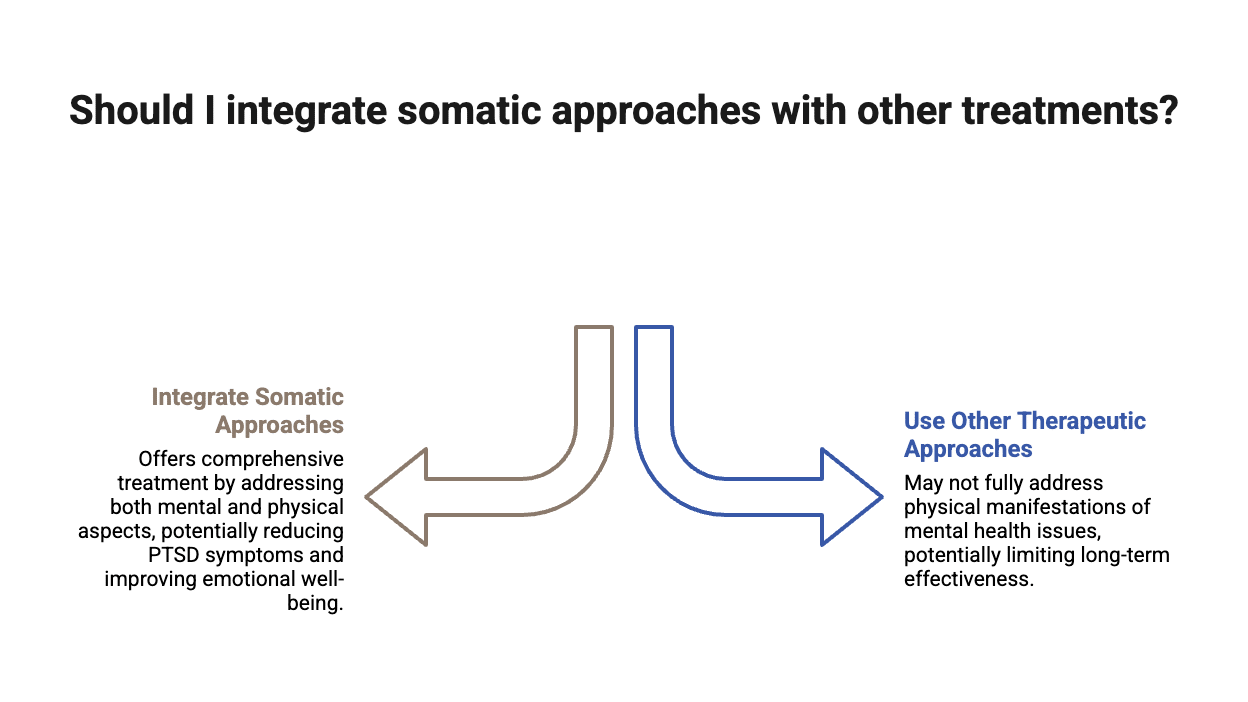
Integrating Somatic Approaches with Other Treatment
Somatic psychotherapy often works best alongside other therapeutic approaches. Many therapists integrate somatic techniques with evidence-based treatments for anxiety like cognitive behavioral therapy.
If you’re experiencing chronic pain, trauma symptoms, or other disorders alongside anxiety, a somatic therapist can help you develop a comprehensive treatment plan. These practitioners are trained to work with both mental health concerns and how they show up in the body.
For trauma survivors, particularly, combining somatic work with trauma-informed approaches offers valuable support. Traumatic experiences and traumatic memories often remain stored in the body even after talk therapy. Research on Somatic Experiencing shows significant reductions in PTSD symptoms and improved emotional well being through body-centered work.
We’ve found that somatic techniques work best when practiced regularly rather than only during crises. Clients who spend even five minutes daily on body awareness or breathing exercises develop stronger self-regulation skills over time. This consistent practice helps your nervous system reset more quickly when anxiety does arise.
The practice of somatic therapy recognizes that improved emotional regulation comes from addressing both mind and body. By learning to work with physical sensations, you develop practical exercises for long-term well being rather than just managing immediate symptoms.
If Sunday evening anxiety is disrupting your life, you don’t have to manage it alone. Working with a therapist who understands the connection between the body and emotions can accelerate your progress and provide personalized guidance.
Find Support for Anxiety in DC
At Therapy Group of DC, our therapists integrate body-based techniques with evidence-based approaches to help you find lasting relief from anxiety. Whether you’re dealing with work-related stress, relationship concerns, or general anxiety, we can help you develop the skills to calm your nervous system and feel more grounded. Contact our team to learn more about starting therapy.
This blog provides general information and discussions about mental health and related subjects. The content is not intended to be a substitute for professional medical advice, diagnosis, or treatment. Always seek the advice of your physician or other qualified health provider with any questions you may have regarding a medical condition.