

If you’ve ever felt consistently uncomfortable in your own body or found yourself constantly critiquing your appearance, you’re experiencing body image concerns—and you’re not alone. This guide is for anyone in Washington DC struggling with body image issues or wondering whether their thoughts about appearance have crossed into unhealthy territory. You’ll learn what constitutes negative body image, when concerns warrant professional support, and which evidence-based treatments can help.
Body image is characterized by how you perceive, think, and feel about your physical appearance, as well as how you behave in response to those perceptions. Research shows that body dissatisfaction affects a significant portion of the population, with concerns ranging from occasional self-consciousness to persistent preoccupation that interferes with daily life.
Body image concerns exist on a continuum. Most people experience some body dissatisfaction at times, but when negative thoughts become consuming or lead to avoidance of social situations, relationships, or activities you once enjoyed, it may be time to seek help. Several therapeutic approaches show strong effectiveness for addressing body image issues, with studies showing significant improvements in how people relate to their bodies and themselves.
What Is an Unhealthy Body Image?
Negative body image is characterized by distorted perceptions and critical thoughts about your appearance that affect your emotional well-being and daily functioning. An unhealthy body image goes beyond occasional dissatisfaction—it involves persistent negative beliefs about how you look that shape how you feel about yourself overall.
The key characteristics of negative body image include distorted perception (seeing your body differently than others see it, often focusing on body shape or body size), negative self-talk about physical appearance, emotional distress related to how you look, and avoidance behaviors like steering clear of mirrors, photos, or social events.
Body dissatisfaction develops from psychological, social, and cultural influences. Low self-esteem, perfectionism, and social comparison can predispose you to dissatisfaction with your physical appearance. In DC’s achievement-oriented culture where professional image matters, these pressures can feel particularly intense.
The Spectrum: From Mild to Severe Body Image Disturbance
Body image concerns fall into three main categories based on severity and impact. Mild body dissatisfaction involves occasional negative thoughts that don’t interfere with daily life. Moderate concerns occur when negative thoughts influence choices—avoiding certain clothing or declining social invitations. Body image disturbance describes a severe pattern where preoccupation with appearance significantly impacts quality of life and relationships.
Understanding this spectrum helps determine what kind of support might be most helpful for addressing body image issues.
Signs Your Body Image Concerns May Need Treatment
Several indicators suggest body image issues have progressed beyond normal self-consciousness. The primary warning signs include excessive time spent thinking about appearance, persistent avoidance patterns, compulsive checking behaviors, impact on relationships, physical consequences like excessive exercise or extreme dieting, and emotional toll including persistent sadness or anxiety tied to body perception.
If several of these patterns sound familiar, therapy for body image issues can provide effective strategies for breaking these cycles and developing a healthier relationship with your body.
What Causes Negative Body Image?
Body image concerns arise from three main categories: psychological factors, social influences, and cultural pressures.
Psychological Factors
Low self-esteem and perfectionism create vulnerability to body dissatisfaction. When self-worth depends heavily on external validation or meeting impossible standards, appearance becomes another domain where you feel you fall short. Anxiety and depression are commonly linked to negative body image, with each condition potentially reinforcing the other.
Social and Cultural Influences
Social interactions shape how we see ourselves. Negative comments about appearance—whether direct criticism or seemingly innocent observations—can leave lasting impacts. Bullying related to physical appearance during formative years often contributes to adult body image struggles.
Cultural norms and media portrayals of ideal body types lead many to internalize unrealistic standards. Social media has intensified these pressures, creating constant exposure to carefully curated images. Media literacy training helps individuals critically evaluate these images rather than accepting them as benchmarks for comparison.
We see how DC’s high-pressure culture affects body image concerns in our practice. Many clients tell us they feel evaluated not just on their work but on how they present themselves professionally. Understanding that these external pressures don’t define your worth is an important part of healing.
These causes naturally lead to an important question: how do body image concerns connect to eating disorders?
The Connection Between Body Image and Eating Disorders
Body image disturbance is closely intertwined with eating disorders, though not everyone with body image concerns develops an eating disorder.
Body dissatisfaction often precedes eating disorder development. Research indicates that negative body image, particularly the tendency to overestimate body size, can predict both the onset of disordered eating and increased relapse risk after eating disorder treatment. The desire to control one’s shape or weight makes addressing body image a crucial component of eating disorder recovery.
However, the timing matters. Body image work is often more effective after normalizing eating habits and achieving nutritional rehabilitation, as a malnourished brain doesn’t process information effectively.
What You Can Do About Body Image Issues
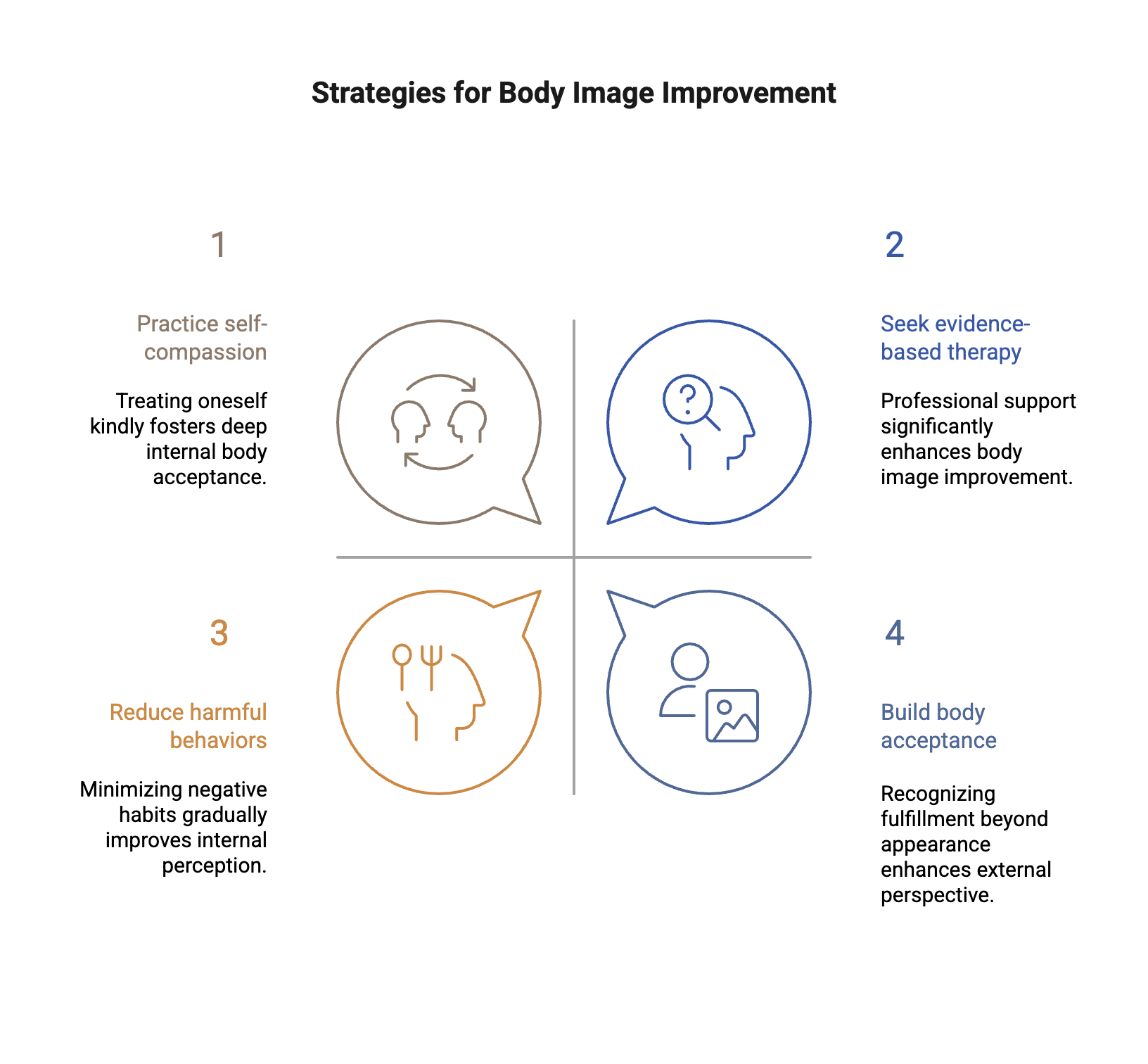
If you experience body image concerns, effective approaches include:
- Seek evidence-based therapy, including acceptance and commitment therapy, cognitive behavioral therapy, or dialectical behavior therapy
- Practice self-compassion by treating yourself with the same kindness you’d offer a friend
- Reduce harmful behaviors like excessive mirror checking, frequent weighing, or comparing yourself to others
- Build body acceptance through mindfulness and recognizing that you can live a fulfilling life without loving every aspect of your appearance
- Address underlying causes, including perfectionism, trauma, or experiences that shaped your relationship with your body
Research consistently shows that these strategies, particularly when combined with professional support, lead to meaningful improvements in body satisfaction and overall quality of life.
Treatment Approaches for Body Image Issues
Multiple therapeutic approaches have demonstrated effectiveness in helping people develop healthier relationships with their bodies. The best fit depends on the severity of body image concerns, personal preferences, and whether body image issues exist alongside other mental health conditions.
Psychotherapy Approaches
The primary therapeutic modalities for addressing body image include acceptance and commitment therapy, cognitive behavioral therapy, dialectical behavior therapy, and psychodynamic therapy.
Acceptance and Commitment Therapy (ACT)
Acceptance and commitment therapy has demonstrated strong effectiveness in helping individuals cope with body image concerns. ACT encourages you to develop a more flexible relationship with difficult experiences rather than focusing solely on changing negative thoughts.
ACT helps you identify your personal values and goals, shifting focus away from appearance-based concerns toward what matters most. The emphasis on body acceptance means acknowledging negative body image thoughts without letting them control your behavior.
Cognitive Behavioral Therapy (CBT)
Cognitive behavioral therapy shows strong research support for addressing body image concerns. CBT helps you identify and modify dysfunctional thoughts, feelings, and behaviors that contribute to negative body image.
CBT typically involves exposure-based work, where you gradually face situations you’ve been avoiding. This might include mirror exposure exercises, wearing avoided clothing, or participating in social situations you’ve stayed away from. Studies show these exposure exercises significantly reduce body dissatisfaction.
Dialectical Behavior Therapy (DBT)
Dialectical behavior therapy teaches mindfulness and distress tolerance skills that help manage negative feelings about body image and regulate emotions.
When working with clients on body image concerns, we find the therapeutic approach matters less than the fit. Some people respond well to structured exercises, while others benefit more from values-based work. What helps most is finding a therapist whose style resonates with your needs.
Complementary Therapeutic Approaches
Several additional evidence-based interventions can enhance body image work.
Mirror Exposure and Self-Compassion Interventions
Mirror exposure involves structured exercises where you learn to view your body neutrally rather than critically. Research shows mirror exposure significantly reduces body dissatisfaction.
Self-compassion interventions produce moderate to large improvements in body image by teaching you to treat yourself with kindness, combining mindfulness with body acceptance.
Psychoeducation and Media Literacy
Psychoeducation about the causes and consequences of negative body image helps you understand that body image concerns didn’t develop in a vacuum. Learning about societal influences, including weight bias and unrealistic media portrayals, can help you critically evaluate the standards you’ve internalized.
How Body Image Therapy Can Help
Body image therapy is characterized by its focus on cultivating body acceptance and improving overall quality of life by addressing the interconnected components of body image—perception, thoughts, emotions, and behaviors.
In therapy, you’ll work on reducing harmful behaviors that reinforce negative body image, challenging cognitive distortions, developing coping strategies for managing triggers, building self-compassion and body neutrality, and addressing underlying causes including trauma or perfectionism.
A pattern we observe in our practice is that clients often think they need to love their body to heal. In reality, many find that body neutrality—simply accepting your body without judgment—can be more realistic and sustainable than forcing positive feelings.
Finding the Right Therapeutic Approach
Research shows the therapeutic relationship predicts outcomes more strongly than the specific approach used. While different modalities use different techniques, finding a therapist in DC you feel comfortable with often matters more than the therapy type.
Treatment typically involves weekly sessions over several months. People who engage in therapy for body image issues experience meaningful improvements in body satisfaction, self-esteem, and overall quality of life.
Body image work requires patience—patterns developed over years don’t shift overnight. But with professional support and evidence-based treatment, developing a healthier relationship with your body is possible.
Ready to Get Started?
If you’re struggling with body image concerns and want support from therapists who understand both the clinical and cultural dimensions of these issues, we’re here to help.
This blog provides general information and discussions about mental health and related subjects. The content is not intended to be a substitute for professional medical advice, diagnosis, or treatment. Always seek the advice of your physician or other qualified health provider with any questions you may have regarding a medical condition.