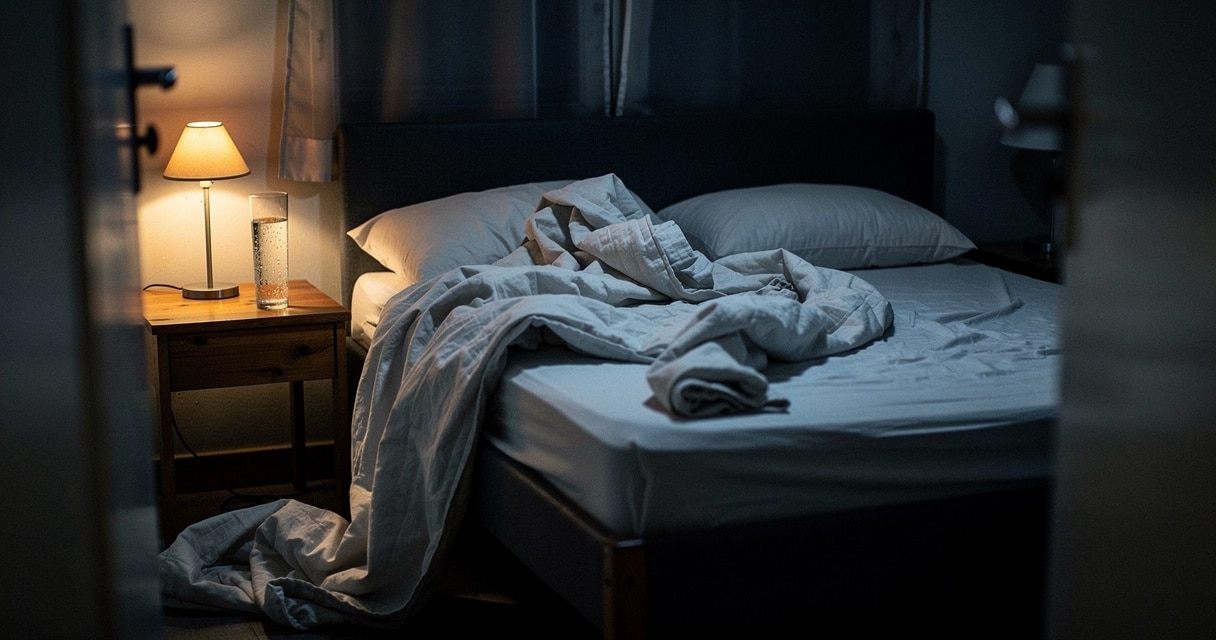

Nocturnal panic attacks wake you from a dead sleep with a pounding heart, chest tightness, and the terrifying sense that something is very wrong. If you’ve bolted upright at 2 a.m. gasping for air, convinced you’re having a heart attack — you’re not dying, and you’re not alone. Nocturnal panic attacks affect a significant percentage of people with panic disorder, with research on anxiety disorders estimating that up to 65-70% of people with panic disorder experience panic attacks at night at some point. Understanding what’s happening in your body during these episodes — and knowing they aren’t dangerous — is the first step toward making them stop.
What Is a Nighttime Panic Attack?
A nocturnal panic attack is a sudden episode of intense fear that erupts during non-REM sleep, usually during the transition between light sleep and deep sleep. Unlike nightmares, nocturnal panic attacks don’t come from a dream. You wake up already in the grip of panic — racing heart, difficulty breathing, chest pain, sweating — with no scary image to point to. The whole episode typically peaks within 10 minutes, though it can feel much longer when you’re in the middle of it.
Nocturnal panic attacks produce the same symptoms as daytime panic attacks: rapid heartbeat, shortness of breath, chest pain, dizziness, tingling, and an overwhelming fear of losing control or dying. The key difference is that nocturnal panic attacks happen without a conscious trigger. Your nervous system fires its alarm while your thinking brain is offline.
We see nocturnal panic attacks most often in clients who’ve been managing anxiety all day — particularly DC professionals who spend their waking hours in high-performance mode. The panic doesn’t disappear just because you fall asleep. It waits.
That pattern makes sense when you understand how your body processes stress. Daytime coping strategies — staying busy, problem-solving, pushing through — don’t operate during sleep. The nervous system continues running its threat-detection software even while you rest.
Why Do I Wake Up in the Middle of the Night with Anxiety?
Nocturnal panic attacks happen when your body’s fight-or-flight response activates during sleep, often during transitions between sleep stages. Several factors can set the stage for panic attacks at night:
Nervous System Activation During Sleep
Your brain doesn’t fully power down at night. During the shift from light sleep to deep sleep, subtle changes in heart rate, breathing, and brain chemistry can trigger the same alarm system that produces daytime panic attacks. For people with panic disorder, the nervous system is already primed to overreact to normal physical changes — and those changes happen every night during sleep stages.
Cortisol and Stress Hormones
Cortisol naturally rises in the early morning hours, peaking around 3–4 a.m. For people already carrying high stress loads, this cortisol surge can push the nervous system past its threshold. In a city like DC, where the baseline stress level runs high, nocturnal panic attacks often cluster in the pre-dawn hours when cortisol is climbing.
Sleep Disorders and Physical Conditions
Obstructive sleep apnea can mimic or trigger nocturnal panic attacks. When breathing pauses during sleep, your body responds with a burst of adrenaline — which feels identical to panic. Other sleep disorders, including sleep disturbances from poor sleep patterns, can also increase susceptibility to nocturnal panic. If your panic attacks at night come with snoring, gasping, or daytime exhaustion, ruling out sleep apnea is an important first step.
Brain Chemistry and Mental Health Conditions
Imbalances in brain chemistry related to anxiety disorders, mood disorders, and mental health conditions like post traumatic stress disorder and generalized anxiety disorder can increase vulnerability to both nocturnal and daytime panic attacks. Genetic factors, childhood experiences, and personality traits all play a role in who develops panic disorder — and by extension, who experiences nocturnal panic attacks.
Understanding the causes doesn’t make the experience less frightening in the moment. But it does shift the relationship with these episodes from “something is terribly wrong with me” to “my body is overprotecting me.”
Nocturnal Panic Attacks vs. Night Terrors: How They Differ
Nocturnal panic attacks and night terrors look similar from the outside but are distinct experiences. Night terrors happen during deep sleep and involve screaming, thrashing, or sitting up — often with no memory of the episode afterward. Nocturnal panic attacks, by contrast, involve a clear awakening. You know you’re awake. You remember everything.
Here’s what separates them:
- Awareness: During nocturnal panic attacks, you wake up fully conscious. During night terrors, you remain in a partial sleep state.
- Memory: People experiencing nocturnal panic attacks remember the episode clearly. Night terrors typically leave no memory.
- Age: Night terrors are most common in children under 5. Nocturnal panic attacks occur in both children and adults, with peak onset in early adulthood.
- Trigger: Nocturnal panic attacks stem from anxiety and panic disorder. Night terrors are classified as a separate sleep disorder — a parasomnia — involving sleep terrors during deep sleep transitions.
- Physical symptoms: Both produce racing heart and sweating, but nocturnal panic attacks also bring the classic panic symptoms: chest pain, difficulty breathing, fear of dying or losing control.
If you’re unsure which you’re experiencing, a sleep medicine specialist can help distinguish between the two — and rule out nightmare disorder or other sleep disorders that can disrupt rest.
Are Nocturnal Panic Attacks Life Threatening?
No — nocturnal panic attacks are not dangerous, even though they can feel life-threatening in the moment. The physical panic symptoms — chest pain, rapid heartbeat, difficulty breathing — are produced by adrenaline, not by a heart attack or medical emergency. Your body is running its emergency response system. The sensations are real, but they aren’t harmful.
If you’re experiencing chest pain and you’re not sure whether it’s panic or a cardiac event, err on the side of going to the emergency room. Nocturnal panic attacks are not dangerous — but heart attacks are, and the symptoms overlap significantly. No therapist or blog post should talk you out of seeking emergency medical care when you’re unsure. Get cleared first. Then work on the panic.
That said, the fear of having a heart attack during nocturnal panic is extremely common. Many people end up in the emergency room after their first nocturnal panic attack, convinced something is physically wrong. Getting a medical evaluation to rule out cardiac issues and obstructive sleep apnea is reasonable — and once those are cleared, the focus can shift to managing the panic itself.
One thing we tell clients early on: the fact that nocturnal panic attacks feel dangerous is actually part of how panic works. Your brain interprets normal physical changes as threatening, which creates more physical symptoms, which creates more fear. Breaking that cycle is the core of treatment.
The real danger isn’t the panic attacks themselves — it’s what happens around them. Sleep avoidance, where you start dreading bedtime or staying up late to avoid nocturnal panic, creates a secondary problem. Sleep deprivation worsens anxiety symptoms, which makes future panic attacks more likely. Frequent nocturnal panic attacks can trap you in a cycle where the fear of panic becomes more disabling than the panic itself.
How Do You Stop a Nocturnal Panic Attack?
Stopping a nocturnal panic attack in the moment requires calming your nervous system — not fighting the panic. The more you resist the experience, the longer it lasts. Here are techniques that work when panic strikes during sleep:
During the Episode
Label What's Happening
Naming the experience sounds simple, but it activates your prefrontal cortex — the part of your brain that can evaluate whether the threat is real. That shift from “I’m dying” to “This is panic” is the single most important move.
Use Slow Diaphragmatic Breathing
The exhale is the key — a longer exhale activates your parasympathetic nervous system, which is the brake pedal to panic’s accelerator.
Ground Yourself with the 3-3-3 Rule
Progressive muscle relaxation is another option: tense and release muscle groups from your feet upward. Both approaches interrupt the physical symptoms of nocturnal panic by giving your body a competing signal.
Tired of Waking Up in Panic?
Our DC therapists specialize in anxiety and panic disorder treatment — including the kind that shows up at 3 a.m. You don't have to keep white-knuckling through these nights alone.
Preventing Nocturnal Panic Attacks Long-Term
Stopping a nocturnal panic attack in the moment matters, but preventing nocturnal panic attacks from recurring requires addressing the root causes. Here’s what the evidence supports:
Cognitive Behavioral Therapy (CBT) is the gold standard for treating panic disorder, including nocturnal panic attacks. Research on CBT for panic disorder shows that therapy combining cognitive restructuring with exposure techniques produces significantly stronger outcomes than behavioral techniques alone. CBT helps you reinterpret the physical changes that trigger panic attacks — so a racing heart at night becomes “normal sleep transition” rather than “emergency.”
Psychodynamic therapy offers a different path. Studies on panic-focused psychodynamic psychotherapy show a 73% response rate — comparable to CBT — by helping you understand the emotional meaning beneath the panic. A Swedish preference trial found that while CBT produced faster initial improvement, psychodynamic therapy showed better outcomes at 6, 12, and 24-month follow-ups. Sometimes the panic attacks are the surface; what’s driving them runs deeper.
Acceptance and Commitment Therapy (ACT) with interoceptive exposure has shown strong results, with recent research showing strong results for panic disorder. ACT helps you change your relationship with panic sensations rather than trying to eliminate them.
Medication can help when panic attacks are frequent and severe. Selective serotonin reuptake inhibitors (SSRIs) reduce the brain’s panic response over time. Most people with panic disorder see improvement within 8 to 24 sessions of psychotherapy, and many notice changes within the first few weeks.
We often start with both a body-level approach — breathing, grounding, sleep hygiene — and a therapy approach simultaneously. The body-level work gives you something to do tonight. The therapy work changes why the panic keeps showing up.
Sleep hygiene adjustments also make a difference: maintaining consistent sleep patterns, limiting caffeine and alcohol (both can trigger panic attacks), implementing a digital curfew 60 minutes before bed, and keeping your bedroom cool and dark. A healthy diet and regular relaxation exercises during the day lower your overall nervous system activation, making nocturnal panic attacks less likely.
When to See a Therapist vs. When to See a Doctor
If nocturnal panic attacks are disrupting your sleep or daily life, both paths are worth exploring. See a doctor first if you experience snoring or gasping during sleep (possible obstructive sleep apnea), chest pain that occurs outside of panic episodes, or any physical symptoms that don’t match typical panic attack symptoms. A sleep medicine evaluation can rule out sleep disorders that mimic or worsen nocturnal panic.
See a therapist if you’ve had more than one or two nocturnal panic attacks, if you’re developing sleep avoidance or dread around bedtime, if daytime anxiety is also present, or if the panic attacks are getting more frequent. Research shows that treatment gains from panic-focused therapy hold steady a year later, with nearly two-thirds (about 65%) of people no longer meeting the diagnostic criteria for panic disorder after successful treatment.
You don’t need to wait until nocturnal panic attacks are happening every night. Early intervention — before sleep avoidance and chronic sleep deprivation set in — produces better outcomes.
You Don't Have to Keep Dreading Bedtime
Our Dupont Circle therapists treat panic disorder every day — including the kind that wakes you up at night. Effective, evidence-based approaches exist, and most people feel improvement within weeks.
Last updated: March 2026
This blog provides general information and discussions about mental health and related subjects. The content is not intended to be a substitute for professional medical advice, diagnosis, or treatment. Always seek the advice of your physician or other qualified health provider with any questions you may have regarding a medical condition.