Trust Issues After a Breakup: A Timeline for Healing (And When to Seek Help)

Trust issues after a breakup are a normal response to emotional pain and loss. Whether your romantic relationship ended due to betrayal, communication breaks, or growing apart, feeling guarded about trusting others again is part of healing. Most people gradually rebuild their ability to trust with time, healthy coping, and support.
What Are Trust Issues After a Breakup?

Trust issues show up as heightened fear or reluctance to be vulnerable in new relationships. After a breakup, you might question people’s intentions, avoid emotional connection, or feel anxious about being hurt again. These patterns stem from the emotional wounds left by your former partner.
Common signs include:
- Overanalyzing new romantic interests for “red flags”
- Feeling uncomfortable sharing personal thoughts or feelings
- Comparing every new person to your ex
- Expecting people to disappoint you
- Avoiding dating entirely out of fear
Research shows breakups trigger genuine psychological distress, including symptoms similar to grief, anxiety, and depression. The intensity depends on how long the relationship lasted, whether you saw a future together, and how it ended. If there was cheating, gaslighting, or broken trust in your entire relationship—especially in a toxic relationship—the emotional injury runs deeper and healing takes longer.
In our practice, we often hear clients say they feel “broken” or worry something is wrong with them for struggling to trust again. We remind them this is a protective response—your mind is trying to keep you safe. The challenge is learning when that protection has become a barrier to connection and well-being.
The Timeline: What to Expect as You Heal
Everyone heals at their own pace, but understanding common patterns can help you recognize progress and know what’s totally normal as you work on rebuilding trust.
Weeks 1-4: The Immediate Aftermath
The first month is about survival, not healing. You’re likely experiencing intense emotions—sadness, anger, confusion, or even relief mixed with guilt. This is when trust feels most shaken because the pain is fresh.
During this phase:
- Focus on basic self-care: sleep, eating, moving your body
- Lean on friends and family members for support
- Avoid making big decisions about your next relationship
- Give yourself permission to grieve what was lost
Research confirms the early weeks after a breakup activate stress responses in the brain and body. Your cortisol levels may be elevated, sleep disrupted, and emotional regulation harder than usual. This isn’t weakness—it’s biology. In fact, heartbreak activates the same brain regions as physical pain, which is why the hurt can feel so intense and all-consuming.
Months 2-6: Processing and Reflection
This is when the real work of rebuilding trust begins. The acute pain starts to ease, and you have more mental space to process what happened. Many people ask: “What went wrong?” “What do I want in my next relationship?” “How do I avoid repeating patterns?”
Healthy reflection involves:
- Acknowledging your role in the relationship without excessive self-blame
- Recognizing patterns you want to change
- Identifying what you learned about your needs and boundaries
- Practicing self-compassion and self love as you process painful memories
This is also when trust issues may feel most frustrating. You might feel ready to move forward but notice yourself pulling back when someone shows interest. That push-pull is normal. You’re learning to trust your own judgment again, which is foundational for trusting someone else. Set small, achievable goals—like having coffee with a new acquaintance or sharing something personal with a friend—to gradually rebuild trust and confidence.
Studies show people who use active coping strategies—like talking to friends, journaling, or engaging in therapy—recover more effectively than those who avoid processing emotions.
We see many clients during this phase who feel stuck. They recognize their trust issues but don’t know how to change them. Often, the breakthrough comes from small, calculated risks: sharing something vulnerable with a friend, going on a casual date without expectations, or simply acknowledging the fear without letting it dictate every choice.
Months 6-12: Gradual Opening
By this point, most people notice meaningful shifts. You think about your former partner less often. A new relationship feels less loaded with fear. You’re able to recognize green flags—positive traits like reliability, emotional availability, and genuine kindness—rather than only scanning for red flags. Trust is built gradually by sharing small vulnerabilities and observing consistency in another person’s actions, not by forcing yourself to open up all at once.
This phase isn’t about being “over it” completely. It’s about feeling more confident in your ability to handle whatever happens next. Trust in yourself grows, which makes trusting others feel less risky.
Research on post-breakup adjustment shows traits like optimism, self-esteem, and emotional resilience significantly predict how quickly people rebuild trust and feel ready for future relationships. If you naturally have these traits, you may heal faster. If you don’t, you can develop them with practice and support.
What Are the Stages of a Breakup?
Breakups often follow a predictable emotional arc, though not everyone experiences every stage in order. Understanding these stages can help you make sense of where you are:
- Denial/Shock – “This isn’t really happening” or minimizing the finality
- Anger – Directed at your ex, yourself, or the situation
- Bargaining – Wondering “what if” or trying to win them back
- Sadness/Grief – Deep mourning for what you’ve lost
- Acceptance – Letting go and beginning to imagine a new life
The relationship between these stages and trust is important: you can’t rebuild trust until you’ve processed your grief. If you’re stuck in anger or still bargaining, your heart isn’t ready to be vulnerable with someone new. That’s not failure—it’s just where you are.
How to Know if It’s Really Over After a Breakup?
You know it’s really over when staying together causes more pain than moving apart. Sometimes breakups happen suddenly; other times, the end unfolds slowly over months of unmet needs, repeated hurt, or growing in different directions.
Signs the old relationship truly can’t be repaired:
- One or both partners have checked out emotionally
- There’s a pattern of broken promises without meaningful change
- You feel relief rather than panic when you imagine life apart
- Core values or life goals have become incompatible
- Respect has eroded to the point where you or your partner feels consistently belittled
After infidelity or major broken trust, some couples do rebuild through intensive work in couples therapy. But repairing trust requires both people to be fully committed to the process. If that commitment isn’t mutual, trying to force it prolongs suffering. It’s also important to understand that after trust is broken, the old relationship cannot exist anymore—a new relationship must be created with different patterns and agreements.
The question many people ask next: “How do I know if I should give it another try?” If you find yourself repeatedly cycling through breakups and reconciliation without addressing the deeper issues, that pattern itself is your answer.
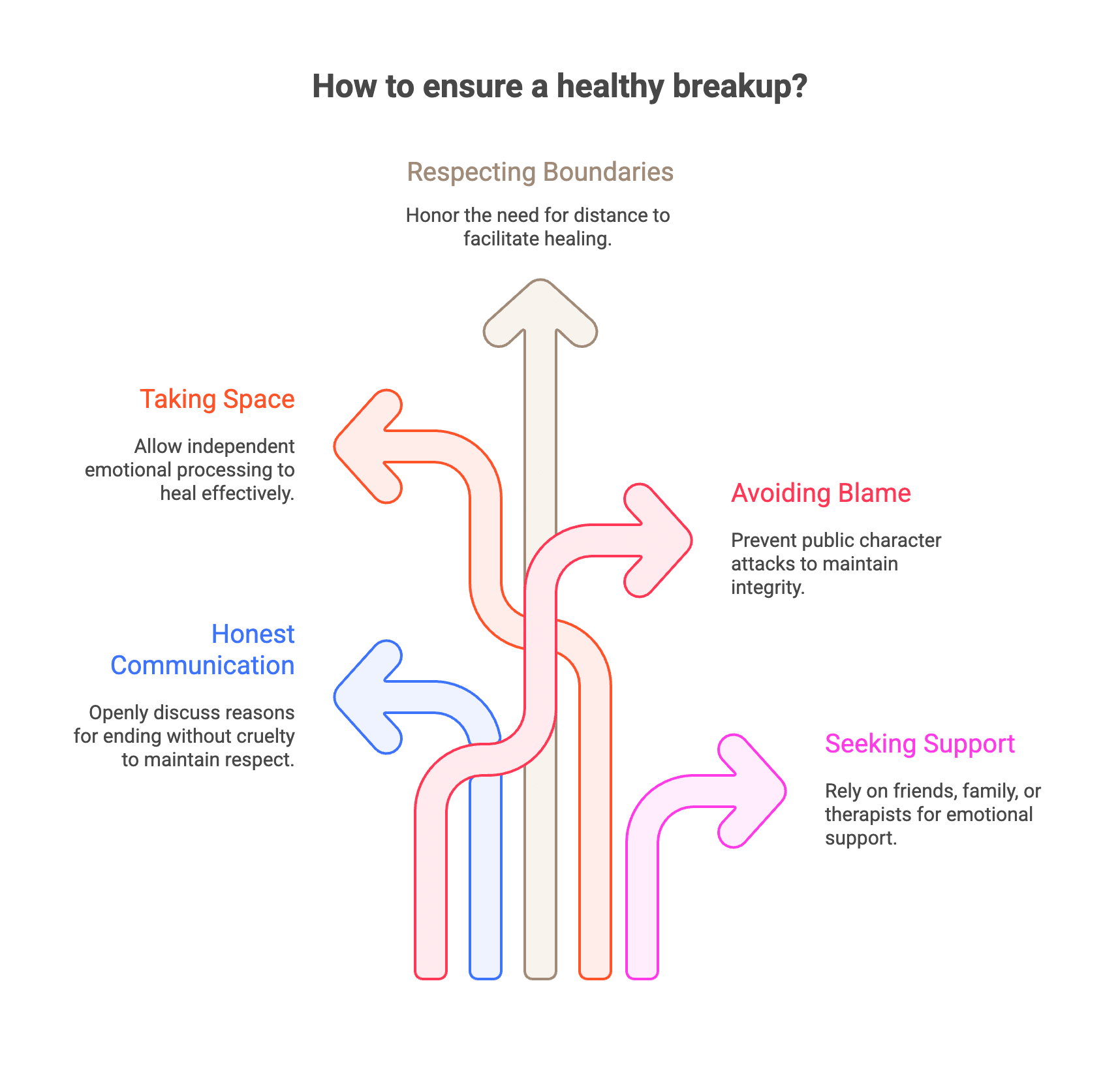
What Does a Healthy Breakup Look Like?
A healthy breakup prioritizes respect, honesty, and clear boundaries—even when emotions run high. While no breakup feels good, how you navigate the end of a romantic relationship affects your healing and future trust.
Key elements of a healthy breakup:
- Honest communication about why it’s ending (without cruelty)
- Taking space from your ex to process emotions independently
- Respecting boundaries if one person needs distance
- Avoiding blame games or public character attacks
- Seeking support from friends, family, or a therapist rather than using your ex as your emotional support person
Even in healthy breakups, trust takes time to rebuild. But when you feel the relationship ended with integrity, you’re less likely to carry deep cynicism into your next chapter. You can acknowledge the pain while still believing in the possibility of love.
What makes a breakup unhealthy: staying in contact when it’s hurting your healing, using intimacy to “stay friends” when one person wants more, or repeatedly crossing boundaries because you “can’t let go.” These patterns keep emotional wounds open and make repairing trust much harder.
When Should You Seek Professional Help?
Most people navigate breakup pain without therapy, but professional support accelerates healing and helps prevent long-term trust issues. Consider reaching out to a therapist if:
- You’re experiencing symptoms of depression or anxiety that interfere with daily life
- It’s been 6+ months and you feel stuck in intense grief or anger
- You notice yourself repeating unhealthy relationship patterns
- Trust issues are preventing you from forming any meaningful connections
- You’re using substances or other destructive coping mechanisms
- Past trauma is getting triggered by the breakup
Therapy offers a safe space to explore where your trust issues come from. Sometimes, difficulty trusting after a breakup isn’t just about that relationship—it can connect to deeper attachment patterns formed in childhood or past betrayals. A skilled therapist can help you recognize these patterns and develop healthier ways of relating. They can also help you take small, gradual steps to build trust again when you’re ready to date.
Cognitive Behavioral Therapy (CBT)—an evidence-based approach that helps you identify and change negative thought patterns—is particularly effective for reframing beliefs like “I’ll never find someone I can trust” or “Everyone will hurt me eventually.” You can learn more about types of therapy for anxiety and related concerns, as many of these approaches also address trust issues. Other approaches like Emotionally Focused Therapy or psychodynamic therapy can help explore the emotional roots of trust struggles.
If you’re considering reconciliation, couples therapy can provide a structured environment to assess whether rebuilding is possible. Effective couples therapy techniques focus on restoring safety, improving communication, and creating consistency—all essential for repairing trust after broken promises or betrayal.
Seeking help isn’t a sign you’re broken. It’s a sign you’re serious about healing and creating the kind of relationships you deserve.
We find that clients who reach out for support often wish they’d done so sooner. The courage it takes to ask for help is the same courage needed to trust again—both require vulnerability and belief in the possibility of healing.
Getting Support in Washington DC
If you’re in DC and struggling with trust issues after a breakup, our therapists specialize in helping people heal from relationship pain and build healthier patterns. In a city where relationships often take a backseat to demanding careers, we understand the unique challenges you’re facing.
We offer both individual therapy and couples therapy (if you’re considering reconciliation or working through a difficult separation). Connect with our relationship specialists to take the first step toward rebuilding trust—in yourself and in future relationships.
This blog provides general information and discussions about mental health and related subjects. The content is not intended to be a substitute for professional medical advice, diagnosis, or treatment. Always seek the advice of your physician or other qualified health provider with any questions you may have regarding a medical condition.