What to Expect in Couples Therapy: From Your First Session to Real Change

Last updated: December 2024
Starting couples therapy is a big step. Couples therapy is a joint process where both partners collaborate with a trained mental health professional to enhance communication and strengthen their relationship. Understanding what happens during couples therapy sessions—and what’s expected of you—can help you get the most from the experience.
This guide is for couples who are new to therapy, considering starting therapy together, or simply curious about what the process entails.
Setting realistic expectations can reduce anxiety and help you get the most out of your couples therapy experience.
What to Expect from the First Session of Couples Therapy

Your first couples therapy session focuses on understanding your relationship and establishing trust with your therapist. Most couples feel nervous before their first couples therapy session, which is completely normal.
During your initial session, your therapist will ask questions about your relationship history, what brought you to therapy, and what you’re each hoping to achieve. Many mental health professionals use questionnaires to better understand your relationship and track progress over time.
One of the most important things you’ll clarify early on is your goal for therapy. Some couples want to improve their relationship, while others want help deciding whether to stay together. Research shows that couples who share goals tend to have better outcomes, so being honest about what you’re hoping for—even if it differs from your partner’s goal—helps guide the process effectively.
In our practice, we often see couples who’ve never discussed their individual goals for therapy before the first couples therapy session. When both partners clearly state what they’re hoping to achieve, we can tailor treatment to meet those needs and help you find common ground.
A trained professional remains neutral and supports both partners equally. Therapy isn’t about fixing one person or taking sides—it’s about helping you both understand patterns in your relationship and develop healthier ways of relating to each other.
What Happens in Your First Few Sessions
The first few sessions establish the foundation for your work together. Your couples therapist will help you identify the patterns that contribute to your relationship challenges and begin building new communication skills.
Ways to Actively Participate
Both partners’ active participation matters from the start. Research consistently shows that when both people actively engage in therapy and expect the relationship to improve, therapy tends to be more successful. This means:
- Attending therapy sessions regularly
- Being honest about your feelings and concerns
- Listening to your partner’s perspective, even when it’s difficult
- Practicing new relationship skills between sessions
- Staying open to seeing your relationship differently
It’s normal for partners to have different expectations about couples therapy at the start. One person might be eager and hopeful while the other feels skeptical. Your therapist will help you work through these differences and create shared goals for your sessions.
Building Emotional Safety
Creating a safe space is essential in couples therapy. Your therapist will establish ground rules for communication during sessions and help both of you express difficult feelings without the conversation escalating into conflict.
Many couples discover that therapy gives them their first opportunity to truly hear each other without defensiveness getting in the way. This emotional safety becomes foundational for deeper work in future sessions.
What Happens During Couples Therapy Sessions
Couples therapy typically focuses on several key areas:
Understanding problems differently: Your therapist helps you see relationship issues as patterns that both partners contribute to, rather than one person’s fault. This shift in perspective—from blame to understanding—often marks the first step toward positive change.
Improving communication: You’ll learn communication skills to talk and listen to each other more effectively, especially during disagreements. Communication problems are common reasons couples seek therapy, and developing better communication skills creates a foundation for addressing other relationship issues. Your therapist may teach you structured communication techniques, such as taking turns speaking and listening without interruption, to help you navigate challenges more effectively.
Managing emotions and conflict: Therapy helps you handle strong feelings in healthier ways and express emotions you may have been avoiding. Effective conflict resolution strategies—not eliminating conflict entirely, but learning to navigate challenges productively—become central to your work together.
Building on strengths: Your couples therapist will help you recognize what’s working well in your relationship and build on those positive aspects. Even couples experiencing relationship challenges have strengths worth celebrating and expanding.
Different Approaches to Couples Therapy
Experienced couples therapists use various evidence-based approaches. Two common methods include:
Emotionally Focused Therapy (EFT): Focuses on understanding the emotional bonds between partners and healing attachment injuries.
The Gottman Method: Based on decades of research about what makes relationships succeed or fail. The Gottman Method helps couples manage conflict, increase intimacy, and build shared meaning in their marriage or relationship.
Your licensed marriage and family therapist will explain their approach and create a treatment plan tailored to your specific needs. What matters most isn’t which specific method your therapist uses, but whether you feel comfortable with them and trust the process.
Some couples may also benefit from individual sessions alongside couples therapy, particularly when one partner is dealing with personal concerns that affect the relationship.
How Long Does Couples Therapy Take?
The length of therapy varies depending on your goals and concerns. Some couples benefit from short-term work (8-12 sessions), while others need longer-term support. Many couples start with weekly therapy sessions for several months before spacing them out.
Most couples see some improvement within the first few months if both partners remain engaged. Research shows that when improvement occurs in therapy, it often happens most strongly in the early sessions. Your therapist will work with you to determine what timeline makes sense for your situation.
Future sessions build on the foundation established early in treatment. As you progress, therapy often shifts from crisis management to maintaining positive change and developing deeper intimacy.
What Not to Do During Couples Therapy
Understanding what doesn’t help in therapy is just as important as knowing what does:
Don’t expect your therapist to take sides. A licensed marriage and family therapist maintains neutrality and works to understand both perspectives.
Don’t wait for your partner to change first. Real change happens when both people take responsibility for their part in relationship patterns.
Don’t hold back important information. Being honest—even about uncomfortable topics like your sex life, past experiences, or concerns about the relationship—allows your therapist to help more effectively. Expressing your feelings openly, even when difficult, is essential for progress.
Don’t skip practicing between sessions. The work you do outside of therapy sessions matters as much as what happens in the therapy room.
Don’t expect instant results. Meaningful change takes time. Feeling uncomfortable or even feeling stuck at times is completely normal and often part of the process.
What Percent of Couples Divorce After Couples Therapy?
Most couples who want to improve their relationship and stay committed to the therapy process see positive results. Research shows that couples who enter therapy with the goal of improving their relationship have high success rates—over 90% remain together six months after completing therapy.
However, it’s important to understand that success in couples therapy doesn’t always mean staying together. For some couples, therapy helps them recognize that separation is the healthiest choice for both individuals. When one partner wants to improve the relationship while the other wants to decide whether to stay, therapy can provide clarity and support for whatever decision makes sense.
Many couples experience a decline in relationship satisfaction before they start couples therapy. After beginning treatment, most couples find that their relationship stabilizes and then improves over time.
What Outcomes Can You Expect?
Many couples see improvements in communication, conflict resolution, and overall relationship satisfaction through couples therapy. Research shows that approximately 70-80% report improvement compared to those who don’t seek treatment, with gains in various relationship challenges including communication issues, life transitions, trust concerns, and when one partner is dealing with mental health concerns or external stressors.
However, positive change requires genuine willingness from both partners to:
- Be honest and open during sessions about your feelings
- Examine your own role in relationship patterns
- Practice new communication skills consistently
- Stay engaged even when therapy feels uncomfortable
- Follow through on your treatment plan
When couples approach marriage counseling or couples counseling as a team rather than adversaries, they create the conditions for meaningful change. The therapeutic relationship between you, your partner, and your couples therapist becomes a safe space where healing can happen.
We’ve seen countless couples make remarkable progress when they commit to the process together. The couples who benefit most are those willing to be vulnerable, challenge old patterns, and trust that change is possible—even when they initially feel skeptical.
Making Couples Therapy Work for You
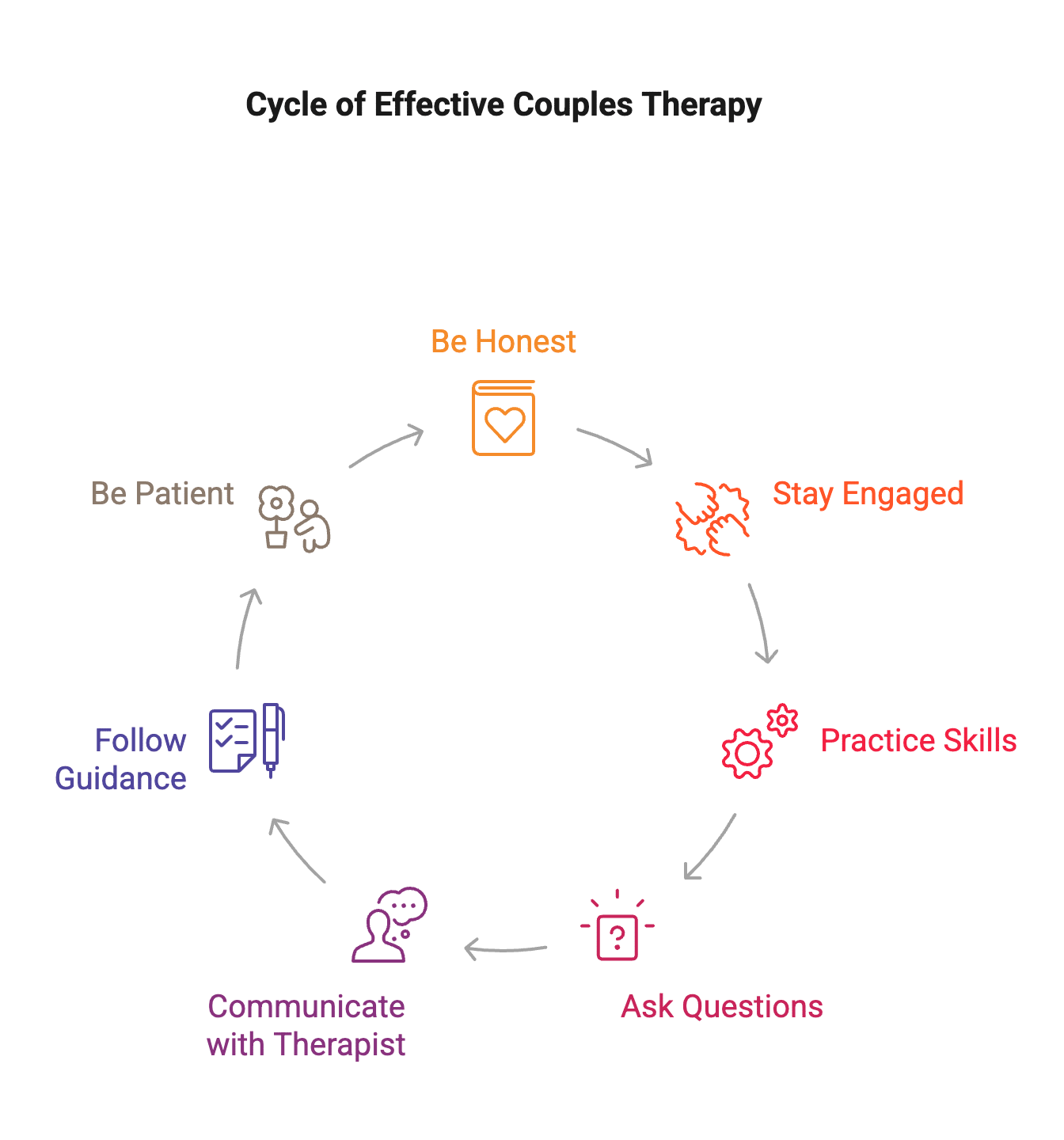
To get the most from marriage counseling or couples counseling:
Be honest about your concerns, goals, and feelings—even the difficult ones
Stay engaged even when sessions feel uncomfortable or bring up painful emotions and feelings
Practice the communication skills and relationship skills you learn between therapy sessions
Ask questions if something isn’t working or doesn’t make sense
Talk to your therapist about concerns regarding the therapy itself
Therapists may assign take-home exercises to help couples apply new skills between sessions. Committing to following the therapist’s guidance outside of sessions is very important.
Remember that change takes time. Relationship patterns developed over months or years won’t shift overnight. Be patient with yourself, your partner, and the process.
Questions to Ask Your Couples Therapist
Don’t hesitate to ask your mental health professional:
- What approach to therapy do you use?
- How will we measure progress?
- What should we work on between sessions?
- How long do you expect our treatment to take?
- What happens if we disagree about our goals?
- How do you handle situations where one partner feels you’re taking sides?
Finding a good fit with your therapist matters. If you don’t feel comfortable after a few sessions, it’s okay to discuss this or consider finding a different therapist who better matches your needs.
The Path Forward
Starting couples therapy demonstrates your commitment to your relationship and your well-being. Whether you’re navigating specific relationship issues, feeling stuck in repetitive conflicts, or wanting to strengthen an already solid foundation, therapy offers tools and support for positive change.
Remember that couples therapy is a collaborative process. Your therapist guides you, but the work you and your partner do—both in sessions and between them—creates lasting change. With genuine willingness to engage, honest communication about your feelings, and active participation from both partners, many couples discover new ways of connecting and building a better relationship together.
Start Couples Therapy in Washington DC
If you’re ready to take the first step, our experienced couples therapists in Dupont Circle can help. We work with straight and LGBTQ couples at all stages—whether you’re dating, engaged, married, or navigating challenges unique to your relationship.
Contact Therapy Group of DC to schedule an initial session and begin your journey toward real change.
This blog provides general information and discussions about mental health and related subjects. The content is not intended to be a substitute for professional medical advice, diagnosis, or treatment. Always seek the advice of your physician or other qualified health provider with any questions you may have regarding a medical condition.