

Struggling to conceive can feel isolating and overwhelming. An infertility therapist provides specialized mental health support for individuals and couples navigating the emotional challenges of fertility struggles, including anxiety, depression, relationship strain, and difficult decisions about treatment options. Research shows that psychotherapy reduces stress and anxiety for people dealing with infertility while also teaching healthy coping mechanisms during this challenging time.
Infertility therapists are mental health professionals with specific training in reproductive health and the emotional impact of fertility challenges. These therapists understand the unique psychological burden of trying to conceive—whether you’re facing your first round of fertility treatment or navigating complex decisions about third-party reproduction through donor egg, donor sperm, or gestational carriers.
What does a fertility therapist do?

Infertility therapists provide a safe space to process the grief, anger, frustration, and isolation that many couples experience while trying to conceive. These mental health professionals have knowledge of reproductive medicine and the specific challenges patients face during fertility treatments.
An infertility therapist helps you manage the emotional rollercoaster that comes with each cycle—the hope before testing, the devastation when you don’t see a positive pregnancy test, and the anxiety about what comes next. Cognitive behavioral therapy and mindfulness are therapeutic approaches commonly used to help individuals develop healthy ways to cope with these intense feelings.
Fertility counseling also addresses the interpersonal aspects of infertility. Many couples find that fertility struggles create tension in their relationship. Therapists help partners communicate more effectively about difficult decisions, from whether to continue fertility treatment to how to handle pregnancy announcements from friends and family. For those experiencing significant relationship strain from toxic patterns, specialized support can help you rebuild connection during this difficult time.
In our Dupont Circle practice, we often work with couples navigating fertility challenges who feel completely alone in their struggle. The isolation can be profound—friends are getting pregnant easily while you’re facing another failed treatment cycle. We’ve learned that having a supportive space to express these feelings without judgment helps people feel less overwhelmed and more equipped to handle whatever comes next in their fertility process.
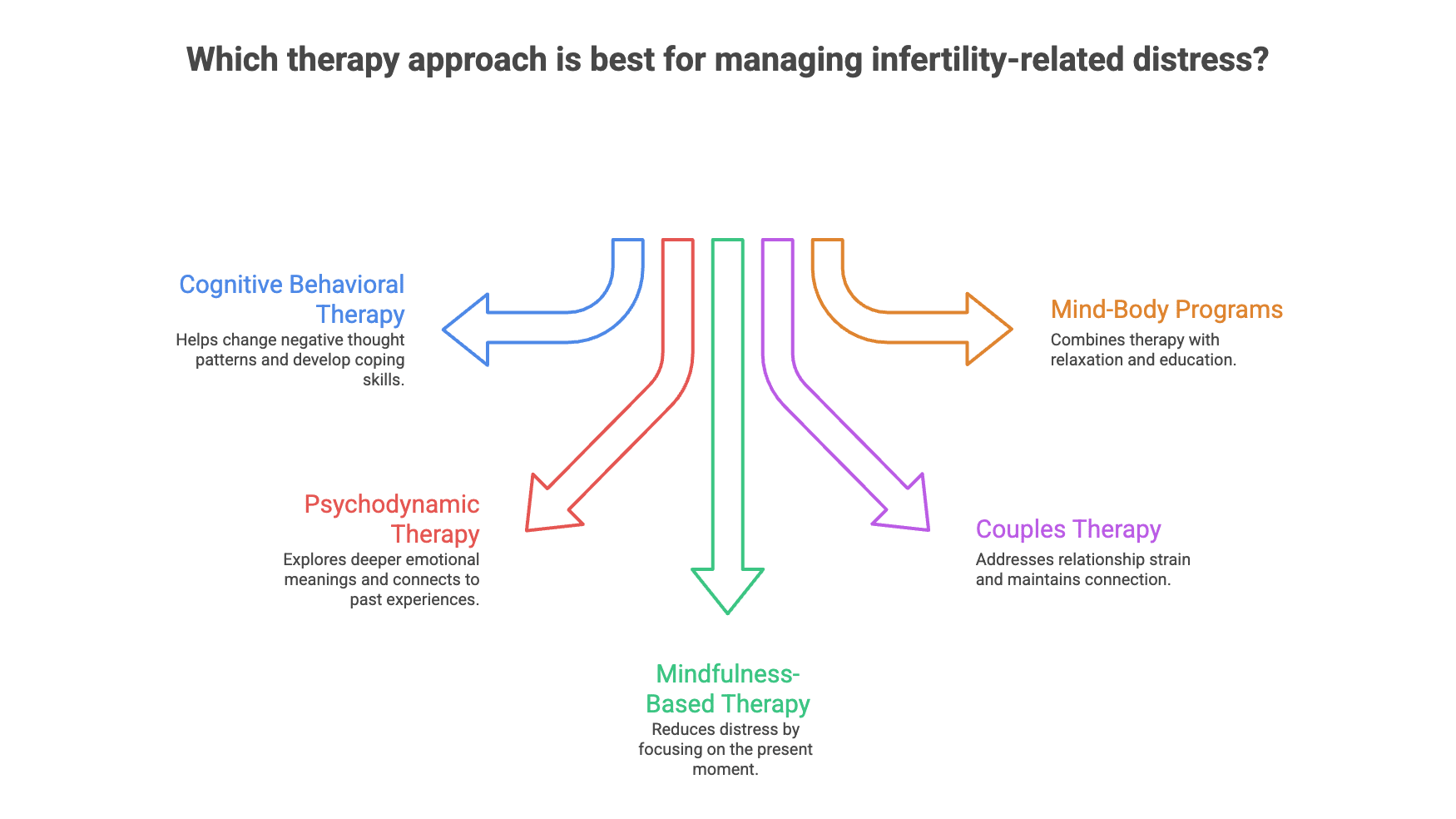
What type of therapy is best for infertility?
Cognitive Behavioral Therapy (CBT) is the most researched and effective therapeutic approach for managing infertility-related anxiety and depression. CBT helps individuals and couples identify and change negative thought patterns that contribute to emotional distress while struggling with infertility.
For example, CBT might help you challenge thoughts like “I’ll never be a parent” or “This is all my fault” by examining the evidence and developing more balanced perspectives. This therapeutic approach teaches specific coping skills you can use when you feel overwhelmed by the stress of fertility treatments. If you’re also dealing with anxiety beyond infertility, learning about different types of therapy for anxiety can help you find the right support.
Psychodynamic therapy explores the deeper emotional meanings of infertility—how it affects your sense of identity, disrupts your vision of the future, and connects to earlier experiences in your life. This approach helps you understand why infertility feels so devastating beyond the obvious desire for a child, addressing the profound ways it can shake your sense of self-worth and life narrative. Psychodynamic work is particularly valuable when infertility triggers earlier losses or unresolved conflicts.
Mindfulness-based therapy is another evidence-based option. Mindfulness approaches reduce psychological distress by teaching you to stay present rather than catastrophizing about the future or ruminating on past disappointments. This can be particularly helpful during the two-week wait between treatment and testing.
Couples therapy addresses the relationship strain that infertility often creates. A therapist committed to supporting individuals and couples through fertility challenges can help you and your partner stay connected during a difficult time when relationships are tested.
Mind-Body Programs
Some fertility clinics offer mind-body programs that combine psychotherapy with relaxation techniques, education about the fertility process, and group support. Research indicates these comprehensive interventions may improve both mental health and pregnancy rates for those undergoing assisted reproductive technologies.
What is infertility counseling?
Infertility counseling is a specialized area of mental health practice focused on the psychological, emotional, and social challenges of fertility struggles. Licensed clinical social workers, psychologists, and other mental health professionals who practice fertility counseling have specific training in reproductive health and understand the medical aspects of fertility treatments like IVF.
Counseling sessions may cover several areas:
Decision-making support for complex treatment choices. Should you try another round of IVF? Is it time to consider donor eggs or donor sperm? These difficult decisions often don’t have clear right answers. Fertility counseling helps you explore your values, priorities, and what feels right for your family-building goals.
Preparation for third-party reproduction. If you’re considering using gamete donors or working with a gestational carrier, infertility counseling plays a critical role in helping you process feelings about this path to parenthood. Many fertility clinics require counseling sessions before proceeding with third-party reproduction to ensure you’ve fully considered the emotional and psychological implications. Third-party reproduction involves using donor eggs, donor sperm, or gestational carriers to build your family—decisions that carry unique emotional weight.
Grief and loss processing. Whether you’ve experienced pregnancy loss, repeated treatment failures, or reproductive loss, therapy provides support for mourning what you hoped would happen. This includes the loss of the pregnancy experience you imagined or secondary infertility when you already have a child but can’t conceive again.
Managing social pressures and triggers. Fertility counseling helps you develop strategies for handling pregnancy announcements, baby showers, and intrusive questions from family about when you’ll have children. Learning to set protective boundaries in healthy relationships becomes essential for maintaining your mental health during this difficult time.
We frequently see clients dealing with the emotional aftermath of seeing everyone around them get pregnant while they struggle through another treatment cycle. The feelings of jealousy and irritation are completely normal, but they can also feel shameful. Part of our work is helping people understand that these emotions don’t make you a bad person—they make you human. Therapy normalizes what you’re feeling while giving you tools to manage these triggers in healthy ways.
How does an infertility therapist support decision-making?
Therapists help you work through the complex decisions that arise as you pursue treatment by creating a non-judgmental safe space to explore your options. This might include whether to pursue fertility treatment in the first place, how many cycles to attempt, or when it might be time to consider living child-free or pursuing adoption.
For many couples experiencing infertility, these decisions feel impossibly heavy. An infertility therapist doesn’t tell you what to decide, but helps you clarify what matters most to you. The therapist asks questions that surface your values: What does parenthood mean to each of you? How much is too much—financially, emotionally, physically? What are your limits?
Fertility counseling is particularly valuable when partners have different perspectives on how to proceed. A therapist can facilitate conversations that help you understand each other’s positions and find a path forward that respects both partners’ needs and concerns in the relationship.
Third-Party Reproduction Counseling
When considering donor eggs, donor sperm, or gestational carriers, specialized counseling becomes even more important. These are not just medical decisions—they involve processing feelings and grief over genetic connection, considering how you’ll talk to your future child about their origins, and preparing for the emotional realities of this path to parenthood.
Professional guidelines recommend counseling for anyone pursuing third-party reproduction. This support helps you enter the process with realistic expectations and emotional preparation for both treatment and the postpartum period.
The decision to use gamete donors or a gestational carrier often brings up feelings people didn’t expect. Grief over the genetic connection they won’t have. Questions about what to tell their child. Anxiety about bonding. In our practice, we help people work through these complex emotions before, during, and after pursuing third-party reproduction. The goal is for you to feel genuinely ready and committed to this path, not just resigned to it.
When should you see an infertility therapist?
You might benefit from seeing an infertility therapist if you:
- Feel anxious, depressed, or emotionally overwhelmed by your fertility challenges
- Notice strain in your relationship with your partner related to trying to conceive
- Struggle to cope with pregnancy announcements or feel isolated from pregnant friends
- Are facing difficult decisions about whether to continue treatment or how to proceed
- Have experienced pregnancy loss or failed fertility treatments and need support to process grief
- Are considering or pursuing third-party reproduction and want help preparing emotionally
- Feel your fertility struggles are affecting other areas of your life—work, friendships, daily functioning
You don’t need to wait until you’re in crisis. Many people find that starting therapy early while trying to conceive helps them manage stress more effectively and maintain healthy relationships throughout the process.
Finding an infertility therapist in Washington, DC
When looking for a fertility therapist, seek mental health professionals with specific experience in reproductive challenges. Some therapists have additional training through organizations focused on reproductive mental health or work closely with fertility clinics to provide support for patients undergoing treatment.
You can ask your fertility clinic for referrals—many reproductive medicine practices partner with therapists who understand the specific protocols and timelines of fertility treatments. This specialized knowledge matters because your therapist will better understand what you’re going through during each phase of the fertility process.
Your therapist should create a supportive space where you can express all your feelings—anger, sadness, jealousy, frustration—without judgment. The therapeutic relationship works best when you feel genuinely understood and supported while you’re working with them.
Schedule a Session in Dupont Circle
If you’re struggling with the emotional impact of infertility and looking for specialized support, therapy can help. Our psychologists and therapists in Dupont Circle work with individuals and couples throughout DC who are navigating fertility challenges, difficult treatment decisions, and the complex emotions that accompany reproductive struggles. Contact us to schedule an appointment. We also provide marriage counseling for couples working through relationship strain related to infertility.
This blog provides general information and discussions about mental health and related subjects. The content is not intended to be a substitute for professional medical advice, diagnosis, or treatment. Always seek the advice of your physician or other qualified health provider with any questions you may have regarding a medical condition.