How Long Does Grief Last After a Breakup? What to Expect in Your Healing Timeline
When a romantic relationship ends, you’re not just losing a partner—you’re losing shared routines, future plans, and part of your identity. Grief after a breakup doesn’t follow a set timeline, and there’s no “normal” duration for how long the emotional pain will last. The breakup of a love relationship involves multiple losses, and it’s normal to feel sad, angry, exhausted, frustrated, and confused. While many people begin to feel sad initially then gradually improve within weeks to months, the grieving process varies based on the relationship’s length and how the relationship ended, according to research on separation and bereavement and prolonged grief disorder.
Understanding what breakup grief looks like and when your difficult feelings need professional support can help you move through this natural process with more clarity.
What Are the 5 Stages of Breakup Grief?

The five stages of grief—denial, anger, bargaining, depression, and acceptance—are a framework, not a roadmap. Many people experience these phases after a relationship ends, but grief doesn’t move in a straight line. You might feel angry one day, bargain the next, and cycle back to denial.
Denial often appears first—shock that the important relationship ended. It buffers the initial impact while you process what happened.
Anger emerges as intense emotions and frustration toward your former partner, yourself, or the situation. These negative feelings are valid parts of the healing process.
Bargaining involves replaying scenarios—”If only I had said this differently.” This reflects your brain’s attempt to regain control over loss.
Depression manifests as deep sadness, emptiness, or feeling you’ll never be whole. This is when the full weight settles—one of the most painful parts of grief after a breakup. You might feel sad throughout the day or feel hurt when reminded of your ex-partner. For some, these feelings can develop into more persistent depression that requires professional support.
Acceptance means you’ve stopped fighting reality. You begin to focus on self care and rebuild your life.
In our practice, we regularly work with clients navigating breakup grief who feel confused by how unpredictable their emotions are from day to day. One moment they feel ready for moving forward, the next they’re crying over a song or memory. We help them understand this non-linear pattern is completely normal—the grieving process doesn’t respect timelines. Progress is about gradually having more good days than bad as you process the end of an important relationship.
How Long Does Grief After a Breakup Usually Last?
There’s no universal answer to how long grief lasts after a romantic relationship ends. For some, intense emotions ease within weeks. For others—particularly after long-term relationships—the process takes many months. Grieving is essential to the healing process—the pain of grief helps you let go of the old relationship and move forward.
Several factors influence your healing process. The length of the past relationship matters, as does whether you were married or living together. Breakups involving shared finances, children, or friend groups create complicated grief. The circumstances also play a role—whether mutual, involving infidelity, or a surprise. If you’re leaving a toxic relationship, the grief may be mixed with relief.
Your support system makes a significant difference. Sharing feelings with friends, family members, or a support group helps you process grief effectively, as group therapy research and psychotherapeutic intervention studies demonstrate. Isolation prolongs emotional pain and can lead to clinical depression—avoiding grief keeps you stuck in feelings of sadness.
Past relationships and previous losses also shape how you grieve. If you’ve experienced significant losses—like the death of a loved one—or have depression or anxiety history, breakup grief might hit harder. Your mental state and well being before the relationship ending also matter.
The key isn’t how quickly you “get over it”—it’s whether you’re moving through the process in healthy ways and gradually regaining function. It’s important to give yourself permission to grieve and feel your emotions rather than pushing them away or expecting yourself to bounce back immediately.
What Is the 72-Hour Rule After a Breakup?
The “72-hour rule” suggests waiting three days after a breakup before making major decisions or reaching out. The idea is that the first 72 hours are filled with intense emotions that cloud judgment.
While no scientific research validates this timeframe, the principle has merit. In the immediate aftermath, your brain floods with stress hormones like cortisol, which impair decision-making. This affects your stress levels and makes processing difficult. Giving yourself a buffer before acting on impulses—texting your former partner, posting on social media, or making dramatic changes like quitting your job or moving to a new city—prevents regrettable choices.
Three days is arbitrary. Some need a week or more. Others feel ready sooner. The wisdom is recognizing when you’re in a heightened state and giving yourself permission to pause. Take a few minutes to breathe, talk to trusted friends or family, and check in before acting.
How Do You Grieve a Breakup in Healthy Ways?
Healthy grieving means allowing yourself to feel emotions while taking active steps to care for yourself. Clinical research on grief and prolonged grief treatment supports evidence-based approaches that help people recover from breakup grief effectively.
Talk about your feelings. Sharing with friends and family, trusted friends, or your best friend helps you feel less alone. Group therapy and social support can significantly improve outcomes for prolonged grief. You don’t grieve the same way everyone does, but isolation makes things harder.
Stay physically active. Exercise releases endorphins, reduces stress, and provides structure. Physical activity helps reduce physical symptoms of grief like fatigue and sleep problems.
Notice patterns in your grief and difficult feelings. Pay attention to when sadness or anger hits hardest—identifying and acknowledging your feelings during the grieving process is essential. Journaling helps identify triggers—a key component of grief-focused therapy. Reflect on your mental state without judgment. Learning emotional regulation skills can help you manage intense feelings more effectively.
Challenge negative thoughts. If you think “I’ll never be happy,” “I’m a bad person,” or “I’m unlovable,” pause and question those beliefs. Cognitive-behavioral therapy research shows that reframing distorted thoughts speeds recovery and helps avoid self judgment.
Set small, meaningful goals that connect to your values and interests:
- Try a new hobby or reconnect with friends
- Plan a trip you’ve wanted to take
- Consider a new job if it aligns with future goals
These activities rebuild identity and purpose beyond the past relationship. Creating new memories and spending time on activities you enjoy helps you focus on moving forward.
Avoid unhealthy coping mechanisms like alcohol, drugs, or overeating to numb emotional pain. These provide temporary relief but prolong grief and harm your mental and physical health.
Maintain boundaries with your ex partner. Constant contact—texts or social media—makes processing harder. In our hyperconnected world, it’s tempting to know all the things your former partner is doing, but distance aids healing.
We frequently see clients in DC who struggle with breakup grief while managing high-pressure careers. In a city where so many build their sense of self around job titles, losing a romantic relationship can feel like losing one of the few spaces where they could be vulnerable. When your whole world revolves around work and you lose the person who knew the real you, grief feels especially isolating. We help them recognize that grief doesn’t make them weak—it makes them human.
When Does Grief After a Breakup Become a Concern?
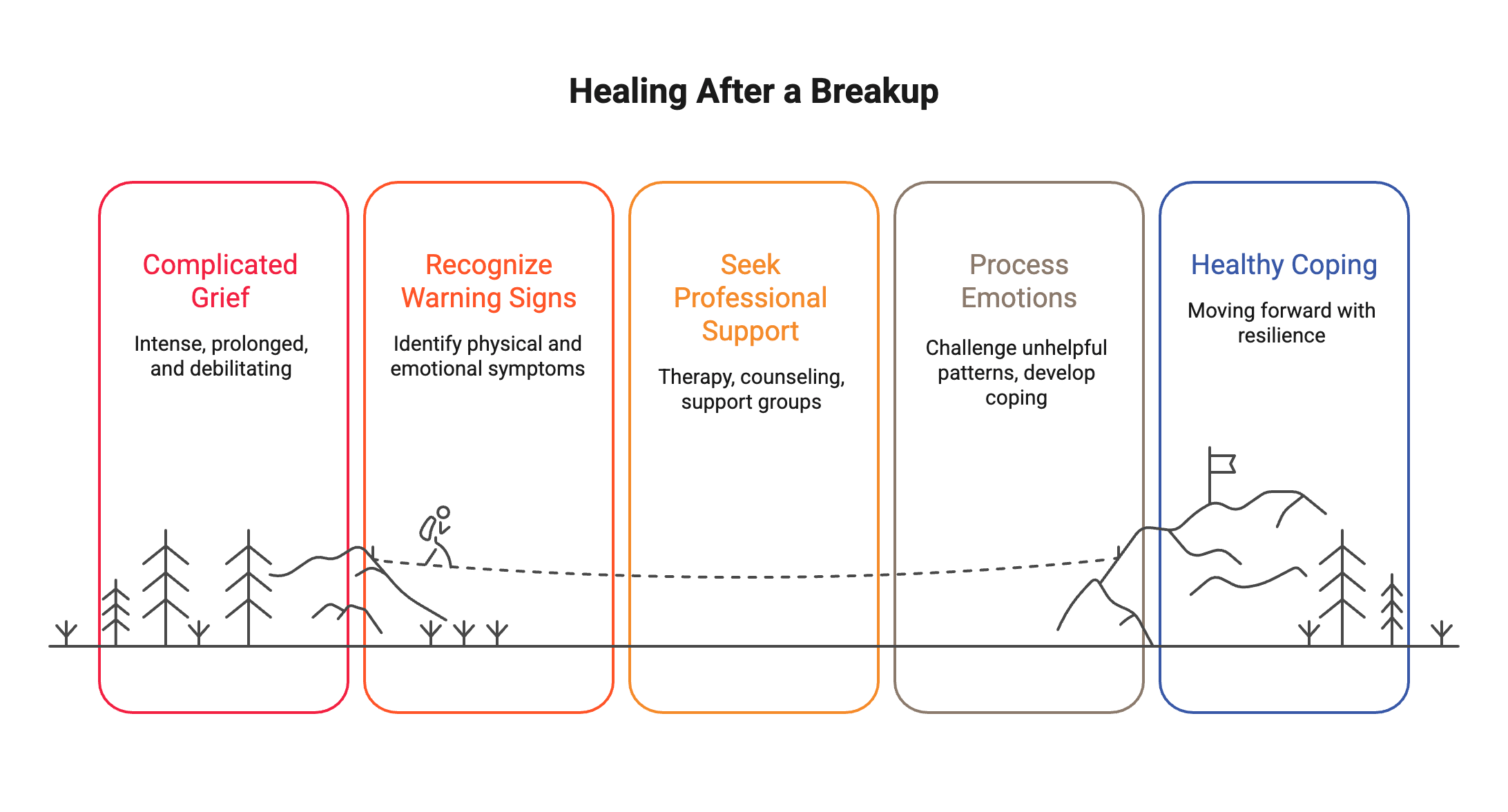
While grief is a natural process and normal response to losing an important relationship, sometimes it becomes more intense or prolonged. If your grief feels stuck or significantly interferes with function, it may be time to seek professional mental health support.
Warning signs include feeling unable to accept the relationship has ended, experiencing intense longing for your former partner that doesn’t ease, or avoiding reminders to the point it limits your life. Grief can manifest in physical symptoms like persistent sleep disturbances, digestive issues, or appetite changes—all signals that grief has become complicated.
If you’re withdrawing from friends and family for weeks, losing interest in activities that brought joy, or having thoughts of hurting yourself, you need support beyond what friends and self care provide. It’s not bad news—it’s recognition you need help, which is strength.
Depression following a breakup is common, and many people experience depressive symptoms after a relationship ends. If you’re experiencing persistent hopelessness, appetite or sleep changes lasting weeks, or difficulty concentrating, therapy makes a substantial difference.
Evidence-based treatments like cognitive-behavioral therapy and grief counseling help people recover from prolonged grief after a relationship ending. These approaches help you process difficult emotions, challenge unhelpful patterns, and develop healthier coping. Therapy gives space to talk through feelings, understand the grieving process, and learn strategies for moving forward.
Moving forward takes time, patience, and often support. Whether you talk to family members, join a support group, or work with a mental health professional, getting the right support makes all the difference in how you grieve and heal.
Find Support for Breakup Grief in Washington, DC
If you’re struggling with grief after a breakup, the therapists at Therapy Group of DC can help. We offer cognitive-behavioral therapy and grief counseling to help you process your loss, work through difficult feelings, and rebuild your life. Contact us at https://therapygroupdc.com/contact-us/ to schedule a consultation.
This blog provides general information and discussions about mental health and related subjects. The content is not intended to be a substitute for professional medical advice, diagnosis, or treatment. Always seek the advice of your physician or other qualified health provider with any questions you may have regarding a medical condition.