The Surprising Things That Trigger Anxiety (And Why)
Anxiety disorders affect millions of people and rank among the most common mental health conditions. While obvious triggers for anxiety like public speaking or job interviews are well-known, many everyday habits can spark anxiety symptoms without you realizing it. Understanding these unexpected triggers helps you manage anxiety more effectively and regain control.
What Is a Trigger for Anxiety?

An anxiety trigger activates your body’s stress response and brings anxiety symptoms to the surface. It can be a situation, thought, or physical factor. Triggers vary from person to person based on experiences, health conditions, and genetics.
Triggers for anxiety fall into several categories:
- External triggers include situations like work deadlines, financial stress, unexpected bills, or relationship conflicts
- Internal triggers involve thoughts and feelings such as negative self-talk, rumination, or feeling overwhelmed
- Biological triggers encompass physical factors like hormonal changes, lack of sleep, or certain medications
Risk factors for developing anxiety triggers include family history—if close family members have anxiety disorders or other mental health conditions, you may be more likely to experience anxiety yourself. Past trauma or abuse, major stressful events, and certain personality traits like being naturally more sensitive can all make you more vulnerable to anxiety-provoking situations. Identifying your personal triggers is the first step toward developing coping strategies that work.
In our years working with clients in DC, we’ve noticed that many people are surprised by how diverse their triggers can be. Someone might handle major work presentations with ease but feel intense anxiety from unexpected changes to their daily routine. We consistently see that understanding your unique trigger pattern—rather than comparing yourself to others—is what makes treatment most effective.
Why Does Skipping Meals Trigger Anxiety?
Blood sugar drops from skipped meals directly trigger anxiety symptoms. When you don’t eat regularly, your body releases stress hormones like cortisol and adrenaline to maintain blood sugar. These are the same hormones that activate during anxiety—explaining why hunger makes you feel anxious, irritable, or shaky.
The connection goes beyond blood sugar. Research shows that diet significantly affects anxiety disorders. When you skip meals, your body lacks nutrients needed to produce mood-regulating neurotransmitters like serotonin and GABA, which help calm your nervous system.
Eating regular, balanced meals helps manage symptoms. Aim for three meals and healthy snacks throughout the day to maintain steady blood sugar. Include protein, complex carbohydrates, and healthy fats for sustained energy and mental health support.
How Does Caffeine Worsen Anxiety?
Caffeine stimulates your central nervous system, triggering the same physical symptoms as anxiety attacks—increased heart rate, muscle tension, chest pain, and shortness of breath. What seems like a harmless cup of coffee can intensify anxiety symptoms significantly. When your body reacts to caffeine, it can mimic or worsen the physical symptoms of anxiety disorders, making it harder to distinguish between caffeine effects and genuine anxiety.
People with panic disorder or generalized anxiety disorder are especially sensitive to caffeine’s effects. Even moderate amounts can trigger anxiety attacks. Caffeine also disrupts sleep quality, creating a feedback loop: poor rest increases next-day anxiety, which leads to more caffeine to fight fatigue, which further worsens sleep.
If you experience anxiety, consider limiting or eliminating caffeine. Start by gradually reducing intake to avoid withdrawal headaches. Many people notice significant improvements within a few weeks. Remember that caffeine hides in coffee, tea, energy drinks, chocolate, and some medications.
Can Certain Medications Trigger Anxiety Disorders?
Several medication types can trigger or worsen anxiety, even when properly prescribed. Common culprits include:
- Stimulant medications for ADHD
- Some asthma medications
- Certain birth control pills
- Corticosteroids used for inflammation
The DSM-5 recognizes substance/medication-induced anxiety disorder as a distinct diagnosis. The DSM-5, published by the American Psychiatric Association, serves as the authoritative guide for diagnosing mental disorders. This differs from simple side effects—it means the medication directly triggers an anxiety disorder requiring attention.
If you notice increased anxiety after starting a new medication, talk to your healthcare provider. Never stop prescribed medications without medical guidance. Your provider may adjust dosages, switch medications, or help you manage medication-related anxiety symptoms. Some medical conditions themselves can also produce symptoms that mimic anxiety disorders, making professional evaluation important.
What Is the #1 Worst Habit for Anxiety?
Poor sleep quality consistently ranks as the most damaging habit for anxiety disorders. Sleep deprivation and anxiety feed into each other: anxiety disrupts sleep, while lack of sleep intensifies next-day anxiety. Even one night of poor sleep increases worry and makes stress harder to manage.
Research on lifestyle factors shows that sleep disturbances significantly worsen mental health conditions. When you don’t get adequate rest, your brain struggles to regulate emotions, making you more reactive to triggers and less able to use coping strategies.
The sleep-anxiety connection affects all anxiety disorder types—generalized anxiety disorder, social anxiety disorder, panic disorder, and separation anxiety disorder. Trouble sleeping often becomes both a symptom and a cause of excessive anxiety.
Good sleep hygiene includes:
- Maintaining a consistent sleep schedule
- Limiting screen time before bed
- Keeping your bedroom cool and dark
- Avoiding caffeine after early afternoon
Adults should aim for seven or more hours of quality sleep nightly. Quality matters as much as quantity—waking frequently or spending hours unable to fall asleep both undermine the restorative benefits your brain needs.
We often tell clients in our practice that improving sleep is one of the fastest ways to see progress with anxiety management. When clients prioritize sleep hygiene—even before working on deeper therapeutic techniques—they frequently report feeling more equipped to handle their anxiety triggers. It’s not a cure, but better sleep provides the foundation that makes other coping strategies actually work.
How Does Alcohol Affect Anxiety Symptoms?
Alcohol temporarily reduces anxious feelings but worsens anxiety disorders over time. Many people turn to alcohol for social anxiety relief or post-stress calm, but this creates serious problems. Alcohol disrupts sleep, changes brain chemistry, and triggers rebound anxiety as it leaves your system.
Alcohol withdrawal can cause severe anxiety symptoms, including panic attacks and intense fear. For people with existing anxiety disorders, regular alcohol use interferes with treatment effectiveness and increases symptom severity. Substance use is recognized as a significant factor that both triggers and worsens mental disorders.
If you use alcohol to manage anxiety, this pattern needs professional attention. Relying on alcohol to cope reinforces the behavior through temporary relief, but the underlying anxiety worsens over time. Healthier coping strategies include:
- Deep breathing exercises
- Progressive muscle relaxation
- Talk therapy like cognitive behavioral therapy
- Regular physical activity
- Building social connections without alcohol
The temporary relief alcohol provides isn’t worth the long-term impact on your mental health. Many people find that reducing or eliminating alcohol significantly improves their anxiety symptoms within weeks.
Why Does Lack of Exercise Trigger Anxiety?
Regular physical activity acts as a natural anxiety reducer by releasing endorphins and lowering stress hormones. When you skip exercise, you miss out on these protective benefits, leaving your nervous system more vulnerable to anxiety triggers.
Physical movement helps your body process stress hormones that build up throughout the day. Without regular activity, these hormones accumulate, keeping you in a heightened state of arousal that makes anxiety more likely. Exercise also improves sleep quality, boosts self-confidence, and provides a healthy outlet for nervous energy.
You don’t need intense workouts to see benefits. Walking for 20-30 minutes daily, gentle yoga, or any movement you enjoy can reduce anxiety symptoms. Consistency matters more than intensity—regular moderate exercise typically provides more anxiety relief than occasional intense workouts.
For DC residents, options abound: walking around the Tidal Basin, exploring Rock Creek Park trails, or joining community fitness groups in neighborhoods like Dupont Circle. Finding movement you genuinely enjoy makes it easier to maintain the habit that supports your mental health.
How Do Social Media and Screen Time Trigger Anxiety?
Constant connectivity has become a major anxiety trigger, particularly affecting social anxiety disorder and feelings of inadequacy. Endless scrolling exposes you to curated highlights of others’ lives, sparking comparison and negative thinking. The pressure to respond immediately, constant notifications, and late-night screen use disrupting sleep all fuel anxiety.
For Washington DC residents, staying connected for work and social obligations can feel impossible to escape. However, research shows that limiting screen time, especially before bed, significantly reduces anxiety symptoms and improves mental health.
Set boundaries around device use, turn off non-essential notifications, and establish screen-free times during your day. Consider whether your social media use serves or harms your mental health. If scrolling increases anxious feelings, triggers comparison, or fuels self-doubt, it may be time to reassess your relationship with these platforms.
Can Physical Health Issues Trigger Anxiety Disorders?
Certain medical conditions directly trigger anxiety symptoms or worsen existing anxiety disorders. Thyroid problems, particularly hyperthyroidism, cause increased heart rate, restlessness, and feelings that mirror panic attacks. Heart conditions, respiratory issues causing shortness of breath, and chronic pain syndromes can all trigger or intensify anxiety.
Some health conditions create concerning overlap with anxiety symptoms. Clinical screening studies emphasize ruling out medical illness when evaluating anxiety disorders. Chest pain could indicate either a panic attack or a cardiac issue. Difficulty concentrating might stem from anxiety or another medical condition affecting brain function.
Working with both a mental health professional and a medical provider is often essential. If you experience sudden anxiety symptoms without clear psychological triggers, ask your doctor about potential medical causes. Blood tests can rule out thyroid disorders, vitamin deficiencies, and other health conditions that present as anxiety. A comprehensive treatment plan addresses both physical and mental aspects.
How to Quickly Calm Anxiety When It Strikes
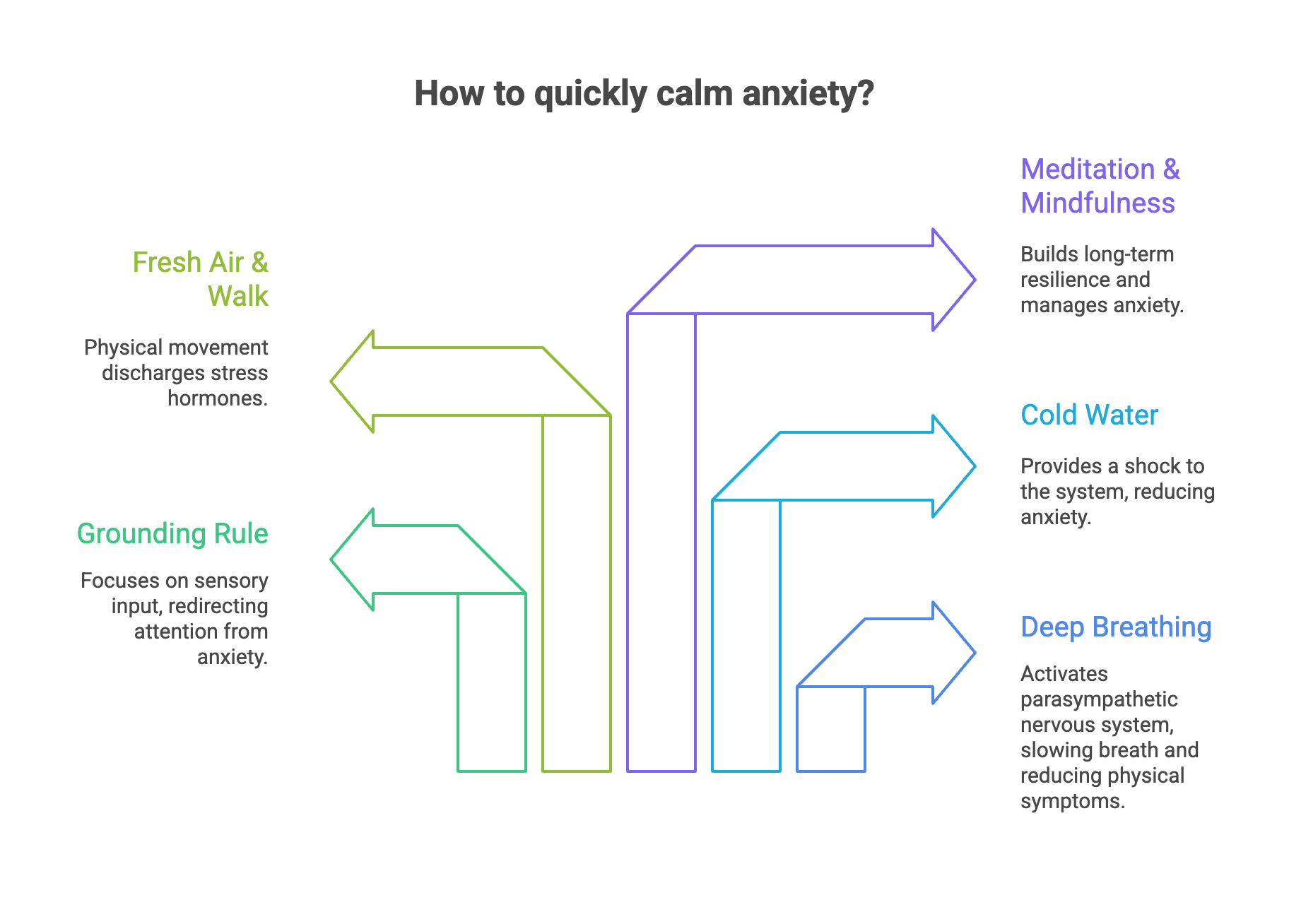
Deep breathing is the most effective immediate strategy to calm your nervous system during an anxiety attack. When anxiety strikes, your breathing becomes shallow and rapid, intensifying physical symptoms like dizziness and chest discomfort. Deliberately slowing your breath activates your parasympathetic nervous system, counteracting the stress response.
Try this technique: Breathe in slowly through your nose for four counts, hold for four, then exhale through your mouth for four. Repeat for several minutes. This controlled breathing, along with other relaxation techniques like progressive muscle relaxation, helps manage acute symptoms.
Other quick strategies include:
- Using the 3-3-3 grounding rule (name 3 things you see, hear, and can touch)
- Splashing cold water on your face
- Stepping outside for fresh air and a brief walk
Physical movement helps discharge stress hormones flooding your system. Evidence-based approaches like meditation and mindfulness also provide tools for managing anxiety in the moment while building long-term resilience.
However, if you need these emergency techniques frequently, it’s time for professional help. Frequent panic attacks, constant anxiety interfering with daily life, or anxiety that doesn’t respond to self-help all warrant evaluation by a mental health provider.
What Are Common Signs You Need Professional Help?
Anxiety requires professional support when it interferes with daily life and relationships. Occasional anxiety is a normal response to actual danger or stressful situations. But anxiety disorders involve excessive anxiety that persists even without real threat, lasting weeks or months. Women and adolescent girls face higher risk for developing anxiety disorders, partly due to hormonal changes and social pressures.
Past traumatic events can also trigger anxiety disorders that require professional attention. A traumatic event—whether it’s a major accident, loss of a loved one, assault, or witnessing violence—can create lasting anxiety responses. Even years after a traumatic event, certain reminders or situations can trigger intense anxiety and other symptoms related to the original trauma.
Research on anxiety treatment indicates that early intervention leads to better outcomes. Warning signs you should reach out include:
- Anxiety that feels overwhelming or uncontrollable
- Avoiding situations due to fear or anxiety
- Experiencing frequent panic attacks
- Using substances to cope with anxious feelings
- Noticing that anxiety triggers are expanding rather than becoming manageable
Physical symptoms also signal the need for evaluation:
- Constant muscle tension
- Upset stomach or ongoing digestive issues
- Persistent chest pain (after ruling out cardiac causes)
- Severe sleep problems
Clinical guidelines recommend screening for anxiety disorders, particularly for women and adolescents who face higher risk factors.
Effective treatment is available for all anxiety disorder types. Options include talk therapy, particularly cognitive behavioral therapy (CBT) and exposure therapy, which help identify negative thoughts and change anxious responses. Some people benefit from medication combined with therapy. A mental health professional can help you develop coping strategies tailored to your personal triggers and create a treatment plan for your specific situation. Learn more about different types of therapy for anxiety.
We approach anxiety treatment as a collaborative process. Rather than simply teaching techniques, we work with clients to understand their specific trigger patterns and build personalized strategies. Some clients need help with immediate coping skills, while others benefit from exploring deeper patterns. What works for one person may not work for another, and that’s exactly why individualized care matters.
Finding Support in DC
Ready to Address Your Anxiety?
If anxiety symptoms are affecting your daily life, reaching out for help is a sign of strength. The therapists at Therapy Group of DC understand the unique pressures of living in Washington’s fast-paced environment, from Capitol Hill to Dupont Circle. We offer evidence-based talk therapy to help you identify your anxiety triggers, develop effective coping strategies, and build resilience. Schedule an appointment to get started.
Disclaimer: This article is for educational purposes only and is not a substitute for professional medical advice, diagnosis, or treatment. Always seek the advice of your physician or qualified mental health provider with any questions you may have regarding a medical or mental health condition. If you are in crisis or experiencing thoughts of self-harm, please call 988 (Suicide and Crisis Lifeline) or go to your nearest emergency room.