

Sexual anxiety in marriage affects more couples than you might think. Estimates suggest that 9% to 25% of men and 6% to 16% of women experience performance anxiety—worry, nervousness, or self-consciousness during intimate moments with their partner. These feelings create distance and reduce satisfaction in relationships, but understanding the causes and knowing what helps makes a real difference.
What is sexual performance anxiety?
Sexual performance anxiety means feeling worried, nervous, or pressured about sexual activity with your partner. You might worry about meeting expectations, satisfying your partner, or being judged during intimate moments. These concerns affect anyone, regardless of marriage length or relationship strength. Common worries include concerns about your body, ability to perform sexually, or whether you’re “doing it right”—anxious thoughts that pull you from the present moment and interfere with connection.
How does sexual anxiety show up in marriage?
Sexual anxiety can affect both your body and emotions. You might notice physical symptoms like tension, rapid heartbeat, or difficulty with arousal. Men may experience erectile dysfunction or premature ejaculation, while women might have arousal difficulties or trouble reaching orgasm.
Beyond the physical symptoms, sexual anxiety often leads to mental and emotional patterns that create more distance. You might start avoiding intimacy altogether, feel self conscious about your body or sexual performance, or experience negative thoughts that spiral during intimate moments. Some people feel guilty or inadequate as a sexual partner, which can heighten anxiety even more.
When one partner experiences sexual performance anxiety, both partners often feel the impact. Research shows that performance anxiety affects both partners, lowering sexual satisfaction and creating distress that extends beyond the bedroom. The person struggling may withdraw from physical intimacy, while their partner might feel rejected or confused about what’s happening.
In our practice, we’ve noticed that couples often wait months or even years before talking about sexual anxiety. By the time they reach out for help, both partners are feeling the strain—one carrying shame and worry, the other feeling confused or personally rejected. We consistently see that when couples can name what’s happening and understand it’s a common issue affecting both of them, not a personal failing, the relief is immediate.
What causes sexual performance anxiety in marriage?
Body image and self-consciousness
Body image issues are one of the most common triggers for sexual anxiety. If you feel uncomfortable with your physical appearance or worry about how your partner sees you, those concerns make it hard to relax during sex. You might worry about how you look during intimate moments, whether your partner finds you physically attractive, or how your body compares to others. These concerns about physical attractiveness can become so consuming they prevent you from being present with your partner.
Low self esteem can feed into these worries, creating a cycle where negative thoughts about yourself lead to more anxiety about sex, which then reinforces those negative beliefs. Self doubt about your worth as a partner or your sexual adequacy becomes self-reinforcing, making each sexual experience feel higher stakes.
Past experiences and trauma
Past trauma can create lasting anxiety around intimacy. Sexual abuse or negative sexual experiences shape how you approach sex later. Your body and mind remember these past experiences, triggering anxiety in new sexual situations, even with a trusted partner in marriage.
Relationship dynamics and communication
The quality of communication in your relationship directly affects sexual anxiety. When couples struggle to talk openly about sex, needs, and worries, anxiety often increases. You might fear being judged by your partner, worry about disappointing them, or feel pressure to perform in ways that don’t feel natural. Research confirms that poor sexual communication is linked to lower sexual satisfaction and higher anxiety in relationships.
Stress and life pressures
Life stress doesn’t stay compartmentalized—it affects your sex life too. When dealing with work pressure, financial worries, parenting responsibilities, or other stressors, stress can make it harder to relax and enjoy sex. Stress may interfere with arousal, making it difficult to become sexually responsive even when you want intimacy. You might feel tense, distracted, or too exhausted to be present sexually.
For some people, anxiety disorders can make sexual anxiety worse. If you already experience general anxiety or panic attacks, those patterns can extend into your sexual relationship.
Performance pressure and unrealistic expectations
Many people have unrealistic expectations about what sex should look like. These expectations might come from media, past relationships, or cultural messages about sexual performance. When reality doesn’t match these expectations, you might feel like you’re failing as a sexual partner. The pressure to perform sexually creates a cycle where anxiety about performance actually interferes with sexual function—worrying about sexual dysfunction contributes to the very problems you fear.
What actually helps with sexual anxiety?
Open and honest communication
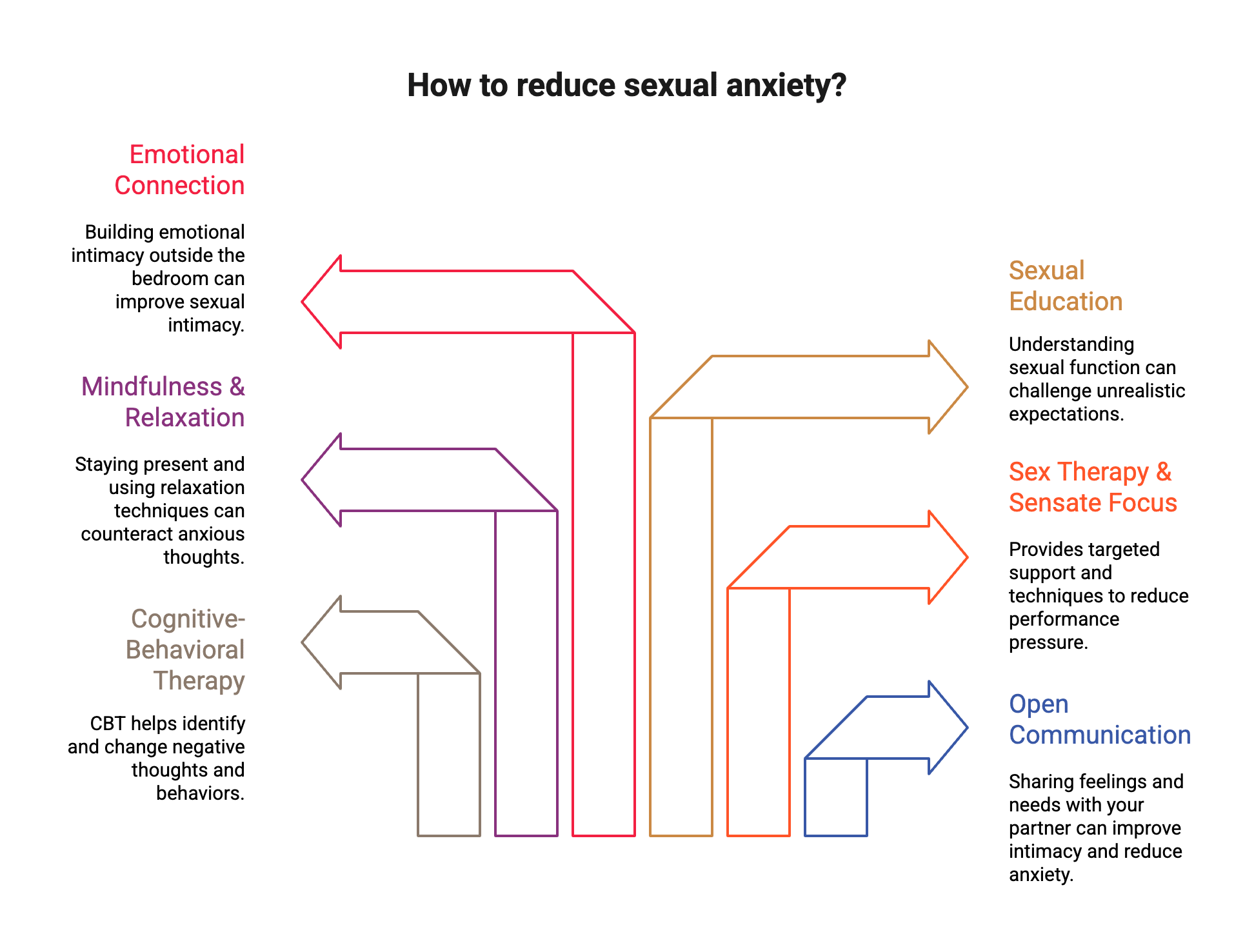
Talking with your partner about your feelings and worries is one of the most effective ways to reduce sexual anxiety. Share what you’re experiencing, what triggers anxiety for you, and what would help you feel more comfortable. When both partners discuss sexual needs, desires, and concerns without judgment, intimacy often improves.
Communication doesn’t mean having one big conversation and being done. It means ongoing, compassionate dialogue about your sexual relationship, checking in with each other, and creating space for both partners to express what they need.
We often tell couples that the hardest part of addressing sexual anxiety is starting the conversation. Many worry they’ll hurt their partner’s feelings or make things worse. What we’ve learned over years of working with couples is that your partner likely already senses something is off. Having an honest conversation—where you share what you’re experiencing without blame—almost always brings couples closer together, even before any other changes happen.
Cognitive-behavioral therapy (CBT)
CBT helps you identify and change negative thoughts and behaviors that contribute to anxiety. For sexual anxiety, CBT helps you recognize anxious thoughts when they arise, challenge unrealistic beliefs about sex and performance, and develop healthier thought patterns.
Research shows that cognitive-behavioral therapy and sexual health education can improve sexual assertiveness and satisfaction. A therapist trained in CBT can teach you specific skills to manage anxiety and change the thought patterns that interfere with sexual intimacy.
Sex therapy and sensate focus
Working with sex therapists can provide targeted support for couples dealing with sexual anxiety. Sex therapy creates a safe space to explore what’s happening in your sexual relationship and learn techniques to reduce anxiety. One common technique is sensate focus, which involves starting with nonsexual touch and gradually moving toward sexual touch. By removing the pressure to perform and focusing on physical sensations, sensate focus helps you relax and reduce performance anxiety.
Mindfulness and relaxation techniques
Learning to stay in the present moment during sex can counteract anxious thoughts. Exercises such as deep breathing, progressive muscle relaxation, and mindfulness techniques can effectively help reduce anxiety before and during sexual activity.
Mindfulness means paying attention to physical sensations, emotions, and connection with your partner without judgment. When anxious thoughts arise, notice them and gently return your focus to the present moment rather than getting caught in worry about performance.
One helpful technique is the 3-3-3 rule for anxiety: identify three things you can see, three sounds you can hear, and move three parts of your body. This grounding exercise can help when you feel anxiety rising before or during sexual encounters, bringing your attention back to the present moment and your body’s sensations.
Education about sexual function
Understanding how sexual function actually works can reduce anxiety and challenge unrealistic expectations. Many people don’t have accurate information about what’s normal in sexual relationships, how bodies respond during sex, or the range of sexual experiences people have. Good sex isn’t about perfect performance—it’s about connection, pleasure, and mutual satisfaction, which can look different every time.
Learning about sexual anatomy, arousal patterns, and common sexual experiences helps you recognize that what you’re experiencing may be more common than you thought. This knowledge reduces feelings of sexual inadequacy and helps you approach sex with more realistic expectations.
Building emotional connection outside the bedroom
Sexual intimacy often reflects the emotional connection in your relationship. When you feel emotionally connected through meaningful conversations, quality time, and resolving conflicts, that connection improves your sex life. Focus on physical closeness that isn’t sexual—holding hands, cuddling, or massage—to rebuild comfort with touch. This creates intimacy without performance pressure, making eventual sexual activity feel less pressured.
From a therapeutic perspective, we tend to approach sexual anxiety as a relationship issue, not an individual failing. The most common mistake we see is when one partner tries to “fix” the problem alone, keeping their struggle private to protect their spouse. In reality, sexual anxiety improves fastest when both partners are involved in the process—understanding what’s happening, removing pressure, and reconnecting emotionally first. The goal isn’t perfect performance; it’s genuine connection.
When to seek professional help
If sexual anxiety is affecting your relationship satisfaction, causing you to avoid intimacy, or creating significant distress, consider reaching out to a mental health professional or sex therapist. Professional help is especially important if anxiety relates to past trauma, accompanies persistent sexual dysfunction, or if self-help strategies haven’t improved things.
Working with a therapist who specializes in sexual health helps you understand the sources of your anxiety, develop coping strategies, and improve communication. Many couples find that addressing sexual anxiety in therapy strengthens their relationship and leads to a more fulfilling sex life.
Remember that sexual anxiety is common, and experiencing it doesn’t mean something is wrong with you or your marriage. With the right support and strategies, you can overcome sexual anxiety and build greater intimacy with your partner.
If you’re looking for support with sexual anxiety, the therapists at Therapy Group of DC are here to help. Schedule an appointment to get started.
Disclaimer: This article is for educational purposes only and is not a substitute for professional medical advice, diagnosis, or treatment. Always seek the advice of your physician or qualified mental health provider with any questions you may have regarding a medical or mental health condition. If you are in crisis or experiencing thoughts of self-harm, please call 988 (Suicide and Crisis Lifeline) or go to your nearest emergency room.